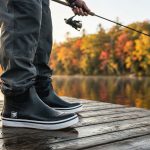
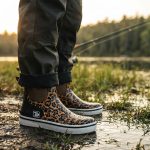
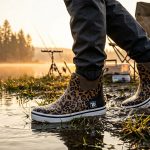
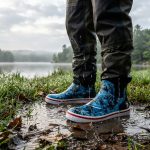
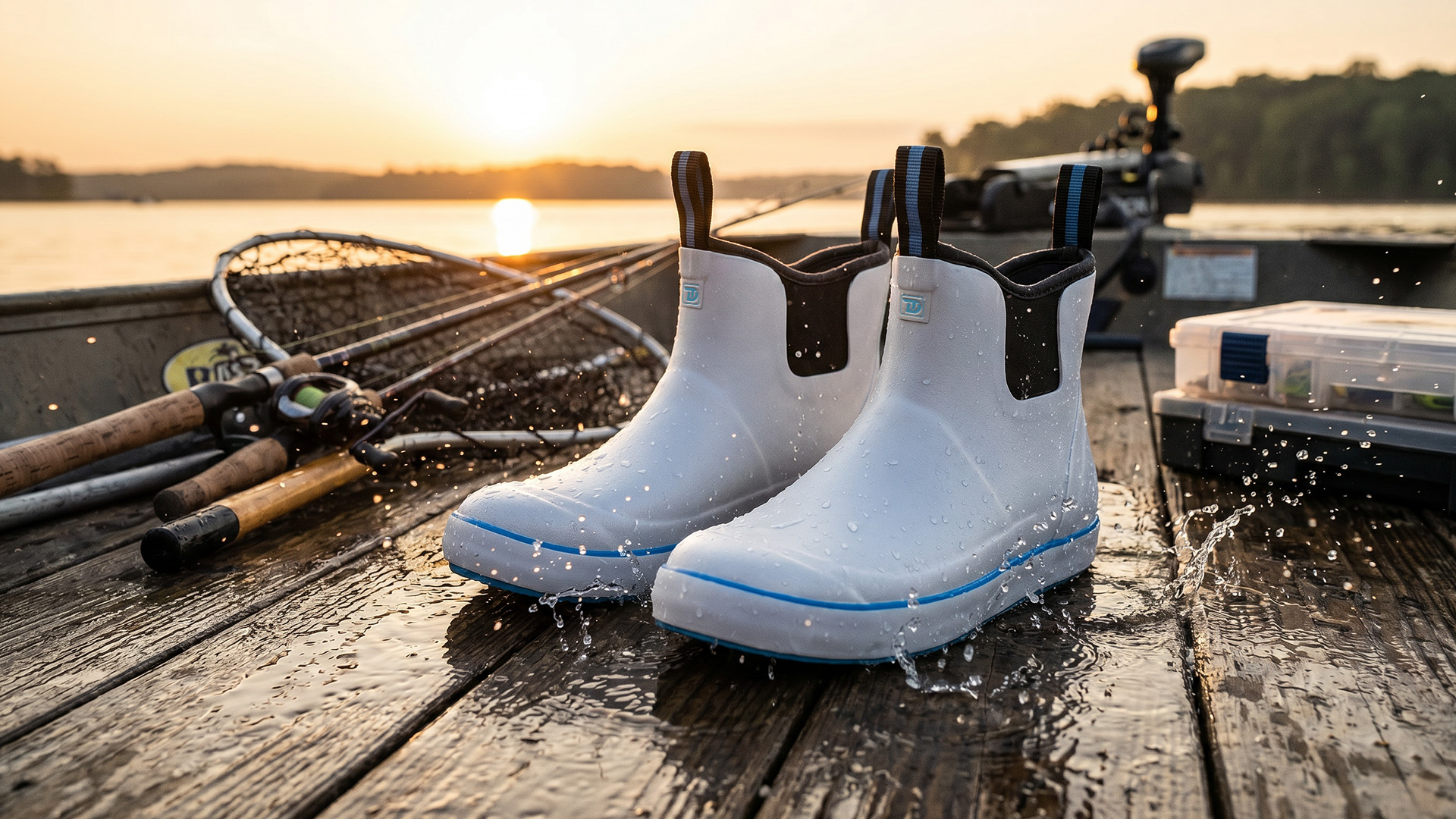
Introduction: More Than a Rubber Shell
A deck boot is often treated like the simplest piece of gear on a boat. You pull it on, you stand in it, you kick it off. But hidden inside that unassuming rubber exterior is a finely tuned system of components, each one engineered to solve a specific problem that the sea throws at you. The siping that grips a slimy deck, the midsole that saves your lower back during a 14-hour shift, the neoprene lining that keeps your feet warm without suffocating them—every part has a job.
When a boot fails, it’s rarely the whole boot that gives up. It’s a single component that couldn’t keep up. The outsole wears smooth and you hydroplane into the gunwale. The glued seam separates and your sock is wet by 9 a.m. The cheap insole flattens into a pancake and your arches ache for a week. Understanding what each part of a deck boot does—and what separates a well-engineered one from a disposable one—is the difference between a boot that lasts five seasons and one that’s in the landfill by August.
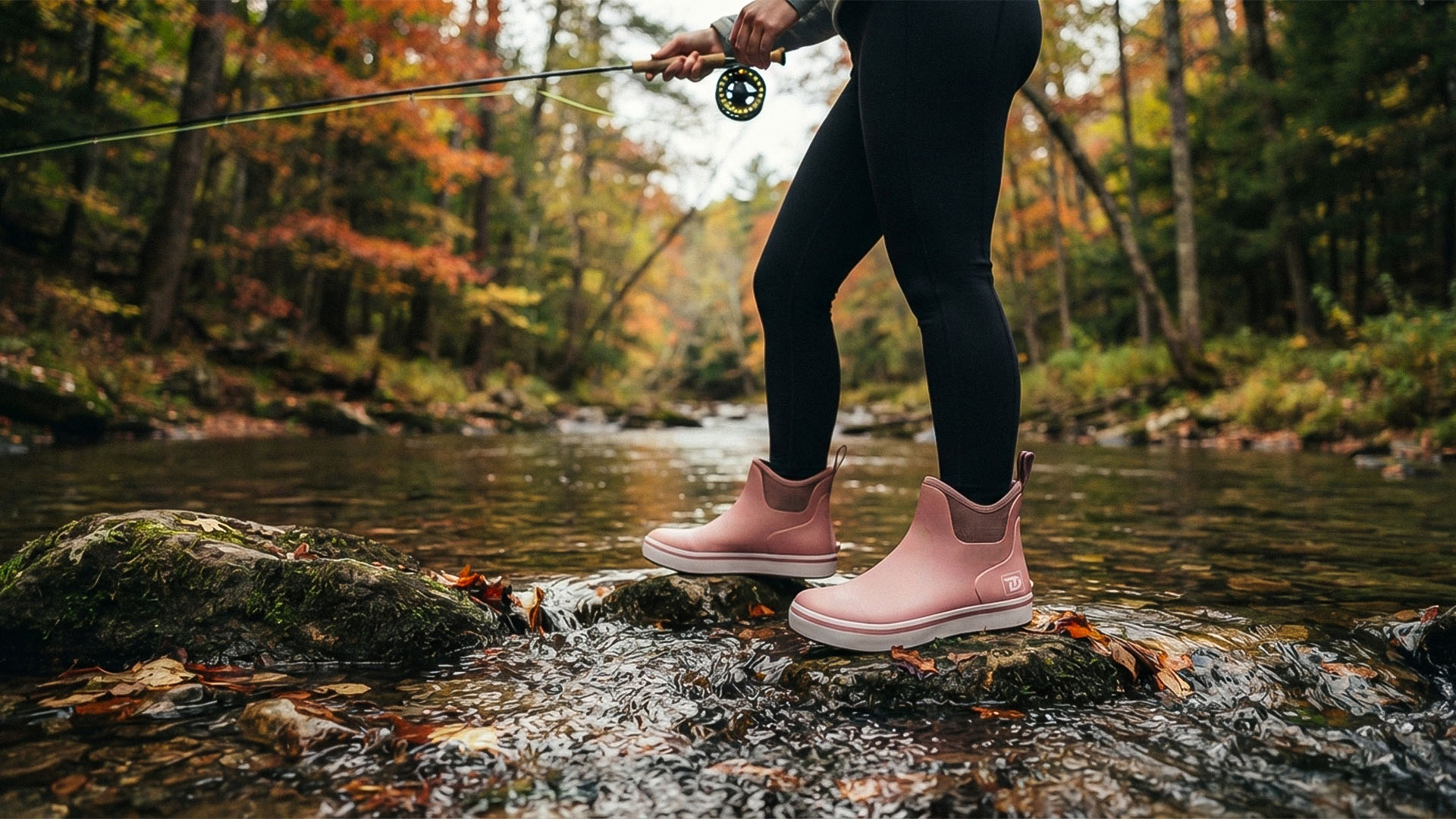
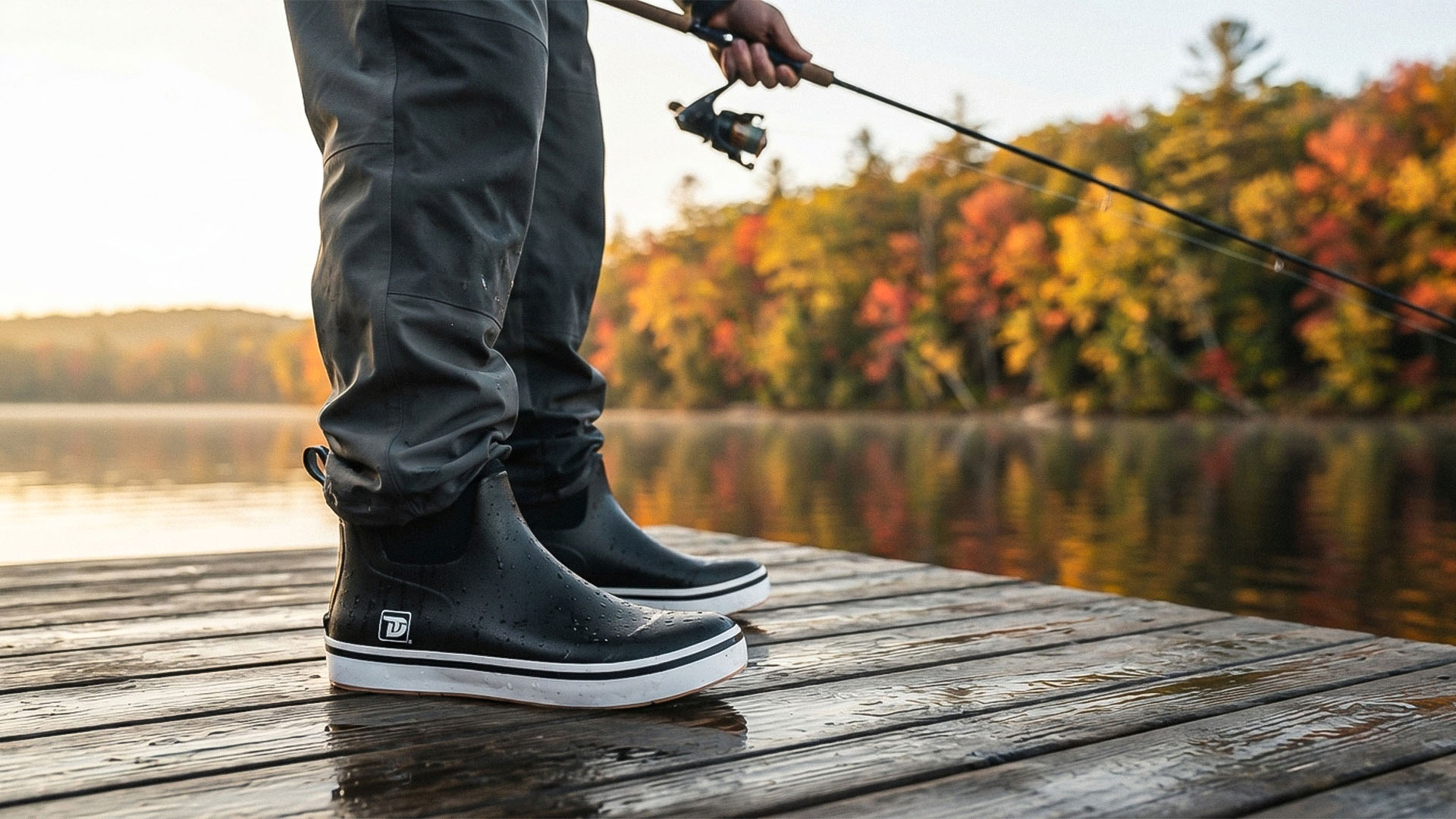
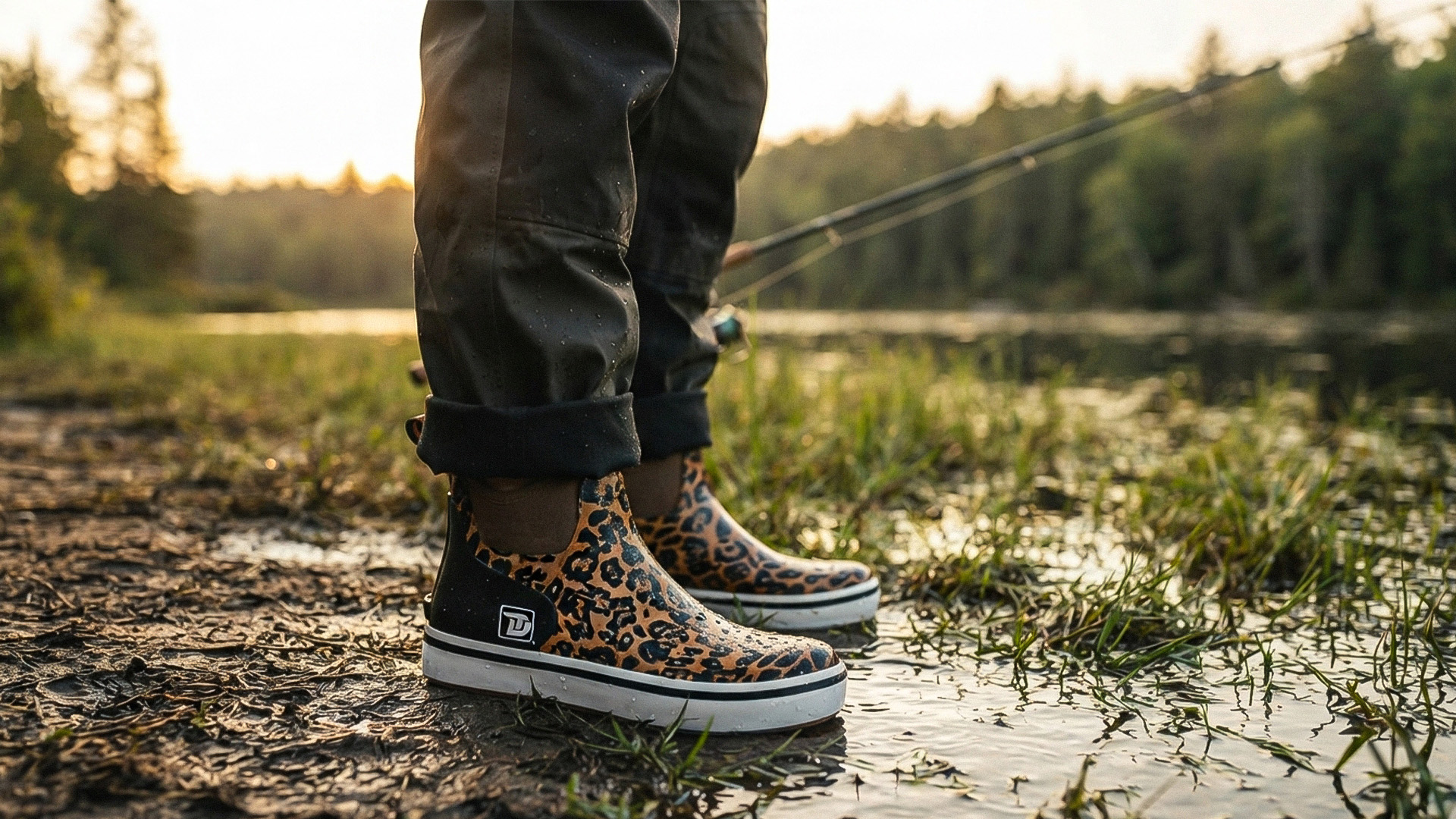
Trudave Gear builds its deck boot lineup—the insulated WaveLock, the lightweight DeckFlow, and the heavy-duty AquaGuard—with a near-obsessive focus on component-level engineering. Every material, from the vulcanized natural rubber to the removable EVA insole, is chosen to perform a specific function under the brutal conditions of saltwater, sun, and constant flexing. This article dissects the anatomy of a Trudave deck boot, piece by piece, so you know exactly what you’re standing on when you step aboard.
1. The Outsole: Where the Rubber Meets the Deck
The outsole is the single most critical safety component on a deck boot. It’s the difference between a secure stance and a trip to the emergency room. Trudave engineers the outsoles on the WaveLock, DeckFlow, and AquaGuard differently because each boot faces a different set of surfaces.
Micro-Channel Siping (WaveLock)
The WaveLock uses Trudave’s most aggressive traction system. Thousands of razor-thin slits—called siping—are cut into the rubber. Under pressure, these slits open up and channel water away from the contact patch, creating a dry zone that grips like a tire on asphalt. The siping channels are molded deep into the rubber so they don’t wear away after a single season. This is the boot for the angler who fishes a center console in a 3-foot chop with a deck slimed by bunker chunks.
Non-Marking Siped Outsole (DeckFlow)
The DeckFlow also uses siping, but the rubber compound is formulated to be non-marking—no black streaks on a white gelcoat deck. The siping channels are slightly shallower, tuned for the mixed surfaces of inshore fishing: fiberglass, wood, wet pavement. The outsole is lighter and more flexible, matching the boot’s warm-weather, high-mobility design.
Industrial Self-Cleaning Lugs (AquaGuard)
The AquaGuard replaces some of the siping with deep, open lugs. These are designed to bite into mud, snow, and the greasy slime of a commercial deck, then eject it cleanly with every step. The lugs are widely spaced to prevent clogging, and the rubber compound is oil-resistant, formulated to withstand diesel and hydraulic fluid that would soften a standard outsole.
All three outsoles are vulcanized to the upper—chemically fused at the molecular level. There is no glue to separate, no separate sole that can peel off. The outsole is the boot.
2. The Midsole: The Hidden Shock Absorber
Between the insole and the outsole is a layer most anglers never see, but feel with every step. Many traditional work boots put a steel shank here for “support.” On a boat, that steel shank is dead weight. It numbs your foot’s ability to feel the deck moving beneath you, conducts cold straight from a freezing deck to your foot, and transmits every wave impact directly up through your skeleton.
Trudave eliminates the steel entirely and replaces it with an EVA (ethylene-vinyl acetate) midsole. EVA is the same lightweight, shock-absorbing foam used in high-end running shoes. It cushions every step without adding pounds. It provides genuine arch support without a rigid plate. And because it’s a poor conductor of heat, it acts as a thermal barrier between your foot and a cold deck.
On the AquaGuard, the EVA midsole is thicker and ergonomically contoured to fight the fatigue of a 12-hour shift on concrete docks and steel decks. On the DeckFlow, it’s tuned lighter and more flexible for warm-weather agility. On the WaveLock, it’s calibrated to work in concert with the insulating liner, absorbing shock while retaining warmth.
3. The Insole: Your Customizable Comfort Layer
Inside the boot, the insole is the removable layer your foot actually rests on. Trudave equips every deck boot with a cushioned EVA insole that provides solid baseline comfort and moderate arch support. But because feet are as individual as fingerprints, these insoles are designed to be pulled out and replaced.
Stock EVA Insole: Good cushioning, moderate arch, breathable. Dries quickly when removed. The right choice for anglers with neutral arches who aren’t on their feet for marathon sessions.
ToughCush Comfort Insole (Upgrade): Trudave’s high-performance upgrade. It features a deeper heel cup to lock the foot in place, more aggressive arch support for high arches or long standing days, and a shock-absorbing heel pad that reduces impact on knees and lower back. It’s slightly thicker than the stock insole, which helps fill excess volume for anglers with narrow feet.
Aftermarket Orthotics: Because the insole is removable, any podiatrist-prescribed orthotic can be substituted. This modular design means the boot can be adapted to severe overpronation, plantar fasciitis, or other foot conditions without compromising the waterproof shell.
The ability to swap insoles isn’t just a comfort feature—it’s a longevity feature. When the insole compresses after a year of hard use, you replace a $20 insole instead of a $100 boot.
4. The Upper Shell: Vulcanized Natural Rubber, Not PVC
The waterproof shell of a Trudave deck boot is made from vulcanized natural rubber, derived from the latex of the Hevea brasiliensis tree. Vulcanization—a chemical process discovered by Charles Goodyear in 1839—cross-links the rubber polymers with sulfur and heat. The result is a single, continuous, permanently waterproof barrier. There are no glued seams to separate. There are no stitches to rot. There are no layers to delaminate.
On the WaveLock, flexible neoprene side panels are bonded into the rubber upper during vulcanization, so the stretch zones are chemically fused, not glued. On the AquaGuard, the rubber compound is thicker and denser, formulated with additional chemical resistance for diesel, gasoline, and hydraulic fluid. On the DeckFlow, the rubber is lighter and tuned for flexibility in warm weather.
The difference between a vulcanized natural rubber shell and a cheap PVC boot is stark. PVC, a petroleum-based plastic, stiffens in the cold, cracks at the flex point within a season, and cannot be effectively repaired. Trudave’s rubber stays supple in freezing temperatures, resists cracking for years, and bonds readily with repair adhesives when punctured.
5. The Liner: Warmth, Breathability, and Moisture Control
Inside the rubber shell, the liner is the layer that touches your sock. It manages the microclimate inside the boot—the sweat, the heat, the cold. Trudave uses three different liner strategies across its deck boot lineup.
Thermal Insulation Lining (WaveLock)
The WaveLock is insulated for cold mornings and chilly offshore runs. The soft thermal lining traps body heat without adding the suffocating bulk of a winter boot. It’s breathable enough that you won’t overheat when the sun comes out, but warm enough to keep your feet comfortable when the air is in the 40s and the deck is wet. This is the boot for the pre-dawn launch, the late-fall striper run, the winter sheepshead trip.
Breathable Moisture-Wicking Lining (DeckFlow)
The DeckFlow is uninsulated. Instead of trapping heat, its lining is designed to wick sweat away from the skin and toward the rubber shell, where it can dissipate. This keeps feet drier and cooler in warm weather. For the Florida flats, the Louisiana marsh in August, or any day when the mercury climbs past 75°F, this is the right liner.
Work-Grade Lining (AquaGuard)
The AquaGuard’s interior is built for durability. The lining resists the accelerated wear that comes from 14-hour shifts, chemical exposure, and frequent washdowns. It’s less about warmth and more about withstanding the relentless abuse of a commercial environment.
All three liners share a critical design feature: they are attached to a boot with a removable insole, so the interior can be fully aired out and dried between uses. No trapped moisture, no bacteria bloom, no mystery odor after a long season.
6. The Shaft: Height, Panels, and the Adjustable Gusset
The part of the boot that wraps around your ankle and lower calf is called the shaft, and its design dramatically affects mobility, protection, and ease of use.
Ankle-Height (DeckFlow)
The DeckFlow’s low-cut profile offers maximum ankle flexion. This is the boot for the angler who’s constantly moving—poling a skiff, hopping from boat to dock, climbing ladders. It doesn’t protect against deep water, but for most inshore and warm-weather fishing, that’s a trade-off worth making.
Mid-Calf (WaveLock and AquaGuard)
The WaveLock and AquaGuard use a mid-calf height that protects against splashes, spray, and shallow wading without the bulk and restriction of a knee-high. The WaveLock incorporates flexible neoprene side panels that stretch as you slide the boot on, then conform to your ankle for a snug, comfortable fit. The AquaGuard uses a more rigid, protective structure with reinforced overlays for impact protection.
Adjustable Gusset
On select models, an adjustable gusset at the top of the shaft lets you customize the fit around your calf. It’s especially useful for wider calves or for tucking in thick pants on a cold day. Tighten it to seal out spray; loosen it for ventilation on a warm afternoon.
7. The Heel and Toe: Protection Where You Need It Most
The toe and heel of a deck boot take the most abuse—from dropped tackle boxes and anchor chains to the constant scraping of a boat deck. Trudave reinforces these high-wear zones.
Reinforced Toe Shell (WaveLock)
The WaveLock features a waterproof toe shell that protects against impact. It’s not a steel toe, but it’s a substantial layer of hardened rubber that can save your toes from a dropped sinker or a misjudged step.
Reinforced Heel Armor and Easy-Off Tab
Across the WaveLock and AquaGuard, the heel is reinforced with extra rubber to resist abrasion and provide stability. At the back, an easy-off heel tab lets you kick the boot off hands-free—step on the heel of one boot with the toe of the other, slide out, done. When you’re exhausted, wet, and covered in fish slime, that tab is a small mercy.
Toe and Heel Overlays (AquaGuard)
The AquaGuard adds even thicker rubber overlays in these zones, designed for the impact and abrasion of commercial fishing—dropped traps, heavy chains, constant grinding on steel decks.
8. The Details: Pull Tabs, Grab Handles, and Drainage
Small features that don’t appear on spec sheets can define the daily experience of wearing a boot.
Pull Tabs and Grab Handles
The WaveLock and DeckFlow have substantial pull tabs at the heel and, on some models, integrated grab handles at the top of the shaft. These let you pull the boot on in seconds, even with wet hands. On a rocking boat at 5 a.m., that speed matters.
Drainage and Quick-Dry Design
No deck boot is designed to be fully submerged, but water over the top happens. When it does, the removable insole and non-absorbent rubber construction mean the boot can be drained, wiped down, and returned to service quickly. There’s no waterlogged fabric, no saturated leather that needs days to dry.
Non-Marking Outsoles
Both the DeckFlow and WaveLock outsoles are non-marking. For the boat owner who’s spent an afternoon scrubbing black streaks off white gelcoat, this is a detail that pays rent every single trip.
9. Putting It All Together: The Right System for Your Feet
A Trudave deck boot is not a single thing. It’s a system of interacting components, each one designed to handle a specific challenge—water, impact, fatigue, heat, cold, abrasion. The outsole grips and releases mud. The midsole cushions and insulates. The insole supports and can be upgraded. The rubber shell seals and flexes. The liner warms or cools. The heel and toe protect. The tabs and handles make it all effortless to use.
When you choose a WaveLock, you’re choosing an insulated, aggressively siped boot for cold mornings, rough seas, and all-day offshore battles. When you choose a DeckFlow, you’re choosing a lightweight, breathable, non-marking boot for the flats, the bay, and the dock. When you choose an AquaGuard, you’re choosing an industrial-grade fortress for the commercial deck, the fish farm, and the job site.
Each component in each boot is there for a reason. Understanding what those components do—and how to maintain them—is what turns a good boot into a great one, and a one-season purchase into a five-season investment.
To explore the complete Trudave Gear deck boot lineup and see the anatomy up close, visit trudavegear.com.