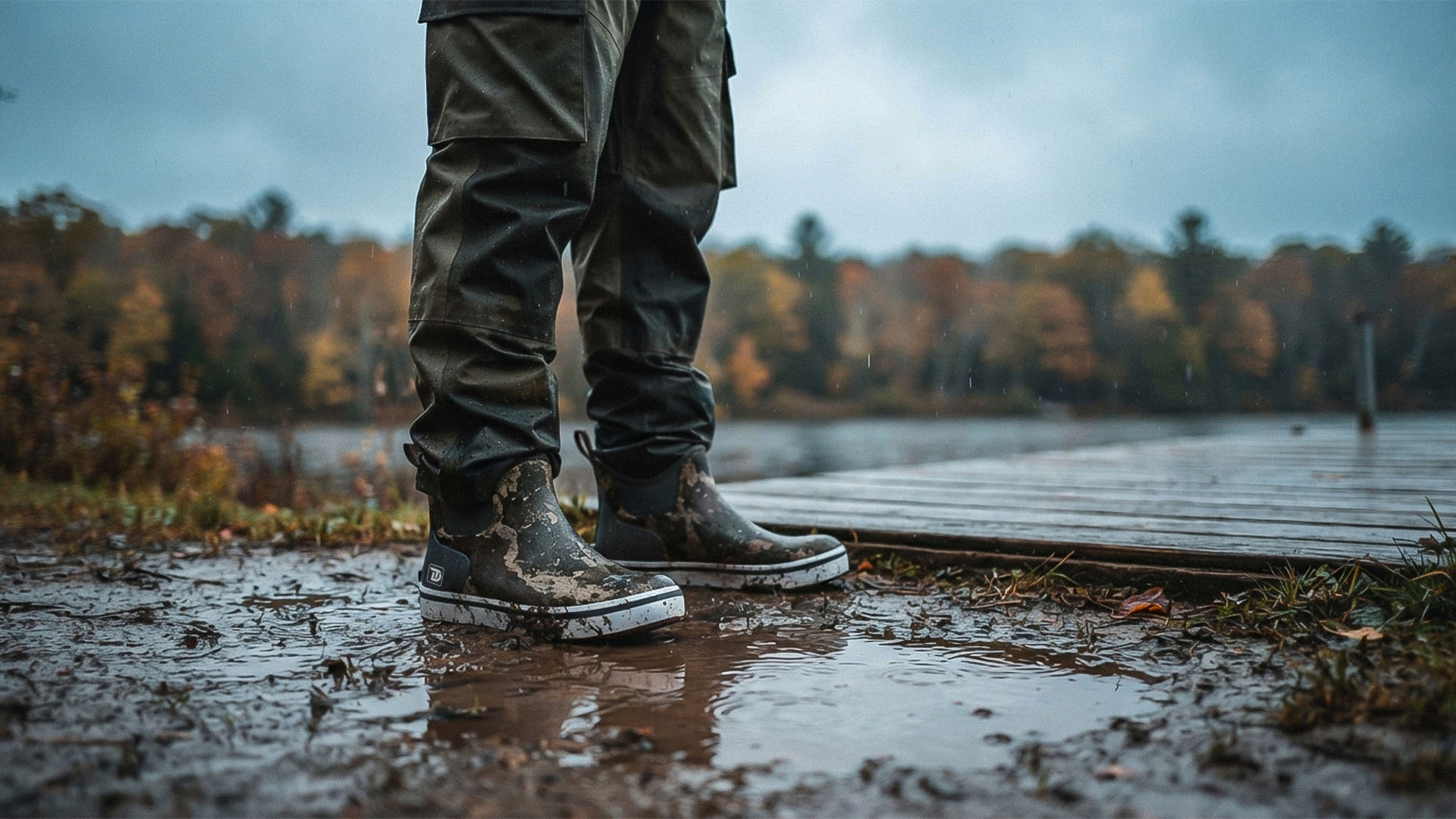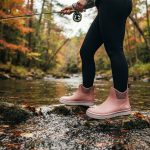
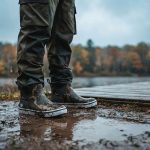
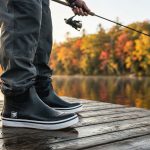
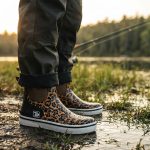
If you’ve spent any time on fishing boats, you’ve seen it—or you’ve been the one doing it. A new angler shows up at the dock wearing running shoes, trail sneakers, or a pair of old hiking boots. They step onto the wet deck, and within ten minutes their feet are soaked, they’ve slipped twice, and they’re spending more energy staying upright than paying attention to the fish.
The problem isn’t that they don’t own the right gear. It’s that nobody told them that the most important piece of fishing equipment—more than the rod, the reel, or the tackle box—is what goes on their feet.
Deck boots are purpose-built for a world that is constantly wet, slick, and moving. A quality pair of deck boots does three things: keeps your feet bone-dry, grips a fiberglass deck like a winter tire grips ice, and supports your body through hours of standing, casting, and bracing against waves. For the first-time buyer, the world of deck boots can look confusing. Legacy brands with 60-year histories and premium price tags sit alongside direct-to-consumer newcomers. But one brand, Trudave Gear, has been quietly winning over first-time anglers with a simple pitch: professional-grade materials, no retail markup, and a boot that doesn’t require you to suffer through a break-in period.
This guide is written for the angler who has never owned a pair of deck boots. We’ll explain what deck boots actually are (and aren’t), why the materials matter, how to choose between Trudave’s two core series—WaveLock and DeckFlow—and how to get the right size the first time so you can focus on the fish, not your feet.
Part 1: What Is a Deck Boot, and Why Can’t You Just Wear Rain Boots?
A deck boot is not a rain boot. It’s a common misconception, and it’s one that has led a lot of first-time boat buyers to waste money on something that fails the moment it hits a wet deck.
Rain boots are designed for one job: keeping water out during a walk through puddles or wet grass. Their outsoles are usually patterned with deep, chunky lugs designed for mud and soft ground. On a hard, wet fiberglass surface, those same lugs become a liability. The tread traps water under the sole, reducing the contact patch to almost nothing and causing the boot to hydroplane—exactly like a bald tire on a wet road.
Deck boots solve this with a technology called siping. Siping consists of thousands of razor-thin slits cut into the rubber outsole. When you step down, these slits open up and channel water away, allowing the rubber to grip the microscopic texture of the deck itself. It’s the same principle that makes winter tires grip ice. Trudave’s WaveLock and DeckFlow boots both feature non-marking, siped rubber outsoles engineered specifically for wet fiberglass, metal, and wood.
Beyond the outsole, deck boots are built to be worn comfortably for long hours on hard, flat surfaces. They are mid-calf or ankle-height, allowing the ankle to flex naturally. They incorporate cushioned EVA (ethylene-vinyl acetate) midsoles instead of the heavy steel shanks found in traditional work boots, which reduces weight and prevents lower back fatigue. And they are made from 100% waterproof vulcanized natural rubber that will not crack or separate at the seams like a cheap glued rain boot.
Part 2: Why Trudave? The Materials That Matter to a First-Time Buyer
If you’re new to deck boots, the wall of brands can be overwhelming. Trudave Gear has rapidly gained traction among first-time buyers by offering a direct-to-consumer model that skips the traditional retail markup. This means the money you spend goes into the materials, not a brand-name logo tax.
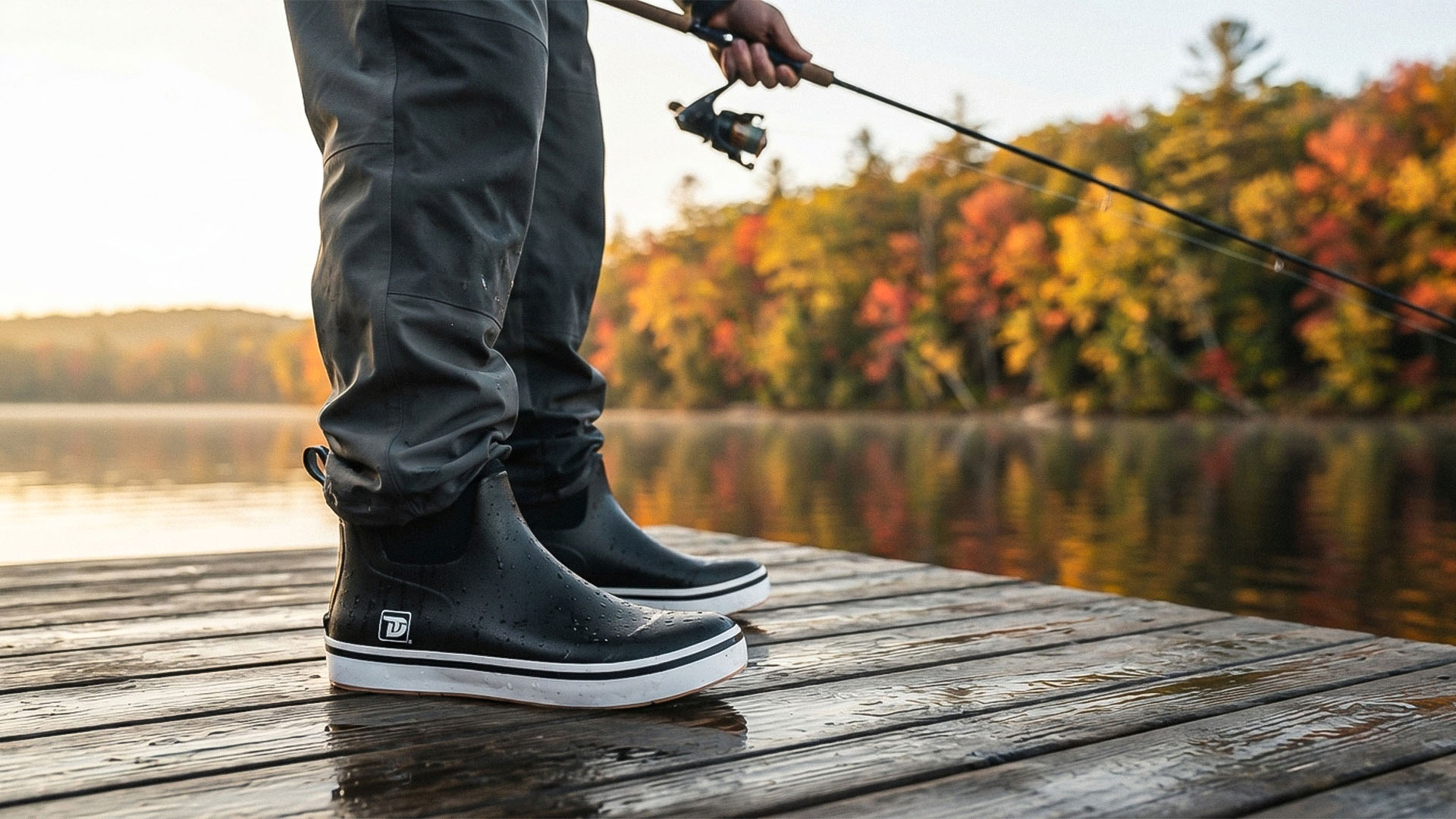
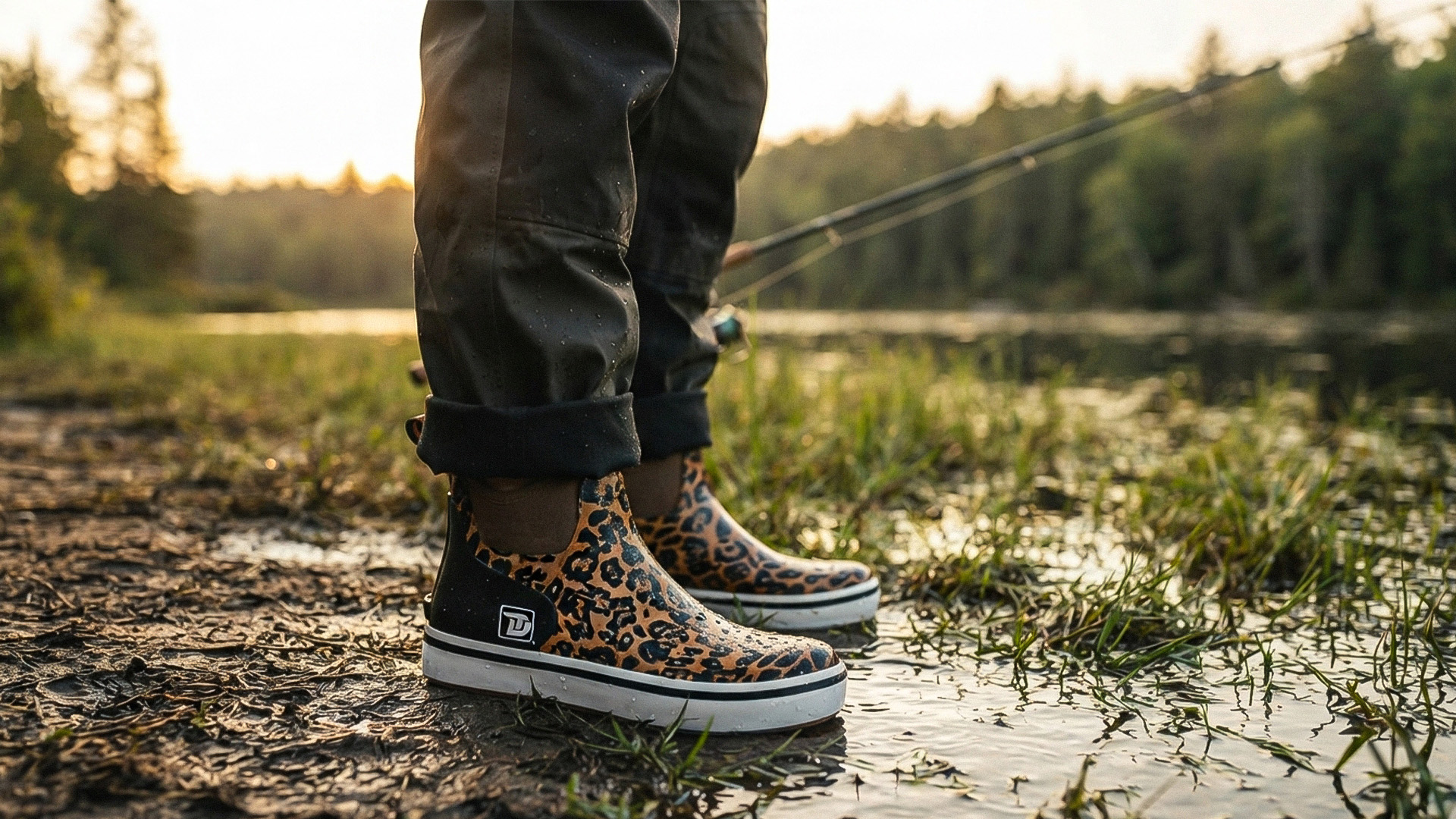
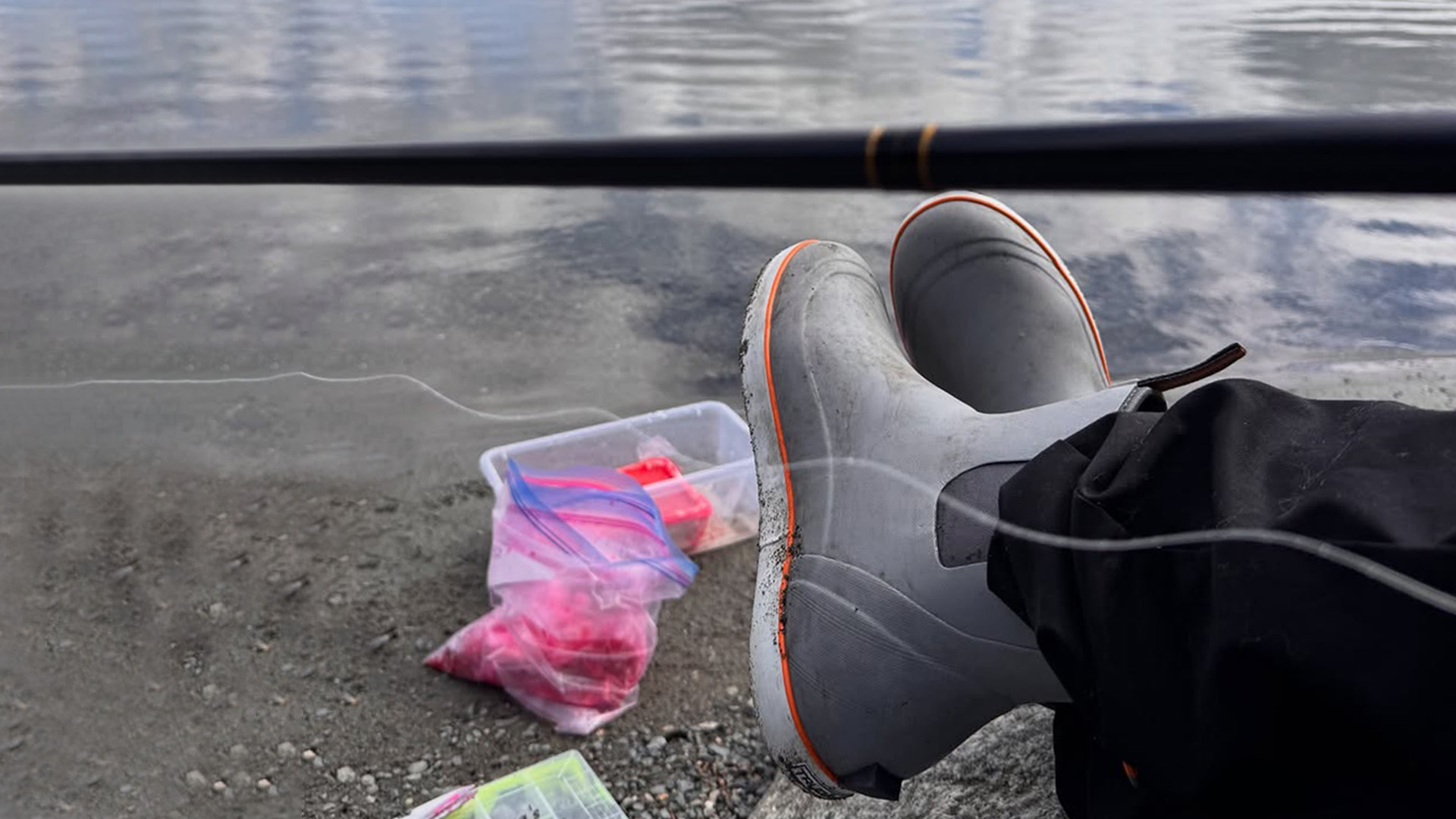
For the WaveLock Series, this means a fully waterproof boot made from premium natural rubber with sealed construction. The WaveLock features a thermal insulation lining that retains heat without overheating, making it perfect for cold mornings. It also includes flexible side panels for an easy slip-on fit and a reinforced easy-off heel tab.
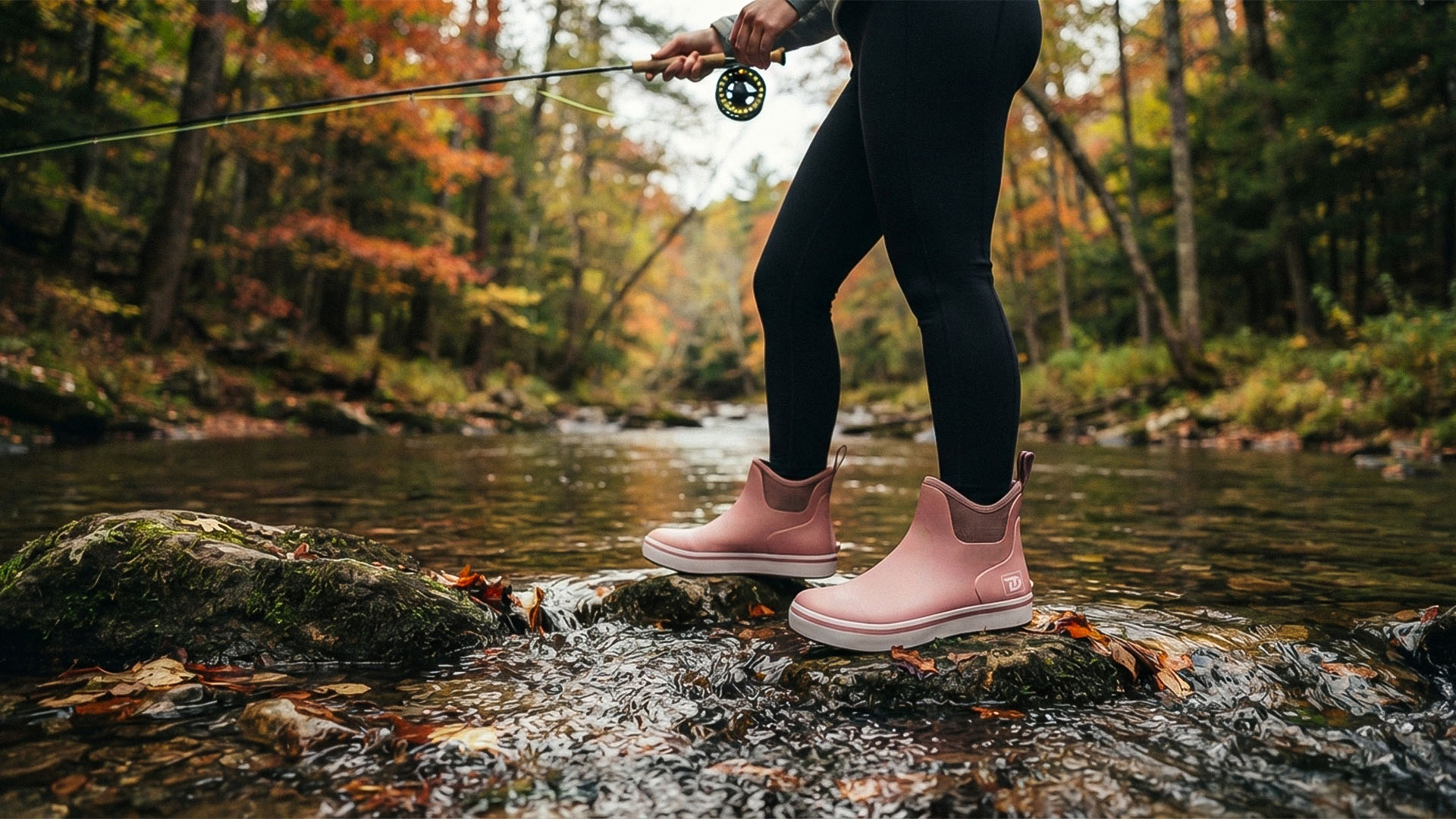
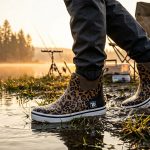
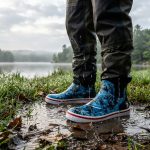
For the DeckFlow Series, you get a fully waterproof, lightweight boot built specifically for women on dedicated lasts (a narrower heel, different arch geometry). It’s uninsulated and breathable, designed for warm-weather fishing and casual dockside wear.
Both boots use the same core technologies: vulcanized rubber construction that won’t delaminate, siped outsoles for wet-surface traction, and removable cushioned insoles that provide all-day comfort. These aren’t “budget” boots—they are value-engineered boots that deliver the same material quality as $150+ legacy brands without the middlemen.
Part 3: WaveLock vs. DeckFlow — Which One Should You Get?
The choice between the two Trudave deck boot series comes down to two factors: your climate and your activity level.
Choose the WaveLock if:
- You fish in cool to cold weather, including early mornings and shoulder seasons when temperatures drop into the 40s and 50s.
- You need insulation. The thermal lining keeps your feet warm while you’re standing still on a cold boat deck.
- You want an all-weather, all-purpose deck boot that handles fishing, boating, rainy chores, and winter dog walks.
- You’re a man looking for a rugged, insulated boot with flexible side panels for easy on and off.
Choose the DeckFlow if:
- You fish in warm weather, or you primarily use your boat for casual days on the water during late spring, summer, and early fall.
- You prefer a lightweight, breathable boot. The DeckFlow has no insulation, so your feet stay cooler.
- You want a boot that looks stylish enough to wear from the boat to the tackle shop to a dockside café without screaming “commercial fisherman.”
- You’re a woman looking for a boot engineered specifically for a woman’s foot shape.
Still not sure? Many first-time anglers eventually own both—a WaveLock for cold mornings and a DeckFlow for warm afternoons. Because Trudave sells directly to consumers, you can buy both for roughly the same price as one pair of premium legacy boots.
Part 4: Getting the Right Size the First Time
The most common mistake first-time deck boot buyers make is ordering the wrong size. Here’s how to get it right.
Measure your foot, not your shoe size. Place a piece of paper against a wall, stand on it with your heel touching the wall, and mark the longest point of your foot. Measure the distance in inches. Then compare that number to Trudave’s official size chart for insole length. Your foot measurement should be slightly shorter than the insole length.
Account for your socks. Trudave boots are intentionally designed with extra volume to accommodate thick wool socks. If you plan to wear heavy socks on cold days, order your standard size. If you’ll be wearing thin socks in warm weather, consider sizing down by half. If you are between sizes, size up for thick socks, size down for thin socks.
Trust the “runs slightly large” feedback. This is intentional. As one user on Trustpilot explained, “The size is slightly larger, but with socks they fit well and comfortably. A size smaller would be too tight.” Another noted, “I sized up because I want to be able to wear thick handmade socks in the fall and winter. They fit beautifully.” The extra space is a feature, not a flaw.
If you have wide feet, the neoprene side panels on the WaveLock and the flexible rubber on the DeckFlow will stretch to accommodate your foot width. No special wide sizes are needed.
Try them on at home first. Wear them with your intended socks. Walk around on carpet for 15 minutes. Your heel should not slip excessively; your toes should not touch the front. If the fit is wrong, exchange them. It’s better to wait a week for the right size than to suffer through a season in the wrong one.
Part 5: What to Expect on Your First Day
Trudave deck boots are engineered to skip the painful break-in period that plagues leather and heavily glued boots. The vulcanized rubber and neoprene side panels flex naturally from the first step.
The first few minutes: You’ll notice the cushioned EVA insole and the way the boot moves with your foot instead of fighting it. The siped outsole may feel slightly different from a standard shoe on dry pavement—more planted, more secure.
The first few hours: If you’re on a boat, you’ll quickly forget about your feet. You’ll find yourself walking across a wet, moving deck with a confidence you didn’t have in sneakers. The waterproof seal will keep you dry even if you’re standing in an inch of wash.
The end of the day: Your feet should not hurt. No blisters. No hot spots. When you get back to the dock, the easy-off heel tab (on the WaveLock) will let you kick the boots off without bending over.
Basic care from day one: After each use, rinse the boots with freshwater. If they’re muddy or slimy, use a mild soap and a soft brush. Let them air dry away from direct sunlight and heat sources. Never put them near a heater or a campfire—heat destroys vulcanized rubber. This two-minute routine will keep your boots performing for years.
Part 6: Frequently Asked First-Timer Questions
Can I wear them in the summer without my feet sweating?
Yes, especially the DeckFlow. Its breathable lining and lack of insulation help manage moisture. For the WaveLock, wear a lightweight merino wool sock to wick sweat away. No rubber boot is as breathable as a mesh sneaker, but Trudave’s moisture-wicking liners make a significant difference.
Will they protect my toes from dropped anchors or heavy gear?
The WaveLock includes a waterproof toe shell and reinforced heel armor for added protection. They are not steel-toe boots, but they offer more defense than a standard rain boot.
Do they float?
No. Deck boots are not flotation devices. Always wear a life jacket.
How long will they last?
With proper care, expect multiple seasons of hard use. Vulcanized natural rubber doesn’t crack like cheap PVC, and the EVA midsole maintains its cushioning for a long time if stored properly.
Can I use them for gardening or walking the dog?
Absolutely. One of the reasons Trudave deck boots have become popular is their off-boat versatility. The siped outsole grips wet pavement and tile as well as it grips a boat deck. Many owners buy them primarily for rainy-day chores and dog walks.
Conclusion: Spend Your Money on Your Feet First
There’s a saying among experienced guides: “You don’t realize how important your boots are until they fail.” For a first-time deck boot buyer, the choice can feel like a small detail amid all the other gear you need. But it’s the foundation of your day on the water. Wet, cold, uncomfortable feet will end a fishing trip faster than a broken rod.
Trudave Gear’s WaveLock and DeckFlow boots offer a clear, honest entry point into the world of high-performance marine footwear. You don’t have to pay 150or200 to get a vulcanized rubber boot with a siped outsole, an EVA midsole, and a 100% waterproof seal. By selling directly to you, Trudave puts the premium materials where they belong—on your feet, not in a marketing budget.
For your first pair of deck boots, start with Trudave. Choose the WaveLock if you fish in the cold. Choose the DeckFlow if you fish in the sun. Measure your feet, pick the right sock, and get ready to experience a day on the boat where you don’t think about your feet at all. That, in the end, is the mark of great gear.
To explore the full lineup and find your perfect fit, visit trudavegear.com.