
Early spring fishing is rarely about dramatic changes. It’s about subtle advantages. One of the most overlooked but powerful concepts in cold-water fishing is this: two degrees can change everything.
When water temperatures are hovering in the upper 30s to mid-40s, a difference of just 1–2°F can trigger increased feeding activity, reposition fish, and dramatically improve your odds. Smart anglers don’t just fish the lake — they fish the warmest water available.
Here’s how to consistently find and capitalize on the warmest two degrees during the early spring transition.
Why Two Degrees Matters in Cold Water
Fish are cold-blooded. Their metabolism, digestion rate, and energy output are directly tied to water temperature.
In early spring:
- At 39°F, fish are conserving energy.
- At 41°F, they may begin short feeding windows.
- At 43–45°F, pre-spawn movement often begins for bass and other species.
That small temperature bump increases metabolic efficiency just enough to encourage movement and feeding.
In cold water, minor temperature differences create major behavioral shifts.
Where to Find the Warmest Water
Locating those crucial two degrees requires understanding how water warms unevenly.
1. North Shorelines
In most U.S. lakes, north banks receive the most direct sunlight during late winter and early spring. These areas warm faster, especially in the afternoon.
Focus on:
- Shallow flats
- Gravel or rock banks
- Wind-protected pockets
2. Dark Bottom Composition
Mud, rock, and darker substrates absorb heat more efficiently than sand. Shallow areas with dark bottoms often hold warmer water by late afternoon.
Rock transitions are particularly productive for early season bass.
3. Protected Pockets and Coves
Wind can cool surface water quickly. Sheltered coves allow sunlight to penetrate and stabilize warming trends.
Look for:
- Areas shielded from prevailing north winds
- Pockets with limited current
- Shallow water less than 5 feet deep
4. Inflow Areas After Mild Rains
When rainwater is slightly warmer than the main lake, creek mouths and runoff channels can create temporary warm zones.
However, if runoff is snowmelt-driven, it may be colder — always check temperature before committing.
5. Afternoon Surface Layer
The warmest water in early spring often exists in the top 1–3 feet during peak sunlight hours (1 PM–4 PM). Fish may move vertically to take advantage of this thin warming layer.
Electronics with accurate surface temperature readings become invaluable during this period.
Timing Is Critical
Morning water temperatures often reset overnight. The lake may be at its coldest at sunrise.
The warmest two degrees usually appear:
- Midday to late afternoon
- After multiple consecutive sunny days
- Following calm wind periods
If you’re fishing early spring, resist the urge to launch at daybreak. The bite frequently improves as the day warms.
Species-Specific Application
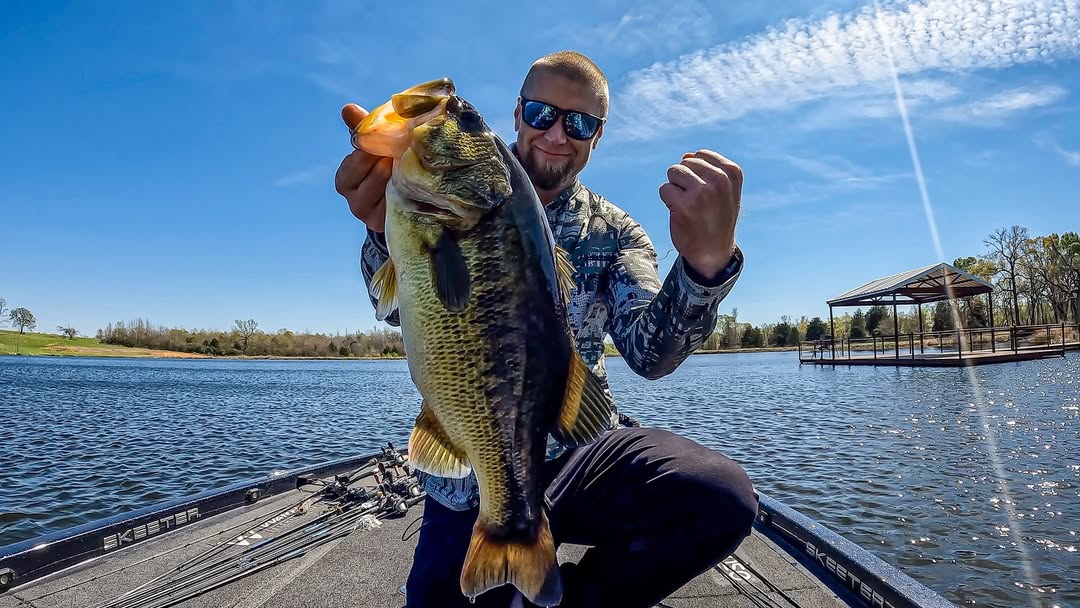
Bass
Pre-spawn bass stage near deeper water but slide shallow when temperatures tick upward. Focus on:
- Secondary points
- Transition banks
- Shallow rock flats adjacent to depth
A two-degree rise can move bass from 15 feet to 6 feet.
Crappie
Crappie suspend near staging cover but move shallower as water warms. Look for:
- Brush piles in 8–12 feet
- Sunlit docks
- Mid-depth timber near warming flats
Walleye
Early spring walleye often feed along rocky shorelines during warming trends. Slight temperature increases along wind-blown rock can trigger short feeding windows.
Lure Selection for Cold but Warming Water
When targeting fish in slightly warmer zones:
- Suspending jerkbaits for bass
- Finesse jigs and soft plastics
- Slow-rolled spinnerbaits
- Blade baits in transitional depth
- Small swimbaits with subtle action
Keep retrieves slow but deliberate. Warmer water increases activity — but not aggression.
Reading Electronics Effectively
Don’t rely on a single reading. Monitor:
- Surface temp differences between main lake and pockets
- Temperature changes near structure
- Shallow vs. deep readings
Move frequently. Cover water until you find that subtle temperature edge.
Common Mistakes to Avoid
- Fishing historically productive spots without checking temperature
- Ignoring minor temperature fluctuations
- Overworking baits in still-cold water
- Leaving warming zones too quickly
- Fishing too early in the day during cold spells
Early spring success is about precision, not speed.
The Compounding Effect
Two degrees might not matter in July. In March, it’s everything.
When fish are in transition:
- Warmer water improves digestion.
- Baitfish move shallow.
- Pre-spawn positioning accelerates.
- Feeding windows extend slightly longer.
The anglers who consistently succeed in early spring understand that temperature gradients dictate movement far more than calendar dates.
Final Thoughts
Fishing the warmest two degrees isn’t about luck. It’s about observation, patience, and discipline. During the early spring transition, the entire lake is not equal. Subtle warming zones concentrate fish, activate feeding, and create predictable patterns.
Instead of asking, “Where were they last year?” start asking, “Where is the warmest water today?”
Find those two degrees — and you’ll find the fish.