
As autumn settles in and the nights turn sharp, largemouth bass begin one of their most dramatic seasonal migrations. Those easy early-fall bites in the shallows start to fade, and fish that once crushed crankbaits near weedlines vanish into deeper, quieter zones. It’s not that the bass have stopped feeding — it’s that they’ve changed their playbook. Understanding how largemouths transition from shallow to deep water in late fall is the key to keeping your lines tight when most anglers start packing up for the season.
Why the Move Happens: Reading Nature’s Signals
By late fall, water temperatures dip into the low 50s and 40s, oxygen levels shift, and vegetation begins to die off. The shallow zones that provided both food and cover all summer long are now unstable. Decomposing weeds rob the water of oxygen, baitfish scatter, and bass instinctively follow the most consistent conditions they can find — typically deeper water with stable temperature and structure.
Bass don’t like chaos. They migrate toward areas where they can feed efficiently and conserve energy — usually the first major drop-offs, creek channels, humps, or submerged timber near their summer haunts. They don’t just disappear; they slide down the contours.
The Transition Path: Following the Contours
The best way to find late-fall largemouths is to trace their migration routes from the shallows to their wintering holes. Bass rarely travel randomly; they move along predictable lines of structure.
- Secondary points and creek mouths: As baitfish leave the backs of creeks, bass intercept them here.
- Channel swings and ledges: These act like underwater highways — fish follow them down to deeper water.
- Isolated cover near deep water: Brush piles, stumps, and rock piles within a cast of the drop are magnets.
Use your electronics to locate these transition areas. You’re not necessarily fishing deep all day — sometimes bass suspend halfway down the break, holding where the temperature and food supply feel just right.
Tuning Presentation: Slow Down and Downsize
As the water cools, a largemouth’s metabolism slows dramatically. That aggressive summer retrieve that worked at 75°F now looks unnatural in 50°F water. The key is to mimic the sluggish movement of prey.
- Jigs and craws: Drag or hop a 3/8-ounce jig with a compact trailer across points and ledges. Bass in transition love an easy meal near the bottom.
- Suspending jerkbaits: A slow, deliberate twitch-and-pause retrieve mimics dying shad perfectly. Sometimes a 10-second pause triggers the bite.
- Finesse plastics: A drop-shot or shaky head presentation keeps your bait in the strike zone longer — ideal for cold, inactive bass.
- Blade baits or spoons: When the water turns cold and clear, these subtle flashes imitate baitfish without requiring fast retrieves.
Remember: late-fall fishing rewards patience. You’re often coaxing bites rather than provoking them.
Locating the Food Chain
Where the bait goes, the bass follow. In late fall, shad and other forage species begin moving deeper to escape cooling surface layers. Use sonar to identify bait balls near channel bends or on the edge of submerged humps.
Bass position themselves just beneath or to the side of these schools, ready to ambush stragglers. If you’re marking bait on your screen but not seeing bass, don’t leave immediately — they’re often lurking below the school, waiting for low light or a temperature shift to feed.
Wind direction also plays a role. Wind-blown points and humps concentrate plankton and baitfish, creating predictable ambush zones. When in doubt, follow the wind.
Timing the Bite Windows
As the sun drops lower in the sky, daily feeding windows shrink. Largemouth bass are most active during brief warm-up periods — typically late morning to early afternoon when sunlight slightly raises surface temperatures.
However, during stable overcast days, bass may feed intermittently throughout the day, especially when barometric pressure stays consistent. Keep track of temperature trends: even a 2°F rise can wake up a dormant school.
Gear and Line Adjustments
Late-fall fishing conditions demand subtlety and control. Cold water changes how your gear performs, and lighter setups can often make the difference.
- Use fluorocarbon line for sensitivity and low visibility in clear water.
- Choose medium or medium-light rods for finesse presentations.
- Dress smart: Layer waterproof outerwear, insulated boots, and gloves that allow tactile control — cold hands lose fish.
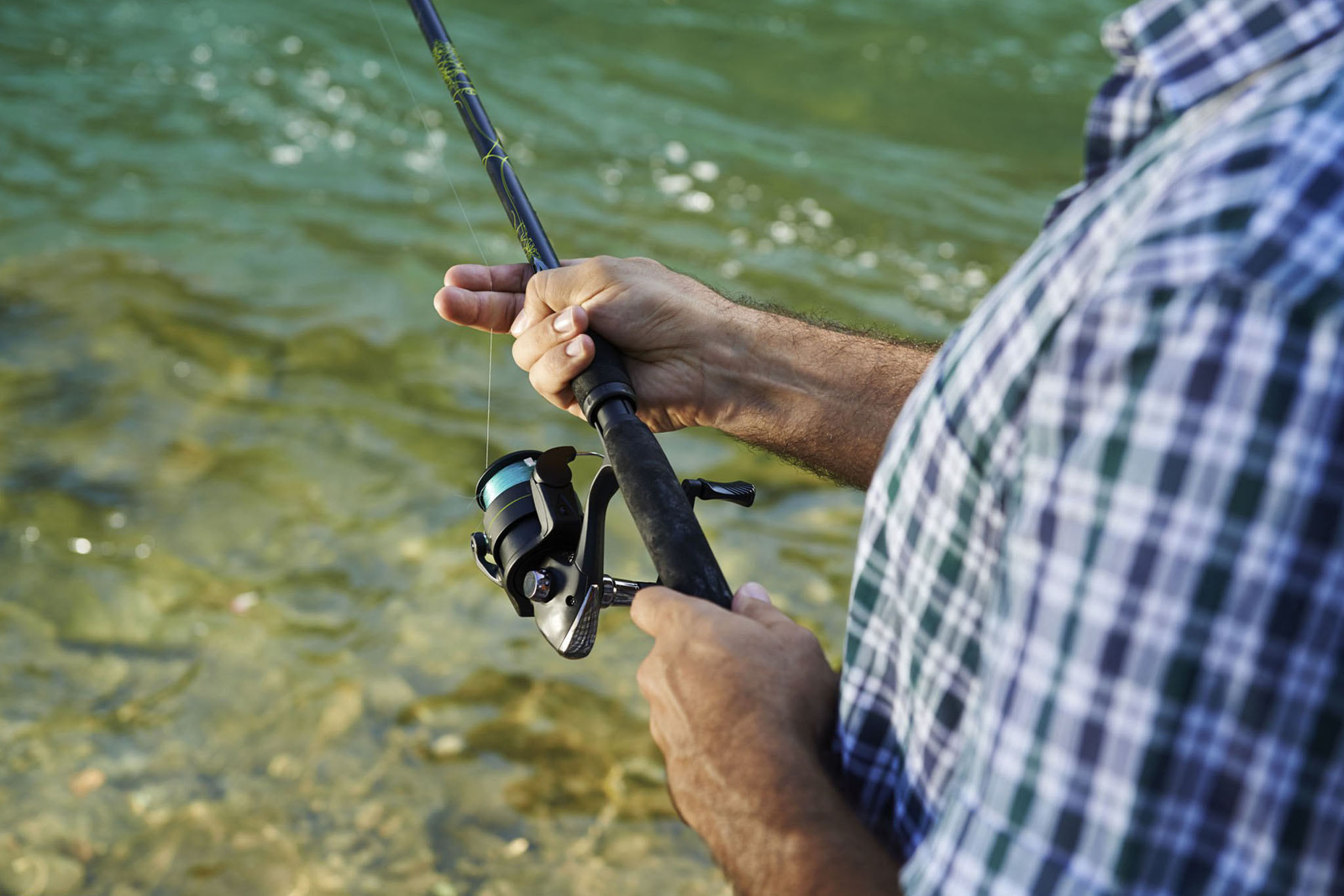
- Keep reels clean and lubricated: Cold grease can cause sluggish performance or missed strikes.
Even the smallest gear tweak can improve your connection with a lethargic late-fall bass.
Reading the Transition Right
The magic of late-fall largemouth fishing lies in precision. Instead of casting blindly across a flat, you’re reading subtle structure, watching your electronics, and matching your presentation to the fish’s shifting mood. It’s a mental game as much as a technical one — patience, timing, and attention to temperature gradients all come together.
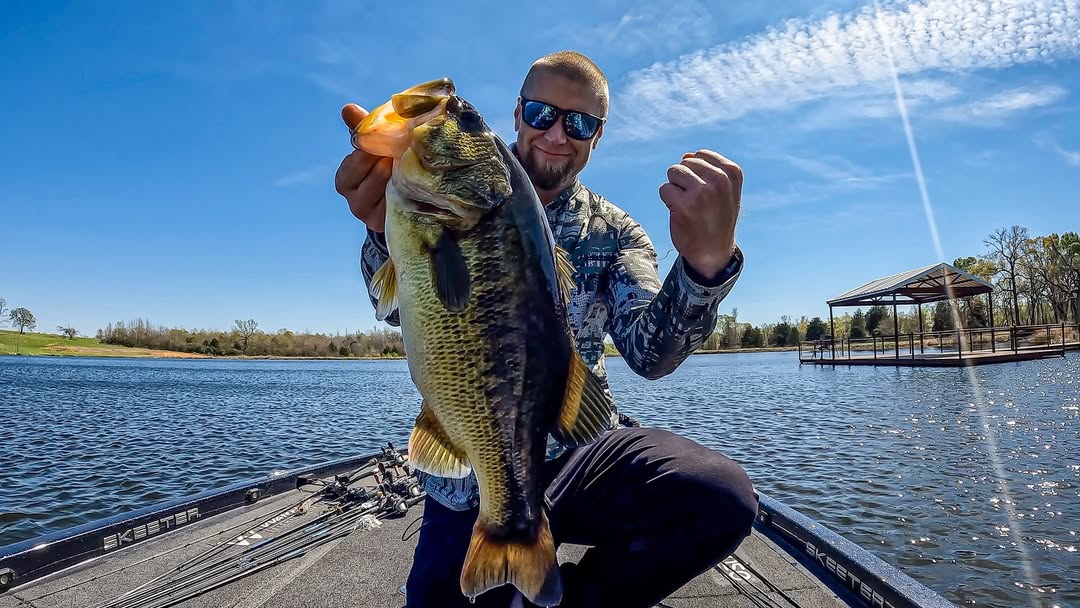
Once you find them, these deep-water bass are often larger and more predictable than summer fish. They’re feeding to prepare for winter, and every bite feels earned — a reward for understanding nature’s rhythm.
So as the water cools and the shoreline grows quiet, don’t hang up your rods just yet. The transition from shallow to deep isn’t the end of the bass season — it’s the start of something more challenging, more deliberate, and often more rewarding.