As summer begins to give way to fall, bass behavior goes through a major shift. Hot, sluggish August days are replaced by crisp mornings, shorter daylight hours, and cooler water temperatures. For anglers, September is an exciting time: bass become more active, baitfish schools move into transition areas, and opportunities for fast-paced action increase.
To capitalize on this shift, you’ll need to adjust your tactics. Understanding where bass move, how they feed, and which lures trigger strikes in cooler water is key. Let’s break down the best September bass patterns so you can keep your rod bent and your reels singing.
Why September Changes the Game
In many lakes and rivers, water temps that hovered in the upper 70s or even 80s begin to drop into the upper 60s and low 70s. This temperature range is a sweet spot for bass. Here’s why:
- Metabolism boost: Cooler water means bass are more comfortable and active, leading to longer feeding windows.
- Forage movement: Shad, bluegill, and other baitfish begin schooling and heading toward shallow coves, creeks, and flats.
- Seasonal instinct: Bass sense the coming winter and begin feeding more aggressively to bulk up.
Key Bass Holding Areas in September
1. Transition Zones
Bass love edges this time of year. Look for spots where deep water meets shallow flats, creek channels meet main-lake basins, or riprap transitions into sandy banks. These areas act as highways for bass following baitfish.
2. Baitfish Congregations
If you can find schools of shad or minnows dimpling the surface, bass won’t be far away. Electronics can help, but in September you’ll often see surface activity where predators are pushing bait to the top.
3. Shallow Grass and Cover
Cooling water brings bass back into shallower cover like hydrilla edges, lily pads, and laydowns. These spots can produce consistent action, especially during low-light conditions.
Best September Bass Baits
Crankbaits – The September Staple
This is the month to “crank up” your bass game. Medium-diving crankbaits (5–12 feet) are perfect for targeting transition zones and schools of baitfish. Match shad colors like silver, white, or chartreuse with a touch of blue.
- Squarebills: Great for banging around shallow cover and triggering reaction bites.
- Lipless crankbaits: Deadly over grass flats where baitfish are schooling.
Spinnerbaits
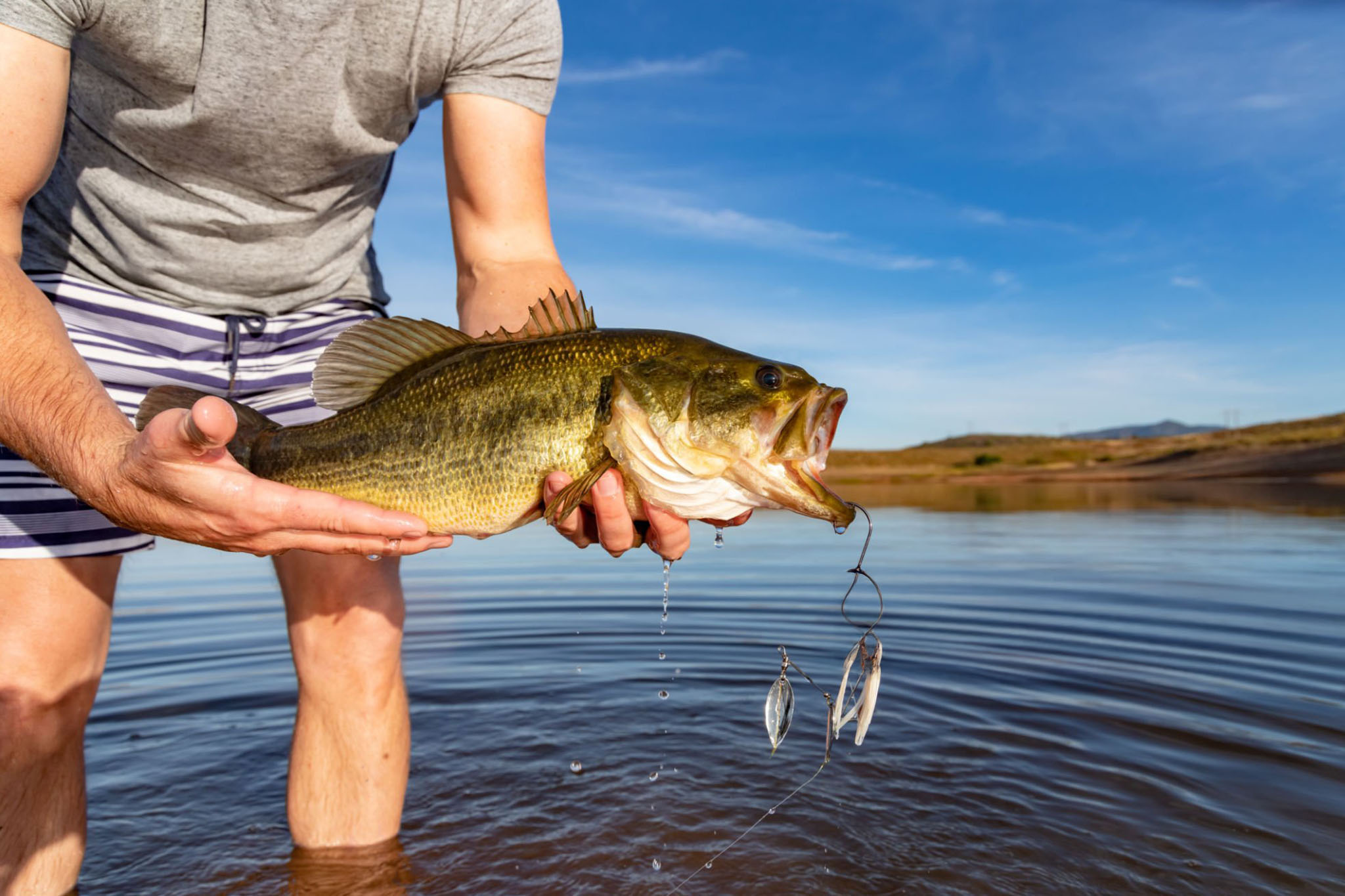
On breezy September days, spinnerbaits shine. Their flash mimics baitfish, and their thumping blades call bass out of cover. A white or white-and-chartreuse spinnerbait retrieved through shad schools can be dynamite.
Topwater Lures
Cool mornings and evenings bring explosive topwater action. Walking baits, poppers, and buzzbaits fished over shallow flats or along weed edges can produce heart-stopping strikes. Don’t put your topwater box away just because summer is ending.
Jigs and Soft Plastics
When the bite slows, a jig or Texas-rigged creature bait dragged along creek channels or worked around cover will still pick up quality fish. Craw and green pumpkin patterns imitate both crawfish and sunfish, which are prime forage this time of year.
Retrieve Adjustments for September
- Faster Cranks: Bass often chase more in September, so pick up the retrieve speed on crankbaits and spinnerbaits.
- Erratic Action: Mix in pauses, twitches, and changes in cadence. Bass key in on movement that looks like fleeing prey.
- Topwater Timing: Work surface baits early in the morning and late in the evening when bass push baitfish shallow.
Pro Tips for September Bass Success
- Follow the bait, not the calendar. Some lakes cool quicker than others. Let forage activity dictate your approach.
- Use electronics. Find bait schools and you’ll find bass.
- Stay mobile. September is about covering water. Bass aren’t always locked into one pattern, so keep moving until you find the bite.
- Weather watch. Overcast days often extend feeding windows, while sunny afternoons may push bass deeper.
Final Thoughts
September is one of the most rewarding months to chase bass. As the waters cool, fish transition from sluggish summer patterns into aggressive feeding behavior, giving anglers a chance at both numbers and size. By focusing on transition zones, following baitfish schools, and cranking up with the right lures, you can stay ahead of shifting patterns and enjoy some of the best action of the year.
Make small adjustments, stay mobile, and you’ll discover why September is a prime time to keep your tackle box busy and your livewell full.