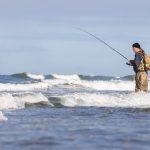
For surfcasters along the Atlantic coast, early fall is one of the most anticipated times of year. The first cool fronts of September and October mark the kickoff of the striper migration, as schools of baitfish begin pouring out of estuaries and inlets — with hungry striped bass right on their heels. This seasonal shift is more than just tradition; it’s a tactical opportunity for anglers willing to put in the time, study the conditions, and match their strategy to the moment.
Understanding the Early Fall Run
The fall striper migration begins when dropping water temperatures and shorter daylight hours trigger baitfish like mullet, peanut bunker, and bay anchovies to leave their summer haunts. Stripers stage along beaches, points, and inlets to intercept them, often pushing bait into shallow water where surfcasters can reach the action.
Unlike the peak fall run in late October and November, early fall stripers can be more scattered. They’re not yet in huge waves of migration, but smaller pods are moving actively and feeding aggressively, especially when bait schools concentrate in predictable areas.
Key Surfcasting Locations
- Inlets and Outflows
Moving water is a magnet this time of year. Stripers use current to corral bait, and anglers who position themselves correctly can catch fish that are funneled past like clockwork. - Sandbar Cuts and Troughs
Pay attention to the structure right in front of you. Early fall stripers often pin bait in the first trough or use deeper cuts in sandbars as highways. Reading the surf is as critical as picking the right lure. - Jetty Edges and Rock Groins
Hard structure creates ambush points. Stripers patrol the edges of rocks to trap baitfish swept along by tides, and these zones often produce some of the season’s most reliable bites. - Open Beaches with Bait Schools
Don’t ignore a seemingly featureless beach if birds are working over bait. Stripers can blitz anywhere bait concentrates, especially during mullet runs.
Lure Selection for Early Fall Surfcasting
- Swimmers and Minnow Plugs
Classics like metal lips or slender swimming plugs shine when bass are on smaller bait. Work them slow and steady in low-light conditions. - Topwater Poppers and Spooks
On calm mornings or evenings, few things rival the thrill of stripers blowing up on surface plugs. Use them to cover water and locate active fish. - Needlefish Plugs
Subtle but deadly, needlefish excel when bass are keyed in on thin bait like sand eels. They cast far and fish well in both calm and rough surf. - Soft Plastics on Jigheads
A versatile tool for matching bait size. Cast them into the wash, through troughs, or around structure where bass are lurking. - Metals and Bucktails
For windier days or deeper cuts, metals like tins and bucktails punch through surf and get down to fish holding deeper. Dress them with a pork rind or soft plastic for added appeal.
Timing and Tides
- Dawn and Dusk: Low-light hours remain the prime windows when stripers push shallow and feed hardest.
- Falling Tide: Outgoing water often delivers bait from estuaries straight to waiting fish.
- Rougher Days: Choppy surf can disorient baitfish, making stripers more aggressive. Don’t shy away from wind; it can create the best action.
Reading Signs of Life
Surfcasters who succeed during the early run aren’t just casting blindly. They watch for:
- Birds diving or working low over the water.
- Nervous, “showering” bait skipping across the surface.
- Slicks or disturbance in the surf line.
- Fellow anglers suddenly reeling tight on fish.
These cues often mean stripers are actively feeding within casting distance.
Staying Mobile and Adaptable
One of the most common mistakes in early fall is camping in a single spot too long. Stripers move with the bait, and sometimes the bite shifts a half mile down the beach. Savvy anglers walk the sand, scan for birds, or move between inlets and beaches to stay on fish. A portable approach almost always pays off.
Final Thoughts
The early fall striper run is a time of anticipation, opportunity, and excitement. While the late-season migration may bring more sheer numbers, these first weeks of movement are often defined by aggressive fish, hungry schools, and explosive action right in the surf. By focusing on key locations, dialing in lures that match the bait, and staying tuned to signs of life, surfcasters can turn the early run into one of the most rewarding stretches of the season.