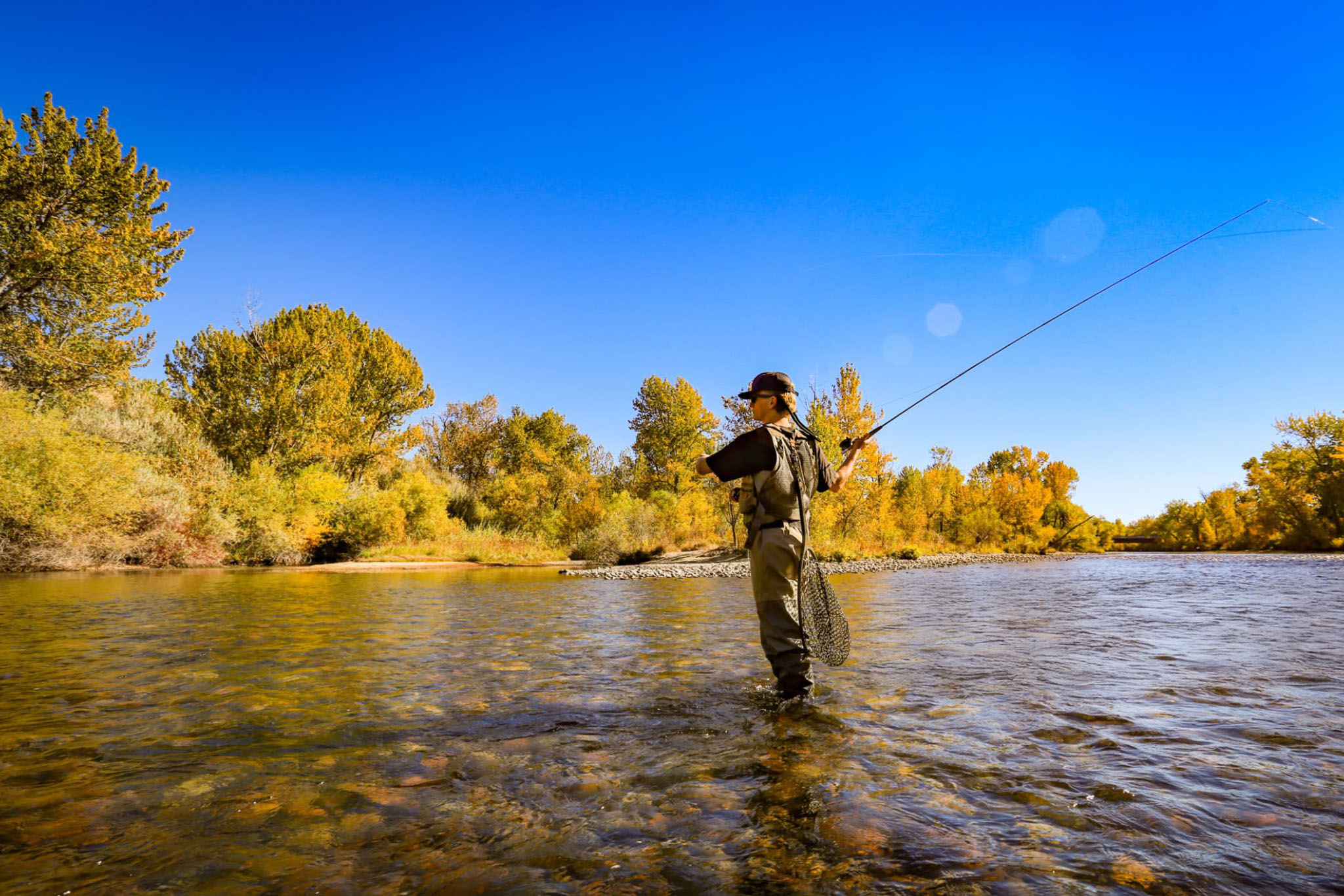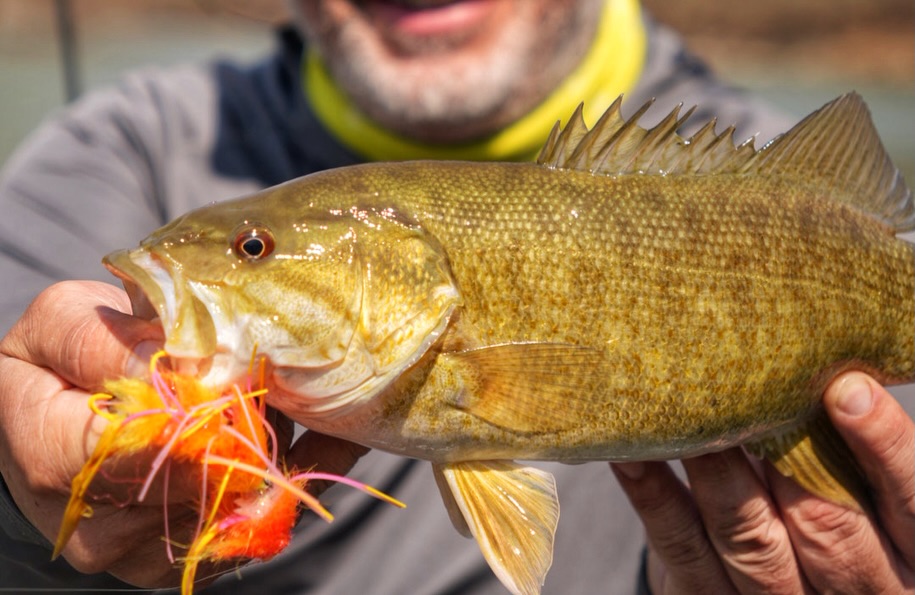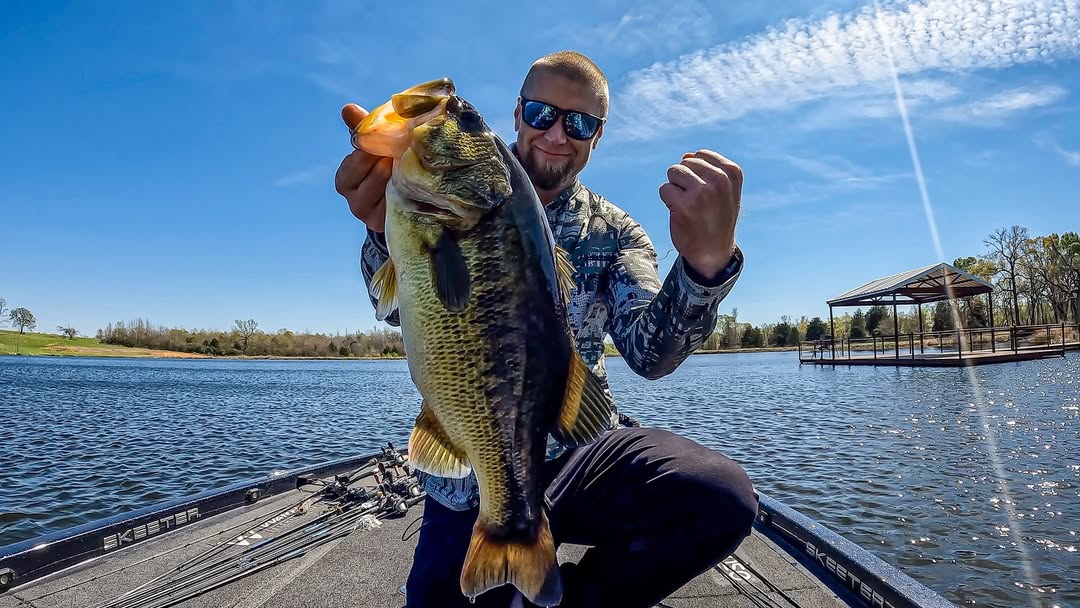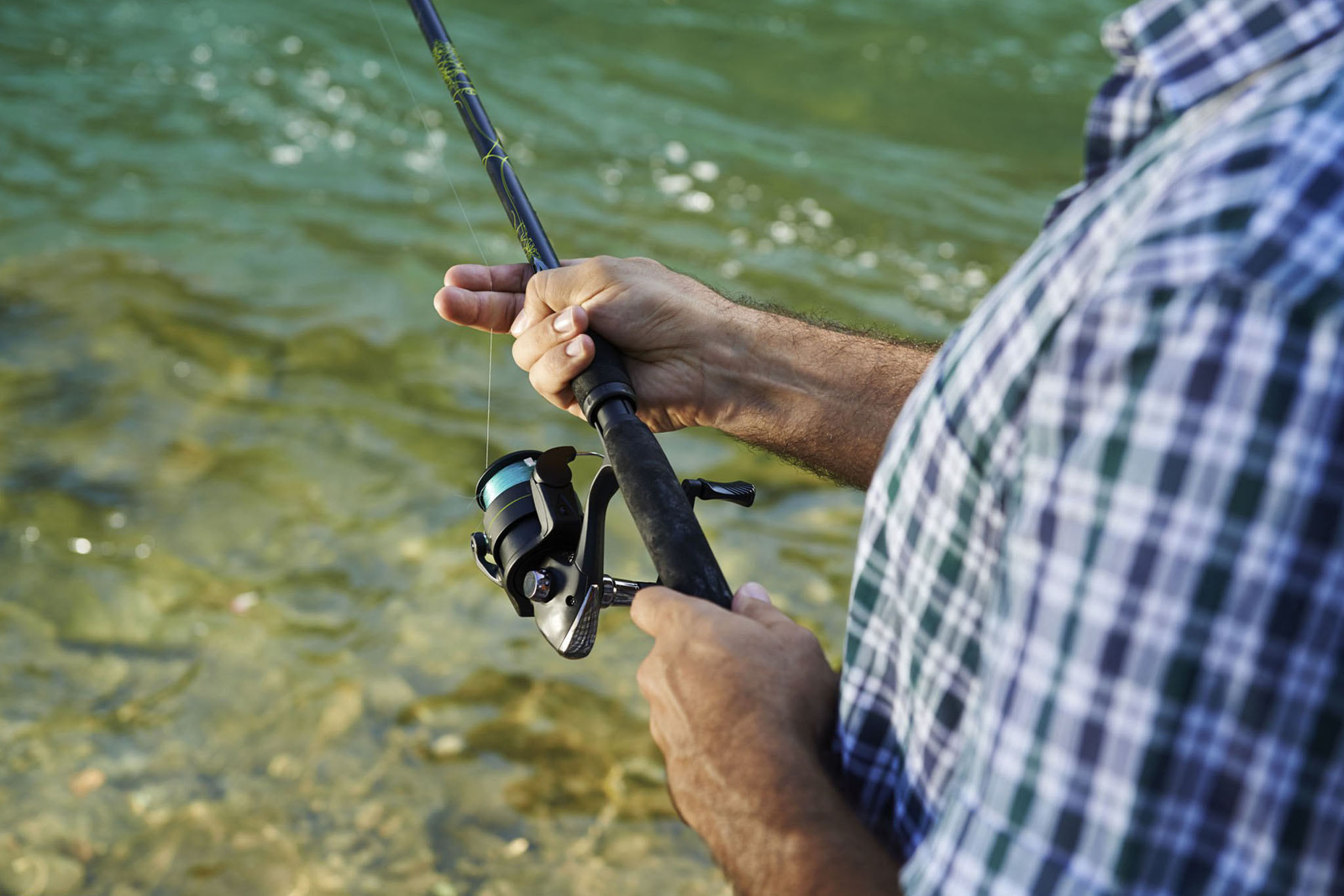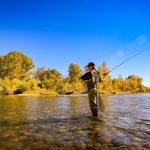
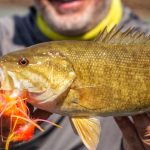

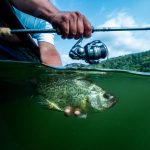

For smallmouth bass anglers, rivers are a classroom that’s always in session. The current never stops, the forage base shifts constantly, and the fish themselves are some of the wariest predators in freshwater. Late summer into early fall marks one of the most dynamic periods of the year, as dropping water temperatures and subtle current changes drive smallmouth into new locations and force anglers to adapt. If you can read these shifts correctly, you’ll not only stay on the bite—you’ll experience some of the most exciting smallmouth fishing of the season.
The Seasonal Shift
Smallmouth in rivers thrive on moving water. Current brings oxygen and food, and bass set up in spots where they can hold with minimal effort while ambushing prey. When hot summer water begins cooling—often triggered by crisp nights and shorter days—oxygen levels stabilize, baitfish shift, and crayfish become more active again. This creates a sweet spot: smallmouth feed more aggressively, but their holding positions and strike zones aren’t the same as they were in July.
Locating Late-Summer to Fall Smallmouth
1. Main-Channel Seams
As rivers cool, bass leave the dead-still slackwater zones they used in midsummer. Instead, they favor current seams where fast and slow water meet. These areas act as conveyor belts for baitfish and are perfect ambush lines for smallmouth.
2. Rocky Riffles and Runs
Don’t overlook shallower riffles in early fall. Cooling water recharges oxygen levels, and crayfish scurry across rocky bottoms. Smallmouth will slide into these zones during low-light periods to gorge before slipping back to deeper pools.
3. Mid-River Structures
Large boulders, wing dams, and submerged logs that break current flow become high-value targets. Smallmouth can hold tight to these structures with minimal effort, waiting for food to wash by.
4. Deep Wintering Holes (as Transition Areas)
Though bass won’t commit to deep wintering pools yet, they begin staging near them. Think of this as a migration corridor—they’ll hunt on adjacent flats and then slip closer to depth as the season progresses.
Adjusting Tactics
Covering Water with Moving Baits
Current breaks and seams are tailor-made for reaction baits. Spinnerbaits with willow blades, square-bill crankbaits, or chatterbaits can be drifted or burned along seams to draw aggressive strikes.
Topwater for Aggressive Feeders
Don’t put the topwater away yet. Walk-the-dog baits, small prop baits, or even buzzbaits can ignite explosive strikes in riffles and shallow runs, especially at dawn.
Finesse in Clear, Cool Water
When rivers run clearer in fall, smallmouth can be line-shy. That’s when Ned rigs, tubes, and drop-shots shine. Cast them upstream and let them drift naturally with the current, imitating baitfish or crayfish washing downstream.
Jigs for Bottom-Huggers
A 1/4- to 3/8-ounce football jig or compact finesse jig crawled across rocky bottoms can perfectly mimic crayfish, which become prime forage again in cooler currents.
Reading the River
Watch the Current
Subtle changes in flow make or break a spot. If you notice a “slick” where fast water spills into slow water, or foam lines drifting consistently, follow them—they often highlight exactly where food (and bass) will concentrate.
Bird and Bait Activity
River gulls and herons are honest guides. If you see them working along riffles or eddies, it’s a strong clue that baitfish are gathered there, and smallmouth aren’t far behind.
Water Temperature Clues
A drop of just three to five degrees can trigger movement. Invest in a simple stream thermometer—you’ll be surprised how often it tells you more than your eyes can.
Timing Your Trips
The best fishing windows stretch from early morning until mid-morning, and again in the late afternoon when shadows lengthen. On cloudy, drizzly days, expect action to hold steady throughout. Smallmouth often turn aggressive when skies are gray and currents run cool and steady.
Final Thoughts
River smallmouth fishing during the late summer-to-fall transition is all about adaptability. Cooling currents shift forage patterns, and the fish won’t always be where you found them weeks ago. By keying in on seams, rocky runs, and mid-river structures—and matching your presentation to their mood—you’ll stay ahead of the curve. This is a season where the river rewards anglers who read the water, adjust to change, and keep chasing those bronze-backed bruisers until the leaves turn.