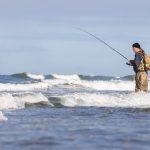
For anglers chasing striped bass in August, timing is everything. Summer heat and shifting tides can make the difference between a productive day and hours of frustration. Understanding how stripers react to tidal movements and adjusting your surf casting strategy accordingly is essential for consistent success.
1. Why Tides Matter for Stripers
Striped bass are opportunistic feeders, and their movements are heavily influenced by tides:
- Incoming Tide: As water rises, baitfish and sand eels move closer to the shore, bringing predators with them. Stripers often patrol shallow water during this time, feeding aggressively.
- High Tide: Fish may linger near troughs, sandbars, or the edge of channels that form along the beach. This is prime feeding territory where stripers can ambush prey without expending excessive energy.
- Outgoing Tide: As water recedes, baitfish may get trapped near sandbars and troughs, creating concentrated feeding zones. Stripers follow these pockets, making mid-to-late outgoing tide a productive window.
2. Scouting the Beach
Not all stretches of sand are equal. Key features to look for include:
- Troughs and Channels: Fish love feeding along depressions where bait congregates.
- Sandbars: These create currents and small drop-offs that funnel baitfish, providing natural ambush points for stripers.
- Point Breaks and Jetties: Structure attracts forage and offers stripers shelter. Casting near these features during tidal shifts can yield more bites.
3. Choosing the Right Bait
August stripers can be selective, so it’s crucial to match your bait to the forage in the area:
- Live Bait: Eels, bunker, and sandworms are excellent choices. Live bait offers natural movement, especially effective during feeding frenzies on incoming or outgoing tides.
- Topwater Lures: Early morning or late evening on rising tides can trigger explosive surface strikes.
- Soft Plastics and Swimbaits: Work well in troughs and near sandbars, mimicking small baitfish or eels that stripers are chasing.
4. Surf Casting Techniques
Success in the surf requires both distance and accuracy:
- Long, Controlled Casts: Target troughs and drop-offs where stripers are likely to patrol.
- Adjust Your Retrieve: During high tide, slower retrieves often work best as fish may be holding in ambush. On incoming or outgoing tides, a faster, erratic retrieve can imitate fleeing baitfish.
- Watch the Water: Look for signs of surface disturbance, diving birds, or baitfish schools—these often indicate feeding activity.
5. Timing Your Session
August heat can drive stripers deeper during midday, but tidal windows are crucial:
- Prime Times: Typically, one hour before and after high tide and one hour before and after low tide offer the best opportunities.
- Morning and Evening: Cooler temperatures encourage fish to move closer to shore, making early and late sessions more productive.
- Weather Considerations: Wind and barometric pressure can shift bait and fish. A light offshore wind can push bait closer to the beach, concentrating feeding activity.
6. Observational Tips
- Track Tidal Charts: Knowing the local tide schedule allows you to plan sessions around peak feeding periods.
- Adjust Position Frequently: Stripers move along the beach with bait. Don’t be afraid to walk sections to find active fish.
- Use Local Intel: Chat with bait shops or other anglers to get insights on current conditions and hotspots.
Conclusion
Surf casting for August stripers is a dynamic challenge, but understanding tidal movements, beach structures, and feeding behavior dramatically increases your chances of landing fish. By combining careful observation with strategic casting and the right bait, anglers can consistently hit productive windows and make the most of late-summer surf fishing.