


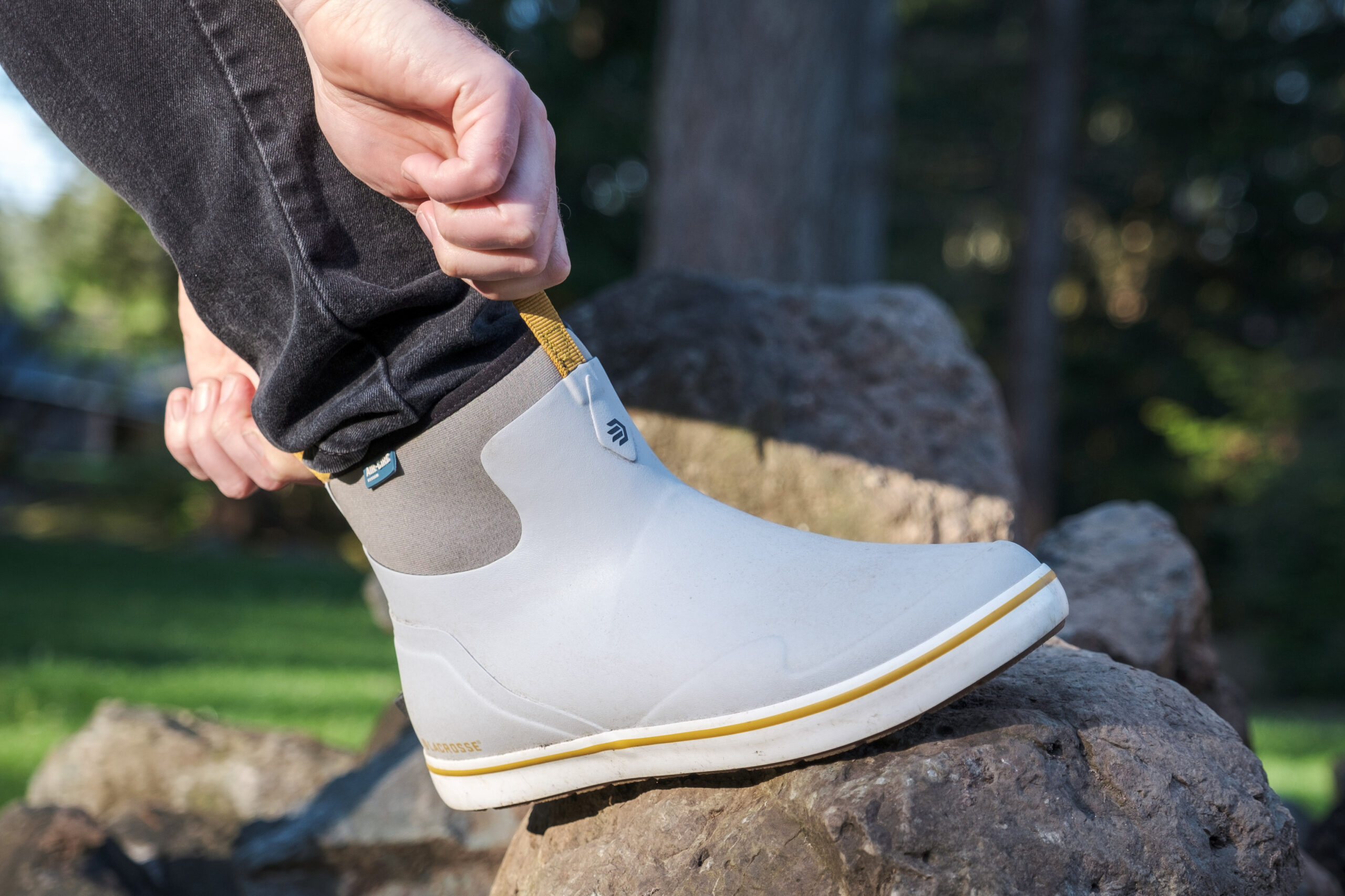
When you’re out on the deck of a boat—or knee-deep in bait and backwash—your footwear isn’t just gear. It’s your anchor.
Deck boots are engineered for performance, but not all pairs are created equal. Have you ever wondered why some boots keep your feet dry all day, while others soak through by noon? Or why one brand grips like a spider on glass while another sends you skating on the deck?
In this article, we break down the science behind high-performance deck boots, so you can spot real quality before you buy.
💧 Waterproofing: More Than Just Rubber
Waterproof deck boots aren’t just about using rubber. It’s about how the material is molded, bonded, and sealed.
🔹 One-Piece Injection Molding
Top-tier boots use one-piece injection-molded construction, meaning no seams, stitches, or glued-together parts. No seams = no leaks.
- Why it matters: Every stitch and seam is a potential failure point for water entry.
- Look for: Seamless uppers, especially where the sole meets the boot body.
🔹 Interior Liners Matter Too
Waterproofing doesn’t end at the outer shell.
- Neoprene linings add comfort and thermal protection while keeping moisture out.
- Moisture-wicking footbeds help prevent sweat buildup that can feel like water intrusion.
🦶 Grip That Doesn’t Slip: Outsole Engineering
Decks are slick—add fish guts, water, or oil and it gets dangerous fast. A good pair of deck boots prioritizes grip with precision.
🔹 Razor-Siped Soles
This design uses thin slits in the rubber to disperse water and create suction, much like car tires on wet roads.
- Better for: Fiberglass decks, rainy days, and high-movement tasks.
🔹 Non-Marking Rubber
Many boat owners hate scuffed-up decks. Non-marking outsoles are soft enough to grip but won’t leave black streaks.
- Pro tip: Look for outsoles labeled “non-marking” or “deck-safe.”
🛡️ Durability: Not All Rubbers Are Equal
Cheaper boots often crack, split, or get stiff over time. Here’s why:
- Natural rubber is flexible but can degrade in saltwater.
- Synthetic compounds like Thermoplastic Rubber (TPR) or EVA blends offer better UV resistance and longer life spans.
What to look for:
- Boots labeled as “UV resistant” or “designed for saltwater use.”
- Reinforced toe caps and heel areas—common wear zones that need extra protection.
🌡️ Comfort Features You Didn’t Know You Needed
Deck boots today go beyond waterproofing and grip—they cater to all-day wear on uncertain waters.
🔹 Cushioned Insoles
Shock-absorbing midsoles protect your feet from hard impacts on metal or fiberglass decks.
🔹 Breathable Liners
Moisture control isn’t just about rain—it’s also about managing sweat. Boots with mesh or perforated liners allow internal airflow and reduce that swampy feeling.
🔹 Easy-On Pull Tabs
When a storm rolls in, you don’t want to wrestle with your boots. Flexible pull tabs or stretch ankle gussets make getting in and out fast—even when wet.
🧪 The Testing Grounds: What Makes a Boot “Boat-Ready”?
Quality brands don’t just design boots—they test them. Hard.
They simulate:
- Salt spray and sun exposure
- Slippery fish-deck conditions
- Temperature extremes
Some even lab-test their soles for slip resistance ratings, similar to industrial or food-service footwear.
🧭 The Takeaway: Know the Tech, Choose with Confidence
When you know the science behind what makes deck boots waterproof, grippy, and durable, you’re no longer shopping blind.
At DeckBoots.shop, we do more than just list boots—we explain what makes them tick. From performance reviews to brand comparisons, we help you make smart choices before hitting the water.
Looking for Boots That Deliver?
Check our latest expert-curated list of top-rated deck boots for offshore anglers, inshore pros, and weekend warriors.