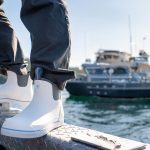
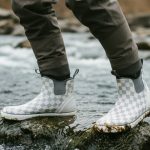
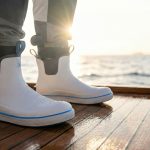
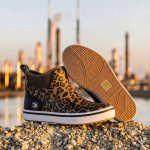
Meta Description: Not all waterproof boots are deck boots — and that difference costs anglers stability, comfort, and fish. Here’s the complete 2025 guide to choosing the right fishing deck boots, featuring Trudave Gear.
You’ve probably seen it happen at the boat ramp.
Guy rolls up in a nice rig, laces up a pair of knockoff rubber work boots he’s been using for fishing for three seasons, steps onto a wet aluminum surface to push off, and — arms out, one foot gone sideways — nearly ends up in the water before the boat even leaves the ramp. He catches himself, laughs it off, and spends the next six hours on a boat deck that was never designed to be slippery-proof in anything other than dedicated marine footwear.
That’s not bad luck. That’s the wrong boot for the environment.
The gap between a standard rubber boot and a purpose-built fishing deck boot is one of the most consistently misunderstood pieces of gear in recreational fishing. Anglers spend hundreds of dollars on rods, reels, and tackle and then step onto a wet fiberglass deck in footwear that was engineered for a construction site or a garden bed — not for the specific traction demands of a slick marine surface.
This guide closes that gap. We’ll break down what separates a real fishing deck boot from every other rubber boot on the market, what features actually matter for the environments anglers fish in, and why Trudave Gear’s 2025 deck boot lineup belongs at the top of your consideration list.
First: What Actually Makes a Deck Boot Different
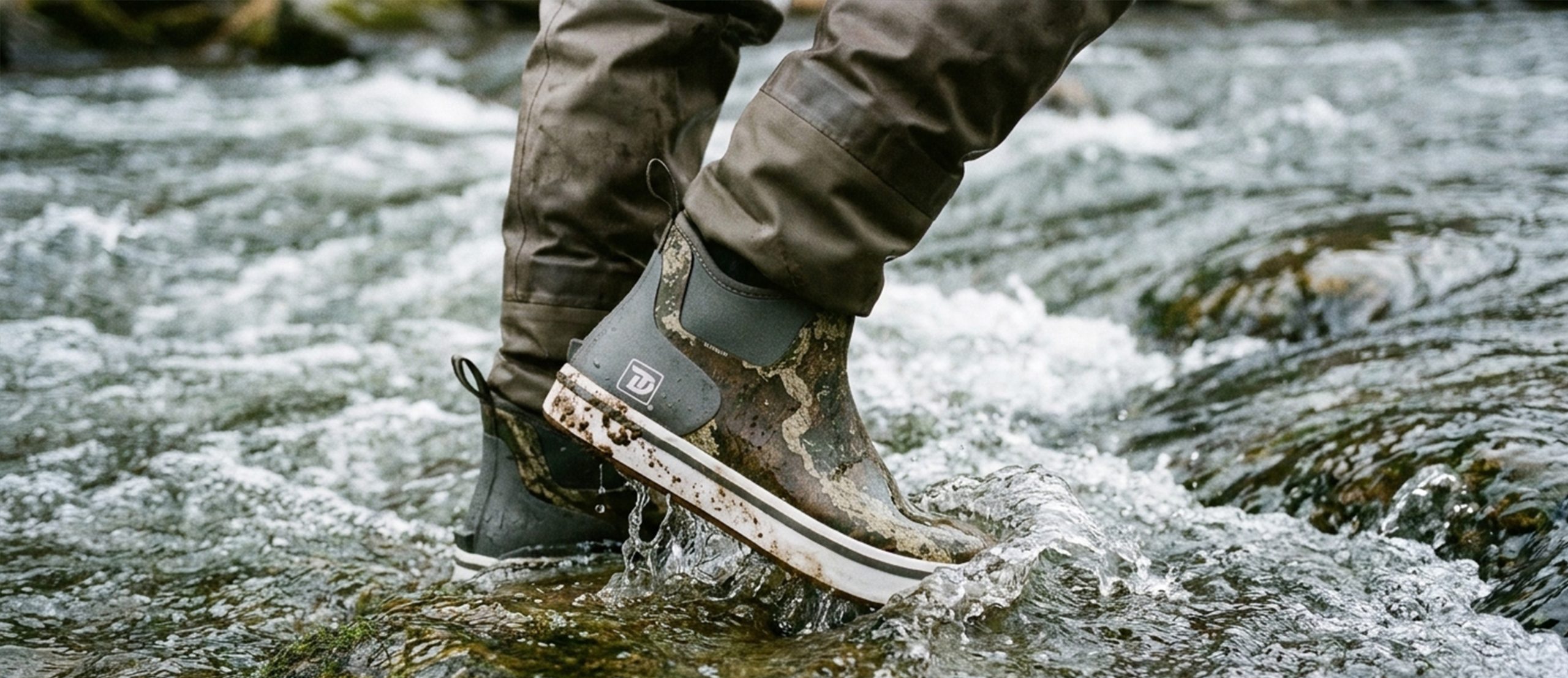
Before the product recommendations, you need to understand the engineering problem. A fishing boat deck — whether it’s fiberglass, aluminum, or painted marine ply — creates a very specific set of traction challenges that differ from every other surface a rubber boot is typically designed for:
Surface type. Fiberglass gel coat is inherently low-friction when wet. Unlike mud or grass, which have texture that interacts with outsole lugs, wet fiberglass is slick at the molecular level. Standard lug soles designed for mud and soil lose most of their function on wet gel coat — the lugs have nothing to bite into.
Contamination. A fishing deck gets covered in a combination of water, fish slime, fish blood, bait residue, and fish cleaning runoff. This particular cocktail is more slippery than plain water. A boot that grips plain wet fiberglass may skate on a deck after the first fish of the morning.
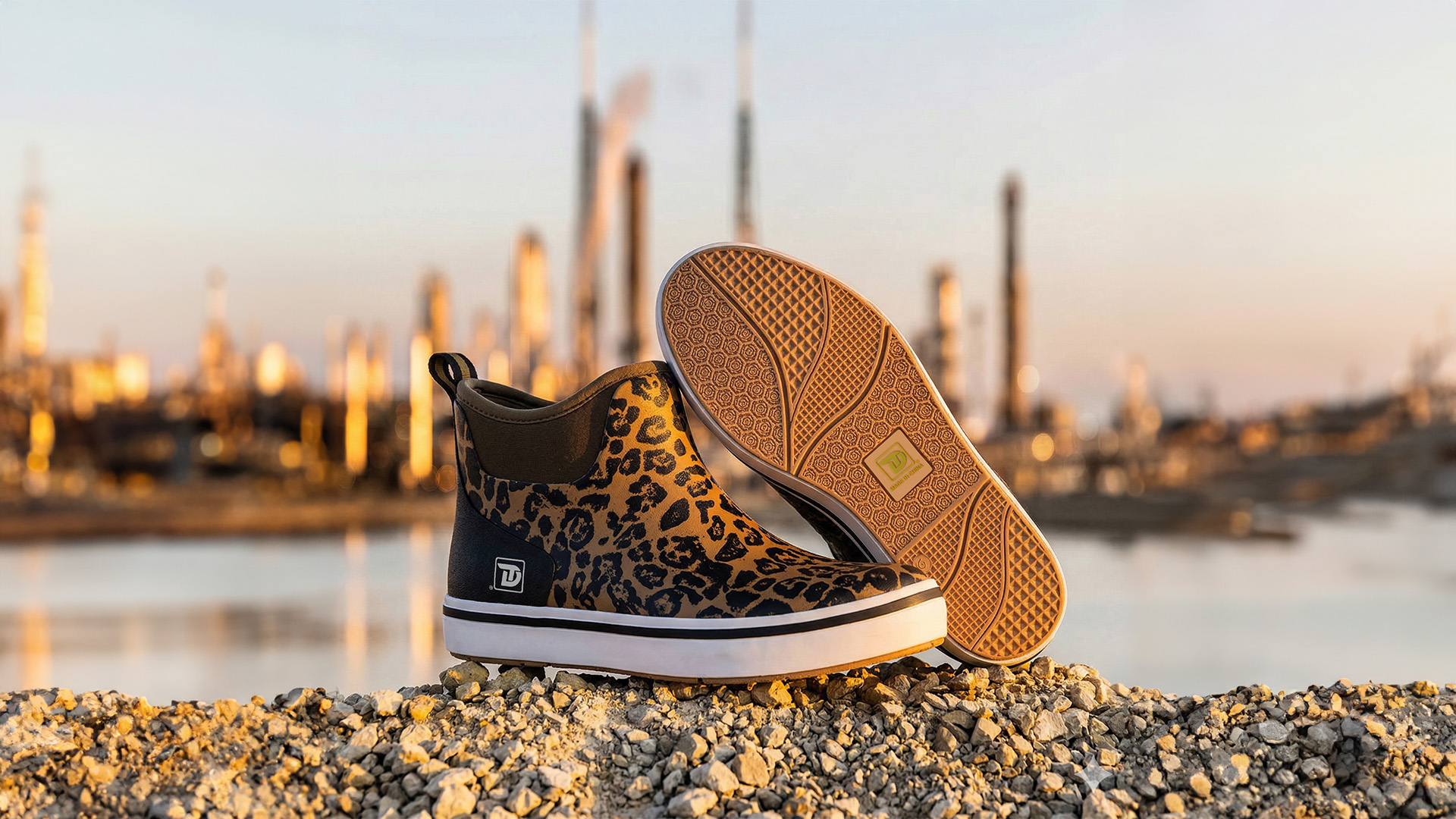
Non-marking requirement. Boat owners care intensely about their gel coat and painted surfaces. A standard rubber boot with a dark, hard outsole compound leaves black scuff marks on fiberglass that range from cosmetic annoyances to genuinely difficult-to-remove stains. Deck boots use non-marking rubber compounds that don’t transfer color — a specific material specification, not a vague promise.
Siping versus lugs. Standard boots use lugs — raised blocks of rubber that grip soft terrain. Deck boots use siping — fine cuts in the outsole surface that create edge contact points on smooth, hard, wet surfaces. Siped outsoles grip wet fiberglass the way bicycle tires grip wet pavement. This is the single most important technical distinction between a deck boot and a work boot used for fishing.
Understanding these four factors explains why every other rubber boot fails on a boat deck in the specific ways that matter — and why buying on price or general waterproofing spec leaves you with boots that perform adequately everywhere except where you actually need them.
The Trudave Gear 2025 Deck Boot Lineup: What’s Available and Who It’s For
Trudave’s deck boot lineup covers a range of anglers with different priorities. Here’s an honest breakdown of each series before the recommendation section:
WaveLock Series — The All-Weather Fishing Standard
Construction: One-piece rubber shell + soft neoprene collar + side flex panels Outsole: WaveLock Traction Outsole — fine siping micro-channels + multi-directional lugs Entry: Dual pull tabs + rear kick plate (glove-friendly) Insulation: Lightweight insulated lining Waterproofing: Full — seamless rubber shell, no seam points below collar Best for: Cold-morning fishing, Great Lakes and northern water fishing, anglers who need warm and waterproof simultaneously
The WaveLock is Trudave’s most robust deck boot — the one built for serious fishing days rather than casual outings. The WaveLock Traction Outsole is the headline feature: micro-channel siping that disperses water films instantly from the contact patch, combined with multi-directional lugs for the transitional surfaces (dock wood, boat ramp concrete, gravel parking lots) that anglers navigate before and after the deck itself. The insulated lining makes it the right call for cold-morning launches and cool-season fishing on the Great Lakes, Mississippi River system, or anywhere the water temperature drops the ambient experience significantly.
NeopreneTrek Series — The Active Angler’s Workhorse
Construction: Fully sealed rubber shell + 4.5mm neoprene body Outsole: Fine siping + multi-directional herringbone channels Entry: Front and rear pull loops + heel kick rim Insulation: None — breathability-focused Waterproofing: Full laminated rubber + neoprene (not for submersion above collar) Best for: Active bass tournament fishing, warm-weather boat fishing, anglers who move constantly and prioritize flexibility and mobility
The NeopreneTrek’s 4.5mm neoprene body is its defining feature for active anglers. Neoprene flexes with foot movement rather than fighting it — critical during the constant repositioning, pivot casting, and quick deck movements of a tournament day. The herringbone siped outsole handles the wet fiberglass environment with the grip confidence a dedicated deck boot requires, in a profile that won’t fatigue your legs during a 10-hour competition day the way stiffer rubber construction would.
Seafarer Lite Series — The Versatile Everyday Angler Boot
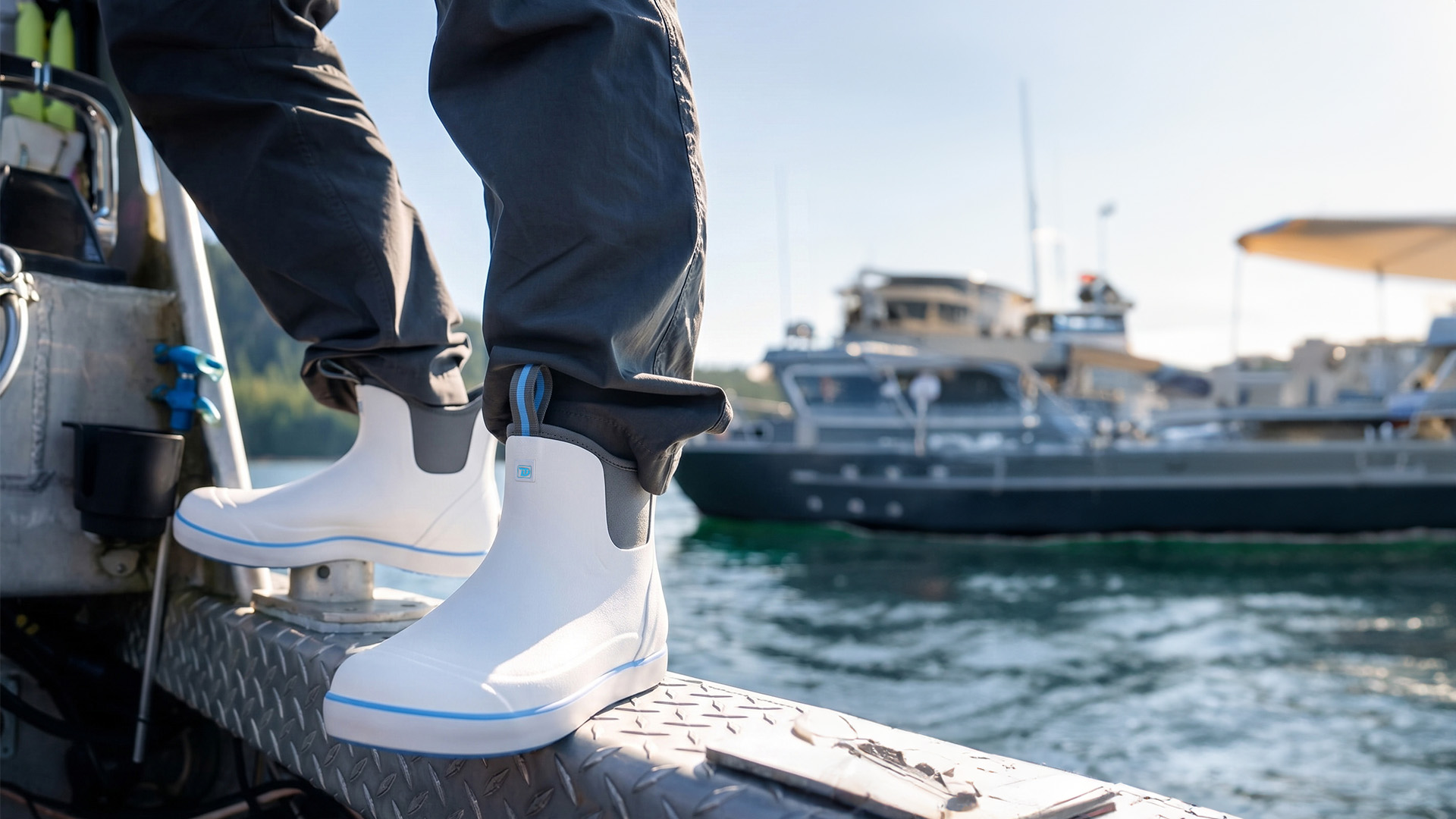
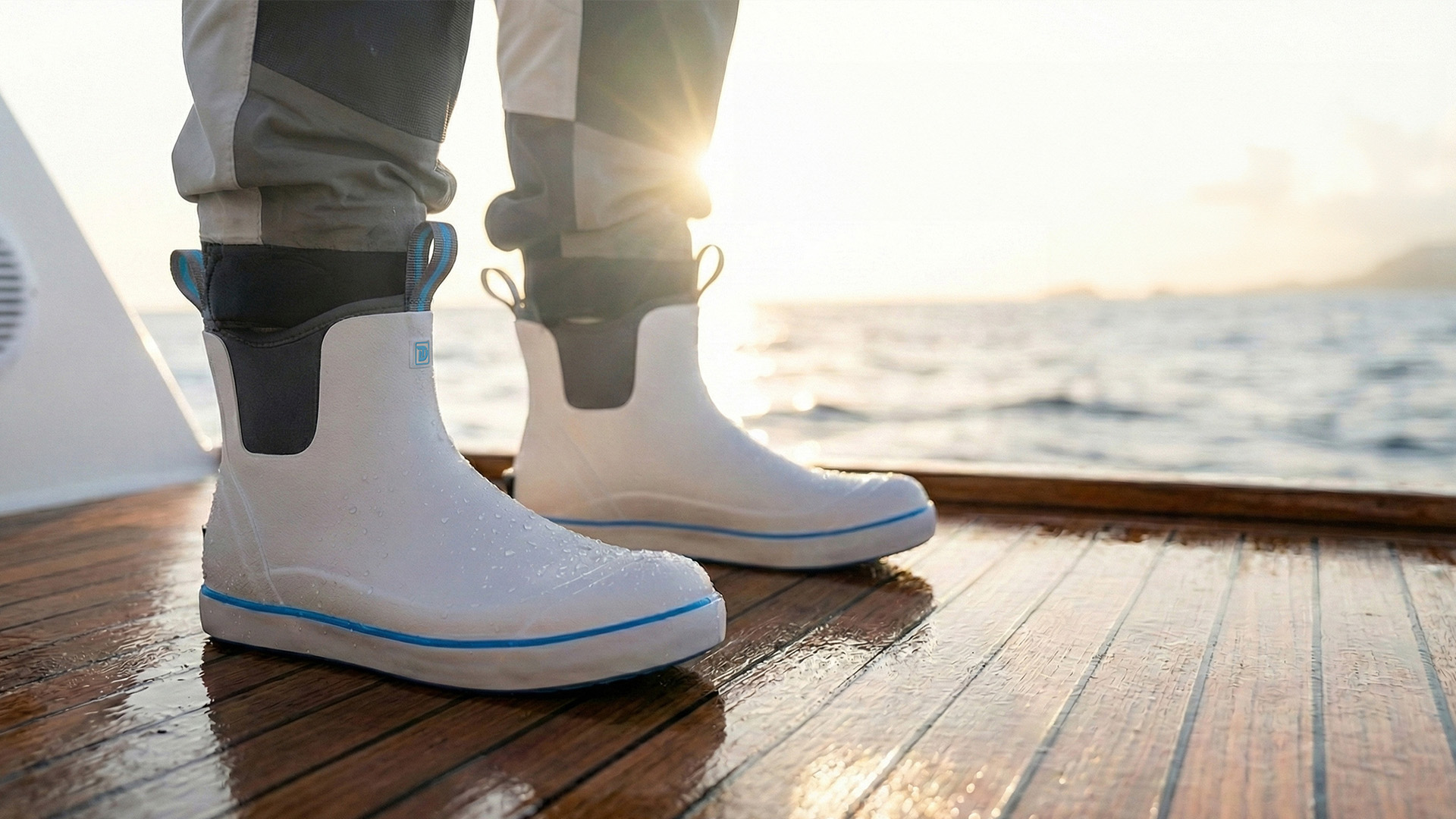
Construction: Lightweight one-piece waterproof rubber shell + soft neoprene collar Outsole: Micro-channel drainage grooves + multi-directional tread (non-marking blue outsole) Entry: Dual pull tabs + rear kick plate Insulation: Lightweight neoprene inner lining Waterproofing: Full seamless rubber Best for: Weekend anglers, marina environments, dock fishing, anglers who want one boot that works from boat to bar
The Seafarer Lite is built around a different philosophy than the WaveLock and NeopreneTrek — it’s not just a fishing boot, it’s a marine lifestyle boot that takes fishing seriously. The lightweight construction and clean styling make it appropriate for wear beyond the deck without looking like you borrowed it from a commercial fishing crew, while the micro-channel drainage outsole provides genuine deck-safe traction. For anglers who drive to the marina, fish a half-day, and then sit down for lunch without changing shoes, the Seafarer Lite is the right fit.
Ocean Breeze Series — The Lightweight Summer Option
Construction: One-piece rubber shell + neoprene collar Outsole: WaveLock-style traction, non-marking Entry: Pull system Best for: Warm-weather fishing, casual boat days, summer use when ventilation matters
The Ocean Breeze occupies the warm-weather end of Trudave’s deck boot spectrum — lighter weight and less thermal mass than the WaveLock or NeopreneTrek, prioritizing comfort in hot summer fishing conditions over cold-weather protection.
Midnight Camo / Classic 6.7″ and 5.7″ Models — The Heritage Line
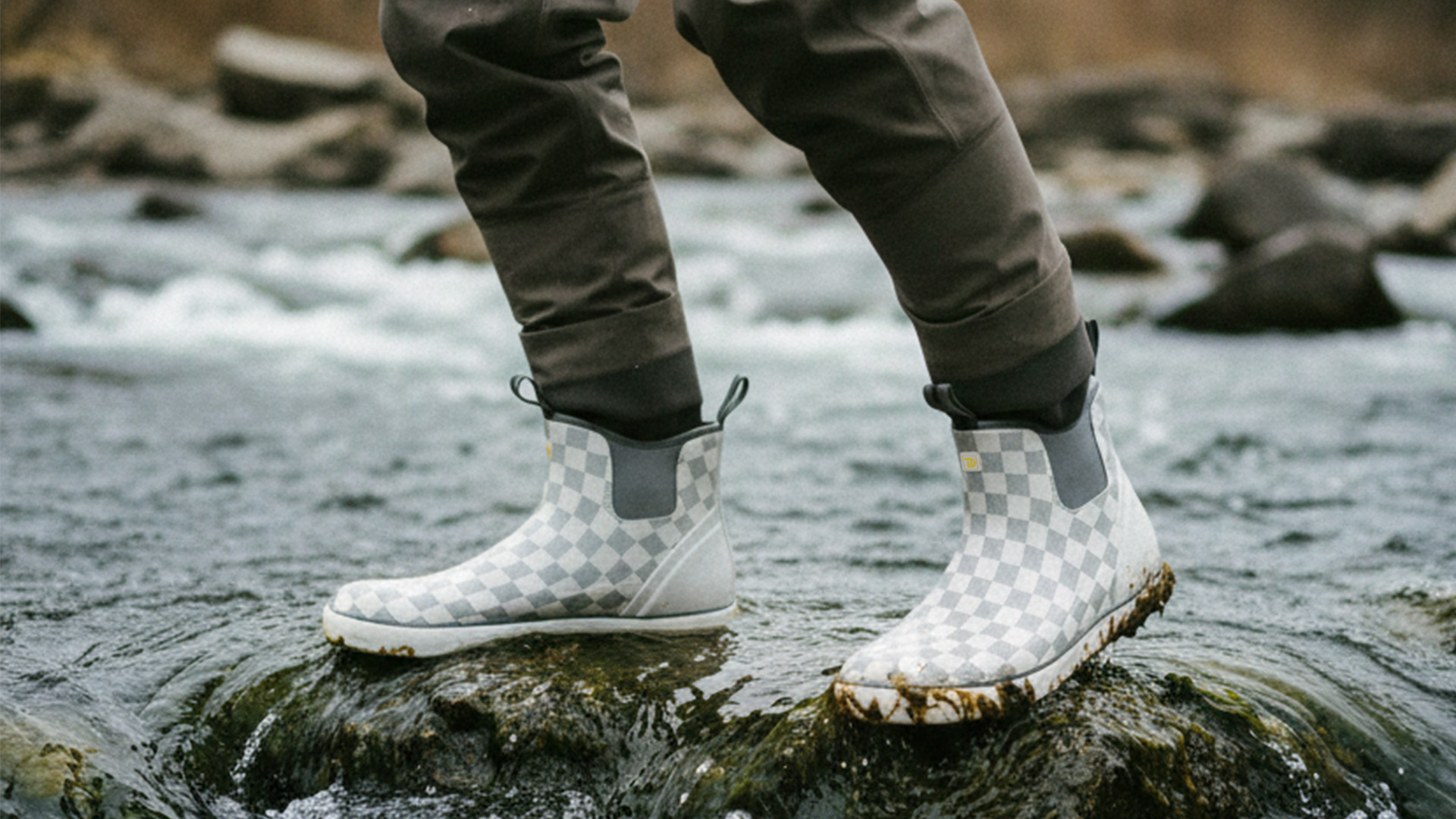
Construction: Rubber + 3mm neoprene, molded EVA footbed Outsole: Non-slip grooved pattern Best for: Anglers who prefer a more traditional styling, wide variety of fishing and outdoor use
Trudave’s classic deck boot models cover anglers who want a straightforward rubber/neoprene construction at a slightly lower price point, with practical performance across fishing, outdoor work, and casual use.
How to Choose the Right Trudave Deck Boot for Your Fishing
Decision 1: How Cold Is Your Typical Fishing Morning?
This is the first filter because it immediately separates the WaveLock from everything else.
Below 45°F regularly: WaveLock Series. The insulated lining is not optional at these temperatures — standing on a cold aluminum or fiberglass deck in an uninsulated rubber boot with water contact underneath means the boat itself acts as a heat sink for your feet. The WaveLock’s insulation breaks that chain.
45°F–65°F: NeopreneTrek or Seafarer Lite. Both provide full waterproofing with moderate thermal protection from the neoprene construction — appropriate for the shoulder-season fishing that covers most of spring and fall fishing on Midwestern and Southern lakes.
65°F and above consistently: Ocean Breeze or Seafarer Lite. Warm-weather fishing prioritizes comfort and breathability over insulation. Either of these lighter options handles summer fishing without the foot heat that heavier neoprene construction generates.
Decision 2: How Active Are You on the Deck?
High-movement fishing (bass tournaments, jigging, active trolling management): NeopreneTrek. The neoprene flexibility handles the constant movement without ankle fatigue.
Moderate-movement fishing (drift fishing, anchor fishing, charter passenger): WaveLock or Seafarer Lite. Stiffer rubber construction is less critical when you’re not pivoting and repositioning constantly.
Low-movement fishing (dock fishing, pier fishing, stationary boat positions): Any model works — prioritize the insulation and comfort factors over mobility.
Decision 3: What Surfaces Are You Navigating Besides the Deck?
Pure deck fishermen who only need performance on fiberglass can optimize for the deck alone. Most anglers aren’t that simple — you’re crossing a boat ramp (wet concrete), walking a dock (wood planking, possible algae), navigating a gravel parking area, and then boarding the boat.
The WaveLock’s multi-directional lug + siping combination is the most versatile across all these transitions. The NeopreneTrek’s herringbone siping performs comparably. The Seafarer Lite’s micro-channel drainage outsole handles these transitions with slightly more stylistic restraint.
Decision 4: Do You Fish Saltwater or Freshwater?
Both environments are handled by Trudave’s rubber-and-neoprene construction, but saltwater imposes one additional maintenance requirement: a fresh water rinse after every outing is non-negotiable for boot longevity in saltwater environments. Salt crystals that dry in outsole channels and on boot seams accelerate material degradation in ways that fresh water simply doesn’t. This isn’t a Trudave-specific issue — it’s true of all marine footwear. The good news is that Trudave’s smooth rubber exterior rinses clean in under two minutes.
Quick Reference: Which Trudave Deck Boot for Which Angler
| Angler Profile | Top Priority | Recommended Series |
|---|---|---|
| Bass tournament competitor | Mobility + grip all day | NeopreneTrek |
| Great Lakes walleye / salmon charter | Cold + waterproof | WaveLock Insulated |
| Freshwater dock & pier fisherman | Grip + comfort, budget-aware | Seafarer Lite or NeopreneTrek |
| Inshore saltwater flats / bay boat | Salt resistance + non-marking | NeopreneTrek or Midnight Camo |
| Summer crappie / panfish boat angler | Lightweight + comfort | Ocean Breeze |
| Women anglers, boat or dock | Fit + versatility | DeckFlow Series |
| Weekend casual / marina lifestyle | Style + performance + versatility | Seafarer Lite |
The Five Deck Boot Mistakes Anglers Make at Purchase
Mistake 1: Buying based on price alone. A $25 rubber work boot is not a $25 deck boot. The outsole engineering difference — siping versus standard lugs — is the delta between slipping on your fiberglass deck and not. That’s not worth saving $40 over.
Mistake 2: Confusing water-resistant with waterproof. Water-resistant means it sheds light rain. Waterproof means your feet stay dry when you’re ankle-deep in a boat ramp puddle at 5 a.m. All Trudave deck boots are fully waterproof — not water-resistant. Read the spec before you buy anything.
Mistake 3: Ignoring insulation for cold-weather fishing. The most common version of this mistake: buying an uninsulated deck boot in September because the weather is still warm, then freezing through a cold November walleye trip in boots that offer zero thermal protection. The WaveLock’s insulated lining prevents this entirely.
Mistake 4: Getting the wrong size for the sock you’ll actually wear. Deck boots sized for thin athletic socks create painful compression when worn with the heavyweight wool sock that makes a cold morning on the water bearable. Trudave’s boots run true to size with intentional room for sock layers — but verify you’re ordering for your actual fishing sock weight, not your everyday shoe size.
Mistake 5: Using the same boots for the boat ramp and the grocery store without intermediate care. Boat ramp mud, fish slime, and dock debris contaminate boots that then sit in a closed truck for three days before your next trip. Basic rinsing between trips extends boot life dramatically and keeps the odor situation manageable. Two minutes with a garden hose handles it.
Deck Boot Care for Anglers: Keeping Your Investment Performing
Trudave deck boots are durable, but they reward the same basic care that any quality rubber footwear deserves:
After every freshwater trip: Knock debris from outsole channels (a boot brush or stick does the job), rinse with a hose, stand to air dry. Takes three minutes.
After every saltwater trip: Thorough fresh-water rinse, paying specific attention to the outsole channels and any rubber-to-neoprene seam areas where salt accumulates. Salt left in place over multiple trips degrades rubber and neoprene faster than field use itself.
Storage: Upright or on a boot rack, never compressed or stored wet. Keep out of prolonged direct UV — a garage shelf that sees hours of direct sun daily degrades rubber noticeably over a season.
Pre-season check: Before your opening trip each year, flex the outsole to check for cracking, inspect the collar seam, and check pull tab attachment points. A small issue caught in March is a ten-minute fix; the same issue discovered at the boat ramp in May is a ruined morning.
FAQ
What makes a deck boot different from a regular rubber boot for fishing? The outsole engineering. Deck boots use siped outsoles — fine cuts in the rubber that create edge contact points on smooth wet surfaces like fiberglass gel coat. Standard rubber work boots use lug patterns designed for soft terrain like mud and soil, which have little grip on wet fiberglass. The non-marking rubber compound is also a deck-specific specification that protects boat surfaces.
Are Trudave deck boots good for saltwater fishing? Yes. The rubber-and-neoprene construction is resistant to saltwater exposure. Consistent fresh-water rinsing after saltwater use is the key maintenance step for long-term durability.
Which Trudave deck boot is best for cold-weather fishing? The WaveLock Series, with its insulated lining and one-piece seamless rubber shell, is purpose-built for cold-morning and cold-season fishing. It’s the right choice for Great Lakes, northern lake, and late-season fishing situations.
Do Trudave deck boots leave marks on fiberglass? No. All Trudave deck boot models use non-marking outsole compounds specifically designed for marine surfaces. This is a standard specification across the deck boot lineup, not a feature of select models.
How long do Trudave deck boots last? With basic maintenance — rinsing after use, proper storage, annual inspection — 2–4 seasons of regular recreational fishing use is realistic for Trudave’s rubber-and-neoprene construction. Daily commercial fishing use would yield shorter lifespans.
Where can I buy Trudave deck boots? Available directly at trudavegear.com/collections/deck-boots with free shipping to the continental US, and through Amazon.
Final Verdict
The difference between the right deck boot and the wrong boot for fishing is not about brand loyalty or marketing. It’s about outsole engineering that grips wet fiberglass, non-marking compounds that protect boat surfaces, and construction that holds up to the specific chemical and physical environment of a fishing deck.
Trudave Gear’s 2025 deck boot lineup — WaveLock for cold-season fishing, NeopreneTrek for active tournament anglers, Seafarer Lite for the versatile weekend angler — covers the genuine range of what recreational fishermen need from waterproof deck footwear at a price point that doesn’t require a tournament purse to justify.
Get the right boot for the surface you’re fishing on. Everything else follows.
Shop Trudave Gear Deck Boots → trudavegear.com/collections/deck-boots