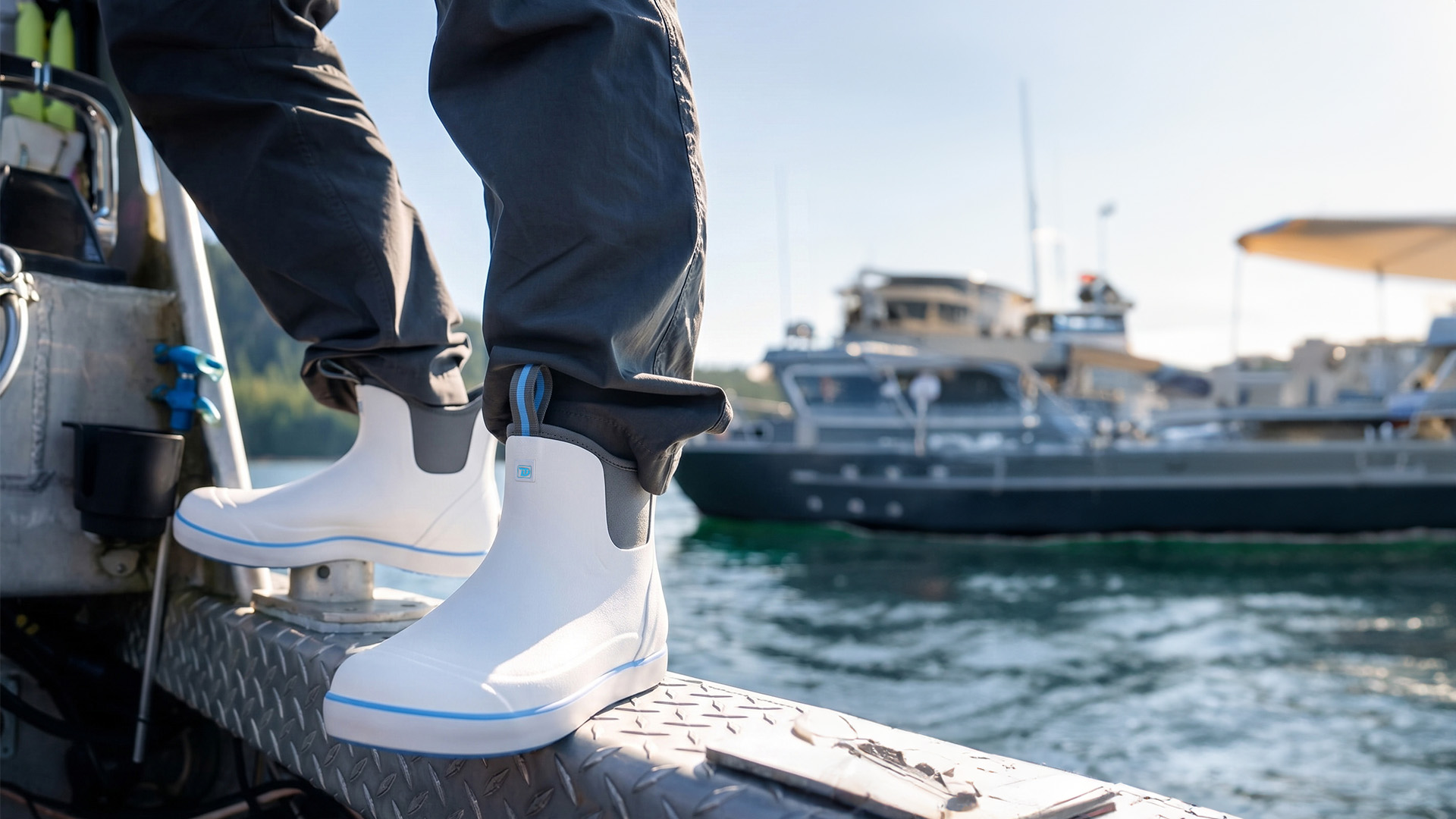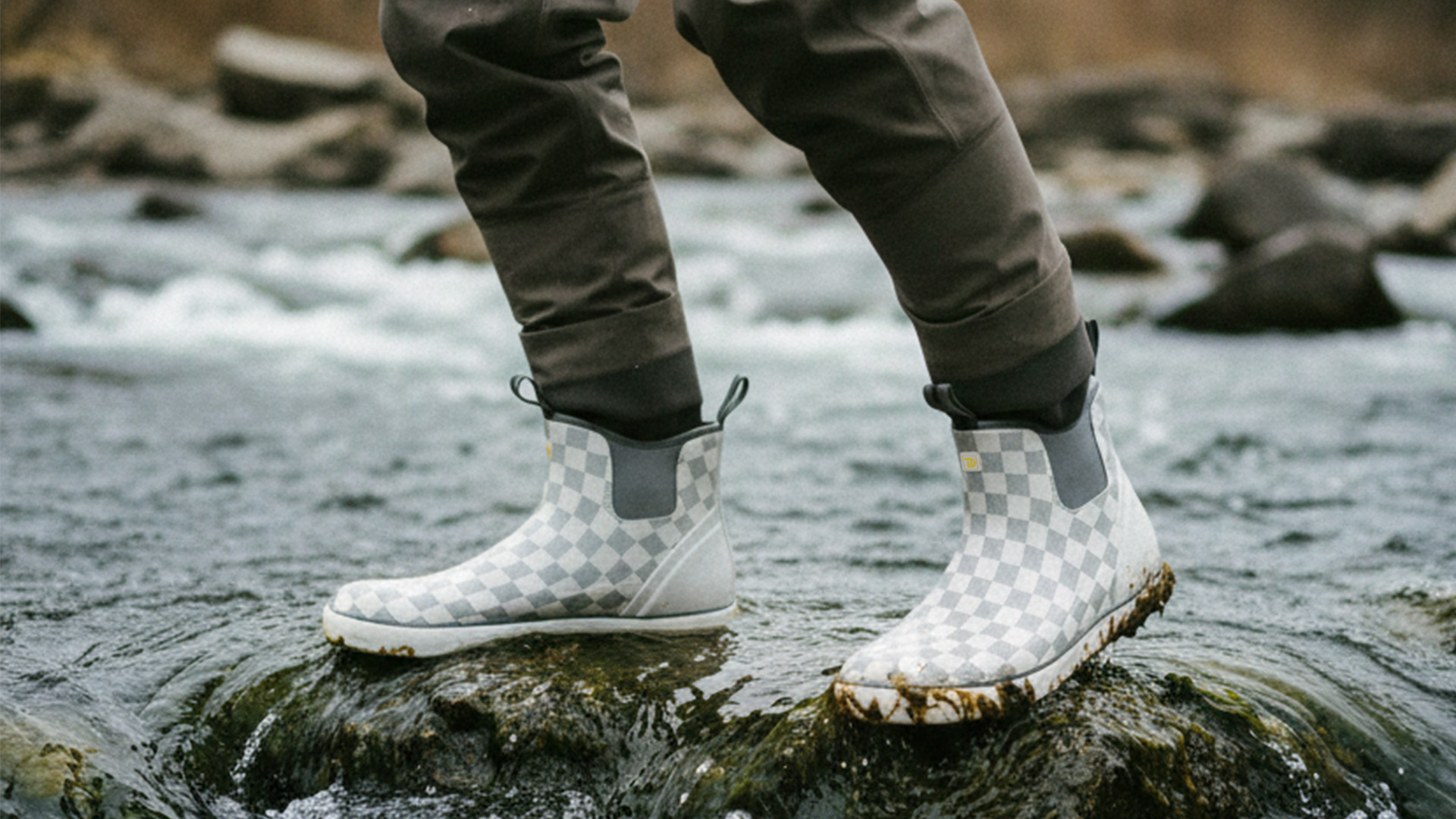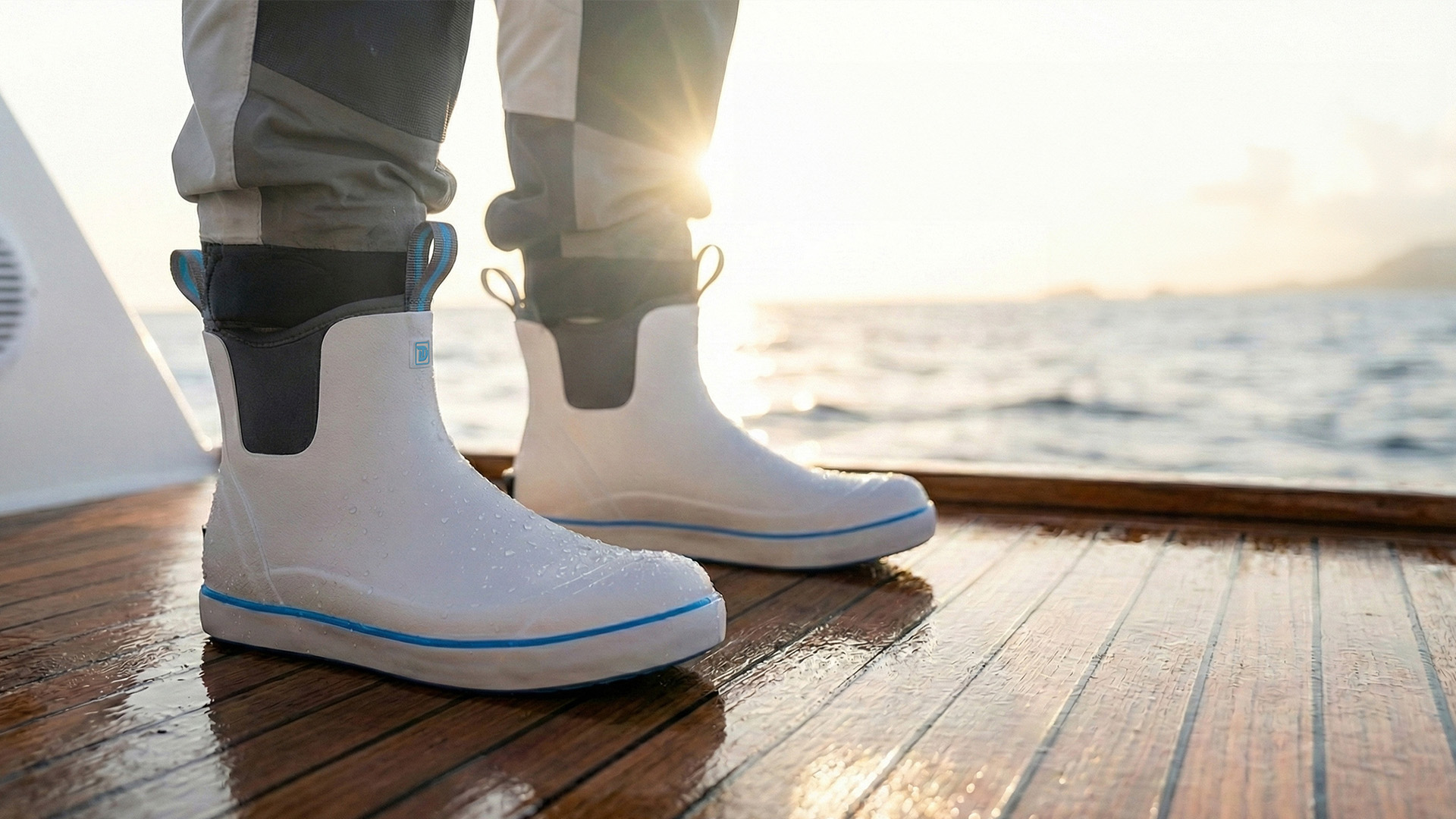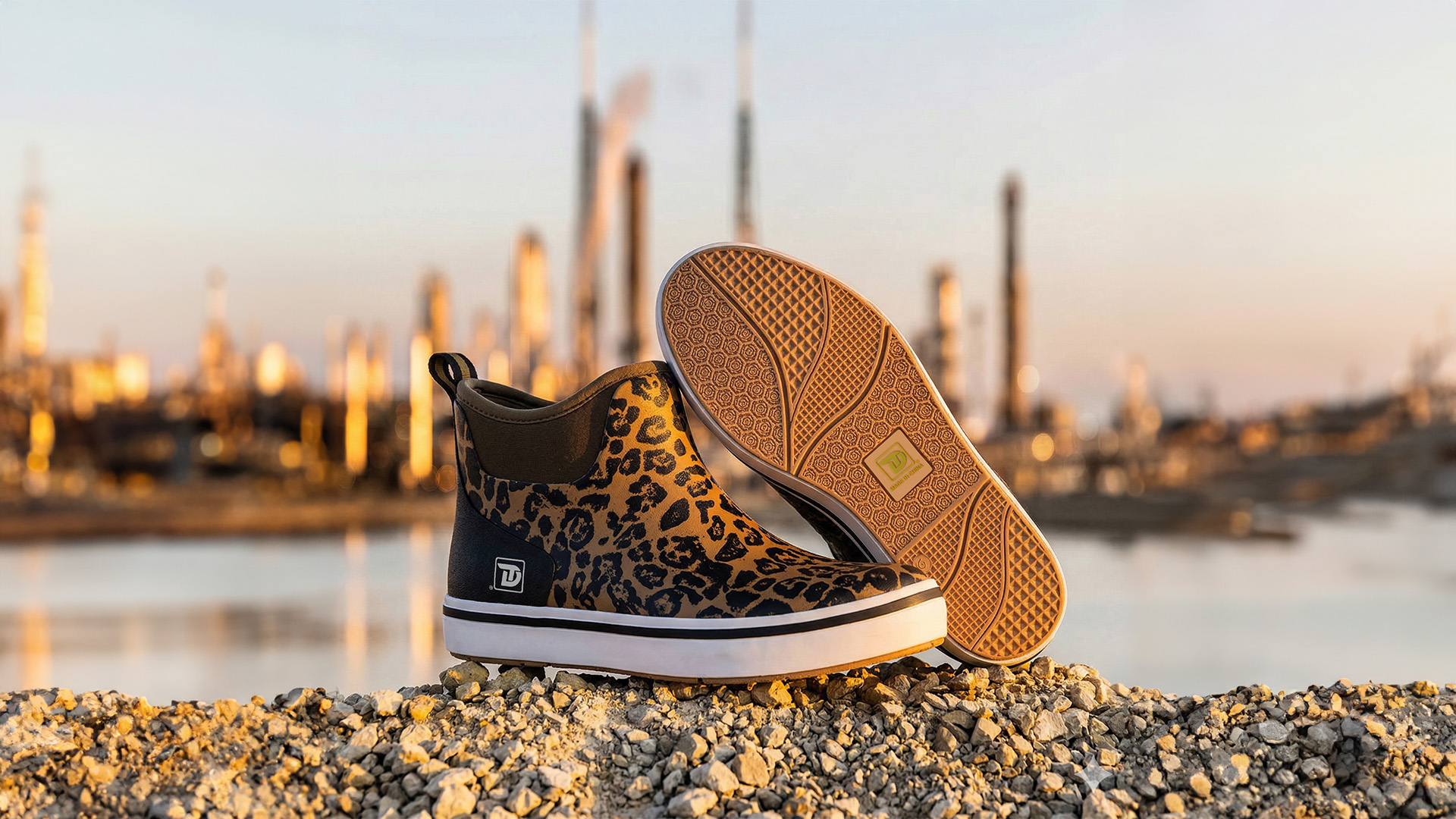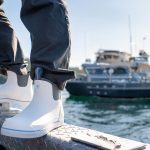
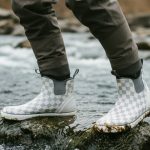
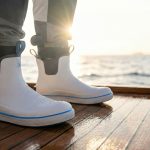
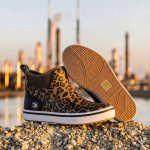
Meta Description: We put Trudave Gear deck boots through a full fishing season — docks, fiberglass, saltwater spray, and everything in between. Here’s the honest verdict for anglers.
Let’s get something straight right off the top: most deck boots on the market are designed by people who’ve never actually spent eight hours fighting a limit of walleye on a rain-slicked fiberglass deck. They look fine in the product photos, feel decent on a showroom floor, and fall apart the moment real fishing conditions enter the picture — slippery when wet, uncomfortable by noon, and cracking at the seams by the second season.
So when Trudave Gear started showing up in conversations among serious freshwater and inshore anglers across the upper Midwest and Great Lakes region, we paid attention. This review covers a full season of real use — from late-spring bass tournaments on Lake Erie to fall walleye runs on the Detroit River and everything in between. No stock photos, no sponsored softballs. Just an honest look at whether Trudave deck boots are actually worth your money.
Spoiler: for most anglers, they are.
Who Makes Trudave Gear?
Trudave Gear is an American outdoor brand based in San Dimas, California, focused exclusively on waterproof footwear for hunters, anglers, and outdoor workers. They don’t make everything under the sun — just boots and waders, which means their product development isn’t split across seventeen categories. That focus shows in the details.
Their deck boot lineup covers several series — the NeopreneTrek, WaveLock, Seafarer Lite, and Midnight Camo among others — each targeting a slightly different fishing use case. For this review, we spent the most time in the NeopreneTrek and WaveLock series, which represent their core offering for serious anglers.
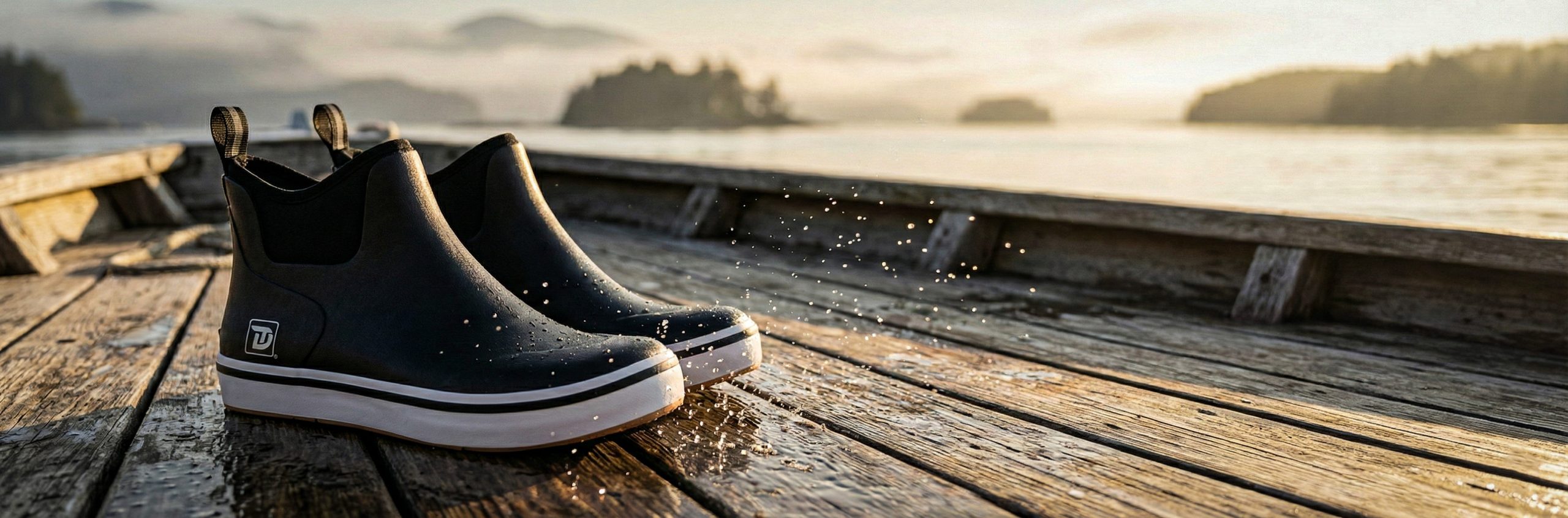
What We Tested: The Trudave NeopreneTrek and WaveLock Deck Boots
NeopreneTrek Series — Quick Specs
- Construction: Laminated rubber shell + 4.5mm neoprene body
- Height: Ankle-high, slip-on
- Outsole: Non-marking, siped multi-directional herringbone pattern
- Entry/Exit: Front and rear pull loops, heel kick rim
- Toe/Heel: Reinforced panels
- Insole: Cushioned footbed
- Waterproofing: Fully sealed upper (not intended for sustained submersion above collar)
WaveLock Series — Quick Specs
- Construction: One-piece rubber shell, fully sealed
- Height: Ankle-high
- Outsole: Multi-directional grip, non-marking
- Insulation: Available in insulated version for cold-weather fishing
- Waterproofing: Integrated rubber, no seams below the waterline
Field Performance: How They Actually Held Up
Traction on Wet Surfaces — The Most Important Test
This is where a lot of deck boots fail. They grip fine on dry fiberglass, feel adequate on slightly wet surfaces, and turn into ice skates the moment fish slime, blood, and rinse water combine on a wet gel coat deck. This is not a hypothetical scenario — it’s what every fishing deck looks like by 7 a.m. on a serious trip.
The NeopreneTrek’s herringbone siped outsole performed noticeably better than we expected at this price point. The multi-directional channel design actually sheds water and fish residue rather than just sitting on top of it. On dry fiberglass, the grip is excellent. On wet fiberglass after a morning of active fishing, it’s good — better than most rubber boots in this price range, and competitive with options costing considerably more.
Worth noting: like most rubber-soled deck boots, grip does decrease on wet, slimy wood dock surfaces — the kind of old, algae-covered dock planking you find at a lot of inland lake marinas. If your primary fishing environment is an older wooden dock, no rubber sole short of a studded outsole is going to give you bulletproof grip. The Trudave performs as well as anything else in that situation.
Verdict on traction: Strong. One of the better performers in its price class.
Waterproofing — Does It Actually Keep Water Out?
Yes — with the appropriate caveat that these are ankle boots, not waders. The fully sealed rubber and neoprene construction keeps water out up to the collar under normal fishing conditions: deck wash-down, rain, shallow puddles, and the occasional misstepped marina approach where you’re ankle-deep before you realize it.
We didn’t experience any seam leaks or moisture intrusion through the boot material over a full season of use. The laminated rubber-neoprene construction in the NeopreneTrek held up through repeated wet/dry cycles without showing any delamination or peeling at the seams — a problem we’ve seen with cheaper boots by their third or fourth month.
The pull tabs and heel kick rim deserve a mention here because they’re one of those small design details that matters more in real use than on a spec sheet. When your hands are wet and you’ve got a fish on the deck and three lines to re-rig, being able to slip these boots on and off without a wrestling match is genuinely useful.
Verdict on waterproofing: Excellent for typical fishing use. Don’t submerge them above the collar on purpose, but for everything a deck boot is supposed to handle, they deliver.
Comfort Over a Long Day on the Water
We fished 10-plus-hour days in both the NeopreneTrek and WaveLock. Here’s the honest report on comfort:
The cushioned footbed provides meaningfully better support than the flat insoles you get in a lot of comparable rubber boots. By mid-afternoon on days that involved a lot of standing and repositioning on the deck, our feet felt better than expected. The neoprene upper in the NeopreneTrek is soft and flexes naturally with ankle movement rather than fighting it — an important distinction from stiffer rubber boots that can cause calf fatigue on long days.
The breathable lining manages moisture reasonably well for a rubber boot — a category that almost universally struggles with heat and sweat retention. These aren’t ventilated trail runners, and on a hot July afternoon, your feet will get warm. But the moisture-wicking liner prevents the wet-sock swampiness that makes cheaper rubber boots miserable in warm weather.
Verdict on comfort: Above average for the category. The footbed and neoprene upper are the standouts.
Durability Through a Full Season
We put these boots through approximately six months of regular use — dock starts and finishes, tackle storage room floors, occasional gravel marina parking lots, and everything in between. Results:
- Rubber shell: No cracks, no splits, no signs of structural compromise
- Outsole: Normal wear on the high-contact points but no delamination or separation
- Pull tabs: Still firmly attached, no fraying
- Interior lining: Clean, no breakdown
- Seams: No lifting or separation at the neoprene-rubber bond
The rubber compound used in Trudave’s construction is notably flexible even after repeated thermal cycling (hot car to cold morning to warm afternoon). Budget rubber boots often develop micro-cracks in the rubber compound when subjected to these temperature swings over a season. We didn’t see that here.
Verdict on durability: Solid. A well-maintained pair should get you multiple seasons.
Pros and Cons
Pros
- Non-marking outsole with genuine wet-surface grip — not just a label claim
- Fully sealed waterproof construction that held up all season without seam issues
- Neoprene upper that flexes naturally — no ankle fatigue on long days
- Cushioned footbed that outperforms what you’d expect at this price
- Easy on/off design that works in real fishing conditions (wet hands, fish on deck, time pressure)
- True to size — size accuracy is better than many competitors in this category
- Free shipping within the continental US and a 1-year warranty
Cons
- Grip on slimy wood dock surfaces decreases, as it does with virtually all non-studded rubber soles
- Warm-weather breathability is limited, as expected from rubber/neoprene construction — plan accordingly on hot summer trips
- Ankle-high cut means these are deck boots, not waders — don’t use them for standing in water above the ankle
- Wide-foot fit may be snug for anglers with significantly wide feet — read sizing carefully
How Trudave Compares to the Competition
| Feature | Trudave NeopreneTrek | Premium Brand A (~$150+) | Budget Rubber Boot (~$40) |
|---|---|---|---|
| Waterproof construction | Full rubber + neoprene | Full rubber | Full rubber |
| Outsole grip rating | Strong | Excellent | Fair |
| Comfort / footbed | Above average | Excellent | Poor–Fair |
| Durability | Strong | Excellent | 1 season |
| Easy on/off | Yes | Yes | Sometimes |
| Price range | $$ | $$$$ | $ |
| Non-marking sole | Yes | Yes | Not always |
Trudave Gear sits in the sweet spot between genuine performance and sensible pricing. They’re not the absolute top of the deck boot market — brands like Xtratuf and Grundens have deeper legacy credibility in commercial fishing environments, and at $150+, they do have some marginal performance advantages. But for recreational anglers who fish the Great Lakes, inland lakes, and inshore coastal environments, the gap in real-world performance doesn’t justify the gap in price. Trudave closes that gap considerably.
Who Should Buy Trudave Deck Boots?
Buy them if you:
- Fish from a boat, dock, or pier regularly and need reliable wet-surface traction
- Want a genuinely waterproof slip-on that can handle a full day of fishing without breaking down
- Are spending $100–$200 more than necessary on premium brand names for recreational use
- Fish in the Great Lakes region, Midwest, or anywhere freshwater or inshore fishing is the primary use case
Look elsewhere if you:
- Need boots rated for commercial or professional fishing in extreme offshore conditions (go with Xtratuf or Grundens)
- Fish primarily in very warm weather and need maximum ventilation
- Have very wide feet and need a specialized wide-last boot
FAQ
Are Trudave deck boots true to size? Yes — Trudave boots are built to US sizing standards and run true to size for most customers. If you’re between sizes or plan to wear a thick sock, consider going up a half size.
Can I use Trudave deck boots on a fiberglass boat deck? Absolutely. The non-marking outsole is specifically designed for fiberglass, gel coat, and dock surfaces without leaving scuffs. The siped herringbone pattern channels water and provides grip on wet fiberglass — the primary surface deck boots need to handle.
How do I clean Trudave deck boots after fishing? Rinse with a garden hose after each use to remove fish slime, salt, and debris. For deeper cleaning, mild soap and a soft brush work fine. Let them air dry completely before storage — never store them sealed while still wet.
How long do Trudave deck boots last? With proper care, 2–4 seasons of regular recreational use is realistic. Commercial fishing environments with daily heavy use may see shorter lifespans.
Do Trudave deck boots work for saltwater fishing? Yes. The rubber and neoprene construction is resistant to saltwater exposure. Rinsing thoroughly with fresh water after saltwater use is important for long-term durability — the same maintenance routine recommended for any marine footwear.
Where can I buy Trudave deck boots? Trudave deck boots are available directly at trudavegear.com with free shipping within the continental US, or through Amazon.
Final Verdict
After a full season on the water — dock after dock, deck after wet deck — Trudave Gear’s deck boots earned a permanent spot in our fishing kit. They grip when it matters, keep water out through everything a recreational angler throws at them, and hold up to the kind of regular use that burns through cheaper boots in a single season.
For freshwater and inshore anglers who want serious performance without the premium brand price tag, Trudave deck boots are one of the best values in fishing footwear right now.
Rating: 4.5 / 5