
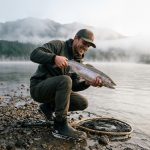
When water temperatures drop into the low 40s—or even colder—fish behavior changes in ways that can frustrate even experienced anglers. Fish don’t disappear in winter, but they stop moving the way most anglers expect. One of the most misunderstood cold-water patterns is how fish position just off structure rather than tight to it when cold water stalls their movement.
Understanding this subtle shift can be the difference between grinding out empty casts and unlocking consistent winter bites.
Cold Water Slows Movement—but It Doesn’t Stop Feeding
In cold water, fish are conserving energy. Their metabolism slows, digestion takes longer, and unnecessary movement becomes costly. But feeding still happens—it’s just more selective, more calculated, and more position-driven.
Instead of roaming or actively chasing bait, fish settle into energy-efficient holding zones where food can come to them with minimal effort. These zones are rarely right on top of structure in winter.
That’s the key mistake many anglers make.
Why Fish Slide Just Off Structure Instead of Hugging It
In warmer months, structure like rocks, brush piles, docks, and ledges often hold fish directly. In winter, however, fish frequently position a few feet off the structure, suspended slightly or resting on adjacent bottom transitions.
There are several reasons for this:
1. Temperature Stability Is Better Off the Structure
Hard structure can absorb and radiate temperature changes more quickly, especially during cold nights. Areas just off structure—slight drops, softer bottoms, or deeper water—often provide more stable temperatures, which fish strongly prefer in winter.
2. Reduced Current and Pressure
In rivers and reservoirs with current, being directly on structure can require constant fin movement to hold position. Sliding just off allows fish to tuck into current breaks or slack water, conserving energy while still staying close to feeding lanes.
3. Better Visibility and Reaction Control
Cold-water fish don’t want to chase, but they will react. Positioning slightly off structure gives them space to track slow-moving prey, rise or slide over, and strike without committing to a long pursuit.
The “Dead Zone” Most Anglers Fish Right Through
One of the most overlooked winter mistakes is fishing too tight to cover.
Anglers pitch jigs into brush, drag baits directly on rocks, or bang crankbaits into structure—classic warm-water tactics. Meanwhile, fish are sitting two to six feet off, watching the bait pass without engaging.
This creates what many anglers experience as “inactive fish,” when in reality, fish are present but poorly positioned relative to the lure.
Key Areas Where Fish Hold Off Structure in Winter
To capitalize on this pattern, focus on adjacent zones, not just the structure itself:
- The first drop-off next to structure
- Soft bottom edges bordering rock or gravel
- Suspended zones beside vertical cover
- The down-current side of structure
- Shadow lines created by depth changes
These are low-energy holding spots where fish can stay comfortable and strike efficiently.
How to Adjust Your Presentation for Off-Structure Fish
Once you understand where fish are positioned, the next step is adjusting how you fish.
Slow Isn’t Enough—Angle Matters
In winter, speed matters—but angle matters more. Presenting a lure so it passes through the off-structure zone is critical.
- Cast past structure and work the bait back through the adjacent area
- Use horizontal presentations when fish are suspended
- Keep bottom baits just off the bottom, not grinding it
Lures That Excel in Off-Structure Winter Zones
Some baits naturally shine when fish are positioned just off cover:
- Suspending jerkbaits (long pauses are key)
- Blade baits fished vertically or with short lifts
- Finesse jigs crawled beside, not into, structure
- Soft plastics on light heads, allowed to glide and settle
The goal is to keep the lure in their strike window longer, not force a reaction.
Missed Strikes Are a Clue—Not a Failure
In cold water, short strikes and light ticks often mean your lure is close but not quite aligned with the fish’s holding depth or distance from structure.
Instead of changing spots immediately:
- Adjust depth by inches
- Change retrieve angle
- Slow the pause, not the movement
These small changes often turn missed bites into solid hookups.
Why This Pattern Becomes Stronger in Late Winter
As winter progresses and fish experience prolonged cold, they become even more position-specific. By late winter, many fish are staging near future spring areas but remain locked into off-structure winter behavior.
Anglers who recognize this transitional positioning gain a major advantage—especially when others assume fish are either gone or inactive.
Final Thoughts: Fish Aren’t Lazy—They’re Efficient
Cold water doesn’t make fish dumb or unwilling to bite. It makes them efficient, selective, and position-oriented.
When you stop fishing at structure and start fishing around it—paying attention to depth, angle, and spacing—you’ll uncover fish that most anglers never realize were there.
In winter, success isn’t about covering water.
It’s about understanding where fish choose to wait when movement costs too much—and putting your bait exactly there.