
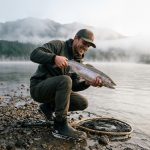
Winter fishing is a season of subtlety. While warm-water bass will chase a fast-moving crankbait or smash a reaction jig, cold-water predators behave differently. Their metabolism slows, their strike windows shrink, and their feeding decisions become calculated. That’s exactly why glidebaits—when fished the right way—become one of the most efficient tools for targeting trophy-size fish in winter.
Not the aggressive S-curve glides you throw in summer.
Not the fast walks you use along riprap in fall.
Winter glidebait mastery comes down to one thing:
The pause-and-fall rhythm.
This technique turns a lure that was designed for sideways swagger into a deadly slow-motion temptation predators simply can’t ignore. Let’s break down why it works so well, how to use it with precision, and the exact situations where this rhythm shines brighter than any other cold-water presentation.
Why Glidebaits Work So Well in Cold Water
Unlike many winter baits, glidebaits deliver a slow, lazy, unpredictable motion that perfectly mimics an injured or dying baitfish. In winter, that’s gold.
Here’s why:
1. Predators want high-calorie, low-effort meals
Winter fish don’t want to chase. A sliding, pausing, vulnerable glidebait is irresistible.
2. Long pauses give fish time to commit
In 38° water, everything slows down—predators included. The long pause is often what seals the deal.
3. Glidebaits stay in the strike zone longer
Unlike jerkbaits that dart away, glidebaits stall in place and hold depth beautifully.
4. Horizontal fall = natural realism
Most baitfish die sideways, not nose-first. Glidebaits replicate that perfectly during the fall phase.
5. Subtle changes in cadence = instant triggers
Predators track glides closely. A slight stall or shift creates the perfect ambush invitation.
When the water is cold, this combination becomes lethal.
The Magic Rhythm: Glide… Pause… Fall… Pause
Winter glidebait fishing isn’t about speed or flash—it’s about rhythm. A simple cadence often looks like this:
- Short glide to the side
- Pause completely (3 to 10 seconds)
- Controlled fall—just a foot or two
- Pause again (3 to 8 seconds)
Repeat.
That’s it.
But the power lies in how naturally prey-like this sequence appears:
- The glide mimics a weak attempt to swim
- The pause imitates exhaustion
- The fall signals collapse
- The final pause triggers opportunistic strikes
Predators—bass, walleye, trout, pike—can’t resist that moment of vulnerability.
The Best Glidebaits for Winter Fishing
Not all glidebaits behave well in cold water. The ideal winter glider has:
✔ A slow sinking rate (½–1 ft per second)
Fast sinkers look unnatural in cold water.
✔ A wide but controlled “S” glide
Not too erratic—just enough travel to catch attention.
✔ A stable horizontal fall
Essential for the dying-baitfish look.
✔ Minimal nose-diving on the pause
Flat posture is key.
Best Types of Baits:
- 5–7″ slow-sink hard glidebaits
- Hybrid semi-soft gliders
- Small winter-specific glidebaits (3–5″)
- Soft-body line-thru gliders
Big glidebaits still work—but downsizing often outperforms in frigid temps.
Where the Pause-and-Fall Glidebait Shines in Winter
Cold-water predators concentrate in specific zones. Target areas where baitfish slow down and bunch up.
1. Deep rock piles & transitions
Big bass and walleyes sit tight to structure.
2. Steep breaks and bluffs
Perfect terrain for controlled fall presentations.
3. Mid-depth wintering basins
Suspended fish love slow gliders.
4. Points blown by winter wind
Wind pushes bait—predators follow.
5. Warm-water influence zones
Drains, inflows, sun-soaked banks, or factory outlets.
6. Underwater saddles
Natural predator ambush zones.
If forage is present, glidebaits can work almost anywhere—especially in low-light periods.
Glidebait Retrieval Cadences That Crush in Winter
Each cadence triggers a specific type of winter predator. Here are the best three:
1. The “Short-Glide, Long-Pause” Method
Best for: Big largemouth, largemouth in clear lakes, trophy pike
- Glide left
- Glide right
- Count to 8
- Let it fall 1–2 ft
- Pause 6 seconds
This is the most deadly winter cadence ever developed.
2. The “Fall-Trigger” Cadence
Best for: Smallmouth bass, spotted bass, walleyes
Smallmouth especially love the fall more than the glide.
- One glide
- Pause 3
- Let it drop 6–12 inches
- Pause 5
Repeat until the strike. Most hits happen on the fall or the first 2 seconds after the fall.
3. The “Micro-Twitch and Freeze” Technique
Best for: Pressured fish, ultra-clear lakes, near-surface feeding predators
- Glide
- Small twitch
- Long freeze (10+ seconds)
Works incredibly well in winter high-pressure systems.
Rod, Reel, and Line Setup for Maximum Precision
Rod
Medium-heavy to heavy fast-action rod (7’ to 7’6”).
You need backbone for big fish and precision control.
Reel
Low gear ratio casting reel (5.4:1–6.3:1).
Slow retrieve gives better cadence control.
Line
- 40–60 lb braid mainline (winter braid doesn’t freeze like old versions)
- 15–20 lb fluorocarbon leader for stealth and abrasion resistance
Fluoro makes the fall smoother and more natural.
Winter Glidebait Strike Detection
Winter strikes can be incredibly subtle. Watch for:
- Line twitching sideways
- Glidebait stopping early
- Slack line suddenly tightening
- Rod tip pulsing lightly
When in doubt—set the hook. Glidebait fish often inhale the bait without a classic “thump.”
Common Mistakes Anglers Make With Winter Glidebaits
Avoid these and your success rate will skyrocket.
❌ Working the bait too aggressively
Winter fish don’t want to chase.
❌ Not pausing long enough
Most anglers pause 2 seconds.
Winter giants want 6–12 seconds.
❌ Fishing the wrong depth zone
Winter fish aren’t roaming far—find the exact level and stay there.
❌ Using glidebaits that sink too fast
A 2ft-per-second fall is too much for winter.
❌ Giving up too early
Glidebait bites often come on cast #10 or #20 to the same area.
Patience is everything.
Final Thoughts: Precision Wins in Winter
Winter glidebait fishing isn’t about flash or speed—it’s about craftsmanship. The pause-and-fall rhythm turns a lure known for summer action into one of the most precise, cold-water killers available.
When predators slow down…
When forage becomes lethargic…
When other lures fail…
A perfectly timed glide…
A long pause…
A lazy, horizontal fall…
That’s the moment big fish cannot resist.
If you master the cadence, winter glidebait fishing may become your most consistent cold-water big-fish technique.