


Every winter angler knows the feeling—dark clouds roll in, the wind shifts, the air gets strangely heavy, and suddenly the bite turns electric. Long before the first snowflake touches the water, fish sense the coming storm. They react instinctively, feeding aggressively and repositioning in ways that are far more predictable than most anglers realize.
The 12-hour window before a major winter system is one of the most powerful bite triggers of the entire cold season. Understanding how fish behave during that short but explosive period can turn a slow winter pattern into some of the hottest action you’ll see until spring.
This guide breaks down the science, the spots, the species-specific behaviors, and the best baits to capitalize on the pre-snowstorm surge.
Why Fish React Before a Heavy Winter Storm
1. Barometric Pressure Begins Its Freefall
Declining barometric pressure is the number one trigger for pre-storm feeding.
Fish sense this through their swim bladders. As pressure drops:
- Their buoyancy changes
- Their bodies feel “lighter”
- They become more active
- They feed aggressively before the coming lull
In winter, when fish already operate with sluggish metabolisms, that sudden change hits them like an internal alarm clock.
2. Light Levels Drop—Creating Perfect Feeding Conditions
As the storm approaches, the sky dims.
This does two important things:
- Predators feel safer roaming
- Baitfish begin moving toward cover or deeper water
Fish that have been pinned tight to structure suddenly spread out and hunt. Even heavily-pressured lakes open up because fish lose some of their winter caution in these conditions.
3. Wind Direction Shifts and Pushes Baitfish
Most winter storms shift winds:
- South → East winds signal the system approaching
- Water on the windblown banks warms slightly
- Plankton and baitfish concentrate
- Predators follow behind
Even a 1–2°F surface change affects fish in the cold season.
4. Oxygen Levels Increase on Shallow Edges
Wind mixes the upper layers of water, giving a temporary oxygen boost.
Shallow fish—especially panfish, perch, and walleyes—use this window to move up and feed actively.
Where Fish Position Themselves 12 Hours Before the Snow Arrives
1. Wind-Facing Banks
Oncoming wind pushes:
- Heat
- Plankton
- Baitfish
This makes windblown points and shorelines the most consistent places to find feeding predators.
2. Mid-Depth Flats (10–20 feet in most lakes)
As the pressure drops, fish leave deep winter holes and move to “feeding flats.”
You’ll find:
- Walleye cruising edges
- Bass sliding up for shad
- Crappie schools drifting higher in the column
These fish are hunting, not resting.
3. Creek Mouths and Funnel Points
Fish preparing for a storm often gather near natural “highways.”
Look for:
- Channel intersections
- Mouths of feeder creeks
- Pinch points between islands
- Steep breaks merging into flats
These are ambush zones filled with mobile, bait-driven fish.
4. Suspended Over Deep Water
Before storms, baitfish push higher in the water column.
Predators follow—especially:
- Smallmouth bass
- Lake trout
- Walleye
Forward sonar can make this pattern deadly effective.
Species Breakdown: What Each Fish Does Before a Snowstorm
🟢 Largemouth Bass
Their behavior becomes noticeably more aggressive:
- Move from deep wood to mid-depth flats
- Feed on dying shad and slow-moving bait
- Hit moving baits more confidently
Expect the bite to peak 6–12 hours before snowfall.
🟣 Smallmouth Bass
Smallmouth use storm fronts to roam.
They:
- Position higher on rocky structures
- Chase bait over deeper water
- Hit metal baits and jerkbaits harder than normal
They’re the most predictable pre-storm feeders.
🟠 Walleye
Walleyes get extremely active right before a winter system.
Expect:
- Shallow movement
- Increased cruising
- Feeding in low-light banks and points
The storm’s dimming sky creates perfect walleye conditions.
🔵 Crappie
Crappie rise in the water column and feed aggressively on small minnows.
They:
- Group tighter
- Become more active
- Respond best to bright or flashy baits
The ramp-up starts early—sometimes up to 18 hours before snow.
🔴 Pike & Musky
Predators of predators.
Before a storm:
- They patrol edges
- Become less cautious
- Crush larger presentations
This is trophy-hunting time.
Best Baits to Use Before a Heavy Winter Snowstorm
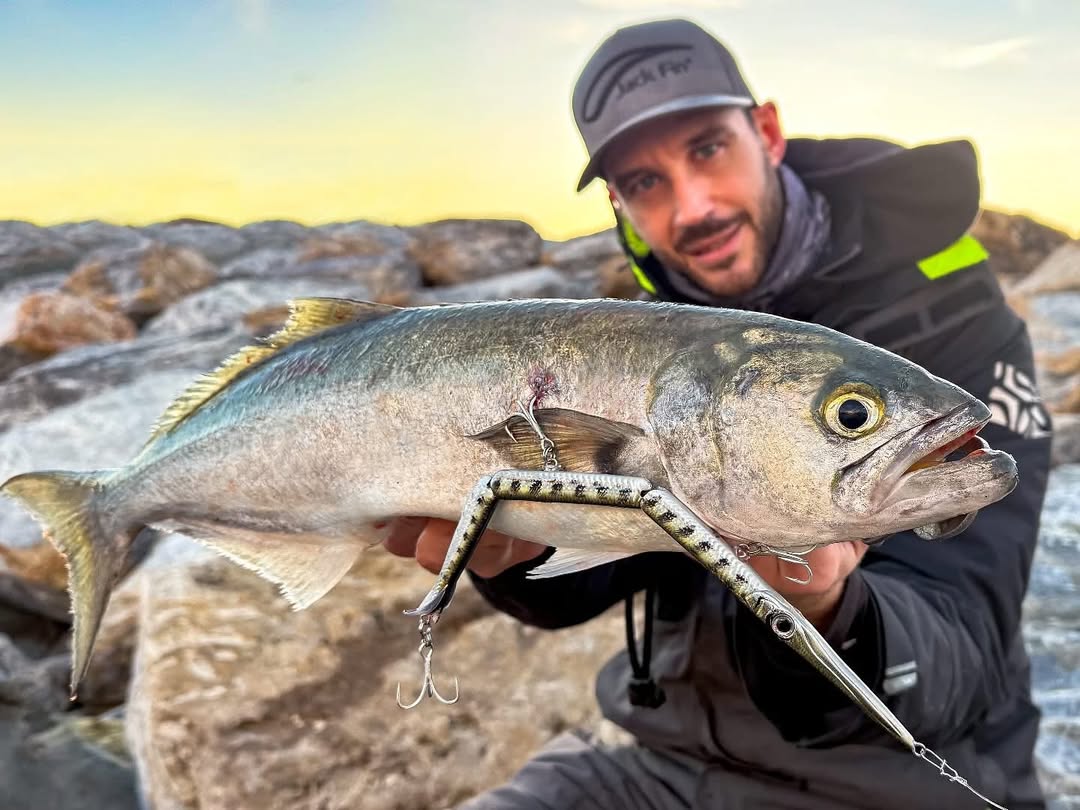
1. Lipless Crankbaits
Perfect for covering water on feeding flats.
Their vibration mimics distressed bait—exactly what predators want during pressure drops.
2. Jerkbaits
The dim light and active baitfish make jerkbaits irresistible.
Use long pauses with quick snaps.
3. Blade Baits
Metal shines brightest when fish are feeding hard.
Best for:
- Walleye
- Smallmouth
- Deep-water schools
4. Swimbaits (Soft or Paddle-Tail)
Slow-rolled across mid-depth flats, they replicate the dying shad of winter perfectly.
5. Jigging Spoons
Ideal for schooling fish reacting to pressure changes.
Drop them on suspended marks or mid-depth breaks.
6. Tungsten Jigs for Panfish
Small profiles match winter forage, while the weight keeps them responsive in wind.
Timing: When the Bite Peaks Before the Storm
Based on angler data and winter fishing pressure patterns, the best bite happens:
⏰ 6–12 hours before snowfall begins
This is the sweet spot.
But even earlier windows can produce:
- Bass: 8–14 hours
- Crappie: up to 18 hours
- Walleye: 4–8 hours
- Pike: often right before the snow hits
Once the storm settles in, fish usually slow dramatically.
How to Adjust Your Strategy to Maximize the Pre-Storm Bite
✔ Speed up your presentations
Fish are active. Slow winter tactics aren’t necessary—until after the storm.
✔ Target areas with bait activity
If you see bait movement, predators are close.
✔ Don’t fear the wind
The rougher the bank, the better the action—especially for bass and walleye.
✔ Stay mobile
This is not a day to camp on one hole or one point.
✔ Watch the sky, not the clock
When the light dims and the air thickens, the bite window opens.
Final Thoughts: Chase the Storm, Catch the Giants
Winter storms shut down many anglers—but savvy fishermen know the truth:
The last half-day before a snowstorm can be the hottest fishing window of the entire season.
Fish sense the coming weather shift long before humans do, and their instinct to feed becomes a powerful advantage for anyone willing to face the cold and get on the water.
If you fish the right spots, with the right baits, during the right pressure drop, you’re not just fishing…