
Why the Year’s Coldest Waters Can Deliver Fast, Aggressive Strikes—If You Know When to Fish and How to Trigger Them
When lakes turn cold and the first skim of ice touches the quiet coves, most anglers assume the bite is done for the year. Bass slow down. Walleye slide deeper. Pike hold tight to structure. Even panfish seem to group up and wait for winter to settle.
But seasoned late-fall anglers know the truth: the coldest water of the season can create some of the most explosive reaction strikes of the year—if you time your approach around short feeding windows and use presentations that force fish to commit.
In late fall, fish aren’t chasing because they’re hungry—they’re striking because instinct tells them they must. This article breaks down how cold-water predators behave, how to identify late-fall “bite windows,” and the proven methods for triggering reaction bites in lakes that feel like they’re on the edge of freezing.
Why Bite Windows Matter in Ice-Cold Lakes
1. Fish Metabolism Slows, But Instinct Stays Sharp
As water temperatures fall into the high 30s or low 40s, a fish’s metabolism drops significantly. They burn fewer calories, move less, and conserve energy whenever possible.
But their predatory wiring still reacts to:
- sudden motion
- flash or vibration
- prey fleeing from cover
- changes in pressure or temperature
They may not feed often, but when they do, they feed decisively.
2. Baitfish Behavior Changes Dramatically
Late fall creates two key triggers in the food chain:
• Baitfish school tightly to survive
Shiners, perch, alewives, and shad group up over deep water. This clustering makes predators hold nearby—even if they’re sluggish.
• Injured or dying baitfish increase
Cold water weakens smaller fish. The slow, erratic fall of dying baitfish is one of the strongest late-fall triggers.
This is why lures with:
- flutter
- wobble
- fall-and-stop action
- vertical jigging motion
are so deadly in November.
3. Pressure Systems Create Predictable Feeding Surges
Fish may be slow most of the day, but pressure swings create short but aggressive feeding windows:
- Right before a cold front hits
- During rising pressure after snow or rain
- In the warmest 90 minutes of daylight
- At dusk as bait schools reorganize
Understanding these windows is the difference between a slow day and a personal best.
Where Fish Position in Near-Freezing Lakes
1. Deep Main-Lake Basins
Often 20–60 feet deep depending on species.
Here, fish conserve energy and follow bait schools.
Great for:
- Jigging spoons
- Rattle baits (lift-and-fall)
- Blade baits
- Live sonar presentations
2. Steep Breaklines
Predators sit on the edge of drop-offs where they can ambush bait but return to deeper rest zones quickly.
Key areas:
- Points
- Channel swings
- Old creek beds
- Ledges near wintering holes
3. Rock Piles and Hard Bottom
Rock retains heat longer. Even a 1–2 degree difference can concentrate fish in late fall.
Look for:
- Boulders
- Riprap shorelines
- Offshore humps
These spots are perfect for contact presentations like blade baits and football jigs.
4. Vegetation Edges—If Any Remain
Most weeds die back, but surviving green patches hold oxygen AND baitfish. Predators hover just outside, waiting for easy meals.
How to Trigger Reaction Strikes in Ice-Cold Lakes
1. Vertical Jigging: Precise, Efficient, Deadly
When water temps are near freezing, vertical presentations often outperform everything else.
Best baits:
- Jigging spoons
- Rap-style vertical baits
- Flutter spoons
- Small metal jigs
Key technique:
Short, quick hops followed by long pauses.
You’re mimicking a dying baitfish—an irresistible trigger.
2. Blade Baits: The Cold-Water King
Blade baits are one of the most reliable late-fall producers.
Why they work:
- intense vibration with minimal movement
- easy to keep in the strike zone
- deadly on sluggish predators
Technique:
- Let the blade sink to bottom.
- Lift 6–12 inches until you feel vibration.
- Drop it back down on controlled slack.
Most strikes happen on the fall.
3. Slow-Rolling Swimbaits
A small paddletail swimbait creeping just above bottom imitates a weak baitfish perfectly.
Use:
- 3–4 inch sizes for walleye & smallmouth
- 5–6 inch sizes for pike & big bass
Retrieve so slowly it almost feels wrong.
If the tail is barely turning, you’re doing it right.
4. Lipless Cranks: Lift-and-Fall, Not Retrieve-and-Reel
Traditional lipless techniques don’t work in freezing water—but their fluttering descent does.
Cold-water technique:
Lift 12–18 inches → feel vibration → let it fall.
Repeat.
This creates a distressed flutter predators can’t resist.
5. Jigs for Finesse Feeding Windows
Sometimes fish won’t react unless the presentation is nearly still.
Use:
- hair jigs
- marabou jigs
- tungsten finesse jigs
- small tubes
Hop lightly. Pause often. Let fish come to you.
Bite Window Timing: When to Be on the Water
1. Midday is Prime Time
Strangely, the sunniest, warmest hours—10 AM to 3 PM—often produce the best late-fall bite.
A 1–2° warm-up can wake an entire lake.
2. Pre-Front Conditions Are Explosive
If you see:
- dropping air pressure
- darkening skies
- stronger wind
- snow flurries incoming
Get ready.
Big fish feed aggressively before conditions crash.
3. Evening Bait School Movements
Just before dark, bait balls reorganize and predators take advantage.
This window is short—sometimes only 20 minutes—but powerful.
Gear Tips for Cold-Lake Fishing
- Use braid with fluorocarbon leaders for sensitivity in deep water
- Carry gloves that allow knot tying—cold hands = lost fish
- Use heavier lures to maintain control in deep water
- Rely on electronics to stay on bait schools (sonar or forward-facing)
- Dress in layers so you can stay mobile and safe
Cold water demands preparation, but the payoff can be incredible.
Final Thoughts: Ice-Cold Lakes Hold Opportunity, Not Obstacles
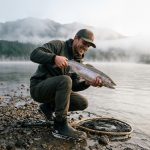
Late fall separates casual anglers from those willing to adapt. While most people stay home, the sharpest fishermen capitalize on short, powerful windows when big predators strike with aggression.
If you can time the weather, match your presentation to cold-water behavior, and stay patient, late-fall lakes can deliver some of your biggest fish of the year—often in just a handful of bites.