


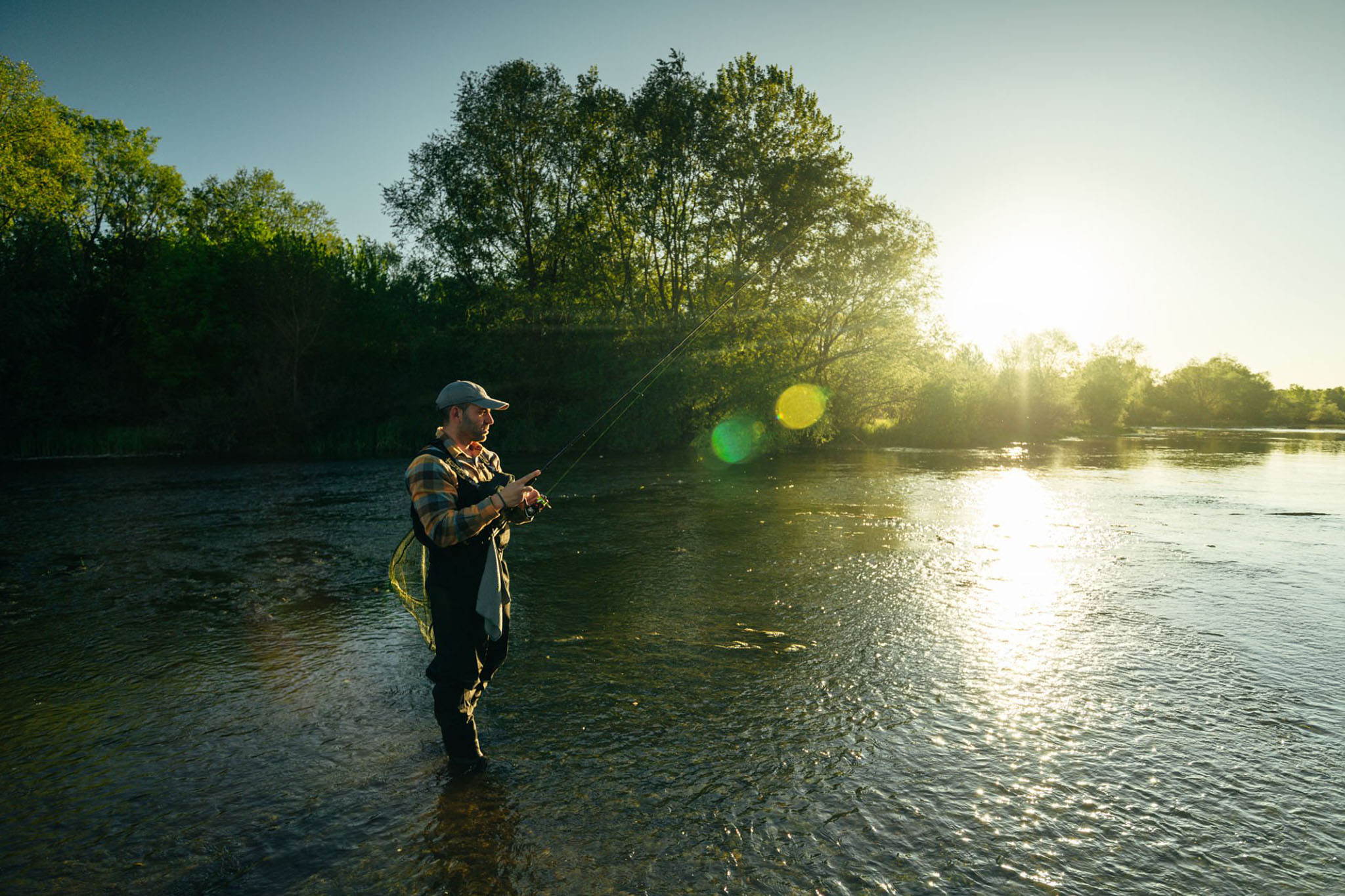
August is a love-hate month for fly anglers. The days are long and beautiful, but in many rivers and creeks, flows are low, the water is gin-clear, and trout are wary enough to make you feel like they’ve read your playbook. These “dog days” demand more than just showing up with your favorite fly—you need stealth, precision, and a deep understanding of fish behavior in tough summer conditions.
Why Low, Clear Water Is So Challenging
When the river drops and runs clear, fish are exposed. Less water overhead means more light penetration and a greater risk of predators spotting them—humans included. Trout and smallmouth will hold tight to cover, feed selectively, and spook at the smallest shadow or splash. The good news? With the right adjustments, you can still connect consistently.
Stealth Is Non-Negotiable
In late summer, the first step to more hook-ups isn’t your fly—it’s your approach.
- Wear muted clothing: Olive, tan, or gray blends in with the background and keeps your profile from standing out.
- Mind your shadow: Fish often face upstream, so stay low and approach from downstream to keep your shadow out of their feeding lane.
- Slow, deliberate movements: In skinny water, even ripples from a careless step can send fish scattering.
Light Leaders, Long Tippets
You can’t get away with the heavy stuff now.
- Leaders: Start with 9-foot leaders and be ready to stretch to 12 feet in extra-clear conditions.
- Tippets: Go lighter—5X to 6X for trout, sometimes even 7X if the fish are especially spooky. For smallmouth, 8–10 lb fluorocarbon offers invisibility without sacrificing strength.
Fly Selection for Skinny Water
When insects are sparse and fish are picky, less is more.
- For Trout:
- Terrestrials: Ants, beetles, and hoppers are prime meals in August. Fish them tight to grassy banks.
- Small Mayfly Patterns: #18–#22 parachute Adams or BWO imitations match late-summer hatches.
- Tiny Nymphs: Pheasant tails, zebra midges, or soft hackles in small sizes can tempt selective feeders.
- For Smallmouth:
- Baitfish Imitations: Small Clousers, woolly buggers, and muddler minnows stripped along current seams.
- Topwater: Poppers or deer-hair bugs early and late in the day.
Timing Is Everything
Heat is your enemy. Fish feed more actively when the water is coolest.
- Dawn and Dusk: Low light and cooler temps create a longer window for aggressive feeding.
- Cloud Cover and Light Rain: Both break up visibility and encourage fish to move from cover.
- Avoid Midday Heat: When water temps climb above 68–70°F for trout, stop fishing to avoid stressing the fish.
Reading Water in Low Flows
When current slows and depth drops, fish behavior changes:
- Deep Pockets: Even a 2-foot depression in the riverbed can hold multiple fish.
- Undercut Banks: Provide shade, cover, and ambush points.
- Current Seams: Fish still want moving water to bring food to them, so target areas where slow and fast water meet.
Presentation: Delicate and Precise
In August, it’s not about covering water fast—it’s about making your first cast count.
- Land your fly softly, avoiding splashes.
- Cast from farther away than you would in higher water.
- Use reach casts or slack-line casts to avoid drag on the fly in tricky currents.
Extra Tip: Watch Your Water Temp
Carry a stream thermometer. If temps creep too high, switch to warmwater species like bass or panfish until conditions improve. This keeps trout healthy and gives you more opportunities to bend a rod.
Bottom line: Dog days fly fishing is about finesse. Long leaders, subtle presentations, quiet approaches, and smart timing turn a frustrating August day into a rewarding one. Master these low-water strategies, and you’ll find that clear, skinny water isn’t the end of the bite—it’s just a different game.