


How to Fish Responsibly and Ensure Your Catch Swims Another Day
Catch and release is more than just tossing a fish back into the water—it’s a vital part of ethical angling that helps maintain healthy fisheries for generations to come. Whether you’re targeting bass in a quiet lake, trout in a mountain stream, or redfish in coastal flats, how you handle your catch can mean the difference between life and death for the fish.
Here’s a full breakdown of how to properly catch and release fish, from the moment they hit your line to their safe return into the water.
🧰 1. Use the Right Gear for the Job
Match your tackle to the species. Using gear that’s too light prolongs the fight, exhausting the fish and reducing its chances of survival. If you’re fishing for bass, walleye, or redfish, a medium-action rod with adequate line strength shortens the battle and lessens stress.
Use barbless hooks or circle hooks. Barbless hooks make for easier removal and less tissue damage. Circle hooks, especially when bait fishing, tend to hook fish in the corner of the mouth rather than deep in the gut.
🎣 2. Land the Fish Quickly and Carefully
A long, drawn-out fight can be lethal, particularly in warm water where oxygen levels are lower. The quicker you bring the fish in, the better its odds of survival.
Avoid using nets with rough mesh that can remove protective slime or damage scales. Opt for a rubber or knotless mesh net that’s fish-friendly.
Support the fish properly. When lifting it, use two hands—one under the belly and one near the tail or head. Never hold a fish vertically by the jaw, especially large species like bass or trout.
🧊 3. Handle With Wet Hands or Gloves
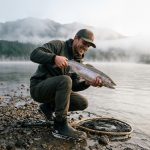
Fish have a slimy outer coating that protects them from disease and infection. Always wet your hands—or use a wet, soft glove—before touching the fish. Dry hands or rough surfaces can scrape off this layer and increase post-release mortality.
Avoid placing the fish on hot boat decks, rocky banks, or dry grass. If you’re snapping a photo, have everything ready so you can release the fish quickly.
⏱ 4. Keep Air Exposure Under 10 Seconds
Every second a fish spends out of water counts. A good rule of thumb: if you can’t hold your breath as long as the fish is out of the water, it’s been too long.
Pre-plan your release:
- Remove the hook while the fish is still in the water if possible.
- Keep pliers or a de-hooking tool handy.
- Take photos quickly and return the fish to the water without delay.
🧷 5. Use Proper Hook Removal Techniques
If the hook is deeply embedded:
- Do not yank it out. This can tear vital organs or gills.
- Cut the line as close to the hook as you can and let the fish go. Many fish will pass the hook naturally or it will rust out over time (especially if using non-stainless hooks).
Hooked in the gill or gut? Consider keeping the fish if regulations allow. Releasing a mortally wounded fish often leads to waste.
💨 6. Revive Before Release
If the fish is sluggish or belly-up, it needs help recovering.
- Hold it in the water facing into the current, or gently move it back and forth to push water through its gills.
- Wait until it kicks away under its own power before letting go.
This step is especially important in warm water conditions or after long fights.
🏞 7. Know the Local Laws & Best Practices
Different regions may have specific regulations or seasonal guidelines for catch and release:
- Some fisheries recommend avoiding catch and release during peak summer heat.
- Certain species (like trout or salmon) are more vulnerable during spawning and post-spawn periods.
Check with your state’s Department of Natural Resources (DNR) or Fish and Wildlife agency before heading out.
🔁 Bonus Tip: Consider Catch and Release Alternatives
- Take a few home if legal and ethical, especially if the fish is injured or invasive.
- Take only what you’ll eat and freeze—no more.
- Introduce kids or newcomers to fishing through panfish or stocked trout, which are often managed with harvest in mind.
Final Cast 🎯
Catch and release isn’t just a conservation buzzword—it’s a skill set every angler should master. Done right, it protects fish populations, improves the quality of your local waters, and ensures that the thrill of the fight will be there for the next generation.
So next time you feel that tug on your line, remember: the way you handle the next few minutes could make all the difference.