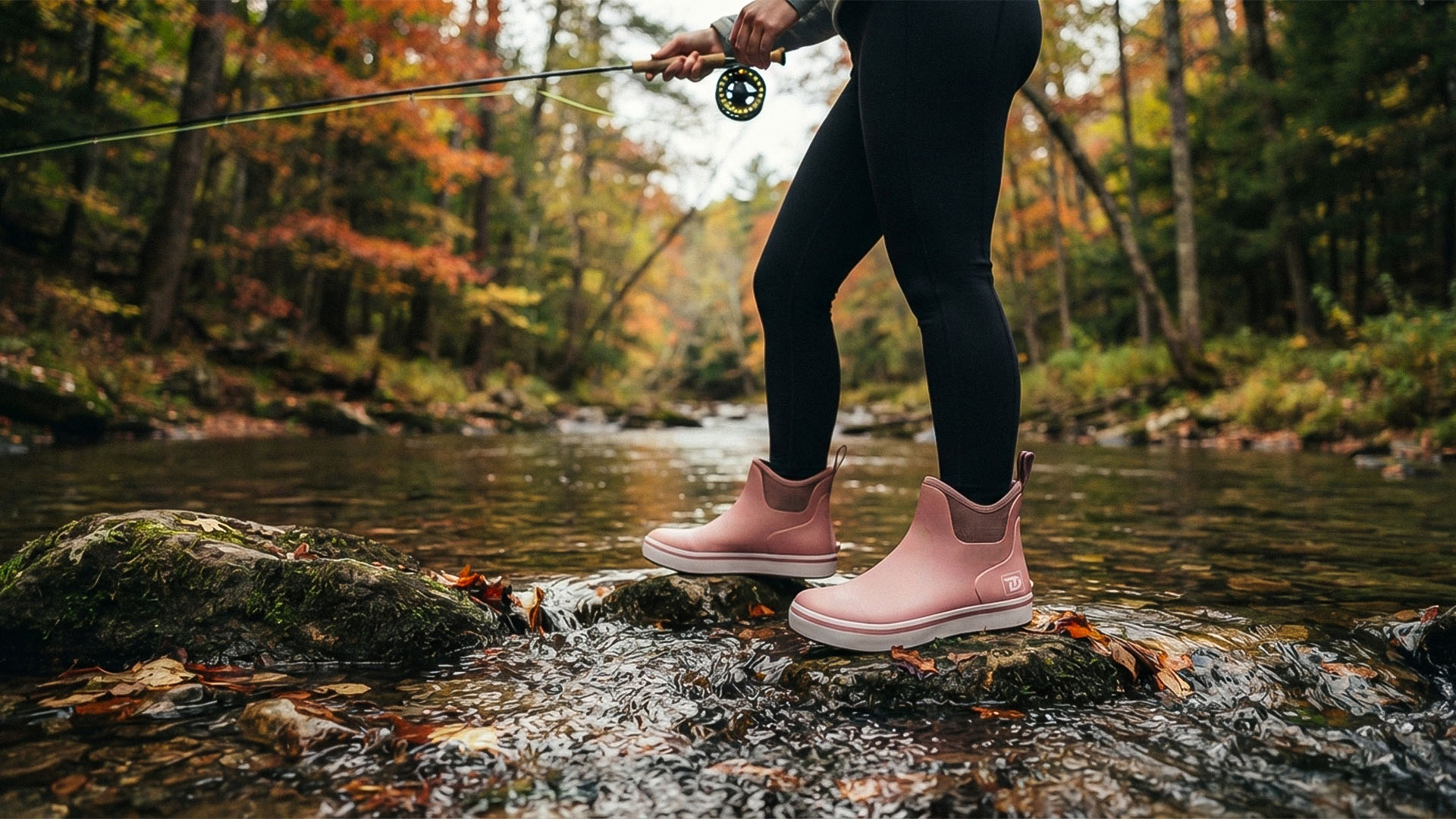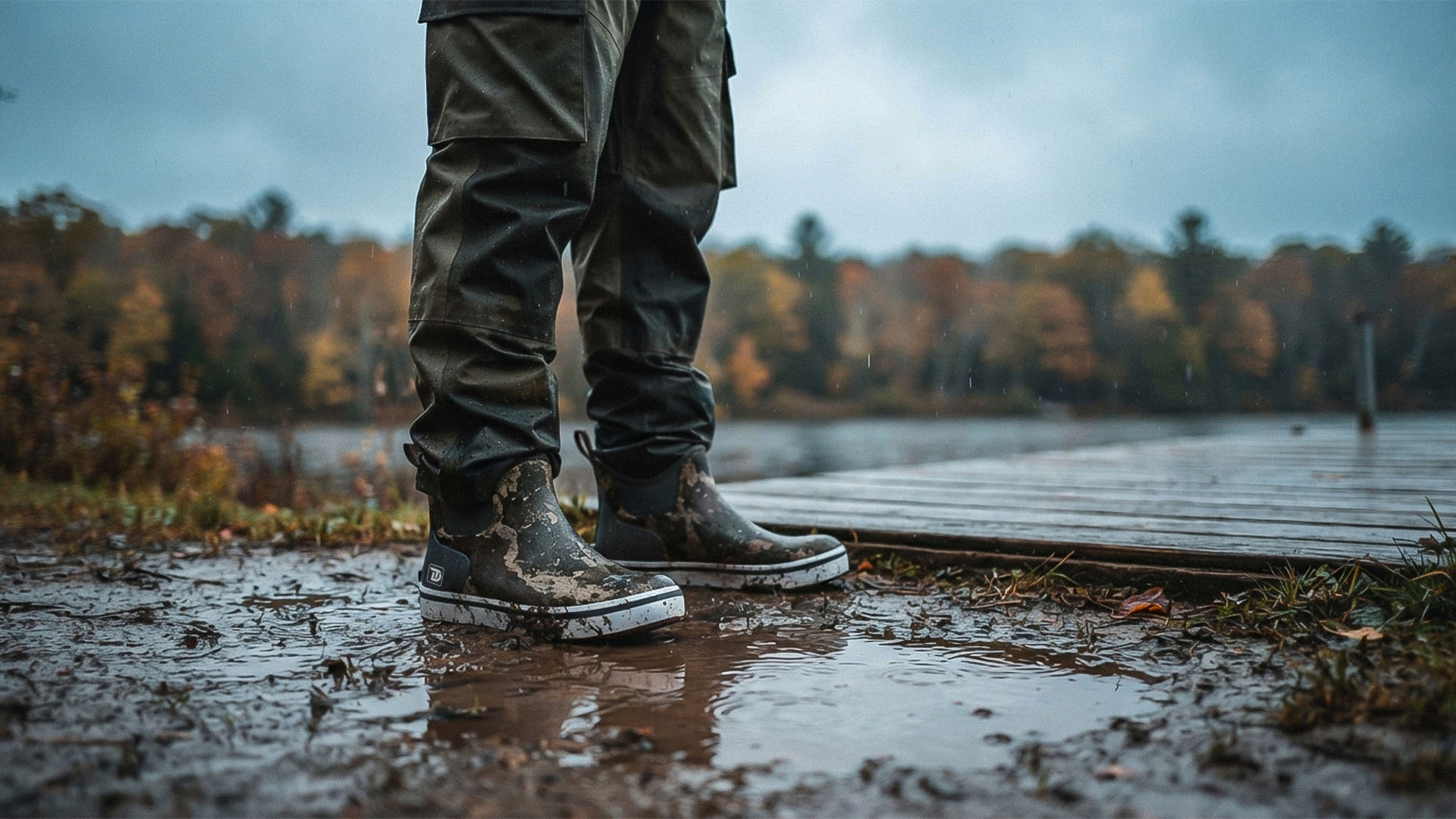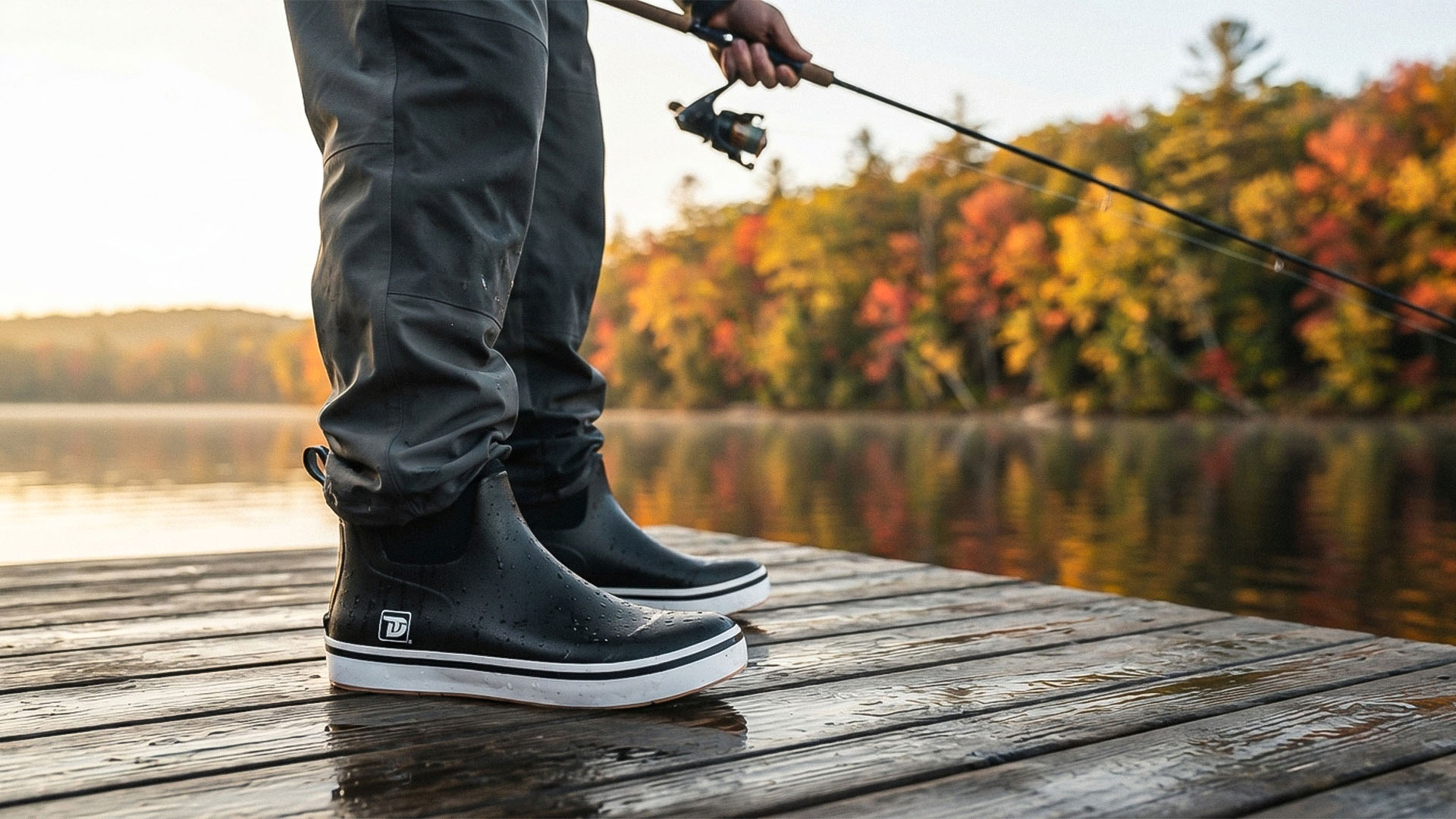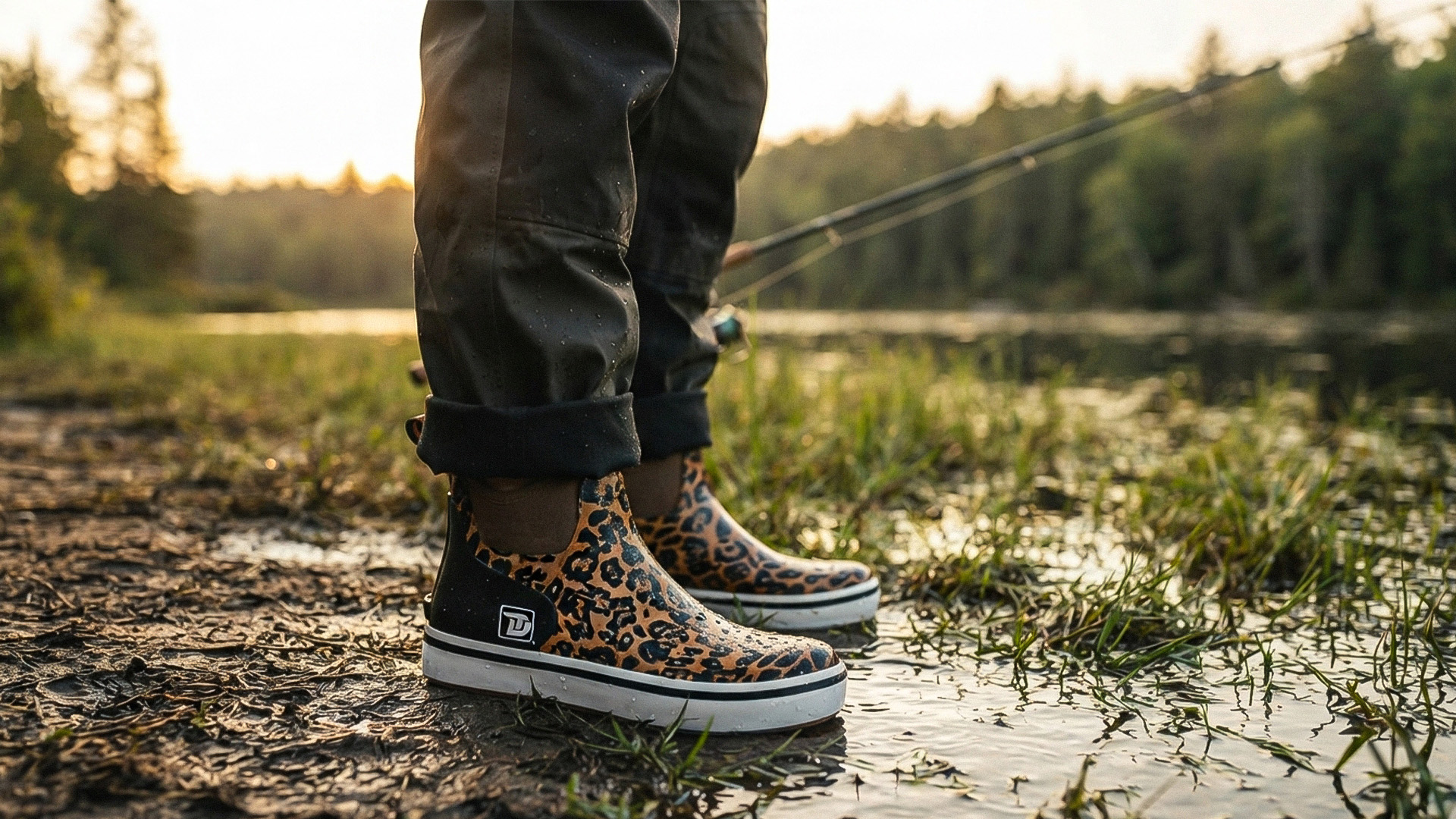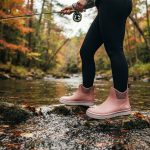
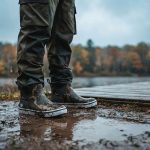
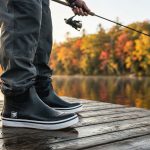
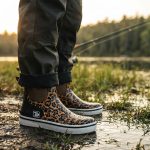
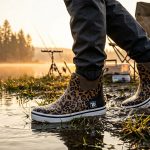
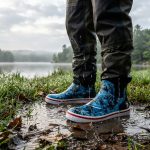
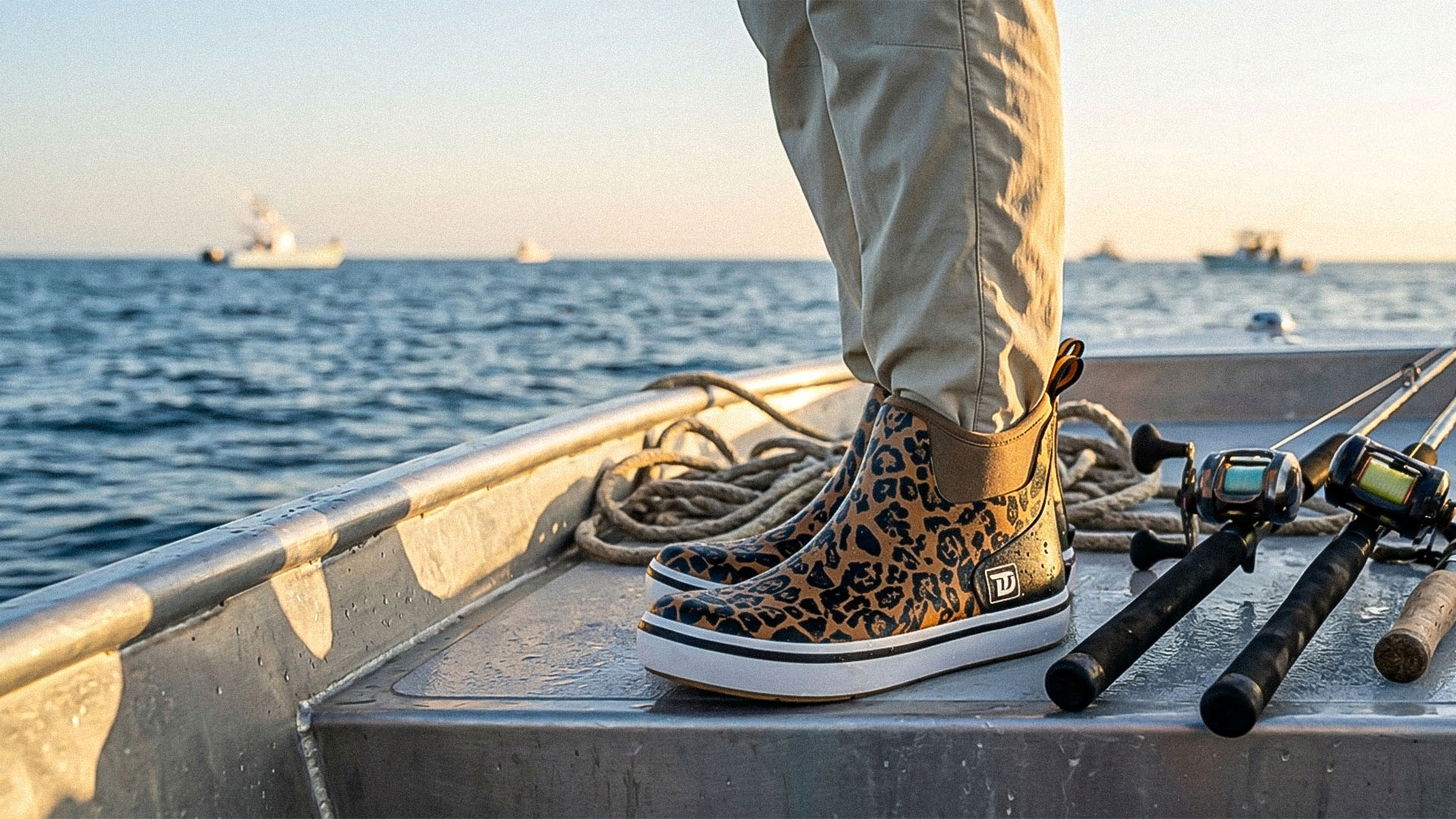
Striped bass fishing can take anglers through some of the most variable conditions on the water.
A spring morning in the Northeast may begin with cold wind and spray. A Chesapeake Bay trolling trip may involve wet decks, live bait, fish slime, rain, and hours of standing. A fall striper run can bring cold temperatures, rough water, muddy boat ramps, and long days chasing moving schools.
That makes footwear more important than many anglers expect.
The best deck boots for striped bass fishing should keep your feet dry, provide stable footing on wet boat surfaces, remain comfortable during long periods of standing, and clean up easily after bait, fish slime, saltwater, and mud.
For most boat-based striper fishing, waterproof ankle or mid-height deck boots offer an excellent balance of mobility, weather protection, and easy maintenance.
This guide explains what to look for in striped bass fishing footwear, when deck boots make sense, how spring and fall conditions affect boot choice, and what anglers should consider for trolling, live bait fishing, jigging, casting, and coastal boat trips.
Why Striped Bass Fishing Is Hard on Footwear
Striper fishing can expose footwear to:
- Saltwater spray
- Cold wind
- Rain
- Live bait water
- Fish slime
- Blood
- Muddy ramps
- Wet docks
- Cooler drainage
- Boat washdowns
- Long periods of standing
Unlike warm-weather recreational boating, some of the best striped bass fishing happens during cooler seasons.
That means keeping your feet dry can be just as important as keeping them warm.
Why Deck Boots Work Well for Striper Fishing
Deck boots are particularly useful because they combine:
- Waterproof construction
- Closed-toe coverage
- Easy-clean materials
- Wet-deck outsole design
- Comfortable standing support
- Quick pull-on convenience
They are well suited to boats where spray, bait water, and fish handling are part of the day.
Anglers comparing waterproof fishing footwear can evaluate TruDaveGear deck boots alongside other marine options based on waterproofing, outsole design, cushioning, removable insoles, fit, boot height, and seasonal conditions.
Spring Striped Bass Fishing
Spring striper fishing can involve some of the most uncomfortable weather of the season.
Conditions may include:
- Cold mornings
- Rain
- Fog
- Strong wind
- Cold water
- Wet ramps
- Boat spray
The air may warm by afternoon, but early-morning conditions can still make wet sneakers miserable.
Uninsulated waterproof deck boots paired with appropriate socks are often a good solution.
They provide weather protection without the excessive warmth of heavy winter boots.
Fall Striper Fishing
Fall is another season where deck boots become especially useful.
Striped bass may move along coastal waters, bays, rivers, and estuaries as water temperatures change.
Anglers may experience:
- Cold fronts
- Strong wind
- Rougher water
- Rain
- Wet decks
- Longer runs
Fall fishing often favors waterproof footwear because weather can change quickly.
A dry pair of socks becomes much more valuable when temperatures drop.
Northeast Striper Fishing
Striper anglers in the Northeast may fish areas such as:
- Long Island Sound
- Cape Cod
- Rhode Island
- New Jersey
- New York waters
- Connecticut
- Massachusetts
Weather can vary dramatically through the season.
Boat footwear should be ready for:
- Saltwater
- Cold spray
- Wind
- Rain
- Wet docks
Waterproof deck boots are especially practical during spring and fall.
Chesapeake Bay Striped Bass Fishing
Chesapeake Bay striper fishing can involve:
- Trolling
- Live lining
- Jigging
- Casting
- Chumming
These techniques can introduce different amounts of water and bait residue into the boat.
Live bait and chumming can make the cockpit particularly messy.
Deck boots help keep your feet protected while making cleanup easier after the trip.
Trolling for Striped Bass
Trolling can mean hours of standing or moving slowly around the boat.
Anglers may monitor:
- Rod holders
- Planer boards
- Umbrella rigs
- Downlines
- Electronics
Long standing means cushioning matters.
Look for boots with:
- Stable heel support
- Comfortable forefoot cushioning
- Secure heel fit
- Enough toe room
- Removable insoles
A boot should remain comfortable even during slow periods between bites.
Umbrella Rigs and Heavy Tackle
Striper trolling may involve relatively heavy terminal tackle.
Depending on the setup, anglers may use:
- Umbrella rigs
- Heavy sinkers
- Large plugs
- Planer boards
- Weighted lines
Keep tackle off walking areas.
Closed-toe deck boots provide more protection than sandals, but they are not safety-toe or puncture-resistant footwear.
The best protection is keeping the cockpit organized.
Live Bait Striper Fishing
Live bait fishing creates additional water around the boat.
Bait systems may involve:
- Livewells
- Bait tanks
- Buckets
- Aerators
- Transfer nets
Water may spill during bait handling.
Waterproof boots help prevent these small spills from soaking your footwear.
Fabric shoes may stay wet for hours after a single bait-tank accident.
Menhaden and Bunker
Menhaden, often called bunker in parts of the Northeast, are commonly associated with striped bass fishing.
Handling oily bait can leave residue on:
- Deck
- Gloves
- Bait containers
- Boots
Bait oils may create strong smells and slippery surfaces.
Deck boots are easier to rinse than mesh sneakers after bait-heavy fishing.
Eel Fishing for Stripers
Some striped bass anglers use live eels.
Eel water and slime can make the bait area messy.
Keep bait containers secure and rinse the deck when necessary.
Waterproof boots protect your feet from ordinary spills and are much easier to clean afterward.
Chumming for Striped Bass
Chumming can create one of the messiest striper fishing environments.
Chum residue may contain:
- Fish oils
- Ground bait
- Water
- Blood
- Organic material
This can create strong odor and slick deck surfaces.
Deck boots are a practical choice because molded waterproof materials do not absorb chum like fabric shoes.
However, chum on the outsole can reduce traction.
Clean the tread during and after fishing when needed.
Jigging for Striped Bass
Vertical jigging may require more active movement than trolling.
You may spend hours:
- Standing
- Working jigs
- Moving around schools
- Repositioning rods
- Fighting fish
For jigging, lighter deck boots are usually preferable.
Look for:
- Flexible forefoot
- Secure heel
- Low-profile ankle design
- Moderate cushioning
Heavy tall boots can become tiring during active fishing.
Casting to Breaking Fish
Striped bass may feed aggressively on the surface.
When birds and bait reveal a school, the boat can go from calm to active immediately.
Anglers may move quickly to:
- Grab rods
- Cast
- Clear other lines
- Reposition
- Net fish
A secure-fitting boot is important.
Your footwear should move with your foot during side steps and turns.
Loose boots can make fast deck movement feel less controlled.
Wet Landing Nets
Striped bass may require a landing net depending on fish size and boat setup.
Wet nets bring significant water aboard.
After multiple fish, the cockpit may remain damp.
Waterproof deck boots prevent net water from soaking into fabric footwear.
This is especially helpful in cool weather.
Striper Slime
Striped bass can leave slime on:
- Deck
- Net
- Cooler
- Boots
Fish slime mixed with seawater can create slippery areas.
Keep the fish-handling area organized.
Rinse heavy residue when it is safe to do so.
No deck boot is completely slip-proof on fish slime.
Fish Blood
When fish are legally harvested, blood may reach the deck or cooler area.
Waterproof boots are easier to clean than absorbent shoes.
Rinse fish residue before it dries.
This helps reduce:
- Odor
- Staining
- Slick tread
Wet-Deck Traction
A striper boat may become slippery from:
- Saltwater
- Rain
- Fish slime
- Bait oil
- Chum
- Washdowns
Look for a deck boot outsole with:
- Broad contact area
- Water channels
- Flexible rubber
- Stable heel platform
- Easy-clean grooves
Outsole condition matters.
A worn-smooth boot may not perform like it did when new.
Boat Spray
Striped bass fishing often involves moving between schools or fishing open bays and coastal waters.
Boat spray may reach:
- Cockpit
- Bow
- Anglers
- Footwear
This is where waterproof boots outperform ordinary sneakers.
Even moderate spray repeated over a long run can soak fabric shoes.
Cold Spray Feels Worse Than Rain
Cold saltwater spray can quickly reduce foot comfort.
When water temperatures are low, wet socks may feel cold for the rest of the day.
A waterproof boot helps prevent that moisture from reaching the foot.
Pair boots with moisture-wicking socks rather than cotton.
Best Socks for Striper Fishing
Choose socks made from:
- Merino wool
- Synthetic performance fibers
- Merino-synthetic blends
Avoid cotton.
Cotton absorbs moisture and dries slowly.
For cool spring and fall conditions, medium-weight merino socks can work well.
For warmer weather, switch to lighter socks.
Do Not Make Boots Too Tight With Thick Socks
Adding thicker socks only works if the boot has enough internal space.
Overly tight footwear can cause:
- Toe compression
- Instep pressure
- Reduced circulation
- Numbness
- Cold feet
Your toes should still move naturally.
Spare Socks
Keep a spare pair of socks in waterproof storage.
They are useful if water enters from:
- Heavy rain
- Spray
- Water over the boot collar
- Sweat
A dry pair can significantly improve comfort during a long trip.
Insulated vs. Uninsulated Striper Boots
Uninsulated Deck Boots
Best for:
- Spring
- Mild fall weather
- Summer
- Active jigging and casting
- Multi-season use
Insulated Deck Boots
Better for:
- Late fall
- Winter striper fishing where open seasons allow
- Cold northern conditions
- Long low-activity trolling days
For most anglers, uninsulated boots with appropriate socks are more versatile.
Summer Striper Fishing
Summer conditions can be much warmer.
During hot weather:
- Choose uninsulated ankle boots
- Wear lightweight socks
- Remove insoles after use
- Avoid heavy liners
If the boat stays dry and the weather is hot, fishing shoes may be more comfortable.
Night Striper Fishing
Striped bass are commonly targeted at night.
Night boat fishing creates additional footwear concerns because you may not immediately see:
- Wet areas
- Loose lures
- Fish slime
- Rods
- Coolers
- Bait water
Closed-toe waterproof footwear provides useful basic protection.
But good deck lighting and organization are essential.
Large Plugs and Treble Hooks
Striper anglers may use large:
- Topwater plugs
- Minnow plugs
- Swimbaits
- Trolling lures
Many have exposed treble hooks.
Do not leave them on the deck.
Standard deck boots are not hook-proof.
Store lures in:
- Tackle boxes
- Hook holders
- Dedicated trays
Footwear is not a substitute for safe tackle storage.
Surf Fishing vs. Boat Fishing
Deck boots are primarily useful for boat-based striped bass fishing.
Surf anglers often need different footwear.
Surf fishing may require:
- Waders
- Surf boots
- Sand protection
- Rock traction
- Cold-water systems
Do not assume a short deck boot is suitable for entering surf water.
Jetty Fishing
Rock jetties are another environment where deck boots may not be ideal.
Jetties can involve:
- Wet rocks
- Barnacles
- Uneven footing
- Wave wash
Specialized footwear with appropriate traction may be safer.
Marine deck boots are designed primarily for boat decks and hard relatively flat surfaces.
Dock Striper Fishing
Deck boots can work well on docks.
They provide water protection from:
- Rain
- Spray
- Bait water
- Wet boards
However, algae-covered dock surfaces can still be extremely slippery.
Move carefully.
Muddy Boat Ramps
Spring and fall rain can make launches muddy.
Deck boots work well for:
- Shallow mud
- Trailer areas
- Wet grass
- Puddles
Before stepping onto the boat, remove heavy mud from the tread.
Mud can reduce traction on hard boat decks.
Gravel Ramps
Small stones can become trapped in outsole grooves.
Before boarding:
- Inspect the tread
- Remove gravel
- Brush debris
This helps protect boat decking and maintain outsole contact.
Aluminum Fishing Boats
Striped bass anglers may use aluminum boats in rivers, bays, and lakes.
Wet aluminum can become slick from:
- Water
- Fish slime
- Mud
- Bait
Deck boots with clean marine-focused tread work well on these surfaces.
Fiberglass Boats
Center consoles and larger coastal boats commonly use fiberglass decks.
Deck boots are especially well suited to this environment.
A marine outsole should provide:
- Stable contact
- Controlled flexibility
- Water evacuation
Keep the deck clean because bait oil and slime can overwhelm any footwear.
Center Console Striper Fishing
Center consoles can be wet, especially during coastal or bay fishing.
Anglers may move between:
- Bow
- Console
- Cockpit
- Bait station
Low-profile ankle deck boots are useful because they offer water protection without excessive bulk.
Charter Striper Fishing
First-time charter passengers should ask the captain what footwear is recommended.
Questions to ask include:
- Are waterproof boots useful?
- Are non-marking soles required?
- Will bait be used?
- How wet does the deck get?
- Is rain gear recommended?
For many spring and fall charters, deck boots are a practical default.
Non-Marking Soles
Some boat owners prefer non-marking outsoles.
Check product specifications when necessary.
Remember:
Non-marking does not automatically mean good wet-deck traction.
Both characteristics matter.
Long Standing Comfort
Striper fishing may involve long stretches of trolling or waiting for schools.
Look for boots with:
- Stable heel cushion
- Comfortable forefoot
- Moderate arch support
- Removable insole
Extremely soft foam is not always better.
Stable support can remain more comfortable over a long day.
Removable Insoles
Removable footbeds are useful for:
- Drying
- Odor control
- Cushion replacement
- Arch support
- Seasonal adjustments
After a wet or sweaty trip, remove the insoles.
Dry them separately from the boots.
Heel Fit
Pull-on boots may have slight heel movement.
Too much movement can cause:
- Blisters
- Sock sliding
- Toe gripping
- Fatigue
The boot should feel controlled during:
- Walking
- Side steps
- Boat movement
Toe Room
Your toes should have enough space for:
- Natural movement
- Seasonal socks
- Mild swelling
Do not choose overly tight boots just to reduce heel lift.
Wide Feet
Wide-footed anglers should look for:
- Roomy forefoot
- Wide toe box
- Comfortable instep
- Secure heel
Do not simply buy a much longer size.
Extra length can increase foot movement.
High Instep
Pull-on deck boots may feel tight across a high instep.
Look for:
- Adequate internal volume
- Strong pull tabs
- Removable insoles
- Comfortable opening
Pain or numbness across the top of the foot is a sign the boot does not fit correctly.
Deck Boots vs. Sneakers for Striper Fishing
Deck Boots Are Better For:
- Cold weather
- Rain
- Spray
- Live bait
- Chumming
- Muddy ramps
- Wet decks
Sneakers Are Better For:
- Hot dry days
- Maximum airflow
- Long walking
During spring and fall boat fishing, waterproof boots usually have the advantage.
Deck Boots vs. Fishing Shoes
Fishing shoes are lighter and more breathable.
They may be better when:
- Weather is hot
- Deck stays dry
- Quick drainage matters
Deck boots are better when:
- Keeping feet dry matters
- Bait is messy
- Rain is expected
- Spray is common
Deck Boots vs. Tall Rubber Boots
Tall rubber boots provide more water coverage.
However, they may be:
- Heavier
- Warmer
- More restrictive
For most recreational striper boats, ankle or mid-height deck boots provide enough protection.
Rain Pants and Deck Boots
Keep rain pants outside the boot openings.
This lets water run down the exterior.
Do not tuck rain pants inside the boots.
Otherwise, rainwater can be directed straight into waterproof footwear.
Cleaning Bait From Deck Boots
After live bait or chum fishing:
- Rinse boots with fresh water.
- Use mild soap if oily residue remains.
- Brush the outsole.
- Rinse all soap away.
- Remove the insoles.
- Dry everything separately.
Do not let bait residue dry on the boots.
Cleaning Striper Slime
Fish slime should be rinsed promptly.
Pay attention to:
- Toe
- Sidewalls
- Heel
- Outsole grooves
A soft or medium brush can help remove residue.
Saltwater Care
After saltwater striper fishing:
- Rinse with fresh water
- Clean outsole grooves
- Rinse pull tabs
- Clean the collar
- Remove fish and bait residue
Salt maintenance should become routine for frequent coastal anglers.
Drying Deck Boots
After fishing:
- Remove insoles
- Drain water
- Open boot tops
- Dry with airflow
- Dry insoles separately
Avoid:
- Clothes dryers
- Heat guns
- Radiators
- Open flames
- Excessive direct heat
High heat can damage footwear materials and adhesives.
Odor Control
Bait-heavy striper fishing can create strong footwear odor.
Prevent it by:
- Cleaning bait quickly
- Wearing moisture-wicking socks
- Removing insoles
- Drying completely
- Cleaning boot trays
- Avoiding sealed wet storage
A hot vehicle can make fish odor much worse.
Clean Shoes for the Drive Home
Bring clean shoes for the ride home.
Store wet or dirty boots in:
- Rubber tray
- Plastic tote
- Washable cargo bin
This helps keep bait, fish slime, saltwater, and mud out of the vehicle interior.
Striped Bass Fishing Footwear Checklist
Before the trip:
- Check weather
- Inspect outsole tread
- Confirm boots are dry
- Choose appropriate socks
- Pack spare socks
- Bring rain gear
- Organize large hooks and lures
- Bring clean driving shoes
After fishing:
- Rinse saltwater
- Clean bait residue
- Remove fish slime
- Brush tread
- Remove insoles
- Dry completely
Best Deck Boot Features for Striped Bass Fishing
Look for:
Waterproof Construction
Important for spray, rain, and bait water.
Secure Heel
Useful during active casting and boat movement.
Stable Wet-Deck Outsole
Important on fiberglass and aluminum.
Comfortable Cushioning
Helps during long trolling sessions.
Removable Insoles
Improves drying and support customization.
Easy-Clean Exterior
Useful after live bait and chum.
Appropriate Boot Height
Ankle or mid-height works well for most recreational boats.
Seasonal Sock Compatibility
Useful during spring and fall.
Lightweight Construction
Improves comfort during active fishing.
Common Striper Fishing Footwear Mistakes
Wearing Mesh Sneakers During Cold Spring Fishing
Spray and rain can soak them quickly.
Wearing Cotton Socks
Cotton stays wet and dries slowly.
Wearing Insulated Boots During Warm Weather
Excess heat creates sweat.
Buying Boots Too Tight for Fall Socks
Compression can make feet colder.
Leaving Live Bait Water on Fabric Shoes
It can create strong odor.
Leaving Large Treble Hooks on the Deck
Deck boots are not hook-proof.
Wearing Deck Boots on Slippery Rock Jetties
Specialized rock footwear may be more appropriate.
Using Ankle Boots for Surf Wading
Water will enter over the top.
Bringing Mud Onto the Boat
Mud reduces outsole contact.
Storing Dirty Boots in a Hot Vehicle
Bait and fish odors become much stronger.
Final Thoughts
Striped bass fishing creates exactly the type of changing, wet environment where waterproof deck boots are useful.
Spring cold fronts, fall wind, coastal spray, Chesapeake Bay rain, live bait, chum, wet landing nets, fish slime, and muddy ramps can make ordinary sneakers uncomfortable quickly.
For most boat-based striper anglers, waterproof ankle or mid-height deck boots provide an excellent balance of protection, mobility, easy cleaning, and all-day comfort.
Choose boots with a secure heel, stable wet-deck outsole, removable insoles, comfortable cushioning, and enough toe room for seasonal socks.
Use uninsulated boots during mild conditions and warmer footwear when temperatures genuinely require it.
Wear synthetic or merino-blend moisture-wicking socks instead of cotton.
Keep plugs, hooks, planer boards, bait containers, and landing nets organized.
Standard deck boots are not puncture-proof and are not designed as surf-wading or slippery-rock footwear.
After fishing, rinse saltwater, clean bait and fish slime, brush the outsole, remove the insoles, and dry everything thoroughly.
The right footwear should help you stay comfortable through the slow hours of trolling and ready for the moment a school of stripers pushes bait to the surface.
Your attention should be on the rods, birds, current, and fish—not cold feet or soaked sneakers.
Frequently Asked Questions
Are deck boots good for striped bass fishing?
Yes. Deck boots are especially useful for boat-based striper fishing in rainy, cold, wet, or bait-heavy conditions.
What boots should I wear for spring striper fishing?
Waterproof ankle or mid-height deck boots paired with moisture-wicking socks are a strong choice for many spring boat trips.
Are deck boots good for Chesapeake Bay striper fishing?
Yes. They are useful for trolling, live bait, chumming, wet decks, and rainy bay conditions.
Are deck boots good for Northeast striped bass fishing?
Yes, especially during cool spring and fall seasons when wind, spray, and rain are common.
What socks should I wear with striper fishing deck boots?
Wear synthetic, merino wool, or merino-blend moisture-wicking socks. Avoid cotton.
Should striped bass fishing boots be insulated?
Not always. Uninsulated boots are more versatile, while insulated boots can be useful during genuinely cold late-season trips.
Are deck boots good for trolling stripers?
Yes. Choose boots with stable cushioning and enough support for long periods of standing.
Are deck boots good for live bait fishing?
Yes. Waterproof, easy-clean boots are useful around bait tanks, menhaden, eels, and bait water.
Can I wear deck boots while chumming?
Yes. They are easier to clean than fabric footwear after exposure to fish oils and chum residue.
Are deck boots good for surf fishing?
Not necessarily. Surf fishing may require taller waterproof or specialized surf footwear depending on water depth and conditions.
Are deck boots good for fishing from rock jetties?
Standard deck boots are usually not designed for wet uneven rocks. Footwear designed specifically for rocky jetty traction may be better.
Can I wear sneakers for striper fishing?
Yes in warm dry conditions, but sneakers can become soaked quickly from spray, rain, bait water, and wet nets.
Should rain pants go inside deck boots?
No. Keep rain pants outside the boot opening so water runs down the exterior.
How do I clean bunker or bait smell from deck boots?
Rinse quickly, use mild soap when needed, brush the outsole, remove the insoles, and dry everything completely.
How do I clean striper slime from fishing boots?
Rinse with fresh water, use mild soap if necessary, brush affected areas, rinse thoroughly, and air dry.
Are removable insoles useful for striper fishing?
Yes. They improve drying, odor control, cushioning replacement, and support.
How should striped bass deck boots fit?
They should hold the heel securely while providing enough toe room for natural movement and the socks you plan to wear.
What is the biggest footwear mistake in striper fishing?
Using absorbent footwear during cold wet boat conditions—or using short deck boots for surf and rocky environments they were not designed for—are two of the most common mistakes.