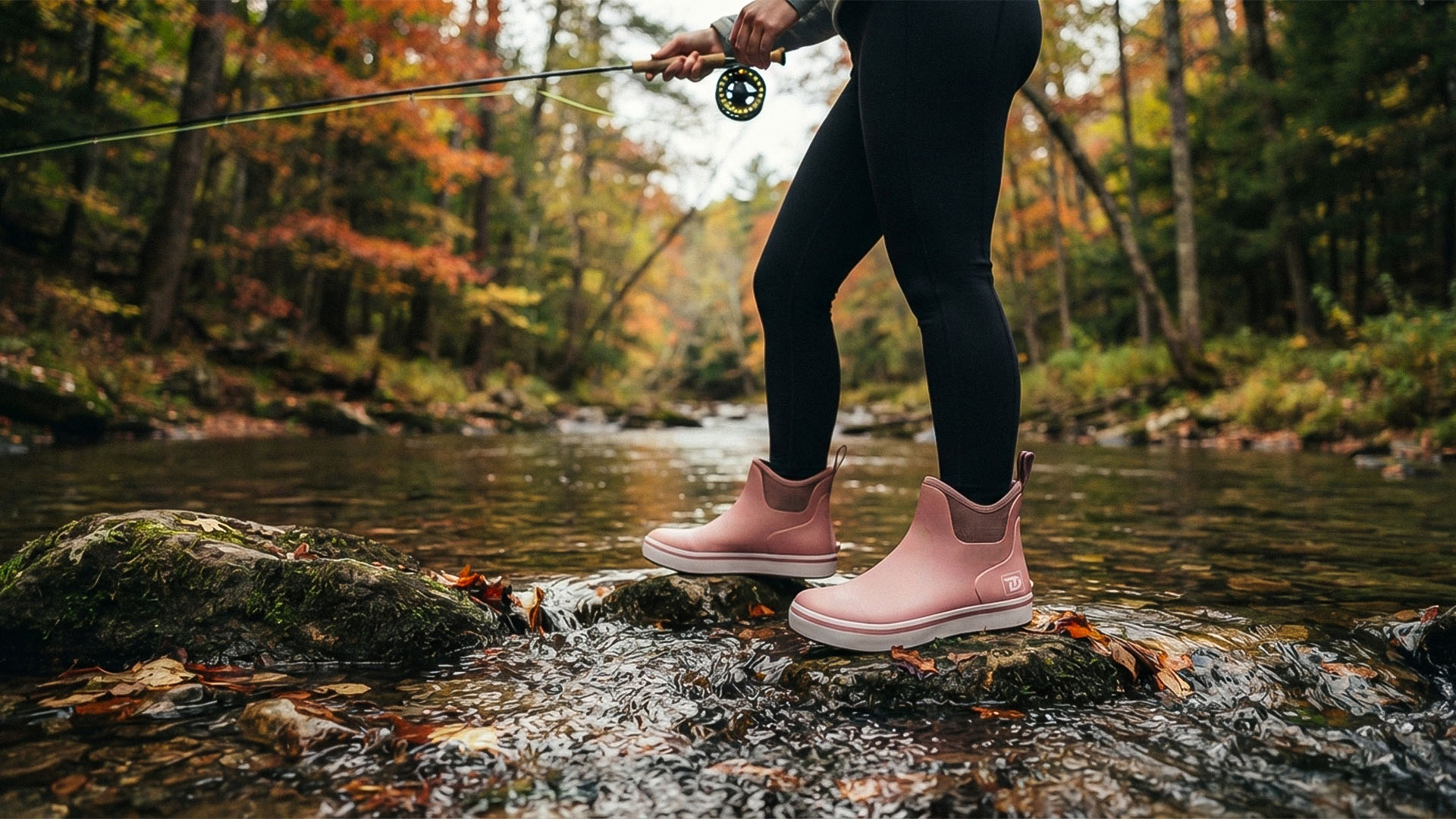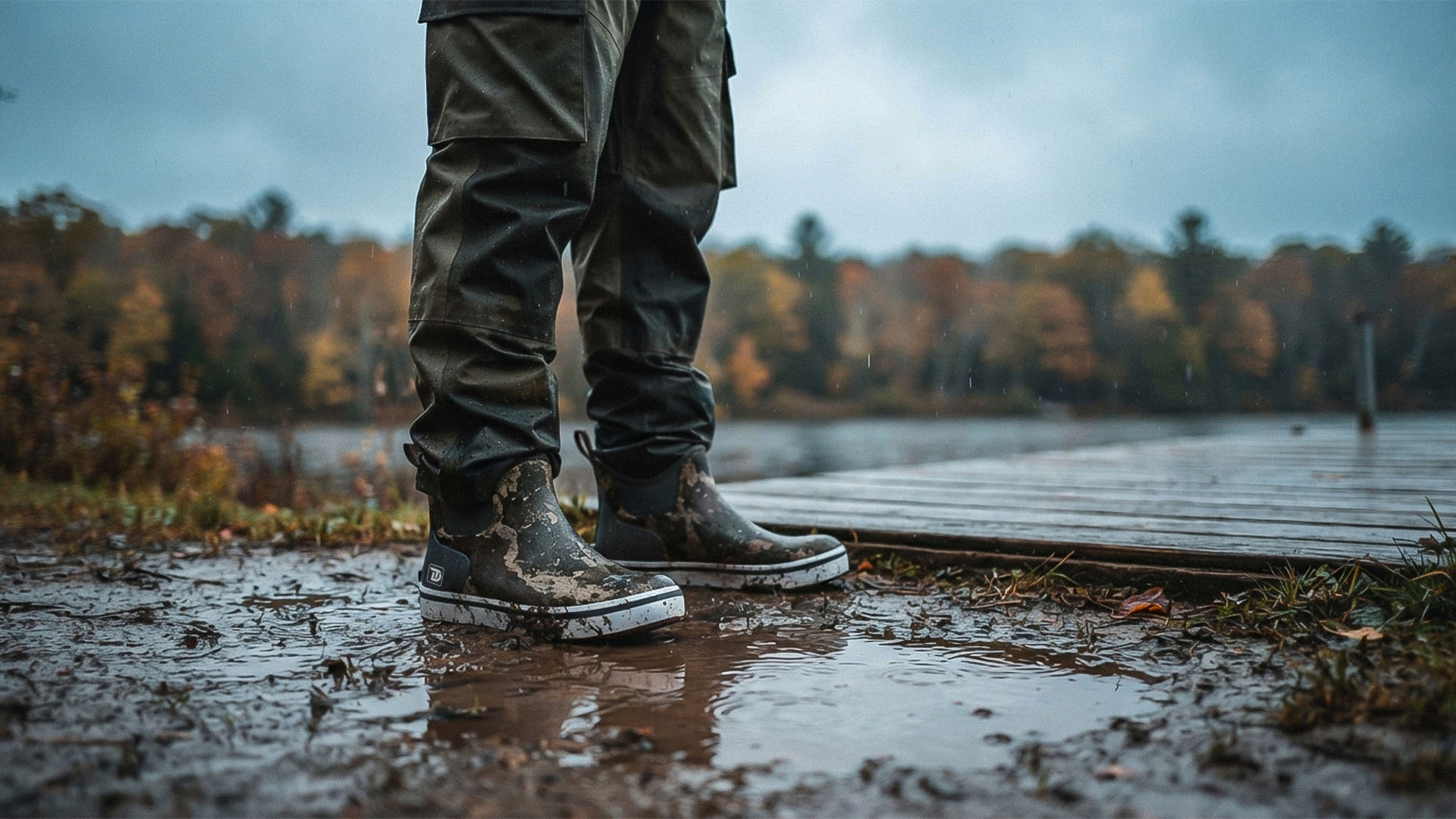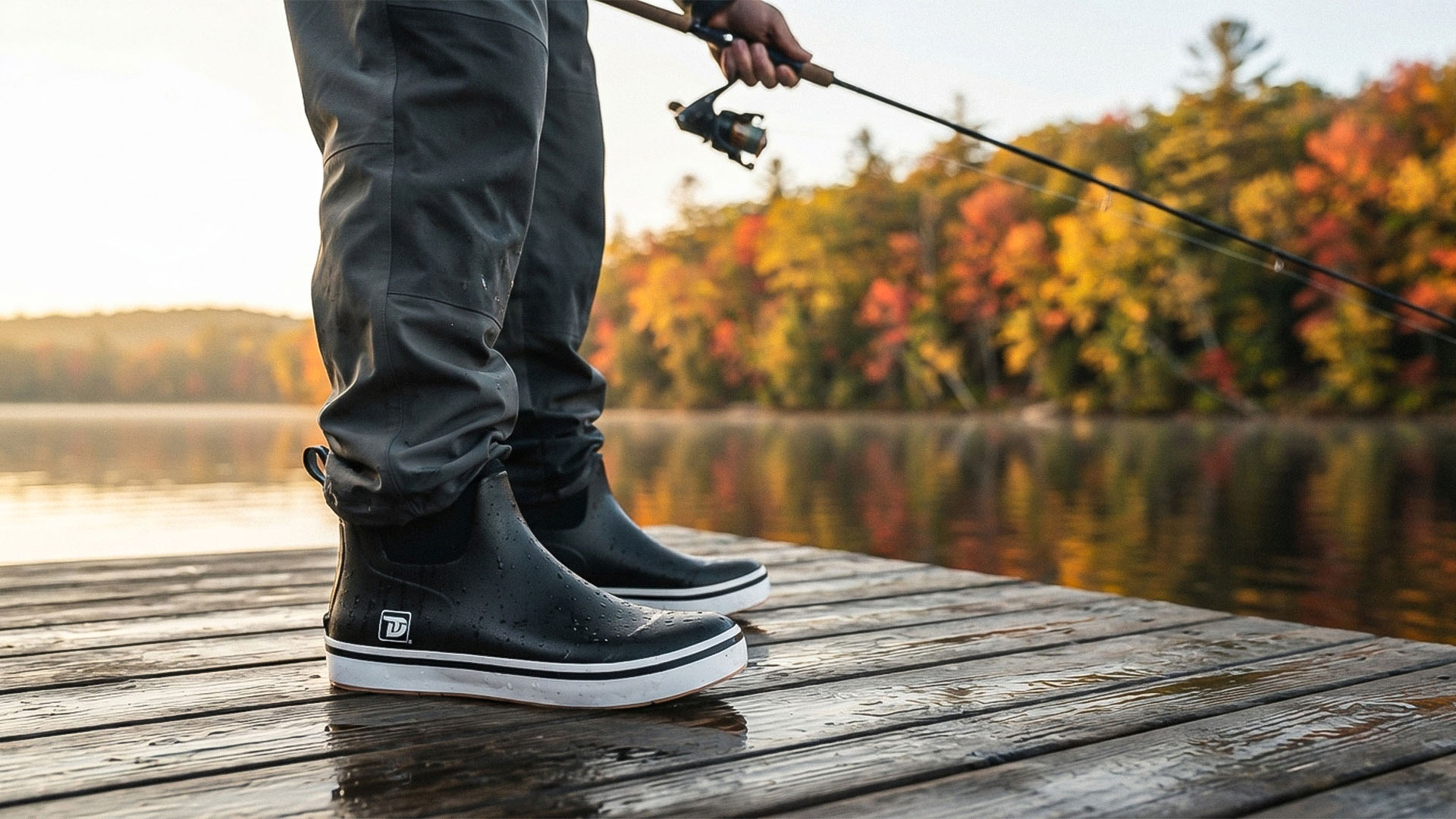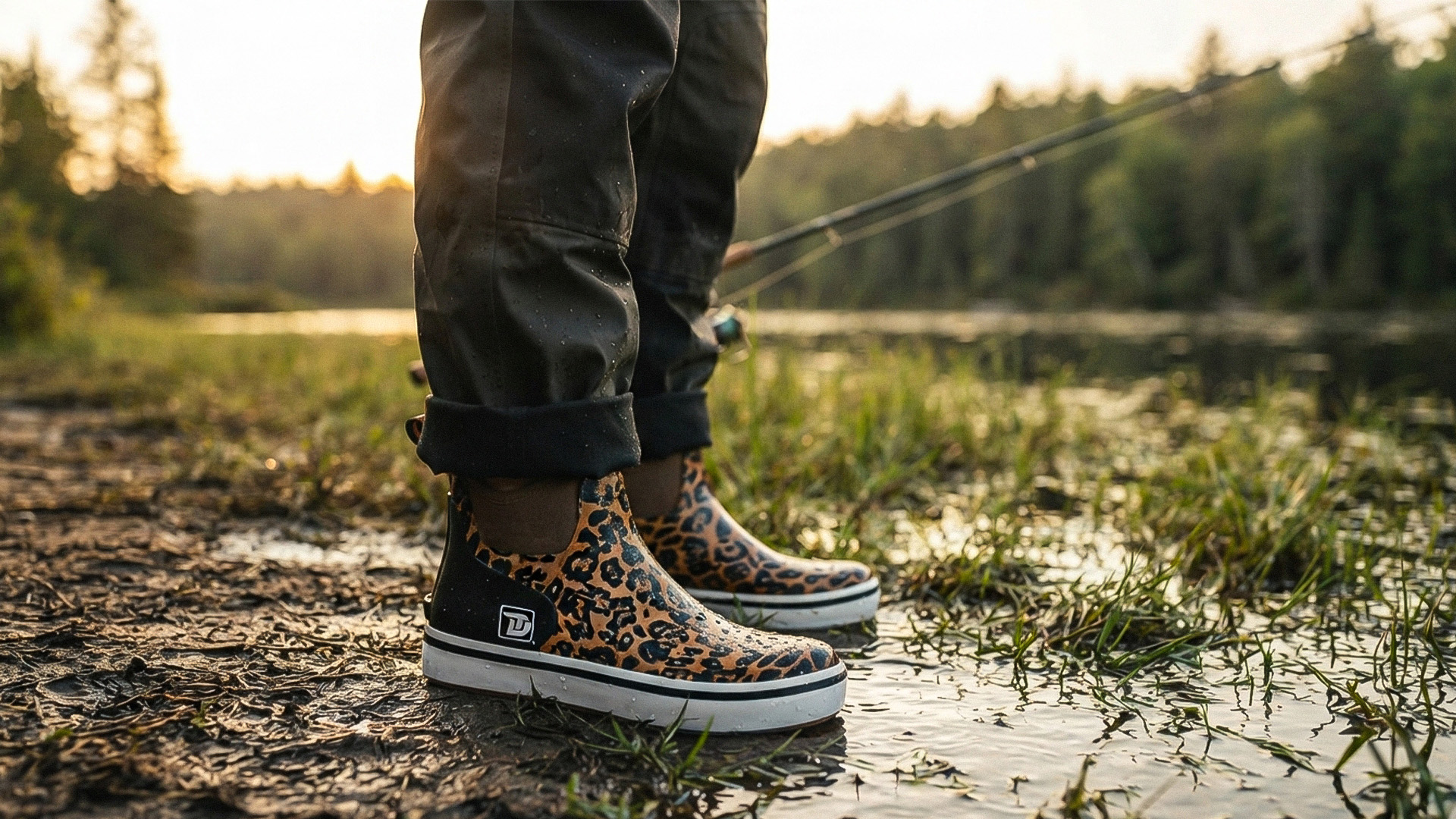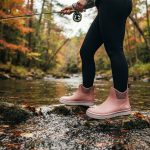
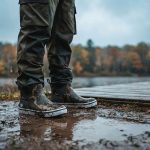
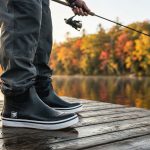
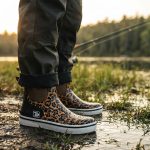
Salmon fishing often happens in exactly the kind of weather that makes anglers appreciate waterproof footwear.
Cold mornings, steady rain, river spray, wet landing nets, fish slime, muddy boat ramps, and hours of standing can turn an ordinary pair of sneakers into a cold, uncomfortable problem long before the fishing day ends.
That is especially true in regions such as the Pacific Northwest and Great Lakes, where productive salmon seasons often overlap with cool, wet weather.
The best deck boots for salmon fishing should keep your feet dry, provide stable footing on wet boat surfaces, remain comfortable during long trolling or drifting sessions, and work with the socks you need for changing temperatures.
For many boat-based salmon anglers, waterproof ankle or mid-height deck boots offer one of the best combinations of protection, comfort, and easy cleanup.
This guide explains what to look for in salmon fishing boots, when insulated footwear makes sense, how deck boots compare with wading boots, and what anglers should consider for rivers, Great Lakes trolling, coastal salmon trips, and cold fall weather.
Why Salmon Fishing Is Hard on Footwear
Salmon fishing can involve:
- Cold rain
- River spray
- Ocean spray
- Wet boat floors
- Large landing nets
- Fish slime
- Blood
- Mud
- Gravel ramps
- Livewell or fish-box water
- Long trolling sessions
- Cold fall temperatures
The conditions often change throughout the day.
A morning may begin cold and foggy, followed by rain, wind, and a warmer afternoon.
Your footwear needs enough weather protection without becoming excessively heavy.
Why Deck Boots Work Well for Salmon Fishing
Deck boots are especially useful for anglers who spend most of their fishing day in a boat.
They provide:
- Waterproof construction
- Closed-toe coverage
- Easy-rinse surfaces
- Wet-deck traction
- Comfortable standing support
- Quick pull-on convenience
- Protection from muddy ramps
Compared with fabric footwear, they absorb much less water and fish residue.
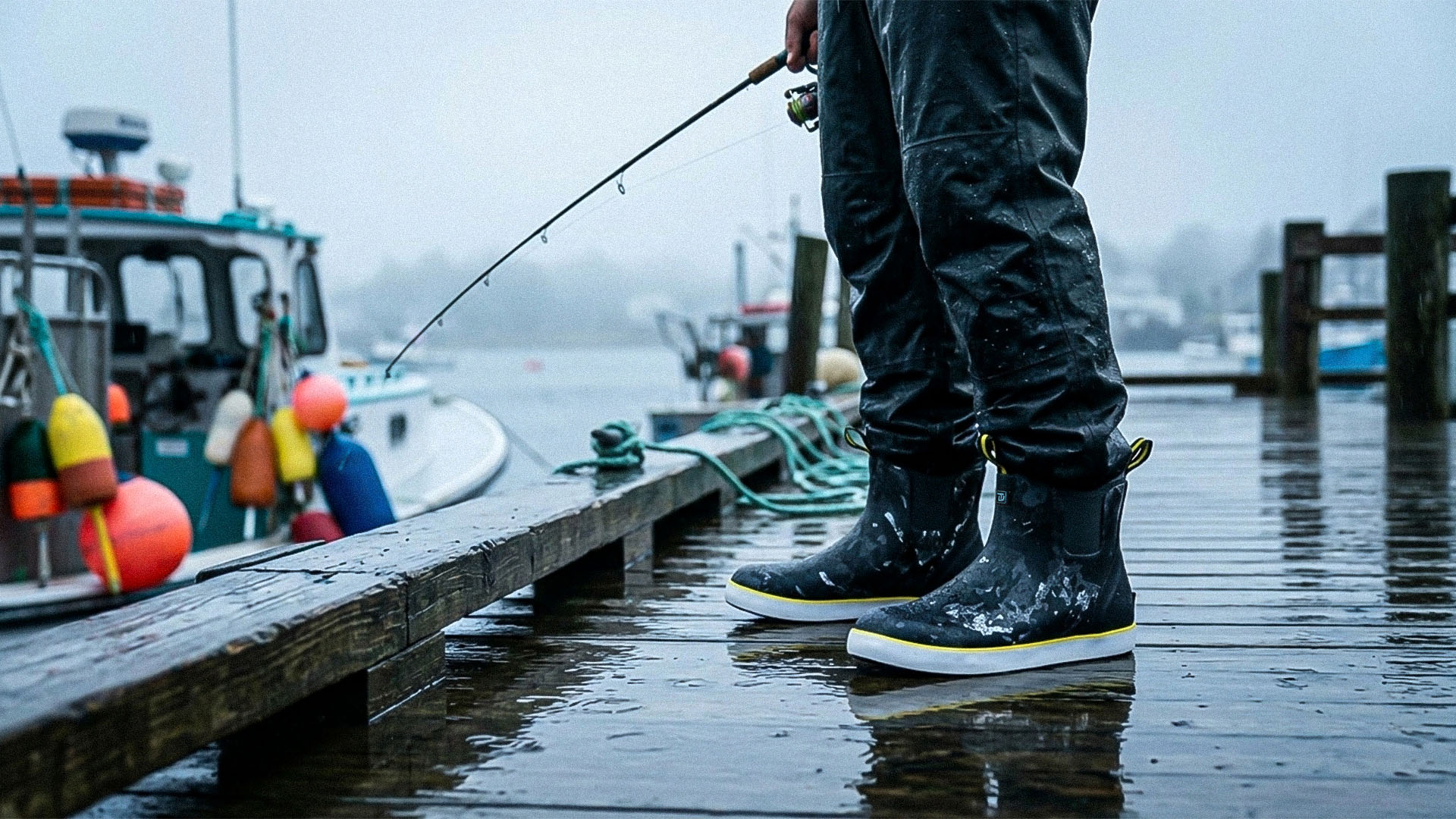
Anglers comparing waterproof fishing footwear can evaluate TruDaveGear deck boots alongside other marine and freshwater options based on waterproofing, outsole design, cushioning, removable insoles, boot height, and cold-weather comfort.
Pacific Northwest Salmon Fishing
The Pacific Northwest is one of the environments where waterproof boots make the most sense.
Salmon anglers may encounter:
- Frequent rain
- Cool temperatures
- Wet river boats
- Muddy launches
- Coastal spray
- Long fishing days
Even when the weather forecast calls for light rain, several hours outside can leave ordinary shoes completely soaked.
Deck boots paired with rain gear create a much more practical system.
Great Lakes Salmon Fishing
Great Lakes salmon anglers can experience conditions that feel much more like offshore fishing than inland lake fishing.
Trips may include:
- Long open-water runs
- Wind
- Heavy spray
- Trolling
- Cold mornings
- Large landing nets
- Wet cockpits
Waterproof deck boots help keep your socks protected from spray and rain.
They are especially useful during spring and fall when air and water temperatures are lower.
Salmon Trolling
Trolling is one of the most common salmon fishing techniques.
Anglers may spend hours:
- Watching rods
- Checking downriggers
- Monitoring planer boards
- Adjusting speed
- Changing lures
- Waiting for strikes
Long periods of standing without much walking can make feet feel cold.
Good salmon fishing boots should provide:
- Stable cushioning
- Enough toe room
- Secure heel fit
- Waterproof protection
- Appropriate warmth
Comfort becomes increasingly important as the day gets longer.
Downrigger Fishing
Downrigger setups create additional activity around the boat.
Anglers may need to:
- Set weights
- Clip lines
- Adjust depths
- Clear gear
- Net fish
The working area can become crowded with:
- Rods
- cables
- tackle
- nets
Your footwear should fit securely enough that you can move without the boot rotating or sliding around your foot.
Wet Landing Nets
Large salmon often require large nets.
A net can bring a surprising amount of water back into the boat.
Once used, it may drip across:
- Cockpit
- deck
- fish box
- anglers’ feet
This alone can soak ordinary shoes during a productive day.
Waterproof deck boots handle repeated net water much better.
Salmon Slime
Salmon can leave a significant amount of slime around the boat.
Fish slime mixed with water can make walking areas slick.
Try to keep the fish-handling area controlled.
When conditions allow:
- Rinse slime
- Keep the fish in the net or fish box
- Avoid leaving fish on walking surfaces
- Keep the deck organized
No boot is completely slip-proof.
Clean surfaces are just as important as good footwear.
Fish Blood and Boat Cleanup
Salmon fishing may also create blood and fish residue around:
- Fish boxes
- Coolers
- Cleaning areas
- Cockpit floors
Deck boots are easier to rinse than fabric shoes.
After fishing, a freshwater rinse and mild soap when needed can remove most residue before it dries.
This makes waterproof boots especially useful for anglers who keep fish.
River Boat Salmon Fishing
River salmon anglers may fish from:
- Drift boats
- Jet boats
- Sleds
- Aluminum fishing boats
River boats create their own footwear conditions.
You may deal with:
- Wet aluminum
- Anchor rope
- Muddy ramps
- Rain
- Fish slime
- Gravel
Deck boots work well when you stay primarily inside the boat.
If you plan to wade extensively, wading boots are the better tool.
Deck Boots vs. Wading Boots for Salmon Fishing
This is an important distinction.
Deck Boots
Best for:
- Boat-based fishing
- Wet decks
- Rain
- Muddy ramps
- Docks
Advantages:
- Waterproof
- Lightweight
- Easy to clean
- Comfortable for boat use
Wading Boots
Best for:
- Standing in rivers
- Rocky bottoms
- Strong current
- Repeated water entry
Advantages:
- Better support on uneven underwater terrain
- More aggressive river traction
- Better wader compatibility
If you stay in the boat, deck boots are usually more comfortable.
If you spend significant time in the river, use proper wading footwear.
Jet Boat Salmon Fishing
Jet boats are commonly used in river fisheries.
The floor may become wet from:
- Rain
- Spray
- Fish handling
- Anchor gear
Low-profile waterproof deck boots work well because they provide water protection without the bulk of tall rubber boots.
Look for a secure fit so your feet remain controlled during boat movement.
Drift Boat Salmon Fishing
Drift boats often involve a combination of:
- Sitting
- standing
- casting
- rowing
- shore stops
Deck boots work well if you do not expect deep wading.
Choose a boot with:
- Flexible forefoot
- Stable heel
- Moderate cushioning
- Good sock compatibility
A bulky boot may interfere with rowing positions or limited foot space.
Coastal Salmon Fishing
Some salmon fishing takes place in bays, estuaries, and coastal waters.
Here, footwear may be exposed to:
- Saltwater spray
- Rain
- Fish slime
- bait
- Washdowns
Waterproof deck boots make sense because they can transition between freshwater and marine environments easily.
After saltwater exposure, rinse them with fresh water.
Chinook Salmon Fishing
Chinook or king salmon can be large and powerful.
Landing one may involve:
- Large nets
- Heavy rods
- Fast movement
- Crowded cockpits
Closed-toe footwear helps protect against ordinary gear contact.
However, recreational deck boots are not safety-toe footwear.
Keep heavy tackle, sinkers, and hooks off the floor.
Coho Salmon Fishing
Coho fishing can involve active trolling or casting.
Anglers may move more frequently than during slower king salmon trolling.
For active fishing, choose boots that are:
- Lightweight
- Flexible
- Secure around the heel
- Comfortable during side steps
Heavy tall boots can feel unnecessary unless the weather is extremely wet.
Pink Salmon Fishing
Pink salmon fisheries can involve large numbers of anglers and busy boats.
Deck organization matters.
Keep:
- Nets
- tackle
- coolers
- hooks
out of walking areas.
Waterproof footwear is useful, but a clean deck is more important than any outsole.
Sockeye Salmon Fishing
Sockeye fishing methods vary by region, but boat anglers still benefit from waterproof footwear during wet conditions.
If the day includes shoreline access or wading, select footwear accordingly.
Do not use ankle deck boots as a substitute for true wading equipment.
Cold Fall Salmon Fishing
Fall salmon fishing can bring:
- Cold rain
- Strong wind
- Fog
- Low temperatures
- Cold water
This is where footwear needs change from simple waterproofing to waterproofing plus warmth.
Look for:
- Enough internal volume
- Good sock compatibility
- Stable footbed
- Appropriate insulation when needed
Insulated vs. Uninsulated Salmon Boots
Uninsulated Deck Boots
Best for:
- Mild fall weather
- Spring fishing
- Summer salmon
- Active boat use
- Multi-season anglers
Insulated Deck Boots
Best for:
- Late fall
- Very cold mornings
- Long trolling sessions
- Anglers who get cold easily
For many anglers, uninsulated boots plus quality socks are more versatile.
Why Too Much Insulation Can Be a Problem
Over-insulated boots can make your feet sweat.
Once socks become damp from sweat, your feet may feel colder later.
Signs a boot is too warm include:
- Damp socks
- Hot feet
- Strong odor
- Excess moisture inside
Match insulation to actual weather rather than the coldest possible day.
Best Socks for Salmon Fishing
For most salmon trips, choose:
- Merino wool
- Synthetic performance socks
- Merino-synthetic blends
Avoid cotton.
Cotton holds moisture and dries slowly.
For colder weather, medium-weight merino socks provide a good balance of warmth and moisture management.
Do Not Wear Multiple Tight Sock Layers
More socks do not automatically mean warmer feet.
Multiple thick layers can make the boot too tight.
That may cause:
- Poor circulation
- Toe compression
- Numbness
- Cold feet
Your toes should have enough room to move.
Spare Socks
A spare pair is worth packing.
Socks can become wet from:
- Rain
- Spray
- Water entering over the boot
- Sweat
Keep spare socks in a waterproof bag.
On a long salmon trip, changing into dry socks can dramatically improve comfort.
Rain Pants and Deck Boots
For wet-weather salmon fishing, wear rain pants over the boot openings.
The correct arrangement is:
- Sock
- Boot
- Rain pant outside boot
This allows rain to run down the exterior.
Do not tuck rain pants into the boots unless your clothing system specifically requires it.
Muddy River Ramps
Rainy salmon seasons often mean muddy launches.
Deck boots are useful for:
- Shallow mud
- Wet grass
- Puddles
- Trailer work
Before boarding, remove heavy mud from the outsole.
Mud packed in tread can reduce traction on the boat.
Gravel Launches
River launches may also contain gravel.
Small stones can become trapped in outsole grooves.
Before stepping onto the boat:
- Inspect tread
- Remove gravel
- Brush debris
This can protect boat floors and improve outsole contact.
Algae-Covered Ramps
Wet algae on submerged ramps can be extremely slippery.
Do not assume a marine outsole makes these surfaces safe.
Move carefully.
Use stable handholds when available.
Avoid rushing during boat launching and retrieval.
Wet Aluminum Boat Floors
Many salmon boats have aluminum floors.
Water can make these surfaces slick.
A good deck boot should provide:
- Broad outsole contact
- Flexible rubber
- Water channels
- Stable heel support
Keep the tread clean.
Mud and gravel reduce outsole contact.
Carpeted Fishing Boats
Some Great Lakes boats use marine carpet.
Waterproof boots keep your socks dry when carpet becomes soaked from:
- Rain
- Spray
- Wet nets
But clean mud from the outsole before boarding.
Dirty waterproof boots can be harder on carpet than clean sneakers.
Synthetic Decking
Boats with EVA or other synthetic flooring may provide more cushioning.
Still, inspect your boot tread for:
- Gravel
- Sharp debris
- Mud
before stepping aboard.
Grit trapped in any outsole can damage softer deck surfaces.
Long Standing Comfort
Trolling anglers may stand for many hours.
Look for boots with:
- Stable heel cushioning
- Supportive footbed
- Comfortable forefoot
- Secure fit
A boot that feels soft in the store is not necessarily comfortable after eight hours.
Balanced support is usually better than excessive softness.
Removable Insoles
Removable footbeds are highly useful for salmon anglers.
They allow you to:
- Dry the boots faster
- Replace worn cushioning
- Add arch support
- Reduce odor
- Clean sweat and moisture
After a rainy trip, remove the insoles immediately.
Dry them separately.
Heel Fit
Pull-on deck boots naturally allow some heel movement.
Excessive movement can cause:
- Blisters
- Sock movement
- Toe gripping
- Fatigue
Test new boots by:
- Walking
- Side-stepping
- Squatting
- Using stairs
The boot should remain controlled.
Toe Room
Salmon fishing boots should provide enough room for:
- Natural toe movement
- Seasonal socks
- Mild foot swelling
Your toes should not touch the front.
Avoid sizing down just to reduce heel lift.
Wide Feet
Wide-footed anglers should look for:
- Roomy forefoot
- Comfortable toe box
- Secure heel
- Enough instep room
Do not solve width problems by choosing a much longer boot.
Excess length can make the boot unstable.
High Instep
Pull-on boots may be difficult for anglers with high insteps.
Signs of poor fit include:
- Pressure on top of the foot
- Numbness
- Difficulty putting boots on
- Difficulty removing them
Look for:
- Higher internal volume
- Strong pull tabs
- Removable insoles
Deck Boots vs. Sneakers for Salmon Fishing
Deck Boots Are Better For:
- Rain
- Spray
- Wet nets
- Mud
- Cold mornings
- Boat cleanup
Sneakers Are Better For:
- Warm dry days
- Long walking
- Maximum ventilation
During typical fall salmon conditions, waterproof deck boots often have the advantage.
Deck Boots vs. Tall Rain Boots
Tall rain boots provide more coverage but may be:
- Heavier
- warmer
- more restrictive
For recreational boat fishing, ankle or mid-height deck boots usually provide better mobility.
Tall boots may make sense for extremely wet work environments.
Deck Boots vs. Waterproof Hiking Boots
Waterproof hiking boots are useful when a salmon trip includes significant walking.
They offer:
- Lace adjustment
- ankle support
- trail traction
Deck boots offer:
- Easier cleaning
- faster entry
- better wet-boat convenience
Choose based on whether most of the day happens on the boat or on land.
Night and Early-Morning Salmon Fishing
Some salmon trips begin before sunrise.
Reduced visibility increases the importance of:
- Secure footwear
- Organized tackle
- Good lighting
Keep hooks and tackle away from walking areas.
Deck boots provide closed-toe coverage but are not hook-proof.
Large Hooks and Salmon Tackle
Salmon fishing may involve:
- Treble hooks
- large single hooks
- flashers
- sinkers
- downrigger equipment
Keep tackle organized.
A recreational deck boot will not reliably stop a sharp hook.
Use tackle storage rather than relying on footwear.
Cleaning Salmon Slime From Deck Boots
After fishing:
- Rinse with fresh water.
- Remove slime.
- Use mild soap if needed.
- Brush the outsole.
- Rinse thoroughly.
- Remove the insoles.
- Air dry.
Clean fish residue before it dries.
Cleaning Fish Blood
Blood may leave stains and odor if allowed to sit.
Rinse promptly.
Use mild soap as needed.
Focus on:
- Toe
- Sidewalls
- Heel
- Outsole grooves
Avoid harsh chemicals unless the manufacturer approves them.
Cleaning River Mud
Mud can harden inside tread grooves.
Use fresh water and a boot brush.
Before cleaning by hand, check for:
- Hooks
- Sharp gravel
- Shell fragments
A brush is safer than digging through tread with bare fingers.
Saltwater Care
If salmon fishing in saltwater or brackish areas:
- Rinse boots with fresh water
- Clean the outsole
- Remove salt from pull tabs and collar
- Dry completely
Saltwater maintenance is especially important for anglers who fish frequently.
Drying Boots
After fishing:
- Remove insoles
- Drain water
- Open boot tops
- Use gentle airflow
- Dry footbeds separately
Avoid:
- Clothes dryers
- Heat guns
- Radiators
- Open flames
- High direct heat
Excessive heat may damage waterproof materials and adhesives.
Odor Control
Salmon fishing boots can develop odor from:
- Sweat
- Fish slime
- Damp insoles
- Wet storage
Prevent odor by:
- Wearing moisture-wicking socks
- Removing insoles
- Cleaning fish residue
- Drying completely
- Avoiding sealed wet storage
Two-Pair Strategy for Frequent Salmon Anglers
Frequent anglers may benefit from:
- Lightweight uninsulated deck boots
- Warmer insulated boots
This allows footwear to match the season.
It also provides time for one pair to dry between trips.
Salmon Fishing Footwear Checklist
Before fishing:
- Check the weather
- Determine whether you will wade
- Inspect outsole tread
- Confirm boots are dry
- Choose proper socks
- Pack spare socks
- Bring rain gear
- Organize hooks and tackle
After fishing:
- Rinse mud
- Clean fish slime
- Remove blood
- Brush tread
- Remove insoles
- Dry completely
Best Deck Boot Features for Salmon Fishing
Look for:
Waterproof Construction
Essential for rain, spray, and wet nets.
Secure Heel Fit
Important for boat movement.
Comfortable Toe Box
Allows seasonal socks.
Stable Wet-Surface Outsole
Useful on wet boat floors.
Removable Insoles
Improves drying and support.
Comfortable Cushioning
Helps during long trolling sessions.
Appropriate Boot Height
Ankle or mid-height works well for most boat anglers.
Easy-Clean Exterior
Useful after fish slime and blood.
Seasonal Warmth
Choose insulation based on actual conditions.
Common Salmon Fishing Footwear Mistakes
Wearing Mesh Sneakers in Cold Rain
They can become soaked quickly.
Wearing Cotton Socks
Cotton holds moisture and dries slowly.
Using Deck Boots for Deep Wading
Short waterproof boots are not wading footwear.
Wearing Boots Too Tight With Fall Socks
Compression can make feet colder.
Wearing Heavy Insulated Boots in Mild Weather
Sweat may become the bigger problem.
Leaving Wet Landing Nets Across Walking Areas
Net water and clutter can create hazards.
Bringing Mud Onto the Boat
Mud reduces outsole contact.
Tucking Rain Pants Into Boots
Rainwater may run inside.
Leaving Hooks Loose on the Deck
Deck boots are not puncture-proof.
Storing Wet Boots in a Boat Compartment
Poor airflow creates odor.
Final Thoughts
Salmon fishing is exactly the kind of environment where waterproof deck boots can earn a permanent place in your fishing gear.
Cold rain, river spray, Great Lakes wind, wet landing nets, muddy ramps, fish slime, and long trolling sessions can make ordinary footwear uncomfortable quickly.
For boat-based salmon fishing, waterproof ankle or mid-height deck boots provide an excellent balance of protection, mobility, easy cleaning, and long-day comfort.
Choose boots with a secure heel, stable outsole, comfortable toe room, removable insoles, and enough cushioning for hours of standing.
Use uninsulated boots for mild conditions and warmer or insulated footwear for genuinely cold late-season trips.
Wear merino or synthetic moisture-wicking socks instead of cotton.
Keep rain pants outside the boot openings.
If you plan to spend significant time wading, use proper wading footwear instead of trying to turn deck boots into river boots.
After fishing, rinse mud, fish slime, blood, and saltwater, remove the insoles, and dry everything completely.
The best salmon fishing footwear should keep your feet dry and comfortable enough that your attention stays on rods, currents, downriggers, and the next fish—not cold toes or soaked socks.
Frequently Asked Questions
Are deck boots good for salmon fishing?
Yes. Deck boots are especially useful for boat-based salmon fishing in rainy, cold, muddy, or wet conditions.
What boots should I wear for Pacific Northwest salmon fishing?
Waterproof ankle or mid-height deck boots with moisture-wicking socks are a practical choice for many boat-based trips.
Are deck boots good for Great Lakes salmon trolling?
Yes. They help protect against spray, rain, wet nets, and long periods on wet boat floors.
Do I need insulated boots for salmon fishing?
Not always. Uninsulated boots are more versatile, while insulated boots are useful during genuinely cold late-fall or winter conditions.
What socks should I wear with salmon fishing boots?
Wear merino wool, synthetic, or merino-blend moisture-wicking socks. Avoid cotton.
Can I use deck boots for river salmon fishing?
Yes if you stay primarily in the boat. If you plan to wade, use proper wading footwear.
Are deck boots good in drift boats?
Yes. Lightweight ankle deck boots work well when you remain onboard and need rain and wet-floor protection.
Are deck boots good in jet boats?
Yes. Their waterproof construction and low profile work well for many river jet-boat fishing conditions.
Can I wear sneakers salmon fishing?
You can in warm dry weather, but sneakers may become soaked quickly in rain, spray, and wet-net conditions.
Are tall rain boots better than deck boots for salmon fishing?
Tall boots offer more coverage, but ankle or mid-height deck boots are usually lighter and easier to move in on recreational fishing boats.
Should rain pants go inside or outside deck boots?
Outside. The pant legs should overlap the boot opening so water runs down the exterior.
Are deck boots slip-proof on salmon slime?
No. No footwear is completely slip-proof on fish slime, blood, algae, or mud. Keep the boat deck and outsole clean.
How do I clean salmon slime from deck boots?
Rinse with fresh water, use mild soap if needed, brush the outsole and upper, rinse thoroughly, remove the insoles, and air dry.
Should I bring spare socks salmon fishing?
Yes, especially for rainy, cold, Great Lakes, or long river trips.
Why are removable insoles useful for salmon fishing?
They improve drying, odor control, support replacement, and seasonal comfort.
How should salmon fishing deck boots fit?
They should hold the heel securely while allowing enough toe space for natural movement and the socks you plan to wear.
What is the biggest footwear mistake in salmon fishing?
Wearing absorbent footwear in cold rain—or using short deck boots when significant river wading is planned—are two of the most common mistakes.