Meta Description: Learn how to choose deck boots for winter fishing, including waterproofing, insulation, sock fit, traction, removable insoles, and cold-weather comfort.
Suggested URL Slug: best-deck-boots-for-winter-fishing
Primary Keyword: deck boots for winter fishing
Secondary Keywords: best winter fishing boots, waterproof fishing boots for cold weather, warm deck boots, cold weather fishing footwear, insulated deck boots, fishing boots for wet cold decks, winter boat fishing boots
Search Intent: Commercial Investigation / Buying Guide
Winter fishing is hard on footwear.
Cold wind, wet decks, icy docks, ocean spray, rain, and long hours of standing can make ordinary shoes feel useless before the first fish comes over the rail. Once your socks become wet or your toes start to feel cold, the rest of the trip becomes harder to enjoy.
That is why deck boots matter during cold-weather fishing.
The best deck boots for winter fishing should protect your feet from outside water while also helping manage warmth, traction, support, and all-day comfort. A boot that is waterproof but too tight can make your feet colder. A boot that is warm but unstable can feel unsafe on a wet deck. A boot that is too bulky may protect against cold but make it harder to move around the boat.
Choosing winter fishing boots is about balance.
You need waterproof protection, enough room for proper socks, stable cushioning, wet-deck traction, and a fit that keeps your heel controlled without cutting off circulation.
This guide explains how to choose deck boots for winter fishing, when insulation matters, what socks to wear, how to avoid cold feet, and what features to look for before buying cold-weather fishing footwear.
Why Winter Fishing Boots Are Different
Winter fishing creates a unique combination of problems.
Your feet may be exposed to:
- Cold air
- Wind chill
- Rain
- Ocean spray
- Wet fiberglass
- Aluminum decks
- Concrete piers
- Frozen docks
- Fish slime
- Bait water
- Cooler drainage
- Boat washdowns
- Long periods of standing
Unlike hiking or hunting, boat fishing often includes less walking and more stationary standing.
That means your feet may not generate as much heat through movement.
At the same time, the boat deck may stay wet and cold for hours.
A good winter fishing boot needs to handle both moisture and temperature.
Waterproofing Comes First
For winter fishing, waterproof protection is usually the most important feature.
Wet feet become cold quickly.
Water may come from:
- Rain
- Spray
- Washdowns
- Fish-box drainage
- Livewell water
- Melting ice
- Wet docks
- Boat ramps
- Standing puddles
Deck boots are useful because they are built around wet marine conditions.
A waterproof upper helps keep outside water away from your socks, which is essential for staying warm during cold-weather trips.
However, waterproofing alone is not enough.
The boot also needs proper fit, sock compatibility, and enough underfoot support.
Warmth Depends on More Than Insulation
Many buyers assume the warmest boot is always the best winter boot.
That is not always true.
Warmth depends on:
- Waterproofing
- Sock choice
- Boot fit
- Circulation
- Insole thickness
- Wind exposure
- Standing time
- Boot height
- Insulation
- Activity level
- Weather conditions
A heavily insulated boot may feel warm in freezing weather but too hot during mild winter afternoons.
A non-insulated deck boot may work well in cool weather when paired with merino socks.
Choose warmth based on your actual fishing conditions, not only the coldest possible day.
Insulated vs. Uninsulated Deck Boots
Both insulated and uninsulated deck boots can work for winter fishing.
The right choice depends on temperature, trip length, and how much your feet naturally get cold.
Insulated Deck Boots
Insulated boots are useful for:
- Freezing mornings
- Cold offshore runs
- Winter charters
- Low-activity fishing
- Long standing periods
- Cold rain
- Windy conditions
- Northern climates
They provide extra warmth but may feel too hot during mild weather.
Uninsulated Deck Boots
Uninsulated boots are useful for:
- Mild winter climates
- Cool mornings and warmer afternoons
- Anglers who run warm
- Multi-season use
- More active fishing
- Boat cleaning
- Southern coastal winters
They rely more on sock choice for warmth.
For many anglers, uninsulated waterproof deck boots plus quality winter socks provide enough warmth for cool but not freezing conditions.
Do Not Buy Boots Too Tight
Tight boots can make feet colder.
When footwear squeezes the foot, it can reduce circulation and compress sock insulation.
This may cause:
- Cold toes
- Numbness
- Tingling
- Pressure on the instep
- Toe compression
- Pain after standing
- Difficulty removing boots
Winter fishing boots need enough room for socks while still feeling secure.
The toes should be able to move.
Your foot should not slide around, but it should not feel trapped.
Do Not Buy Boots Too Loose
Oversized boots also create problems.
A boot that is too large may cause:
- Heel slip
- Foot rotation
- Sock bunching
- Blisters
- Toe gripping
- Poor balance
- Less control on wet decks
- Cold air pockets inside the boot
Some anglers size up too much to fit thick socks.
That can backfire.
The better approach is to choose a boot with the right internal volume and wear technical socks that provide warmth without excessive bulk.
Sock Choice Is Critical
Socks are a major part of winter fishing comfort.
Good winter fishing socks should:
- Manage moisture
- Provide warmth
- Stay in place
- Avoid bunching
- Fit inside the boot
- Dry faster than cotton
- Allow toe movement
- Reduce friction
The best materials are usually:
- Merino wool
- Synthetic insulation blends
- Merino-synthetic blends
Avoid cotton socks.
Cotton holds moisture, dries slowly, and can make feet feel colder when damp.
Merino Wool Socks for Winter Fishing
Merino wool is one of the best sock materials for cold-weather fishing.
It helps with:
- Warmth
- Moisture management
- Odor control
- Comfort
- Temperature regulation
Choose sock thickness based on boot volume and weather.
A medium-weight merino sock often works well for cold deck-boot use.
Heavyweight socks may be useful in freezing weather, but only if the boots have enough room.
Do not force thick socks into tight boots.
Synthetic Winter Socks
Synthetic socks can also work well.
They may provide:
- Fast drying
- Good shape retention
- Moisture movement
- Durable construction
- Lower bulk
- Good warmth-to-weight ratio
Some anglers prefer synthetic socks because they dry faster after sweat or spray exposure.
A merino-synthetic blend often provides a strong balance of warmth and moisture control.
Bring Spare Socks
Spare socks are especially important in winter.
Even waterproof boots can become damp inside from:
- Sweat
- Water entering through the opening
- Rain pants tucked incorrectly
- Wet insoles
- Condensation
- Previous-trip moisture
Pack at least one dry pair in a waterproof bag.
Change socks when:
- Feet feel damp
- Toes start getting cold
- Socks bunch under the heel
- Water enters through the boot opening
- The trip continues into the evening
Dry socks can improve warmth more than adding another jacket.
Keep Rain Pants Outside the Boots
Fishing bibs and rain pants should usually overlap the outside of ankle deck boots.
Do not tuck pant legs inside the boot opening.
Tucked-in pants can direct water into the boot.
This is especially bad in winter because even a small amount of water can make socks cold.
The correct layering system is:
- Sock inside boot
- Boot under rain pant or bib leg
- Pant leg outside the boot opening
- Water running down the exterior
This simple detail can prevent wet feet during rain and spray.
Boot Height Matters
Boot height affects both protection and warmth.
Ankle Deck Boots
Best for:
- Recreational fishing
- Boat decks
- Mild to cool weather
- Easy movement
- Driving
- General winter use
Mid-Height Deck Boots
Best for:
- More spray protection
- Cold rain
- Wet cockpits
- More lower-leg coverage
Tall Rubber Boots
Best for:
- Heavy washdowns
- Commercial fishing
- Fish processing
- Deep standing water
- Very wet work environments
For most recreational winter fishing, ankle or mid-height deck boots are more comfortable than tall heavy rubber boots.
Choose taller boots only when water exposure justifies the extra height.
Wet-Deck Traction in Winter
Winter decks can be slippery for several reasons.
Common hazards include:
- Rain
- Spray
- Fish slime
- Ice
- Frost
- Mud
- Algae
- Soap
- Oil
- Snow
- Wet leaves
- Frozen dock surfaces
A good winter deck boot should have an outsole designed for wet hard surfaces.
Look for:
- Water-channeling grooves
- Broad contact area
- Stable heel platform
- Flexible rubber
- Cleanable tread
- Controlled forefoot flex
No boot is completely slip-proof.
Ice and algae remain dangerous even with good footwear.
Move carefully and use handholds when available.
Ice Requires Extra Caution
Standard deck boots should not be treated as ice boots.
Wet-deck traction and ice traction are not the same.
If docks, ramps, or marina walkways are icy, use extreme caution.
You may need:
- Winter-specific footwear
- Approved traction aids
- Salted or treated walkways
- Handrails
- Slower movement
- Captain or marina guidance
Metal traction devices may damage boat decks and may not be allowed onboard.
Ask before wearing any removable traction accessory on a boat.
Cold Rubber Can Feel Different
Some outsole materials become firmer in cold temperatures.
When rubber becomes harder, it may not conform to deck texture as well.
This can affect traction and comfort.
Cold-weather anglers should pay attention to whether the boots remain:
- Flexible
- Stable
- Comfortable
- Predictable
- Easy to walk in
A boot that feels great in summer may feel stiffer in freezing weather.
Standing Still Makes Feet Colder
Winter fishing often involves waiting.
You may stand near the rail while:
- Trolling
- Bottom fishing
- Watching rods
- Waiting on a bite
- Drifting
- Cleaning fish
- Running between spots
When you stand still, blood flow and muscle activity decrease.
Feet get colder faster.
Supportive footwear helps, but small safe movements can also help.
When conditions allow:
- Shift weight between feet
- Wiggle toes
- Bend knees slightly
- Take short controlled steps
- Avoid locking the knees
Do not move unnecessarily during rough water.
Safety comes first.
Underfoot Cushioning Helps With Cold Decks
A cold deck can pull heat from your feet.
A boot with adequate underfoot cushioning creates separation between your foot and the deck.
This matters on:
- Aluminum boats
- Concrete piers
- Wet docks
- Fiberglass decks
- Steel work surfaces
Thin footwear may feel colder because there is less material between your foot and the surface.
Look for cushioning that is stable, not overly soft.
Removable Insoles Are Useful in Winter
Removable insoles are valuable for winter fishing because they allow you to:
- Dry the boot faster
- Replace damp footbeds
- Add warmth
- Improve cushioning
- Improve arch support
- Adjust internal volume
- Clean odor-producing material
A damp insole can make a boot feel cold even when the upper is waterproof.
After every winter trip, remove the insoles and dry them separately.
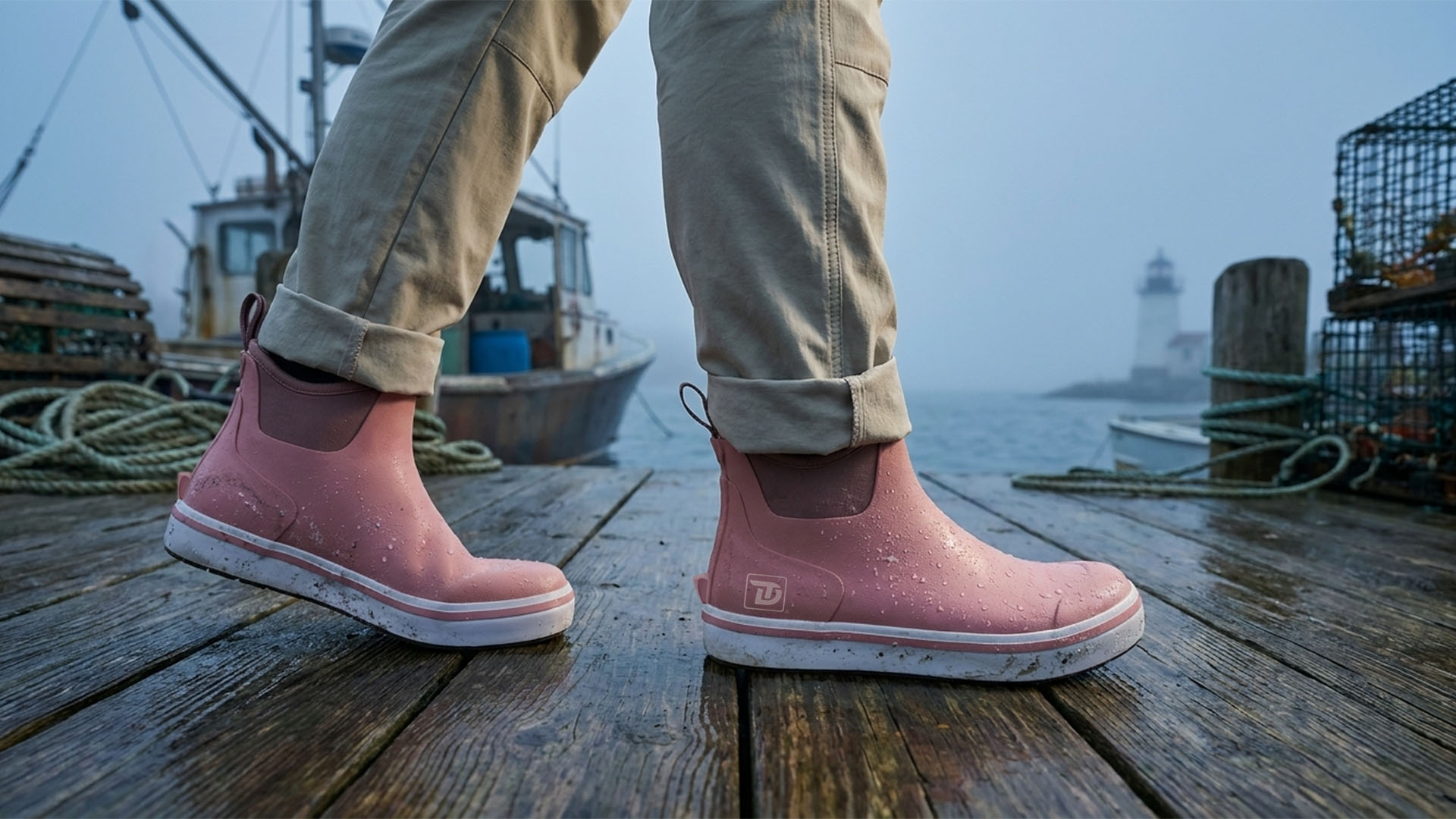
When comparing waterproof fishing footwear, anglers can evaluate TruDaveGear waterproof deck boots alongside other deck boot options based on waterproofing, removable insoles, outsole stability, boot height, and cold-weather sock compatibility.
Thermal Insoles
Some anglers use thermal insoles for cold weather.
They may add warmth underfoot, but they also change fit.
A thermal insole may:
- Raise the foot
- Reduce toe room
- Increase instep pressure
- Change heel position
- Affect collar comfort
- Make the boot harder to remove
Test thermal insoles indoors before fishing.
Do not stack multiple insoles to create warmth.
That can reduce stability and circulation.
Heated Insoles
Heated insoles may help some anglers, but they require caution.
Before using them, check:
- Battery placement
- Water resistance
- Fit inside the boot
- Heat level
- Charging process
- Manufacturer instructions
- Compatibility with wet environments
Do not use damaged electrical products inside wet footwear.
A heated insole should never replace proper waterproofing, socks, and fit.
Fit Testing Winter Deck Boots
Always test winter boots with the exact socks and insoles you plan to wear.
A boot that fits well with thin socks may become too tight with winter socks.
During an indoor test, check:
- Toe room
- Heel movement
- Instep pressure
- Sock bunching
- Arch comfort
- Ankle rubbing
- Boot removal
- Side-step stability
Keep new boots clean until you are sure you will keep them.
Toe Room for Cold Weather
Toes need space to move.
Toe movement helps comfort and circulation.
A winter deck boot should allow:
- Natural toe wiggle
- No nail pressure
- No side compression
- Enough sock room
- Slight swelling
- No toe curling
Do not choose a tight fit for warmth.
A boot that compresses the toes may make them colder.
Heel Fit for Winter Fishing
Heel control remains important.
A winter boot should not slide around simply because it has extra sock room.
Too much heel movement can cause:
- Blisters
- Sock sliding
- Foot fatigue
- Collar rubbing
- Instability
- Toe gripping
A small amount of heel movement is normal in many pull-on deck boots.
Large heel lift is not.
Instep Pressure With Winter Socks
Winter socks and insoles take up more space.
Pay attention to the top of the foot.
Instep pressure may cause:
- Numbness
- Tingling
- Cold toes
- Pain
- Deep sock marks
- Difficulty removing boots
If the boot feels tight over the instep, do not assume it will stretch.
Most waterproof deck boots change very little.
Choose a better-volume boot or thinner sock system.
Break In Winter Deck Boots Before the Trip
Do not wear new boots for the first time on a cold full-day trip.
Break them in gradually.
A simple process:
- Wear them indoors with winter socks.
- Stand for 20 minutes.
- Walk and use stairs.
- Test side steps.
- Wear them during a short outdoor chore.
- Use them on a short fishing trip.
- Inspect feet afterward.
Break-in should not involve numbness, sharp pressure, or serious pain.
Winter Fishing From a Boat
Boat fishing requires waterproofing, traction, and warmth.
Prioritize:
- Waterproof upper
- Wet-deck outsole
- Enough sock room
- Stable heel fit
- Comfortable cushioning
- Removable insoles
- Easy-clean exterior
- Appropriate boot height
The boat deck may be wet all day.
Choose footwear that handles both cold and fish mess.
Winter Fishing From a Pier
Pier fishing may involve long standing on concrete.
Concrete can feel cold and unforgiving.
For pier fishing, look for:
- Good underfoot cushioning
- Supportive insole
- Waterproof protection
- Stable outsole
- Warm socks
- Enough toe room
- Durable tread
Marine outsoles may wear faster on rough concrete than on fiberglass.
Inspect tread regularly.
Winter Surf and Jetty Fishing
Deck boots are not always the best choice for surf or jetty fishing.
Surf fishing may require:
- Taller waterproof boots
- Waders
- Sand-friendly traction
- Wave protection
- More aggressive terrain grip
Jetty fishing may require footwear with better rock traction and ankle support.
Ankle deck boots are best for boats, docks, marinas, and wet hard surfaces.
Choose footwear for the actual environment.
Winter Kayak Fishing
Kayak fishing in cold weather requires serious caution.
Cold water exposure can be dangerous.
Deck boots may not be appropriate if water entry is likely.
Kayak anglers may need:
- Dry suit
- Waders used appropriately
- Cold-water safety gear
- Proper flotation
- Footwear compatible with pedals
- Quick-drain or waterproof systems based on risk
- Professional guidance for cold-water conditions
Do not choose footwear alone as a cold-water safety plan.
Winter Boat Cleaning
Boat cleaning in winter can be cold and wet.
Wear footwear that protects against:
- Hose water
- Cold deck surfaces
- Soap
- Fish slime
- Mud
- Standing puddles
Deck boots are useful because they rinse clean and keep water away from socks.
However, soap can make surfaces extremely slippery.
Move slowly and rinse thoroughly.
Cold Feet vs. Wet Feet
Cold feet and wet feet may feel similar, but the causes differ.
Cold Feet
May be caused by:
- Low temperature
- Tight boots
- Poor circulation
- Thin socks
- Cold deck surfaces
- Long standing
Wet Feet
May be caused by:
- Leaks
- Sweat
- Water entering from above
- Damp insoles
- Rain pants tucked inside boots
- Previous-trip moisture
Identify the cause before changing footwear.
If your boots are waterproof but your socks are damp from sweat, a warmer boot may not solve the problem.
Sweat Can Make Feet Cold
Feet still sweat in winter.
If sweat becomes trapped inside the boot, socks may become damp.
Damp socks lose warmth and increase friction.
To manage sweat:
- Wear moisture-wicking socks
- Avoid cotton
- Do not overdress the feet
- Choose insulation appropriate to the weather
- Remove insoles after use
- Dry boots completely
- Bring spare socks
Overly warm boots can create moisture that later makes feet cold.
Condensation Inside Waterproof Boots
Waterproof boots limit airflow.
Warm moist air from your feet can condense inside the boot during cold weather.
This may make the interior feel damp even when there is no leak.
To reduce condensation:
- Wear moisture-managing socks
- Dry boots fully between trips
- Remove insoles
- Avoid storing boots in cold damp places
- Use gentle airflow after use
- Bring spare socks on long trips
Condensation is especially noticeable during long wear in cold temperatures.
How to Tell If Winter Deck Boots Are Leaking
A leak is more likely when:
- One boot gets wet
- Moisture appears in the same location
- Water enters quickly after shallow exposure
- A crack or puncture is visible
- The outsole is separating
- The insole is wet underneath in one area
Sweat or condensation is more likely when:
- Both boots are similarly damp
- Moisture develops gradually
- Socks are damp all over
- No visible damage is present
- Boots were not fully dried after the previous trip
Test suspected leaks only after the boots are completely dry.
Cleaning Winter Deck Boots
Winter boots collect salt, mud, fish slime, and road grime.
After fishing:
- Rinse with fresh water.
- Remove fish slime and bait residue.
- Brush the outsole grooves.
- Clean mud from tread.
- Remove insoles.
- Wipe the interior if damp.
- Dry boots with gentle airflow.
- Store only when fully dry.
Salt should not remain on the boot surface or inside the tread.
Drying Boots in Winter
Drying takes longer in cold weather.
Do not use high heat.
Avoid:
- Clothes dryers
- Radiators
- Space heaters
- Fireplaces
- Hot vehicle floors
- Direct intense heat
Use:
- Room-temperature airflow
- Boot dryer approved for the footwear
- Towels to absorb moisture
- Separate insole drying
- Open boot storage
High heat may damage waterproof materials, foam, adhesives, and boot shape.
Store Winter Boots Correctly
Store boots:
- Clean
- Dry
- Upright
- Away from direct heat
- Away from chemicals
- Out of direct sunlight
- With insoles removed or dry
- In a ventilated area
Do not leave damp boots in a sealed gear bag, boat compartment, or vehicle trunk.
Moisture creates odor and may shorten footwear life.
Rotate Footwear in Winter
Frequent winter anglers may benefit from rotating two pairs.
This allows each pair to:
- Dry fully
- Release moisture
- Recover from compression
- Be cleaned properly
- Serve as backup
A rotation system is useful for guides, charter crews, marina workers, and anglers who fish several days in a row.
What to Look for in Winter Deck Boots
Look for:
Waterproof Construction
Keeps rain, spray, and washdown water away from socks.
Appropriate Warmth
Insulated or uninsulated depending on your climate.
Room for Winter Socks
Enough space without losing heel control.
Stable Wet-Deck Outsole
Designed for hard wet surfaces.
Removable Insoles
Improves drying, cleaning, and support adjustment.
Comfortable Cushioning
Helps with cold hard decks and long standing.
Secure Heel Fit
Reduces slipping and blisters.
Easy-Clean Upper
Useful after saltwater, fish slime, mud, and bait residue.
Manageable Weight
Reduces fatigue during long trips.
Features to Avoid
Avoid winter fishing boots that are:
- Too tight for socks
- Too loose for safe movement
- Slow to dry
- Hard to clean
- Heavy without support
- Smooth-soled
- Built only for casual rain
- Too warm for your climate
- Too short for expected water exposure
- Non-removable insole designs when you need support adjustment
The wrong winter boot can keep water out but still leave your feet cold, tired, or unstable.
Common Winter Deck Boot Mistakes
Wearing Cotton Socks
Cotton holds moisture and makes feet colder.
Buying Boots Too Tight
Compression reduces warmth and circulation.
Buying Boots Too Large
Loose boots cause heel slip and instability.
Tucking Rain Pants Inside
Water runs into the boots.
Wearing Insulated Boots in Mild Weather
Sweat can make socks damp and cold later.
Forgetting Spare Socks
Dry socks are essential in winter.
Using High Heat to Dry Boots
Heat can damage waterproof materials.
Ignoring Ice
Wet-deck boots are not automatically ice boots.
Wearing New Boots on a Full-Day Trip
Test them first.
Leaving Insoles Inside After Use
Boots dry slowly and may develop odor.
Winter Deck Boot Buying Checklist
Before buying:
- Identify typical winter temperature
- Decide whether insulation is needed
- Check boot height
- Review outsole design
- Check removable insole information
- Consider sock thickness
- Read fit reviews
- Review return policy
- Avoid sizing up blindly
After delivery:
- Test with winter socks
- Check toe movement
- Check heel slip
- Check instep pressure
- Walk and turn
- Side-step
- Use stairs
- Squat
- Stand for 20 minutes
- Test with insoles if needed
- Exchange if painful or unstable
Final Thoughts
The best deck boots for winter fishing should keep your feet protected from cold water, spray, rain, fish slime, and wet decks while still allowing enough comfort for long hours of standing.
Waterproofing is the first priority.
Wet feet become cold quickly.
However, warmth also depends on sock choice, circulation, boot fit, insole support, and how well the boots dry between trips.
Do not buy boots that are too tight.
Compressed socks and restricted toe movement can make feet colder.
Do not buy boots that are too loose.
Heel slip, foot rotation, and sock bunching reduce control on wet decks.
Choose insulated deck boots for freezing, low-activity, or very cold conditions.
Choose uninsulated waterproof deck boots with quality merino or synthetic socks for mild winter climates and multi-season use.
Keep rain pants and bib legs outside the boot openings.
Bring spare socks in a dry bag.
Remove insoles after every trip and dry the boots with gentle airflow.
Avoid high heat.
Remember that standard deck boots are not automatically safe on ice.
Use caution around frozen docks, ramps, and marina walkways.
For winter fishing, good footwear should do more than keep water out.
It should help your feet stay warm, supported, stable, and ready for a full day on cold wet surfaces.
Frequently Asked Questions
Are deck boots good for winter fishing?
Yes. Waterproof deck boots are useful for winter fishing because they protect against spray, rain, wet decks, fish slime, and shallow standing water.
Do I need insulated deck boots for winter fishing?
It depends on your climate. Insulated boots are useful in freezing conditions, while uninsulated deck boots with warm socks may work well in mild winter weather.
What socks should I wear with deck boots in winter?
Wear merino wool, synthetic, or merino-blend moisture-wicking socks. Avoid cotton because it holds moisture and can make feet colder.
Should winter deck boots fit bigger?
They should have enough room for winter socks, but they should not be oversized. Too much extra space can cause heel slip and instability.
Why are my feet cold in waterproof boots?
Possible causes include tight fit, damp socks, poor circulation, thin insoles, cold deck surfaces, sweat buildup, or water entering through the boot opening.
Should rain pants go inside or outside deck boots?
Rain pants and fishing bibs should usually go outside the boot opening so water runs down the exterior instead of into the boots.
Are deck boots safe on icy docks?
Standard deck boots are not automatically designed for ice. Use extra caution and follow marina or captain guidance around icy surfaces.
Can I use heated insoles in deck boots?
Sometimes, but check fit, battery safety, water resistance, and manufacturer instructions. Do not use damaged heated products in wet footwear.
Are uninsulated deck boots warm enough for winter?
They can be in mild climates when paired with quality merino or synthetic socks. Freezing conditions may require insulated boots.
Why do my socks get damp in winter deck boots?
Dampness may come from sweat, condensation, water entering from above, leaks, or insoles that were not fully dried after the previous trip.
How do I dry deck boots in winter?
Remove the insoles, wipe moisture, and dry with room-temperature airflow or a compatible no-heat boot dryer. Avoid heaters and clothes dryers.
Are tall rubber boots better than deck boots in winter?
Tall rubber boots provide more water coverage, but they may be heavier and less comfortable. Deck boots are often better for recreational boat fishing.
Can I wear deck boots for winter pier fishing?
Yes, especially on wet piers, but choose boots with good cushioning and support. Rough concrete may wear marine outsoles faster.
How do I know if winter deck boots are too tight?
Signs include toe compression, numbness, tingling, instep pressure, cold toes, and difficulty removing the boots.
How do I know if winter deck boots are too loose?
Signs include heel slip, foot rotation, sock bunching, boot slapping, toe gripping, and unstable side steps.
What is the best winter deck boot feature?
Waterproof construction is the first priority, followed by sock-compatible fit, stable outsole traction, removable insoles, and appropriate warmth.