Meta Description: Learn how anglers with plantar fasciitis should choose deck boots, including heel cushioning, arch support, removable insoles, stable fit, and all-day fishing comfort.
Suggested URL Slug: best-deck-boots-for-plantar-fasciitis
Primary Keyword: deck boots for plantar fasciitis
Secondary Keywords: best fishing boots for plantar fasciitis, deck boots for heel pain, fishing boots with arch support, comfortable deck boots for standing all day, waterproof boots for foot pain, deck boots with removable insoles, fishing footwear for heel pain
Search Intent: Commercial Investigation / Buying Guide
Heel pain can ruin a fishing trip quickly.
You may feel fine while loading the boat, walking down the dock, or stepping onto the deck. Then, after a few hours of standing on fiberglass, aluminum, concrete, or a wet marina floor, the bottom of your heel begins to ache.
For some anglers, the pain is sharpest during the first steps in the morning. For others, it builds gradually during a long day offshore, after standing at the rail, fighting fish, cleaning the boat, or walking across hard piers.
Plantar fasciitis is one of the most common causes of heel pain, and it can make fishing footwear much more important.
The wrong deck boots may feel flat, unstable, too soft, too loose, or too hard under the heel. The right boots should provide waterproof protection while also supporting the foot during long standing.
This guide explains how to choose deck boots for plantar fasciitis, what features help reduce unnecessary heel stress, why removable insoles matter, and how anglers can test fishing boots before trusting them on a full-day trip.
This article is for general footwear education. It is not a medical diagnosis or treatment plan. If heel pain is severe, persistent, one-sided, worsening, or affecting daily life, consult a qualified medical professional.
What Is Plantar Fasciitis?
Plantar fasciitis is commonly associated with pain near the bottom of the heel.
The plantar fascia is a band of tissue that runs along the bottom of the foot. It helps support the arch and contributes to foot stability during standing and walking.
When this area becomes irritated or overloaded, people may experience:
- Sharp heel pain
- Aching under the heel
- Pain during first steps in the morning
- Pain after long standing
- Discomfort after walking on hard surfaces
- Arch tightness
- Foot fatigue
- Tenderness near the inside of the heel
Fishing does not directly cause plantar fasciitis for everyone, but certain fishing conditions can make heel pain more noticeable.
Hard decks, long standing, poor footwear, wet socks, and unstable footing can all increase stress on the feet.
Why Fishing Can Aggravate Heel Pain
Fishing often involves long periods of standing with limited movement.
On a boat, your body constantly makes small balance corrections because of:
- Waves
- Boat wakes
- Engine vibration
- Wind
- Current
- Shifting passengers
- Turning and acceleration
- Uneven deck surfaces
These small corrections may not feel intense at first, but they can add up over several hours.
Your feet may also be standing on hard surfaces such as:
- Fiberglass decks
- Aluminum floors
- Concrete piers
- Boat ramps
- Dock boards
- Synthetic marine decking
If your boots are flat, worn out, poorly cushioned, or unstable, your heel and arch may absorb more stress than necessary.
Deck Boots Are Not All Built for Heel Pain
Many deck boots are designed mainly for waterproof protection and wet-deck traction.
Those are important features, but anglers with plantar fasciitis need more than waterproofing.
A heel-pain-friendly deck boot should also offer:
- Stable heel cushioning
- Supportive footbed
- Removable insole
- Secure heel fit
- Proper arch support
- Enough toe room
- Controlled midfoot movement
- Stable outsole
- Comfortable standing support
- Enough internal volume for orthotics if needed
A boot that keeps water out but leaves your heel unsupported may not be comfortable for long trips.
Cushioning Matters, But Softness Is Not Everything
When your heel hurts, it is natural to look for the softest boot possible.
However, extreme softness is not always best.
A very soft footbed may feel comfortable for a few minutes, but it can compress during long standing and allow the foot to sink or rotate.
That may increase fatigue and reduce stability.
Good heel cushioning should feel:
- Comfortable under pressure
- Stable during side steps
- Supportive during long standing
- Resilient after several hours
- Not mushy or collapsing
- Not hard or sharp under the heel
For plantar fasciitis, cushioning should work together with support.
Arch Support Helps Reduce Heel Stress
The heel and arch are connected.
When the arch is poorly supported, the plantar fascia may experience more strain during standing and walking.
A supportive footbed may help by:
- Supporting the arch
- Reducing excessive foot movement
- Improving heel position
- Distributing pressure more evenly
- Reducing toe gripping
- Improving standing comfort
The key is choosing support that matches your foot.
Too little support may feel flat.
Too much support may create pressure under the arch.
The best support should feel natural, stable, and comfortable.
Why Flat Footbeds Can Be a Problem
Some basic waterproof boots have nearly flat insoles.
A flat insole may be acceptable for short use, but it can become uncomfortable during:
- Full-day charters
- Offshore trips
- Long pier sessions
- Boat cleaning
- Commercial dock work
- Standing on concrete
- Cold-weather fishing
Flat footbeds may allow the arch to collapse or the foot to move too much inside the boot.
For anglers with plantar fasciitis, this may contribute to heel fatigue and arch discomfort.
A removable supportive insole can make a major difference when the boot has enough internal space.
Removable Insoles Are One of the Most Important Features
If you have plantar fasciitis or recurring heel pain, removable insoles are highly valuable.
They allow you to:
- Replace flat factory footbeds
- Add plantar-fasciitis-friendly support
- Use custom orthotics when appropriate
- Improve heel cushioning
- Adjust internal volume
- Dry the boot faster
- Clean odor-producing material
- Replace worn cushioning over time
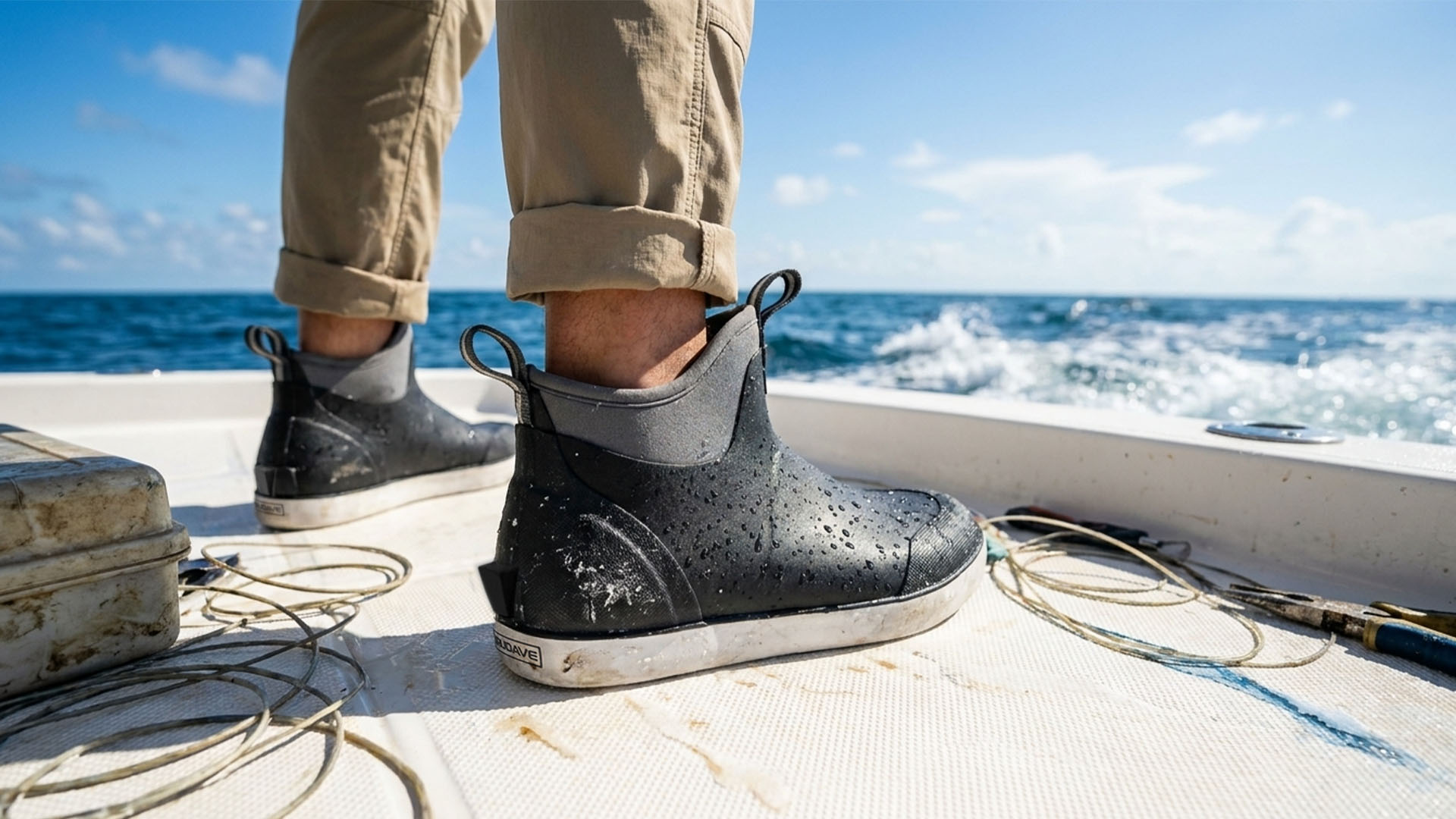
When comparing waterproof fishing footwear, anglers can evaluate TruDaveGear waterproof deck boots alongside other marine options based on removable insoles, heel cushioning, wet-deck traction, fit, and all-day standing comfort.
A removable insole does not guarantee comfort, but it gives you more options.
What Kind of Insole Is Best for Plantar Fasciitis?
The best insole depends on the individual foot and professional recommendations when needed.
In general, anglers with heel pain often look for insoles with:
- Supportive arch contour
- Deep or stable heel cup
- Heel cushioning
- Full-length design
- Firm but comfortable structure
- Smooth top cover
- Moisture-friendly materials
- Secure fit inside the boot
Avoid choosing only by softness.
A supportive insole that holds the heel and arch correctly may feel better than a thick soft foam pad that collapses.
Full-Length Insoles Are Usually Better
Full-length insoles support the entire foot from heel to toe.
They are usually more stable than small heel pads or arch inserts.
A full-length insole may help:
- Keep the foot centered
- Reduce sliding inside the boot
- Improve heel comfort
- Support the arch
- Reduce forefoot pressure
- Improve standing comfort
The insole should lie flat.
It should not curl, bunch, slide, or shorten toe room too much.
Heel Cups Can Help Stability
A stable heel cup can help position the heel more consistently inside the boot.
This may reduce side-to-side movement and internal sliding.
A good heel cup should feel:
- Supportive
- Smooth
- Centered
- Stable
- Not sharp
- Not too narrow
If the heel cup presses painfully into the sides of the heel, it may be the wrong shape.
If it is too loose, it may not provide much benefit.
Avoid Stacking Multiple Insoles
Stacking insoles may seem like a simple way to add cushioning.
It usually creates problems.
Multiple insoles can cause:
- Instep pressure
- Toe compression
- Heel sitting too high
- Collar rubbing
- Foot instability
- Reduced boot control
- Difficulty removing the boot
- Bunching inside the boot
Use one properly fitted insole.
If one insole cannot make the boot comfortable, the boot may not have the right shape, volume, or support.
Thick Insoles Can Create Fit Problems
A thick supportive insole raises your foot inside the boot.
This can reduce space around:
- Toes
- Instep
- Heel
- Ankle opening
- Boot collar
Signs that the insole is too thick include:
- Pressure on top of the foot
- Numbness
- Toe compression
- Difficulty putting boots on
- Difficulty removing boots
- Heel sitting too high
- Increased ankle rubbing
Support should not create new pain.
Test the boot and insole combination indoors before using it on the water.
Can Custom Orthotics Fit in Deck Boots?
Sometimes.
Custom orthotics may work well in deck boots when the boots have:
- Removable factory insoles
- Enough internal volume
- Secure heel fit
- Proper length
- Enough toe room
- Comfortable instep space
- Stable outsole
Bring your orthotics when trying on boots whenever possible.
Do not assume they will fit after purchase.
Some orthotics are too thick or rigid for certain pull-on deck boots.
Fit Matters as Much as Support
A supportive insole cannot fully fix a boot that does not fit.
Deck boots for plantar fasciitis should fit securely without squeezing.
A good fit should provide:
- Comfortable toe room
- Secure heel
- Controlled midfoot
- No painful instep pressure
- No excessive heel slip
- No foot rotation
- Stable side steps
- Proper forefoot flex
- Enough room for fishing socks
Loose boots can make heel pain worse because your foot works harder to stabilize each step.
Tight boots can create pressure, reduce circulation, and make standing uncomfortable.
Heel Slip Can Increase Foot Fatigue
A small amount of heel movement may be normal in pull-on deck boots.
Excessive heel slip is different.
Too much movement may cause:
- Blisters
- Sock sliding
- Foot fatigue
- Toe gripping
- Heel irritation
- Reduced balance
- More stress during side steps
- Collar rubbing
If you have plantar fasciitis, heel instability can make your foot work harder.
The boot should follow your foot during walking and turning.
It should not feel delayed or disconnected.
Toe Gripping Is a Warning Sign
Some anglers unconsciously curl or grip their toes to keep loose boots in place.
This can happen when boots are too long, too wide, or too loose around the heel.
Toe gripping may increase fatigue in the arch and forefoot.
Signs include:
- Tired toes
- Forefoot pressure
- Sock movement
- Foot cramping
- Boot slapping
- Heel lift
- Reduced comfort during long standing
A properly fitted boot should not require your toes to hold it on.
Toe Room Still Matters
Do not choose a boot that is too short in an attempt to reduce heel movement.
Your toes need enough room for:
- Natural movement
- Slight swelling
- Fishing socks
- Balance
- Long standing
- Cold-weather circulation
Toe compression can create its own pain and may affect balance.
The correct fit keeps the heel stable while still allowing toe movement.
Midfoot Control Helps Reduce Strain
The midfoot area helps control how your foot moves inside the boot.
Poor midfoot control may allow the foot to rotate or collapse inward.
This can increase unnecessary movement during:
- Walking
- Turning
- Side-stepping
- Bracing
- Fighting fish
- Boat cleaning
- Standing on hard decks
Look for a boot that feels secure through the middle of the foot without pressing painfully on the top of the foot.
Stable Outsole Design
The outsole is the foundation of the boot.
For heel pain, stability is important because an unstable sole can make your foot and lower leg work harder.
Look for:
- Stable heel platform
- Broad contact area
- Controlled flexibility
- Wet-deck tread
- Good surface contact
- No excessive twisting
- No uneven compression
- Reliable traction on hard wet surfaces
A very soft or narrow outsole may feel unstable on a moving boat.
A rigid outsole may feel tiring during walking.
The best outsole balances support, flexibility, and traction.
Wet-Deck Traction and Plantar Fasciitis
When anglers do not trust their traction, they often stiffen their legs and grip with their toes.
That can increase foot fatigue.
A good marine outsole may help you move more confidently on:
- Wet fiberglass
- Aluminum decks
- Dock boards
- Concrete piers
- Boat ramps
- Synthetic marine decking
No boot is completely slip-proof.
Fish slime, soap, oil, algae, mud, and ice can still create hazards.
Good traction works best when the deck and tread are clean.
Boot Weight Matters
Heavy boots can increase fatigue during long fishing days.
You may notice weight more when:
- Climbing aboard
- Walking docks
- Stepping around coolers
- Operating pedals
- Cleaning the boat
- Moving during rough water
- Standing for hours
Lightweight deck boots are often more comfortable than tall heavy rubber boots for recreational fishing.
However, the lightest boot is not always the best.
It still needs enough cushioning, support, and outsole stability.
Boot Height and Heel Pain
Boot height affects mobility and fatigue.
Ankle Deck Boots
Good for:
- Recreational fishing
- Offshore charters
- Warm weather
- Boat cleaning
- Easy movement
- Driving
- General wet-deck use
Mid-Height Deck Boots
Good for:
- More spray protection
- Rain
- Cooler conditions
- More lower-leg coverage
Tall Rubber Boots
Good for:
- Heavy washdowns
- Commercial fishing
- Deep standing water
- Fish processing
For plantar fasciitis, heavier and taller boots may increase fatigue unless the extra protection is necessary.
Choose the lowest boot height that provides enough water protection.
Deck Boots vs. Sneakers for Heel Pain
Sneakers may feel supportive at first, but ordinary sneakers are usually not ideal for wet fishing conditions.
They may:
- Absorb saltwater
- Stay wet
- Hold fish odor
- Lose comfort when soaked
- Offer limited waterproof protection
- Become slippery on wet decks
- Take a long time to dry
Deck boots provide better waterproof protection and easier cleanup.
However, some sneakers may have more built-in arch support than basic deck boots.
That is why deck boots with removable insoles are especially useful for anglers with heel pain.
Deck Boots vs. Fishing Shoes for Plantar Fasciitis
Fishing shoes can be comfortable in warm, dry, or quick-draining conditions.
They may offer:
- Better airflow
- Lower weight
- More lace adjustment
- More sneaker-like support
- Easier walking on land
Deck boots offer:
- Better waterproof protection
- Easier cleaning
- More protection from fish slime
- Better rain and spray coverage
- More practical use during washdowns
For offshore, rainy, or messy fishing, deck boots are usually more practical.
For hot inshore trips with lots of walking, supportive fishing shoes may be worth considering.
Socks for Plantar Fasciitis and Deck Boots
Socks do not replace support, but they affect comfort.
Choose socks that are:
- Moisture-wicking
- Smooth underfoot
- Crew height
- Secure around the heel
- Low to medium bulk
- Fast drying
- Comfortable with your insole
Good materials include:
- Synthetic blends
- Merino wool
- Merino-synthetic blends
Avoid cotton.
Cotton absorbs moisture, stretches when wet, bunches, and dries slowly.
Wet or bunched socks can increase friction and discomfort.
Should You Wear Thick Socks?
Thick socks may add cushioning, but they are not always best for plantar fasciitis.
They can create:
- Instep pressure
- Toe compression
- Heat buildup
- Reduced boot volume
- More sweating
- Sock bunching
Use thicker socks only when the boot has enough space.
For most fishing trips, a quality moisture-wicking sock plus a supportive insole is better than relying on bulky socks.
Spare Socks Can Make a Difference
Wet socks can make heel pain and friction worse.
Bring a spare pair on long trips.
Change socks when:
- Feet become soaked
- Sweat builds up
- Socks bunch under the heel
- Blisters begin
- Water enters through the boot opening
- The trip continues into colder weather
Store spare socks in a dry bag.
Dry socks can improve comfort even when the boots are still slightly damp.
At-Home Fit Test for Heel Pain
Do not test new boots for the first time on a full-day fishing trip.
Test them indoors with your fishing socks and intended insoles.
Spend 20 to 30 minutes doing:
- Standing
- Walking
- Turning
- Side-stepping
- Squatting
- Climbing stairs
- Standing still for several minutes
Pay attention to heel comfort.
If your heel starts hurting quickly at home, the boots may not be right for a long day on the water.
Standing Test
Plantar fasciitis often becomes noticeable during standing.
Stand in the boots long enough to evaluate pressure.
Ask:
- Does the heel feel cushioned?
- Does the arch feel supported?
- Does the insole feel natural?
- Is the boot stable?
- Do my toes stay relaxed?
- Does heel pain increase?
- Does the boot feel too flat?
- Does the foot slide inside?
Standing comfort is essential for fishing.
A boot that feels good while walking for five minutes may still feel poor after hours at the rail.
First-Step Test
Some people with plantar fasciitis feel pain during first steps after rest.
Try the boots after sitting for several minutes.
Then stand and walk.
Notice whether:
- Heel pain is sharp
- The foot feels supported
- The insole feels stable
- The heel cup holds the foot
- The boot feels too hard
- The boot feels too loose
This does not diagnose anything, but it may help compare footwear comfort.
Side-Step Test
Side movement is common on boats.
Take slow side steps in both directions.
The boot should not:
- Twist around the foot
- Let the heel slide sideways
- Feel unstable at the outsole edge
- Require toe gripping
- Cause arch strain
- Feel delayed behind the foot
Stable lateral control is important for anglers with heel pain.
Stair Test
Walk up and down clean indoor stairs.
Watch for:
- Heel slip
- Toe pressure
- Arch discomfort
- Instep pressure
- Boot slapping
- Wrong flex point
- Heel pain
If a boot feels unstable on stairs, it may feel worse on docks, ramps, and moving decks.
Squat Test
Squatting tests forefoot flex, heel lift, and instep space.
The boot should bend naturally without:
- Crushing toes
- Pulling the heel out
- Creating sharp arch pressure
- Increasing heel pain
- Pressing the top of the foot
- Collapsing under the heel
Anglers squat often around fish boxes, coolers, rods, bait, and cleaning gear.
Plantar Fasciitis and Offshore Fishing
Offshore fishing can be demanding on the feet.
You may deal with:
- Long standing
- Wet decks
- Heavy spray
- Cold morning wind
- Afternoon heat
- Rough water
- Fish slime
- Bait water
- Washdowns
- Concrete marina walks
For offshore use, prioritize:
- Waterproof protection
- Supportive footbed
- Stable heel cushioning
- Secure fit
- Wet-deck outsole
- Removable insole
- Moisture-wicking socks
- Manageable boot weight
Do not make a long offshore charter the first real test of new boots.
Plantar Fasciitis and Fishing Charters
Charter customers may not control how long they stand or where water collects on the deck.
Before a charter:
- Test your boots indoors
- Use supportive insoles if needed
- Wear moisture-wicking socks
- Bring spare socks
- Pack clean shoes for the drive home
- Ask whether non-marking soles are required
- Bring blister protection
- Avoid untested footwear
Deck boots are practical for charters because they protect against wet decks, fish slime, rain, and spray.
But the boots still need to support your feet properly.
Plantar Fasciitis and Pier Fishing
Pier fishing can be tough on heel pain because concrete is unforgiving.
For pier fishing, look for:
- Strong heel cushioning
- Stable arch support
- Durable outsole
- Secure heel fit
- Comfortable toe room
- Moisture control
- Enough support for walking distance
Deck boots are useful when the pier is wet, rainy, or near cleaning stations.
However, rough concrete may wear marine outsoles faster than fiberglass decks.
Plantar Fasciitis and Boat Cleaning
Boat cleaning can be surprisingly hard on the feet.
It involves:
- Standing
- Bending
- Squatting
- Walking on wet surfaces
- Holding hoses
- Brushing decks
- Carrying gear
- Moving around soap and fish residue
For boat cleaning, wear boots with:
- Waterproof protection
- Stable outsole
- Good heel cushioning
- Supportive insole
- Secure fit
- Easy-clean upper
Soap can make surfaces extremely slippery.
Move carefully even with good footwear.
Hot Weather and Heel Pain
Hot weather can make feet swell and sweat.
For warm-weather fishing:
- Choose uninsulated deck boots
- Wear lightweight moisture-wicking socks
- Avoid overly thick insoles
- Bring spare socks
- Dry boots after use
- Make sure the boot is not tight
- Avoid sizing up only for airflow
Waterproof boots can feel warm, but correct socks and fit help manage moisture.
Cold Weather and Heel Pain
Cold-weather fishing requires warmth without compression.
Choose:
- Waterproof boots
- Merino or synthetic socks
- Supportive insoles
- Enough toe room
- Enough instep space
- Insulated boots when necessary
Tight boots can reduce circulation and make feet feel colder.
If winter socks and insoles make the boot tight, the boot may not have enough internal volume for cold-weather use.
Morning Heel Pain Before Fishing
Some anglers feel heel pain before they even leave home.
A supportive footwear plan begins before stepping onto the boat.
Consider:
- Wearing supportive shoes before the trip
- Avoiding barefoot walking on hard floors
- Packing tested deck boots
- Bringing spare socks
- Using your preferred insoles
- Stretching only as recommended by a qualified professional
- Avoiding untested footwear
The first footwear you wear that day can affect how your feet feel later.
Should You Bring Backup Shoes?
Yes, when practical.
Clean backup shoes are useful for:
- Driving home
- Resting your feet after the trip
- Changing out of wet boots
- Keeping fish odor out of the vehicle
- Walking long distances after fishing
Leave backup shoes in the vehicle if boat space is limited.
A dry supportive pair can make the end of the day much more comfortable.
Cleaning Deck Boots After Fishing
Cleaning helps preserve comfort and odor control.
After fishing:
- Rinse boots with fresh water.
- Remove fish slime and bait residue.
- Brush the tread.
- Remove the insoles.
- Clean insoles if needed.
- Dry boots with gentle airflow.
- Dry insoles separately.
- Store only when fully dry.
Do not leave damp insoles inside the boots.
Moisture can increase odor and break down comfort over time.
Drying Insoles Correctly
Supportive insoles may contain foam, plastic, fabric, or gel.
Dry them carefully.
Avoid:
- Clothes dryers
- Radiators
- Space heaters
- Direct high heat
- Closed hot vehicles
Use airflow and room-temperature drying unless the insole manufacturer says otherwise.
High heat may warp support structures or damage cushioning.
When to Replace Insoles
Replace deck boot insoles when they are:
- Flattened
- Cracked
- Torn
- Uneven
- Permanently odorous
- No longer supportive
- Causing pressure
- Slow to dry
- Sliding inside the boot
For anglers with heel pain, worn insoles can reduce comfort before the boot itself looks worn out.
When to Replace the Boots
New insoles cannot fix every boot problem.
Replace deck boots when:
- Outsole tread is worn
- Heel structure has collapsed
- Boot shape is warped
- Waterproofing fails
- Cracks appear
- Outsole separates
- Fit becomes unstable
- Heel pain continues despite better insoles
- The boot no longer supports standing
A boot can remain waterproof while no longer being supportive enough.
Features to Look for in Deck Boots for Plantar Fasciitis
Look for:
Removable Insoles
Allows support adjustment and easier drying.
Stable Heel Cushioning
Reduces hard-surface pressure.
Supportive Arch Area
Helps distribute load and control foot movement.
Secure Heel Fit
Limits slipping and internal friction.
Stable Wet-Deck Outsole
Improves control on wet hard surfaces.
Roomy Toe Box
Prevents toe compression and allows natural balance.
Controlled Midfoot
Reduces foot rotation.
Manageable Weight
Helps reduce fatigue during long trips.
Easy-Clean Upper
Useful after saltwater, bait, and fish slime exposure.
Features to Avoid
Avoid boots with:
- Completely flat footbeds
- Non-removable insoles
- Excessive heel slip
- Very soft unstable soles
- Thin hard cushioning
- Poor arch support
- Narrow toe boxes
- Heavy construction without support
- Smooth worn outsoles
- Collapsed heel structure
The wrong boot may keep your feet dry but still leave your heels aching.
Buying Deck Boots Online for Heel Pain
Before buying online, check:
- Size chart
- Return policy
- Removable insole information
- Reviews mentioning heel comfort
- Reviews mentioning arch support
- Boot weight
- Width comments
- Heel slip feedback
- Outsole design
- Boot height
- Half-size recommendations
Keep new boots clean during indoor testing.
Exchange them if they feel painful, unstable, or too flat.
Should Anglers With Plantar Fasciitis Size Up?
Not automatically.
Size up only when:
- Toes touch the front
- The forefoot is squeezed
- The instep is compressed
- Orthotics need more room
- The larger size remains stable
Do not size up if it creates:
- Heel slip
- Foot rotation
- Toe gripping
- Wrong flex point
- Boot slapping
- Side-step instability
A better-shaped boot is often better than a larger boot.
Should Anglers With Plantar Fasciitis Choose Wide Boots?
Maybe.
Wide boots may help when:
- Forefoot pressure is present
- Feet spread while standing
- Bunions need room
- Standard width causes numbness
- Orthotics require space
Wide boots may not help if the main issue is heel instability or lack of arch support.
The best boot is wide enough in the forefoot and secure enough in the heel.
When to Seek Professional Help
Footwear can improve comfort, but persistent pain deserves attention.
Consider professional guidance when heel pain is:
- Severe
- Getting worse
- Present every morning
- Affecting daily walking
- Associated with swelling
- One-sided and unexplained
- Causing limping
- Not improving after footwear changes
- Accompanied by numbness or tingling
A qualified professional may recommend treatment, stretching, orthotics, or activity changes based on your situation.
Common Mistakes Anglers With Heel Pain Make
Choosing the Softest Boot
Softness without support may not help.
Ignoring Removable Insoles
Support options are limited without them.
Wearing Cotton Socks
Cotton holds moisture and increases friction.
Sizing Up Too Much
Extra length can create heel slip and toe gripping.
Stacking Insoles
This raises the foot too high and reduces stability.
Wearing New Boots on a Full-Day Trip
Fit problems become worse over time.
Ignoring Heel Slip
Unstable heel movement can increase fatigue.
Walking Barefoot Before the Trip
Hard floors may irritate heel pain before fishing begins.
Forgetting Spare Socks
Wet socks increase discomfort.
Keeping Boots That Hurt Indoors
Pain during testing usually worsens on the boat.
Deck Boots for Plantar Fasciitis Buying Checklist
Before buying:
- Measure both feet
- Check size chart
- Review return policy
- Look for removable insoles
- Check heel comfort reviews
- Consider orthotic compatibility
- Review outsole stability
- Consider boot weight
- Avoid sizing up blindly
After delivery:
- Keep boots clean
- Wear fishing socks
- Add intended insoles
- Stand for 20 minutes
- Walk and turn
- Side-step
- Squat
- Use stairs
- Check heel comfort
- Check arch support
- Check heel movement
- Exchange if painful or unstable
Final Thoughts
The best deck boots for plantar fasciitis are not simply the softest waterproof boots.
They are boots that combine stable heel cushioning, supportive arch structure, secure heel fit, removable insoles, proper toe room, controlled midfoot movement, and reliable wet-deck traction.
Heel pain often becomes worse during long standing on hard marine surfaces.
That is why fishing footwear should support the entire foot, not just keep water out.
Look for deck boots with removable insoles so you can use supportive footbeds or orthotics when appropriate.
Avoid boots that are flat, unstable, too loose, too tight, or too heavy for your fishing style.
Wear moisture-wicking socks instead of cotton.
Bring spare socks for long trips.
Test new boots indoors before wearing them on an offshore charter, pier session, or full day of boat cleaning.
If heel pain is persistent, severe, or worsening, get professional guidance.
The right deck boots cannot replace medical care, but they can help reduce unnecessary stress from wet decks, hard surfaces, poor support, and unstable fit.
For anglers with plantar fasciitis, comfortable feet can mean more time fishing and less time thinking about every step.
Frequently Asked Questions
Are deck boots good for plantar fasciitis?
They can be, especially when they have removable insoles, stable heel cushioning, arch support, secure heel fit, and enough toe room.
What should I look for in deck boots for heel pain?
Look for stable heel cushioning, removable insoles, supportive arch structure, secure fit, wet-deck traction, and a roomy toe box.
Do deck boots have enough arch support?
Some do, but many basic deck boots have simple insoles. Removable footbeds allow you to add better support if needed.
Can I put plantar fasciitis insoles in deck boots?
Yes, if the boots have removable insoles and enough internal volume. Test the insole and boot together before fishing.
Are soft deck boots better for plantar fasciitis?
Not always. Soft cushioning helps, but support and stability are just as important.
Should I size up in deck boots for plantar fasciitis insoles?
Only if the larger size remains stable. Sizing up too much can cause heel slip, foot rotation, and toe gripping.
Why do my heels hurt in deck boots?
Possible causes include flat insoles, poor arch support, worn cushioning, hard decks, excessive heel movement, or incorrect sizing.
What socks should I wear with deck boots if I have heel pain?
Wear moisture-wicking synthetic or merino-blend crew socks. Avoid cotton because it holds moisture and may bunch.
Can custom orthotics fit in deck boots?
Sometimes. Choose boots with removable insoles, enough instep volume, secure heel fit, and adequate toe room.
Are deck boots comfortable for standing all day with plantar fasciitis?
They can be when they provide stable support, heel cushioning, proper fit, and suitable insoles.
Are fishing shoes better than deck boots for plantar fasciitis?
Fishing shoes may offer more breathability and lace adjustment. Deck boots are better for wet decks, spray, rain, fish slime, and washdowns.
Are tall rubber boots good for plantar fasciitis?
They may provide waterproof protection, but they can be heavy and may lack support. Ankle deck boots with supportive insoles are often more comfortable for recreational fishing.
How should deck boots fit if I have heel pain?
They should hold the heel securely, support the arch, allow toe movement, and prevent foot rotation or excessive heel slip.
Can worn insoles cause heel pain?
Yes. Flattened or unsupportive insoles can reduce cushioning and stability.
When should I replace deck boot insoles?
Replace them when they are flattened, cracked, torn, uneven, odorous, or no longer supportive.
When should I replace the boots instead of the insoles?
Replace boots when the outsole is worn, heel structure collapses, waterproofing fails, cracks appear, or the fit remains unstable despite better insoles.
Should I see a doctor for heel pain from fishing boots?
Seek professional guidance if heel pain is severe, persistent, worsening, causing limping, associated with swelling, or affecting daily activities.