Meta Description: Learn how anglers with flat feet should choose deck boots, including arch support, heel stability, insoles, cushioning, fit, and all-day fishing comfort.
Suggested URL Slug: best-deck-boots-for-flat-feet
Primary Keyword: deck boots for flat feet
Secondary Keywords: best fishing boots for flat feet, deck boots with arch support, fishing boots for foot pain, comfortable deck boots, flat feet fishing footwear, waterproof boots with removable insoles, deck boots for standing all day
Search Intent: Commercial Investigation / Buying Guide
Flat feet can make fishing footwear more complicated.
A pair of deck boots may look comfortable, waterproof, and ready for the boat, but after a few hours of standing on fiberglass, aluminum, or concrete, your arches may ache, your heels may feel tired, and your knees or lower back may start to complain.
For anglers with flat feet, comfort is not only about soft cushioning.
The best deck boots need to provide a stable platform, enough room for natural foot spread, good heel control, supportive insoles, and wet-deck traction that does not make your feet work harder than necessary.
A boot that is too soft may feel good for the first ten minutes but collapse under your weight. A boot that is too flat may leave your foot unsupported during a full day offshore. A boot that is too loose may allow your foot to rotate inside the footwear, increasing fatigue.
This guide explains how to choose deck boots for flat feet, what arch support actually does, why removable insoles matter, and how to test fishing boots before wearing them on a long boat trip.
What Are Flat Feet?
Flat feet generally means the arch of the foot sits lower than average or collapses more when standing.
Some people have naturally low arches and no pain at all.
Others experience discomfort after long periods of standing, walking, or balancing on hard surfaces.
Flat feet may be associated with:
- Arch fatigue
- Heel pain
- Forefoot pressure
- Foot rolling inward
- Knee discomfort
- Lower-leg fatigue
- Lower-back tiredness
- Faster shoe wear on one side
- Difficulty finding stable footwear
Not every person with flat feet needs the same amount of support.
Some anglers only need a stable insole.
Others need more structured footwear or professional guidance.
Why Flat Feet Matter on a Fishing Boat
Fishing boats create unique stress on the feet.
You may stand for hours while your body responds to:
- Waves
- Boat wakes
- Current
- Wind
- Engine vibration
- Slippery surfaces
- Sudden movement
- Long fights with fish
- Hard fiberglass or aluminum decks
Your feet are constantly making small balance corrections.
For anglers with flat feet, this can increase pressure through the arch, heel, and inside edge of the foot.
If the boot does not provide enough support, your feet may become tired long before the fishing day is over.
Deck Boots Are Different From Athletic Shoes
Many athletic shoes use shaped midsoles, structured arch support, and laces that lock the foot in place.
Most deck boots are different.
They are often:
- Pull-on
- Waterproof
- Less adjustable
- Made from molded materials
- Built for wet decks
- Easy to clean
- Designed with removable or simple insoles
That waterproof and easy-clean design is excellent for fishing, but it can also mean less built-in arch structure than some walking or running shoes.
This makes fit and insole choice especially important for flat-footed anglers.
Arch Support Is Not Just About the Arch
Arch support does more than fill empty space under the foot.
A good support system may help:
- Stabilize the midfoot
- Reduce excessive foot rotation
- Improve heel position
- Distribute pressure
- Reduce toe gripping
- Improve standing comfort
- Limit fatigue during long trips
However, too much arch support can also create pain.
A hard, high arch insert may press into a flat foot in an uncomfortable way.
The right support should feel stable and natural, not sharp or forced.
Cushioning vs. Support
Cushioning and support are related, but they are not the same.
Cushioning
Cushioning helps absorb pressure under the heel and forefoot.
It can make hard boat decks feel more comfortable.
Support
Support helps control how the foot sits and moves inside the boot.
It can reduce unnecessary motion and improve stability.
A very soft boot may have cushioning but little support.
A very firm boot may have support but little comfort.
Flat-footed anglers usually need a balance of both.
Why Extremely Soft Boots Can Be a Problem
Soft foam feels comfortable during a short try-on.
But on a moving boat, overly soft cushioning may compress and allow the foot to sink.
This can cause:
- Foot rotation
- Heel movement
- Arch fatigue
- Less balance control
- More lower-leg effort
- Toe gripping
- Instability during side steps
For flat feet, a stable platform is often more important than maximum softness.
The boot should cushion pressure without collapsing.
Look for a Stable Heel
Heel stability matters because the heel is the foundation of the foot inside the boot.
A good deck boot should help keep the heel centered.
Look for:
- Secure heel cup
- Limited side-to-side movement
- No excessive heel lift
- Stable rear outsole
- Comfortable heel cushioning
- No rubbing around the collar
If the heel moves too much, the arch and midfoot often work harder.
This can make flat-foot fatigue worse.
Midfoot Control Is Important
Flat feet may spread or roll inward during standing.
A boot with poor midfoot control can allow the foot to move too much inside the footwear.
Good midfoot control helps reduce:
- Foot sliding
- Internal rotation
- Sock twisting
- Arch fatigue
- Knee strain
- Instability on wet decks
The boot should feel secure through the middle of the foot without squeezing the top of the foot.
Toe Box Room Still Matters
Some people with flat feet also have wider forefeet.
When standing, the foot may spread more than it does while sitting.
A deck boot for flat feet should provide enough toe box room for:
- Natural toe spread
- Slight swelling
- Fishing socks
- No little-toe pressure
- No big-toe joint rubbing
- No forefoot numbness
Do not choose a narrow boot just because it feels supportive.
Compression is not support.
A good boot allows the forefoot to spread naturally while keeping the heel and midfoot controlled.
Avoid Boots That Are Too Loose
Some flat-footed anglers size up because their feet feel wide or high-volume.
This may create extra space, but it can also reduce stability.
Oversized boots may cause:
- Heel slip
- Foot rotation
- Toe gripping
- Wrong flex point
- Sock bunching
- Ankle rubbing
- More fatigue
If your foot slides inside the boot, your muscles may work harder to stabilize each step.
Choose a boot shape that fits your foot, not just a larger size.
Removable Insoles Are a Major Advantage
For anglers with flat feet, removable insoles are one of the most useful deck boot features.
They allow you to:
- Replace flat factory footbeds
- Add moderate arch support
- Improve heel cushioning
- Adjust internal volume
- Dry the boots faster
- Clean odor-producing material
- Replace worn cushioning over time
A removable insole gives the boot more flexibility for different foot shapes.
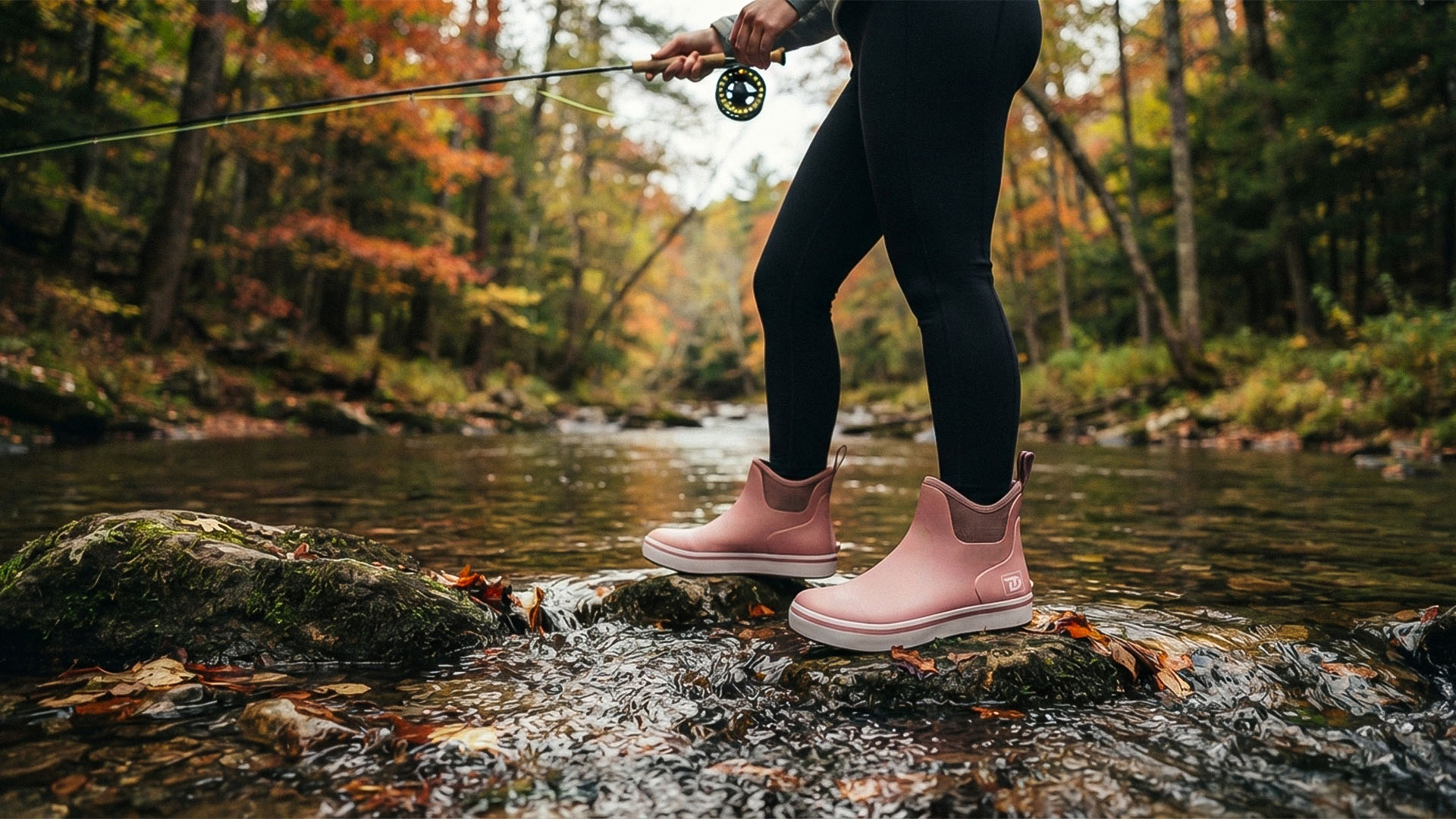
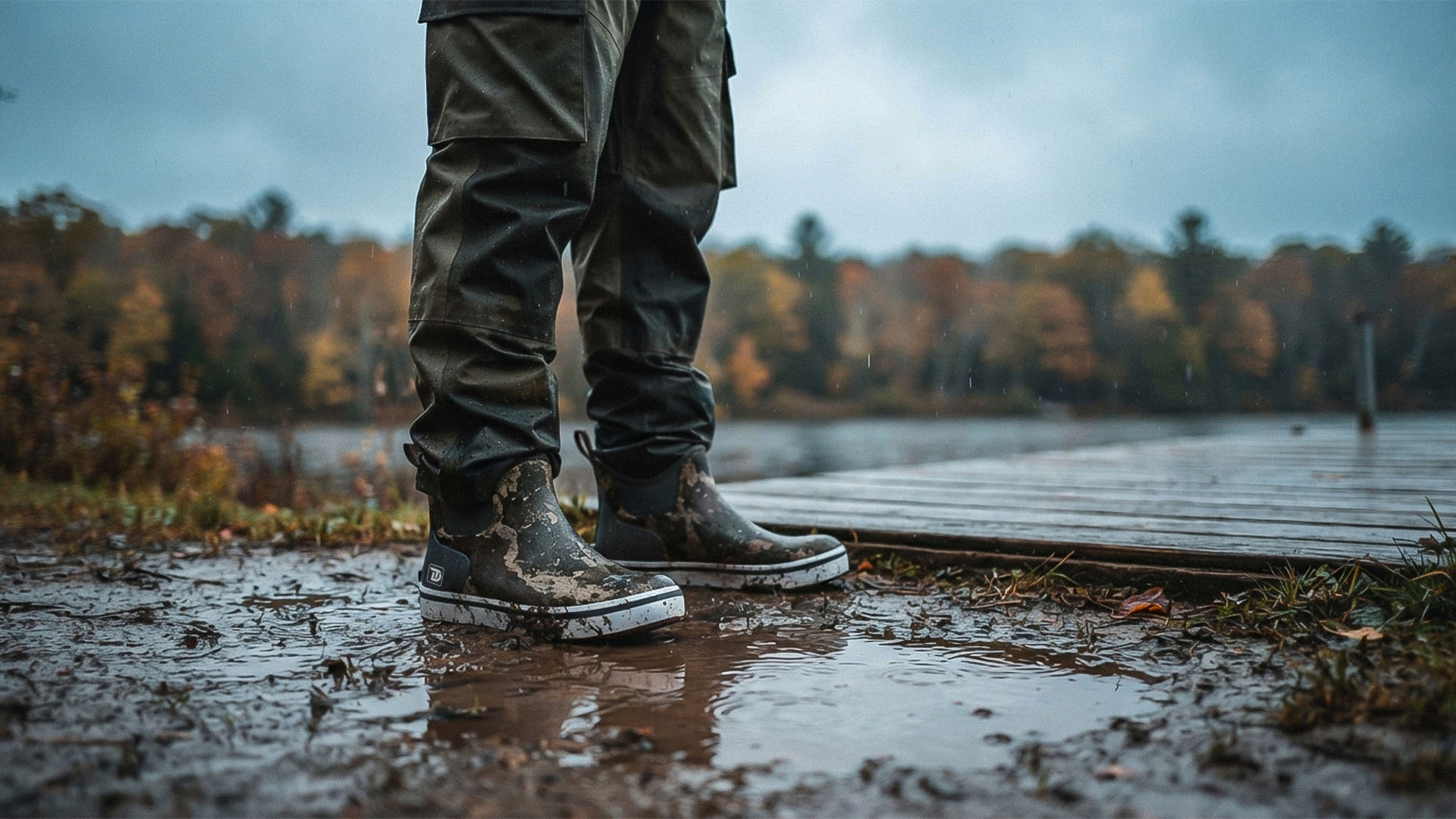
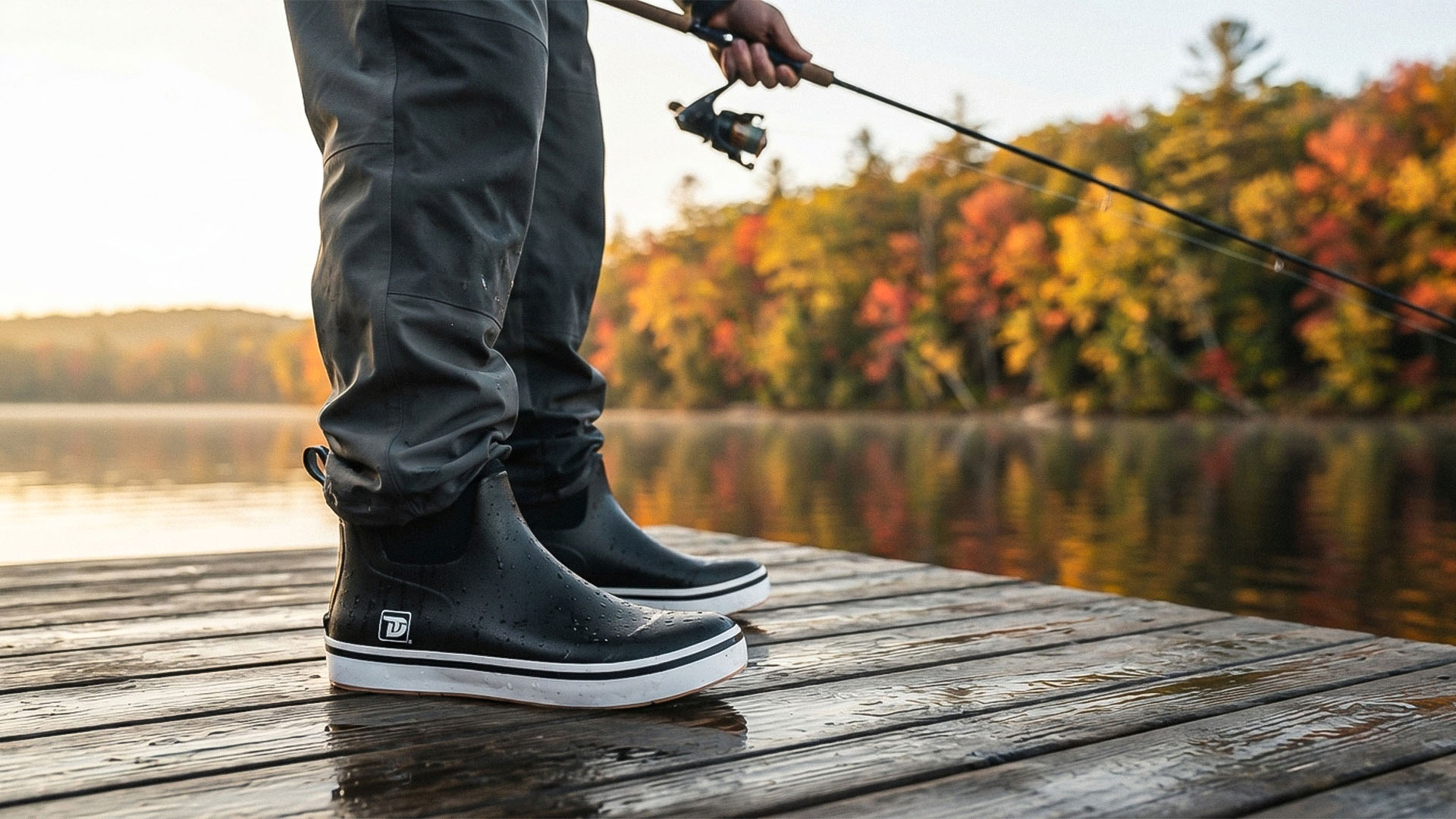
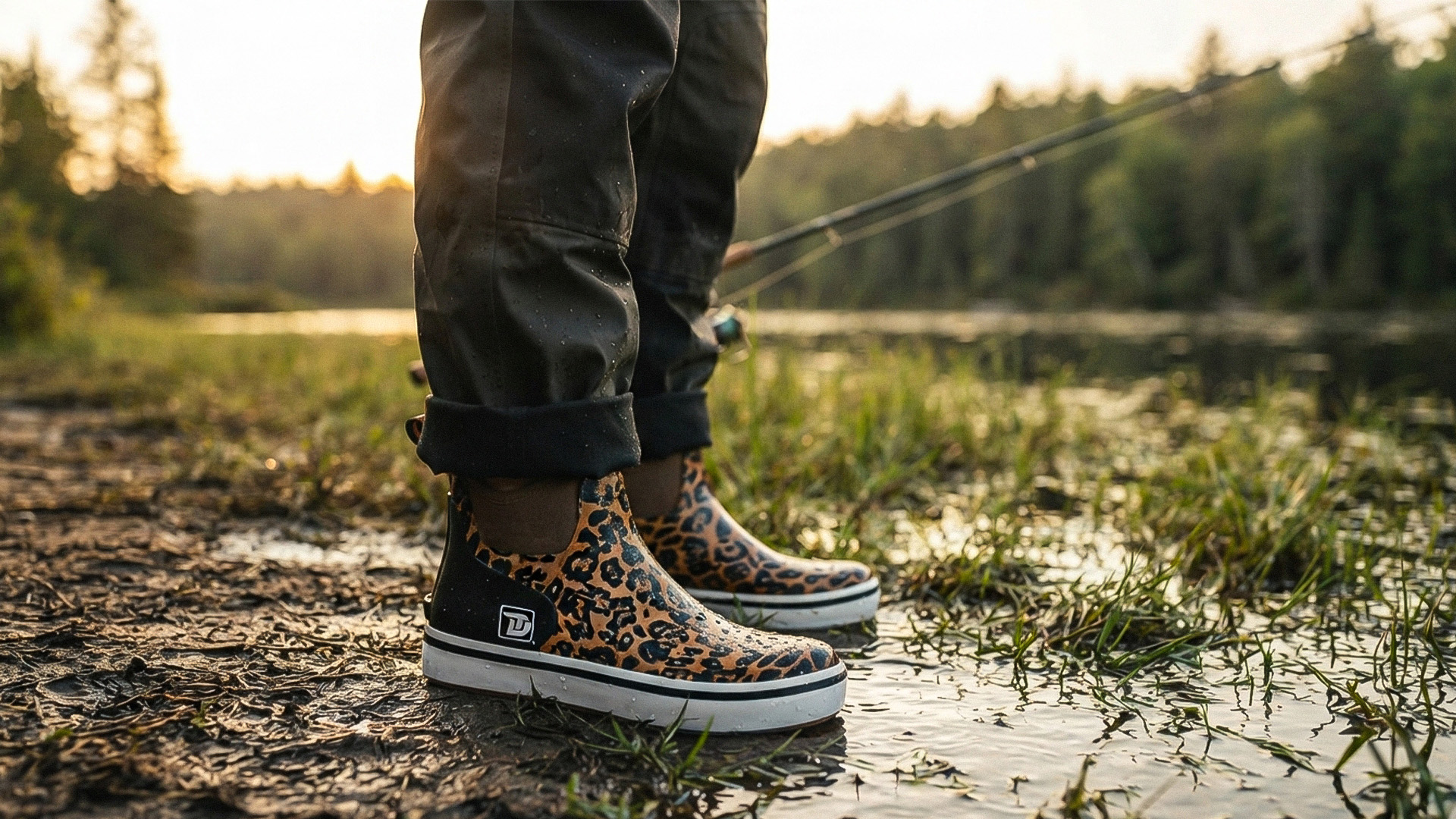
When comparing marine footwear, anglers can review TruDaveGear waterproof deck boots alongside other deck boot options based on removable insoles, cushioning, heel stability, outsole design, and all-day standing comfort.
What Kind of Insole Works for Flat Feet?
The best insole depends on the person, but flat-footed anglers often benefit from:
- Moderate arch support
- Stable heel cup
- Full-length design
- Balanced cushioning
- Low to medium profile
- Moisture-friendly materials
- Good fit inside the boot
Avoid choosing the highest arch support automatically.
A moderate, comfortable arch often works better than an aggressive insert that creates pressure.
Full-Length Insoles Are Usually Better
Full-length insoles provide support from heel to toe.
They are usually more stable than small arch pads or heel-only inserts.
A full-length insole can help:
- Support the arch
- Stabilize the heel
- Reduce forefoot pressure
- Improve comfort while standing
- Keep the foot aligned inside the boot
It should lie flat without curling at the edges.
If the insole bunches, slides, or shortens toe room too much, it is not a good match.
Do Not Stack Multiple Insoles
Stacking several insoles may seem like a simple way to add support.
It usually creates more problems.
Stacked insoles can cause:
- Instability
- Toe compression
- Instep pressure
- Heel sitting too high
- Collar rubbing
- Foot sliding
- Difficulty removing the boot
Use one well-fitting supportive insole.
If one insole cannot make the boot comfortable, the boot itself may not be the right fit.
Check Instep Pressure
Adding arch support can raise the foot inside the boot.
This may reduce available space over the top of the foot.
Signs of too much instep pressure include:
- Numbness
- Tingling
- Pain on top of the foot
- Deep sock marks
- Difficulty putting boots on
- Difficulty removing boots
- Feeling trapped inside the boot
The insole should improve support without making the boot too tight.
Socks Matter for Flat Feet
Socks affect both comfort and stability.
Good fishing socks should:
- Manage moisture
- Stay in place
- Reduce friction
- Provide light cushioning
- Extend above the boot collar
- Avoid excessive bulk
Synthetic and merino-blend socks are usually better than cotton.
Cotton holds moisture, stretches when wet, bunches under the foot, and may increase friction.
For flat feet, sock bunching can create uneven pressure under the arch and forefoot.
Should Flat-Footed Anglers Wear Thick Socks?
Thick socks may help in cool weather, but they are not a replacement for proper support.
Thick socks can create:
- Forefoot pressure
- Instep tightness
- Heat buildup
- Reduced toe room
- More sweating
For most trips, a lightweight or medium-weight moisture-wicking sock works better.
Use the insole for support and the sock for moisture control and friction reduction.
Fit Checklist for Flat Feet
A deck boot may work well for flat feet when:
- The heel feels secure
- The midfoot feels stable
- The toe box allows natural spread
- The arch feels supported but not forced
- The outsole feels stable during side steps
- The boot does not rotate around the foot
- The insole does not create pressure
- Socks remain smooth
- The boot feels comfortable after standing
- The foot does not slide forward
The boot should feel balanced, not tight.
At-Home Fit Test
Before taking new deck boots on a fishing trip, test them indoors.
Wear the socks you plan to use.
If you plan to use replacement insoles, test them together with the boots.
Spend 20 to 30 minutes doing:
- Standing
- Walking
- Turning
- Side-stepping
- Squatting
- Climbing stairs
- Simulating boat movement
- Standing still for several minutes
Pay attention to early signs of discomfort.
A pressure point at home may become pain after several hours on the water.
Standing Test
Flat feet often feel fine while walking but tired while standing.
Stand in the boots for several minutes.
Ask yourself:
- Do my arches feel supported?
- Does the heel feel stable?
- Are my toes relaxed?
- Is the forefoot squeezed?
- Is the top of my foot compressed?
- Do I feel pressure from the insole?
- Are my knees or lower legs working too hard?
Standing comfort is important because fishing often involves waiting, watching lines, or staying near the rail.
Side-Step Test
Side movement is common on boats.
Take slow side steps in both directions.
The boot should not:
- Rotate around the foot
- Allow the heel to slide sideways
- Feel delayed
- Collapse under the arch
- Cause toe gripping
- Feel unstable at the outsole edge
Flat-footed anglers need stable lateral control, not only soft underfoot cushioning.
Squat Test
Anglers often squat to reach coolers, fish boxes, rods, bait, or deck gear.
Squat gently in the boots.
Check for:
- Forefoot pressure
- Instep tightness
- Heel lifting
- Arch discomfort
- Boot folding incorrectly
- Ankle rubbing
The boot should bend naturally without crushing the foot.
Stair Test
Walking up and down stairs can reveal problems quickly.
Watch for:
- Heel slip
- Foot sliding forward
- Toe contact
- Arch pressure
- Instep pain
- Boot flexing in the wrong place
If the boot feels unstable on stairs indoors, it may feel worse on a wet dock or moving boat.
Flat Feet and Wet-Deck Traction
Flat-footed anglers may rely heavily on footwear stability.
A slippery or unstable outsole can make the feet work harder.
Look for a marine outsole with:
- Water-channeling grooves
- Broad contact area
- Stable heel platform
- Controlled flexibility
- Good surface contact
- Cleanable tread pattern
No boot is completely slip-proof.
Fish slime, soap, oil, mud, and algae can still create hazards.
Keep the deck and boot tread clean.
Flat Feet and Offshore Fishing
Offshore fishing can be demanding for flat feet.
The trip may involve:
- Long standing
- Rough water
- Heavy spray
- Wet decks
- Fish slime
- Bait water
- Boat washdowns
- Early morning cold
- Afternoon heat
- Long rides back to the dock
For offshore use, prioritize:
- Waterproof protection
- Stable cushioning
- Secure heel fit
- Removable insoles
- Moderate arch support
- Wet-deck outsole
- Moisture-wicking socks
- Correct boot height
Comfort should last beyond the first hour.
Flat Feet and Fishing Charters
Charter customers may stand for hours and may not control where water collects on the deck.
If you have flat feet, do not wear untested footwear on a charter.
Before the trip:
- Test boots indoors
- Try them with fishing socks
- Add insoles if needed
- Bring spare socks
- Pack clean shoes for the drive home
- Ask the captain about footwear rules
Deck boots are often practical for charters because they protect against wet decks, fish slime, and spray.
But they still need to fit and support your feet properly.
Flat Feet and Pier Fishing
Pier fishing often involves standing on concrete.
Concrete can be harder on flat feet than a boat deck because pressure stays constant.
For pier fishing, look for:
- Strong heel cushioning
- Stable arch support
- Roomy toe box
- Secure fit
- Durable outsole
- Moisture control
- Enough comfort for walking distance
Deck boots can work well on wet piers, especially when rain, fish slime, or cleaning stations are involved.
However, rough concrete may wear marine outsoles faster.
Flat Feet and Boat Cleaning
Boat cleaning involves standing, bending, squatting, and walking on wet soapy surfaces.
For cleaning use, deck boots should provide:
- Waterproof protection
- Stable outsole
- Good heel support
- Easy-clean upper
- Secure fit
- Comfortable insole
Soap can make surfaces extremely slippery.
Move carefully even when wearing good boots.
Flat Feet and Hot Weather
Hot weather can make flat-foot discomfort worse because feet may swell slightly.
Choose:
- Uninsulated deck boots
- Lightweight moisture-wicking socks
- Breathable clothing
- Removable insoles
- Correct toe box room
- Spare socks
Avoid tight boots that restrict circulation.
Do not size up only for airflow because oversized boots can increase instability.
Flat Feet and Cold Weather
Cold-weather fishing requires enough room for warmer socks without squeezing the foot.
Tight boots may reduce circulation and make feet colder.
Choose:
- Waterproof boots
- Warm but low-bulk socks
- Enough toe room
- Stable support
- Insulated model when necessary
Make sure any arch-support insole still leaves enough space for winter socks.
Common Pain Points for Flat-Footed Anglers
Arch Fatigue
Often caused by flat footbeds, poor support, or long standing.
Heel Pain
May come from insufficient cushioning or unstable heel fit.
Forefoot Pressure
Often caused by narrow boots or incorrect flex points.
Knee Fatigue
May be linked to poor foot control or unstable footwear.
Lower-Back Tiredness
Can become worse when footwear does not support long standing.
Blisters
May result from heel slip, wet socks, or foot rotation.
Footwear cannot solve every issue, but good fit and support can help reduce unnecessary strain.
When to Consider Professional Support
Some anglers need more than standard footwear advice.
Consider professional guidance if you experience:
- Persistent foot pain
- Severe heel pain
- Recurring knee pain
- Numbness
- Pain in only one foot
- Sudden changes in foot shape
- Difficulty walking after trips
- Repeated blistering
- Pain that affects daily life
A podiatrist or qualified professional may recommend custom orthotics or a specific support strategy.
Can Custom Orthotics Fit in Deck Boots?
Sometimes.
Custom orthotics may work if the deck boots have:
- Removable insoles
- Enough internal volume
- Stable heel area
- Proper length
- Enough toe room
- No excessive instep pressure
Test the orthotic and boot together before fishing.
Some orthotics are too thick or rigid for certain pull-on boots.
The boot must still feel stable and comfortable.
Choosing Deck Boots for Orthotics
If you use orthotics, look for:
- Removable factory footbed
- Roomy but controlled fit
- Secure heel
- Sufficient instep volume
- Wide enough toe box
- Stable outsole
- Easy entry and removal
Bring your orthotics when trying boots.
Do not assume they will fit after purchase.
When Flat Feet Make Boots Feel Too Tight
Flat feet may spread inside the boot when standing.
A boot that feels fine while sitting may become tight after body weight is applied.
Signs include:
- Forefoot pressure
- Little toe rubbing
- Big toe joint pain
- Numbness
- Tightness after standing
- Sock marks
- Pain that improves after removing boots
Test boots while standing, not only while seated.
When Flat Feet Make Boots Feel Too Loose
Flat feet can also make some boots feel unstable.
If the boot lacks midfoot support, the foot may spread and rotate inside the boot.
Signs include:
- Foot sliding
- Heel movement
- Sock twisting
- Toe gripping
- Arch fatigue
- Side-step instability
A supportive insole may help when the boot size is otherwise correct.
If the boot is too long or too wide, another model may be needed.
Best Features in Deck Boots for Flat Feet
Look for these features:
Removable Insoles
Allows support adjustment and easier drying.
Stable Heel Cup
Helps center the foot and reduce movement.
Moderate Arch Support
Supports the foot without creating sharp pressure.
Roomy Toe Box
Allows natural spread during standing.
Secure Midfoot
Reduces foot rotation inside the boot.
Stable Outsole
Improves control on wet hard surfaces.
Balanced Cushioning
Soft enough for pressure relief, firm enough for support.
Waterproof Upper
Protects against spray, rain, and fish mess.
Easy Cleaning
Important after saltwater, bait, and fish slime exposure.
Features to Avoid
Flat-footed anglers should be cautious with boots that have:
- Completely flat insoles
- Extremely soft unstable foam
- Narrow toe boxes
- Excessive heel lift
- Very high rigid arch inserts
- Non-removable footbeds
- Smooth worn outsoles
- Poor midfoot control
- Heavy construction without support
- Thin soles with little cushioning
The wrong boot may feel acceptable at the dock and uncomfortable after hours of standing.
Buying Deck Boots Online for Flat Feet
Before buying online, check:
- Size chart
- Return policy
- Insole removability
- Customer reviews mentioning arch support
- Width comments
- Heel slip feedback
- Boot weight
- Outsole design
- Intended use
- Whether half sizes are available
Look for reviews from anglers who mention standing time, flat feet, arch support, or replacement insoles.
Keep the boots clean during indoor testing in case you need to exchange them.
Should Flat-Footed Anglers Size Up?
Not automatically.
Size up only when:
- Toes touch the front
- Forefoot is squeezed
- Instep pressure is painful
- Intended socks or orthotics need room
- The larger size remains stable
Do not size up if it causes:
- Heel slip
- Foot rotation
- Wrong flex point
- Side-step instability
- Toe gripping
Supportive fit is more important than extra empty space.
Should Flat-Footed Anglers Choose Wide Boots?
Maybe.
Many people with flat feet need more forefoot room, but not everyone does.
Wide boots may help when:
- Forefoot pressure occurs
- Toes feel compressed
- Feet spread while standing
- Bunions or wide toe joints need room
- Standard width creates numbness
Wide boots may create problems when:
- Heel becomes loose
- Midfoot loses control
- Foot rotates inside the boot
- Socks twist during movement
The best boot is wide enough in the forefoot and secure enough in the heel.
How to Break In Deck Boots With Flat Feet
Deck boots usually do not require a long break-in period, but a short adjustment process is useful.
Try this approach:
- Wear indoors for 20 minutes.
- Test with your fishing socks.
- Test with your preferred insoles.
- Walk up and down stairs.
- Wear them during a short outdoor chore.
- Use them on a short fishing trip.
- Inspect your feet afterward.
Do not begin with a full-day offshore trip.
Break-in should not involve serious pain or numbness.
Cleaning and Drying Supportive Insoles
After fishing, remove the insoles.
Supportive footbeds can hold sweat, saltwater, and odor.
To clean them:
- Use mild soap when needed.
- Rinse lightly if allowed.
- Press moisture out with a towel.
- Air dry completely.
- Avoid high heat.
- Reinstall only when dry.
Do not place insoles near heaters or in clothes dryers unless the manufacturer allows it.
Heat can warp foam and support structures.
When to Replace Insoles
Replace deck boot insoles when they are:
- Flattened
- Cracked
- Torn
- Permanently odorous
- Uneven
- No longer supportive
- Causing pressure
- Slow to dry
- Sliding inside the boot
A fresh insole can restore comfort when the boot itself is still waterproof and stable.
When to Replace the Boots
New insoles cannot fix every problem.
Replace deck boots when:
- Outsole tread is worn
- Heel structure has collapsed
- Boot shape is warped
- Waterproofing has failed
- Cracks are present
- Outsole is separating
- Fit has become unstable
- Pain continues despite insole changes
- The boot no longer supports standing
A dry boot is not useful if it causes foot pain or poor balance.
Common Mistakes Flat-Footed Anglers Make
Choosing the Softest Boot
Softness without support can increase fatigue.
Ignoring Removable Insoles
Support adjustment is harder without removable footbeds.
Wearing Cotton Socks
Cotton holds moisture and creates friction.
Sizing Up Too Much
Extra length causes heel slip and instability.
Using Aggressive Arch Inserts
Too much arch pressure can hurt flat feet.
Not Testing While Standing
Flat feet spread under body weight.
Wearing New Boots on a Full-Day Trip
Fit problems get worse over time.
Ignoring Heel Stability
A loose heel makes the foot work harder.
Keeping Boots That Hurt Indoors
Pain at home usually becomes worse on the boat.
Forgetting to Dry Insoles
Damp footbeds create odor and discomfort.
Deck Boots for Flat Feet Buying Checklist
Before buying:
- Measure both feet
- Check width
- Review size chart
- Look for removable insoles
- Check return policy
- Read comfort reviews
- Consider orthotic compatibility
- Think about fishing conditions
- Avoid sizing up blindly
After delivery:
- Keep boots clean
- Wear fishing socks
- Add insoles if needed
- Stand for 20 minutes
- Walk and turn
- Side-step
- Squat
- Use stairs
- Check arch comfort
- Check heel stability
- Exchange if painful or unstable
Final Thoughts
The best deck boots for flat feet are not simply the softest boots or the widest boots.
They are boots that combine waterproof protection, stable cushioning, moderate arch support, secure heel control, natural toe room, and a wet-deck outsole that feels predictable during movement.
Flat-footed anglers should pay special attention to removable insoles.
A good insole can improve arch support, heel position, and all-day standing comfort.
But the boot itself still needs to fit correctly.
Do not rely on a larger size to solve support problems.
Do not use thick socks or stacked insoles to force a poor fit.
Test new boots indoors with the socks and insoles you plan to use.
Stand, walk, turn, side-step, squat, and climb stairs before wearing them on a fishing charter or offshore trip.
If you use custom orthotics, choose deck boots with removable footbeds and enough internal volume.
For long days on wet fiberglass, aluminum, concrete piers, or fishing charters, comfort depends on the complete footwear system.
The right deck boots should keep your feet protected from water, fish slime, and spray while helping your arches, heels, knees, and lower legs stay comfortable from the first cast to the final cleanup.
Frequently Asked Questions
Are deck boots good for flat feet?
They can be, especially when they have stable cushioning, a secure heel, enough toe room, and removable insoles that allow arch-support adjustment.
What should flat-footed anglers look for in deck boots?
Look for removable insoles, moderate arch support, stable heel fit, roomy toe box, secure midfoot, and wet-deck traction.
Do deck boots have arch support?
Some do, but many basic deck boots have simple footbeds. Removable insoles make it easier to add the support you need.
Can I put orthotics in deck boots?
Yes, if the boots have removable insoles and enough internal volume. Test the orthotics with the boots before fishing.
Should flat-footed anglers choose soft deck boots?
Soft cushioning helps, but too much softness can feel unstable. Choose balanced cushioning with support.
Should flat-footed anglers size up?
Only when the smaller size is truly too tight and the larger size remains stable. Sizing up too much can cause heel slip and foot rotation.
Are wide deck boots better for flat feet?
Sometimes. Flat feet may spread while standing, but wide boots should still hold the heel and midfoot securely.
What socks are best for flat feet in deck boots?
Wear synthetic or merino-blend moisture-wicking socks. Avoid cotton socks because they hold moisture and may bunch.
Why do my arches hurt in deck boots?
Possible causes include flat footbeds, poor support, worn insoles, excessive foot movement, hard deck surfaces, or incorrect sizing.
Can insoles fix deck boots that hurt my arches?
They may help when the boot fits correctly. Insoles cannot fix boots that are too long, too narrow, unstable, or structurally worn out.
What insole is best for flat feet in fishing boots?
A full-length insole with moderate arch support, stable heel cup, and balanced cushioning usually works better than a very high rigid arch.
Are deck boots comfortable for standing all day with flat feet?
They can be when they fit properly and include enough support and cushioning for long standing on hard marine surfaces.
Why do my knees hurt after wearing deck boots?
Poor support, worn insoles, unstable fit, excessive foot rotation, or hard standing surfaces may contribute. Persistent pain should be evaluated professionally.
How should deck boots fit for flat feet?
They should feel secure through the heel and midfoot, roomy enough in the toe box, supportive under the arch, and stable during side steps.
Can I wear deck boots on concrete piers if I have flat feet?
Yes, but choose boots with good cushioning and support. Rough concrete may wear marine outsoles faster than boat decks.
When should I replace deck boot insoles?
Replace them when they are flattened, torn, cracked, permanently odorous, uneven, or no longer supportive.
When should I replace the boots instead of the insoles?
Replace the boots when the outsole is worn, the heel structure collapses, waterproofing fails, cracks appear, or the fit remains unstable despite better insoles.