
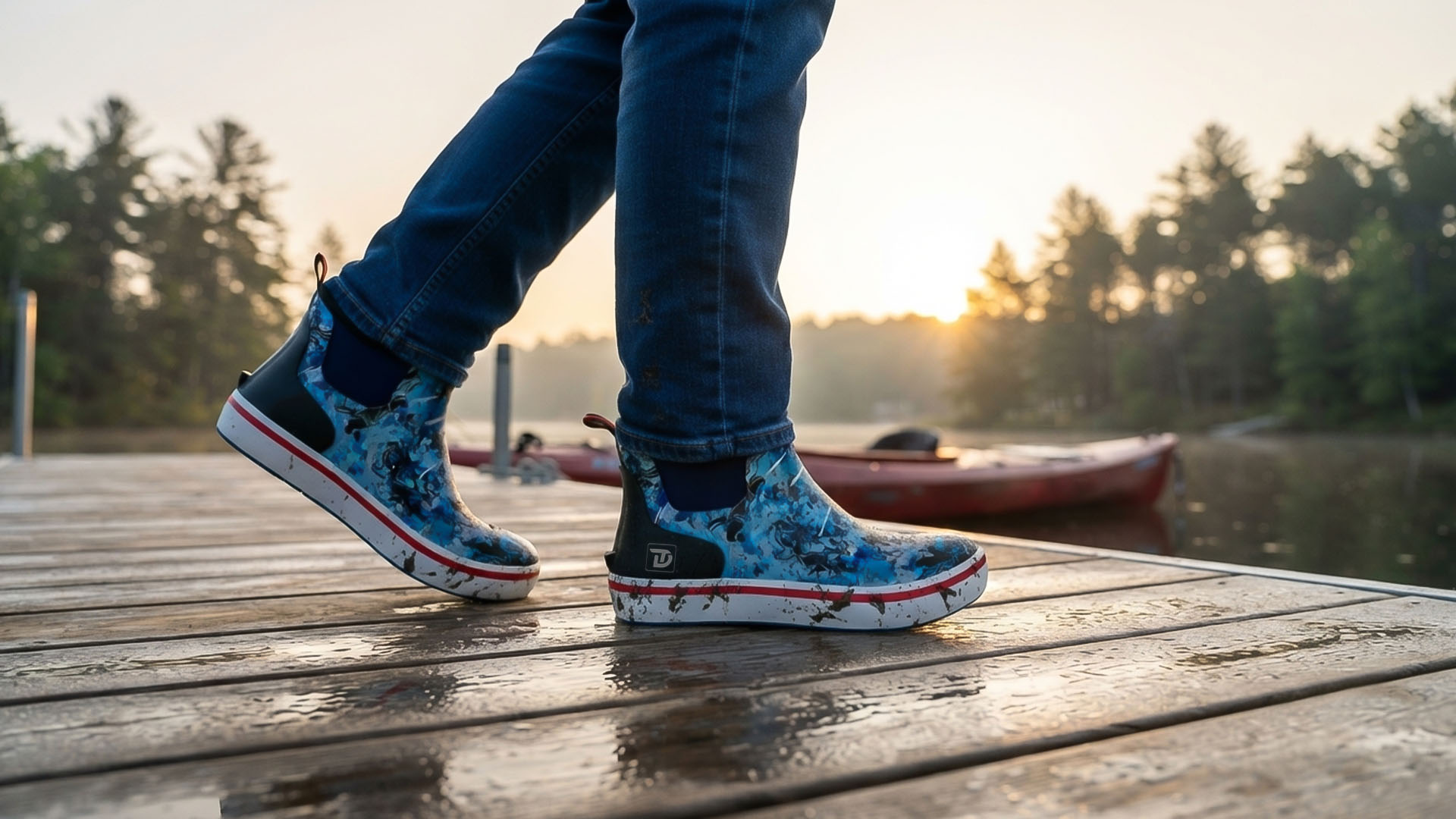
Meta Description: Learn how to clean deck boots after saltwater fishing, remove fish slime and odors, wash the insoles, dry boots safely, and avoid damaging waterproof materials.
Suggested URL Slug: how-to-clean-deck-boots-after-saltwater-fishing
Primary Keyword: how to clean deck boots after saltwater fishing
Secondary Keywords: clean fishing boots, remove fish smell from deck boots, saltwater boot care, wash waterproof fishing boots, clean deck boot insoles, how to dry deck boots
Search Intent: Informational / Post-Purchase
Deck boots are designed to handle wet fishing conditions, but that does not mean they should be left covered with salt, fish slime, bait residue, and mud after every trip.
Saltwater dries into a fine mineral layer. Fish slime and blood can settle into outsole grooves. Bait residue may remain around the heel, boot opening, and removable footbed.
When this material is not removed, the boots may develop strong odors, slippery outsoles, stained surfaces, and an interior that never seems completely fresh.
The good news is that routine deck boot cleaning is usually simple.
Most fishing boots do not require aggressive chemicals, stiff wire brushes, boiling water, or high-temperature drying. In fact, those methods may cause more damage than the original dirt.
A fresh-water rinse, mild soap, gentle brushing, and proper airflow are enough for most fishing trips.
This guide explains how to clean deck boots after saltwater fishing, remove fish odor, wash the insoles, dry the interior, and avoid common cleaning mistakes that can shorten the life of waterproof footwear.
Why Deck Boots Should Be Cleaned After Saltwater Use
Saltwater does not always create obvious damage after a single trip.
The problems usually build gradually.
Salt, bait, fish residue, and moisture may collect around:
- Outsole grooves
- Flex points
- Pull tabs
- Boot openings
- Heel areas
- Removable insoles
- Interior linings
- Textured exterior surfaces
Cleaning the boots after fishing helps maintain:
- Traction
- Flexibility
- Waterproof performance
- Interior freshness
- Foot comfort
- Material condition
- Easier future cleaning
It also gives you an opportunity to inspect the boots for cracks, punctures, worn tread, or outsole separation.
What Saltwater Leaves Behind
When seawater evaporates, salt crystals remain on the boot.
You may notice:
- White surface marks
- Dull-looking material
- Stiff residue
- Rough texture
- Salt around seams or grooves
- Hardened deposits near the opening
Salt may also remain inside the boot when water enters from above.
Fresh water dissolves and carries this residue away.
That is why rinsing is the most important step after a saltwater trip.
Why Fish Slime and Bait Need Prompt Cleaning
Fish slime, blood, cut bait, squid, shrimp, and chum contain organic material.
When left on footwear, they may create:
- Strong odor
- Sticky surfaces
- Discoloration
- Bacterial growth
- Slippery outsoles
- Attraction for insects or animals
- More difficult cleaning later
Fresh residue is easier to remove than dried residue.
Cleaning the boots soon after returning home reduces the amount of scrubbing required.
Supplies You Need
For routine deck boot cleaning, gather:
- Fresh water
- Mild liquid soap
- Soft- or medium-bristle brush
- Small toothbrush or detail brush
- Clean sponge or cloth
- Bucket or utility sink
- Absorbent towel
- Drying rack
- Newspaper or clean paper towels when appropriate
- Compatible no-heat boot dryer, if available
Avoid starting with aggressive chemicals.
Most ordinary fishing residue can be removed with mild soap and water.
Choose a Mild Soap
A mild dishwashing liquid or gentle footwear cleaner is usually sufficient.
The soap should remove:
- Fish oil
- Slime
- Blood
- Bait residue
- Light mud
- Surface grime
Use only a small amount.
Too much soap creates extra residue and makes rinsing more difficult.
Avoid cleaners containing strong solvents unless the boot manufacturer specifically approves them.
Check the Manufacturer’s Care Instructions
Deck boots may be made from different materials, including:
- Rubber compounds
- EVA-based materials
- Neoprene
- Synthetic waterproof compounds
- Fabric linings
- Foam footbeds
- Mixed-material construction
A method that works for one material may not be appropriate for another.
Before using disinfectants, stain removers, odor sprays, conditioners, or washing machines, check the care information provided for the specific footwear.
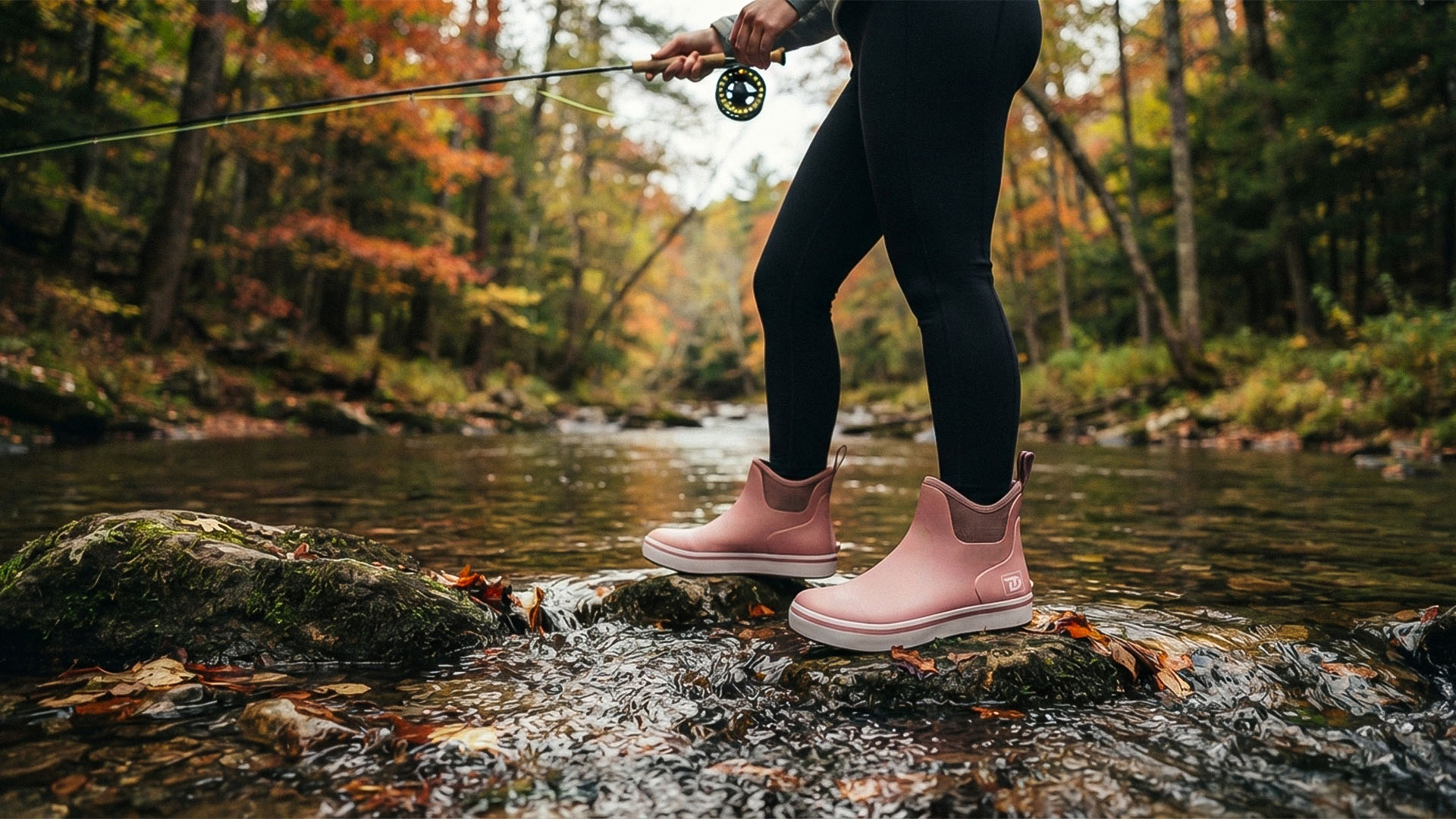
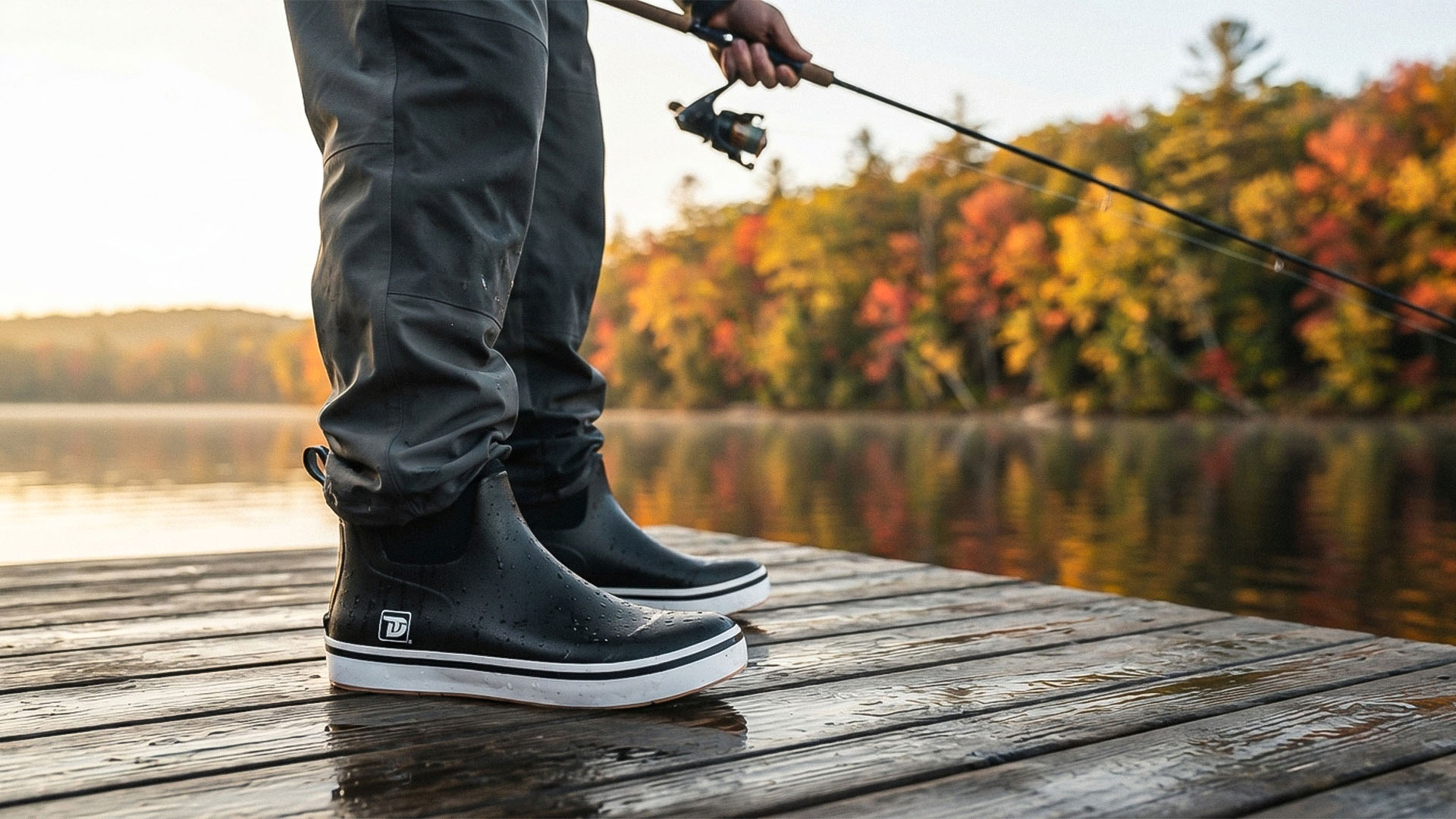
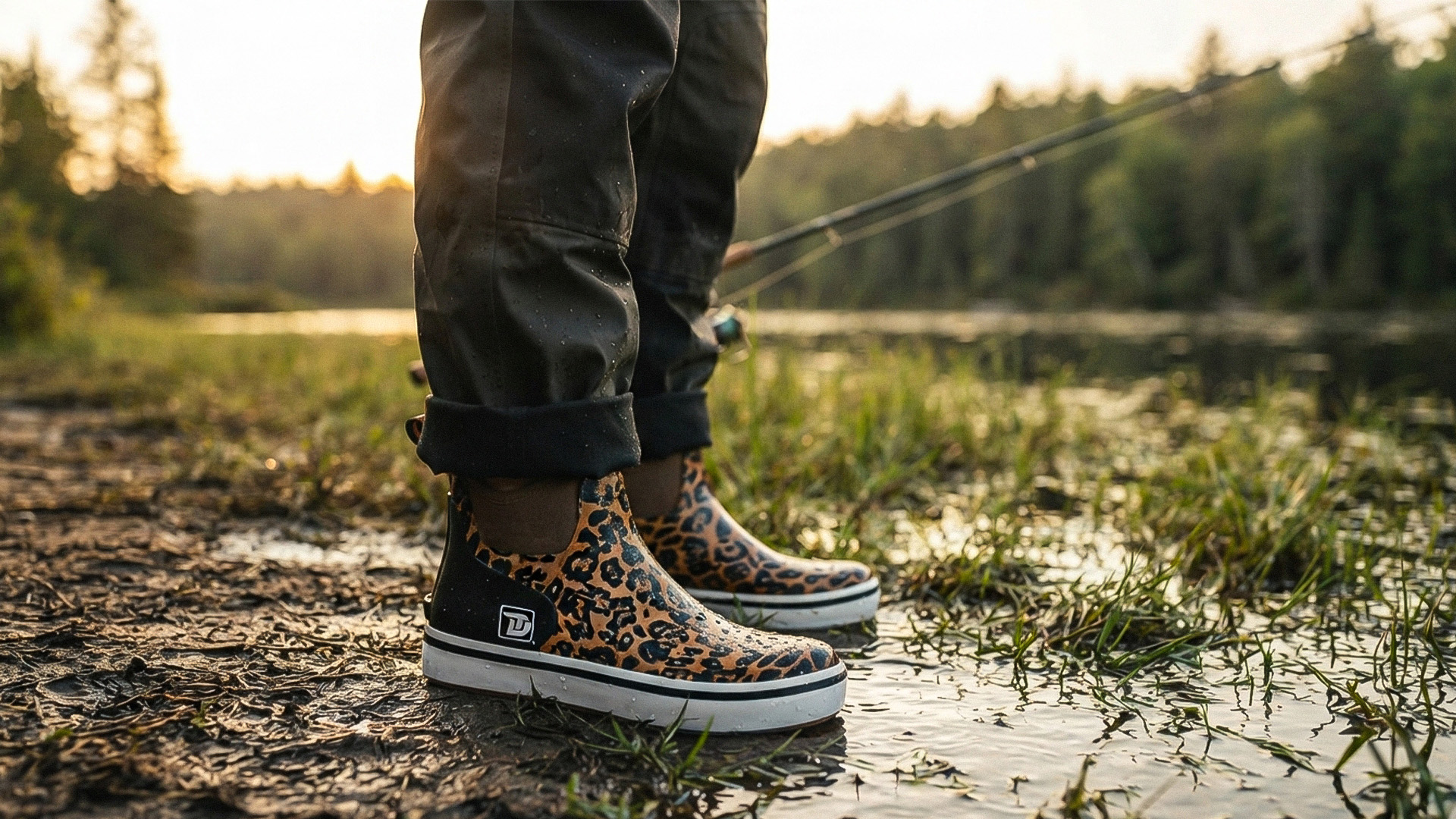
Anglers comparing new waterproof fishing footwear can also review TruDaveGear deck boots alongside other marine-focused options, paying attention to material construction, removable insoles, and recommended maintenance.
Step 1: Remove Loose Mud and Debris
Begin before adding soap.
Remove:
- Mud
- Sand
- Grass
- Fish scales
- Small stones
- Seaweed
- Bait fragments
- Hooks or fishing line
Use a hose, soft brush, or wooden stick for packed debris.
Be careful when inspecting tread.
A hook, fish spine, or sharp shell fragment may be hidden inside an outsole groove.
Wear protective gloves when necessary.
Step 2: Rinse the Exterior With Fresh Water
Rinse the entire boot thoroughly.
Pay attention to:
- Toe area
- Sidewalls
- Heel
- Boot opening
- Pull tabs
- Flex points
- Outsole grooves
- Connection between upper and sole
Use moderate water pressure.
The goal is to dissolve salt and loosen residue, not force water into the boot.
Rinse both boots even when only one appears dirty.
Salt spray may cover areas that do not look visibly contaminated.
Step 3: Remove the Insoles
If the boots have removable insoles, take them out before deeper cleaning.
Insoles collect:
- Sweat
- Salt
- Moisture
- Fish odor
- Dirt
- Bacteria
- Pressure from repeated standing
Removing them improves airflow and allows the interior to dry faster.
Do not pull aggressively if the insole appears attached.
Some footbeds are not designed to be removed.
Follow the manufacturer’s instructions.
Step 4: Wash the Exterior With Mild Soap
Mix a small amount of mild soap with fresh water.
Apply it using a sponge or soft brush.
Clean one section at a time.
Use gentle circular movement around:
- Textured surfaces
- Flex areas
- Heel edges
- Pull tabs
- Stained areas
- Outsole sidewalls
The brush should loosen residue without scratching or weakening the material.
Do not use a metal brush.
Step 5: Scrub the Outsole Grooves
The outsole deserves special attention because it directly affects traction.
Packed residue may include:
- Fish slime
- Blood
- Mud
- Gravel
- bait
- Seaweed
- Soap
- Oil
Use a medium-bristle brush for the main tread.
Use a smaller brush for narrow grooves.
Clean until the water runs clear and the tread pattern is visible.
Do not assume that a boot is safe on wet surfaces while its outsole is coated with dried fish residue.
Step 6: Treat Fish Slime and Oily Residue
Fish slime and oil may require more than plain water.
Apply a small amount of diluted mild soap directly to the affected area.
Allow it to sit briefly, but do not let the soap dry on the surface.
Brush gently and rinse thoroughly.
Repeat when necessary.
Avoid using gasoline, paint thinner, acetone, industrial degreasers, or other harsh solvents.
These products may damage waterproof compounds, adhesives, finishes, and outsole materials.
Step 7: Clean Blood Before It Fully Dries
Fish blood is easier to remove while fresh.
Rinse the area with cool or lukewarm fresh water.
Apply mild soap and brush gently.
Avoid beginning with very hot water.
Heat may make some organic stains more difficult to remove from fabric linings and mixed materials.
For persistent staining, use only a cleaner approved for the specific boot.
A slight cosmetic mark does not necessarily affect waterproof performance.
Aggressive stain removal may cause more damage than leaving a harmless discoloration.
Step 8: Clean the Boot Opening and Pull Tabs
The upper opening often collects:
- Salt
- Sweat
- Sand
- Rainwater
- Mud
- Fish residue from clothing
Wipe around the collar with a damp soapy cloth.
Clean both sides of the pull tabs.
Rinse carefully so soap does not remain inside the lining.
Inspect the pull-tab attachment points for cracks or separation while cleaning.
Step 9: Rinse All Soap Away
Soap residue can leave the boots:
- Sticky
- Dull
- Slippery
- More likely to collect dirt
Rinse the exterior thoroughly with fresh water.
Continue until no foam remains around the outsole, collar, or textured areas.
Turn the boots to different angles so water reaches all exterior surfaces.
Do not leave concentrated soap inside outsole grooves.
How to Clean the Inside of Deck Boots
The interior should not be flooded after every routine trip unless it actually needs cleaning.
Frequent soaking may increase drying time and create unnecessary moisture around linings or foam components.
Clean the interior when:
- Water entered the boots
- Fish residue reached the lining
- Odor is developing
- Mud or sand entered through the opening
- Socks became unusually dirty
- The interior feels sticky
- The boots were worn barefoot
Use a damp cloth and diluted mild soap for light cleaning.
For more extensive interior washing, follow the manufacturer’s instructions.
Cleaning a Lightly Dirty Interior
For ordinary sweat and light odor:
- Remove the insoles.
- Wipe the interior with a damp cloth.
- Use a small amount of diluted mild soap.
- Wipe again with a clean damp cloth.
- Remove as much moisture as possible.
- Dry with airflow.
Avoid leaving soap inside the lining.
The interior should feel clean, not heavily perfumed.
Cleaning Sand From Inside the Boots
Sand creates friction and can damage socks and linings.
To remove it:
- Turn the boot upside down.
- Shake out loose sand.
- Remove the insole.
- Use a soft brush or dry cloth.
- Rinse lightly if necessary.
- Drain completely.
- Dry before reinstalling the insole.
Inspect beneath the insole.
Fine sand often settles around the heel and toe areas.
How to Clean Removable Insoles
Wash removable insoles separately.
Use:
- Cool or lukewarm water
- Mild soap
- Soft brush or cloth
Gently clean the top fabric, edges, and bottom.
Rinse thoroughly.
Press the insoles between towels to remove excess water.
Do not twist or aggressively wring foam footbeds.
Lay them flat or place them where air can reach both sides.
Do not reinstall the insoles until they are completely dry.
Can Deck Boot Insoles Go in a Washing Machine?
Do not assume they are machine washable.
Washing machines may:
- Tear surface fabric
- Distort foam
- Damage adhesives
- Change the insole shape
- Cause uneven compression
Check the care instructions first.
Hand washing is generally the safer method for ordinary removable footbeds.
How to Remove Fish Smell From Deck Boots
Fish odor usually comes from organic residue and trapped moisture.
The most effective approach is:
- Remove all visible residue.
- Wash with mild soap.
- Rinse thoroughly.
- Remove and clean the insoles.
- Dry the boots completely.
- Store them with airflow.
Masking odor with perfume does not remove its source.
A strong fragrance mixed with fish residue may make the problem worse.
Odor Often Comes From the Insoles
The removable footbed absorbs sweat and moisture more readily than a molded exterior.
When odor remains after exterior cleaning, inspect the insoles.
Possible solutions include:
- Hand washing
- Complete drying
- Rotating between two sets
- Replacing permanently damaged insoles
- Using an approved footwear deodorizer
If an insole remains strongly odorous after repeated cleaning and drying, replacement may be more effective than continuing to treat it.
Can You Use Baking Soda?
Baking soda is commonly used for odor control, but it should be used carefully.
Loose powder may:
- Collect inside seams
- Remain beneath the insole
- Create abrasive residue
- Be difficult to remove
- Affect some linings
Check the manufacturer’s recommendations.
A better first step is always cleaning and complete drying.
When an odor treatment is needed, use one designed for footwear and compatible with the boot materials.
Can You Use Vinegar?
Diluted vinegar is sometimes used as a household odor treatment, but it is not appropriate for every material.
It may affect:
- Adhesives
- Surface finishes
- Dyes
- Foam
- Certain rubber compounds
Do not pour undiluted vinegar into deck boots.
Use only manufacturer-approved methods.
Mild soap, freshwater rinsing, and complete drying are safer general recommendations.
Can You Use Bleach?
Avoid bleach unless the boot manufacturer explicitly approves it.
Bleach may:
- Discolor the boot
- Weaken materials
- Damage fabric linings
- Affect adhesives
- Create strong fumes
- Leave irritating residue
Ordinary fish odor and slime usually do not require bleach.
Use a compatible footwear disinfectant only when necessary and approved for the material.
Can You Pressure-Wash Deck Boots?
A pressure washer is usually unnecessary.
High-pressure water may:
- Force moisture into the lining
- Damage surface finishes
- Stress seams
- Lift loose material
- Drive debris deeper into gaps
- Damage pull-tab attachment points
A standard hose and brush provide more control.
When pressure washing a boat, remove the boots or avoid directing the high-pressure stream at close range.
Can You Put Deck Boots in a Dishwasher?
No.
Dishwashers expose footwear to:
- High heat
- Strong detergent
- Prolonged water pressure
- Food-contact sanitation concerns
The heat and chemicals may damage boots, insoles, and adhesives.
Clean fishing footwear separately with appropriate tools.
Can You Put Deck Boots in a Washing Machine?
Most molded deck boots should not be placed in a washing machine unless the manufacturer specifically permits it.
Machine washing may:
- Distort the boot
- Damage the drum
- affect adhesives
- Trap water inside
- Stress pull tabs
- Damage removable footbeds
Hand cleaning gives you more control and is usually all that is needed.
How to Dry Deck Boots Correctly
Proper drying is as important as cleaning.
Deck boots that remain damp may develop:
- Odor
- Mildew
- Lining damage
- Uncomfortable moisture
- Cold feet during the next trip
After cleaning:
- Drain all water.
- Remove the insoles.
- Wipe the interior.
- Place the boots in a ventilated area.
- Allow air to enter the openings.
- Dry the insoles separately.
- Confirm everything is fully dry before storage.
Position the Boots for Better Airflow
Place the boots upright or at a slight angle.
Do not leave them upside down for the entire drying period if that prevents air from reaching the interior.
A rack that allows air to circulate around the boots works well.
Keep the openings unobstructed.
Do not place wet socks or towels inside.
Can You Stuff Boots With Newspaper?
Clean newspaper or absorbent paper may help remove moisture from the interior.
Use it carefully:
- Insert a small amount loosely.
- Allow it to absorb moisture.
- Replace it when damp.
- Remove all paper before final drying.
Do not pack the boot tightly.
Heavy stuffing restricts airflow and may distort the lining.
Printed paper may transfer ink to some interiors.
Clean, unprinted absorbent paper is preferable when available.
Use a No-Heat Boot Dryer
A compatible no-heat or low-temperature boot dryer can improve airflow.
It may be useful for anglers who fish several days per week.
Check that the dryer is appropriate for:
- Rubber
- EVA
- Neoprene
- Foam
- The specific boot lining
Avoid high-temperature settings unless the footwear manufacturer approves them.
The goal is air movement, not intense heat.
Do Not Dry Boots Beside a Heater
Direct heat can damage:
- Waterproof materials
- Adhesives
- Foam cushioning
- Surface finishes
- Boot shape
- Linings
Avoid placing boots:
- On radiators
- Beside space heaters
- In clothes dryers
- Over heating vents
- Near open flames
- Directly under high-temperature hair dryers
The boots may appear dry faster while becoming brittle, warped, or separated internally.
Avoid Long-Term Drying in Direct Sunlight
Short exposure during cleaning may not be a problem, but prolonged direct sunlight is not the best drying or storage method.
Ultraviolet light and heat may contribute to:
- Material fading
- Hardening
- Cracking
- Warping
- Adhesive damage
Dry the boots in a shaded, ventilated location.
How Long Do Deck Boots Take to Dry?
Drying time depends on:
- Interior moisture
- Insulation
- Lining material
- Air circulation
- Humidity
- Temperature
- Whether the insole was removed
A lightly rinsed uninsulated boot may dry relatively quickly.
A flooded insulated boot may require much longer.
Do not reinstall damp insoles or place the boots into sealed storage simply because the exterior feels dry.
Check the toe and heel interior.
How to Clean Insulated Deck Boots
Insulated boots require more careful drying.
Water may remain inside:
- Thermal lining
- Foam
- Neoprene
- Thick footbeds
- Insulated collars
Use minimal water for routine interior cleaning.
Remove the insoles and create strong airflow.
Allow additional drying time.
Do not expose insulation to high heat.
Damp insulation may feel cold during the next fishing trip even when the exterior appears dry.
How to Clean Neoprene Sections
Neoprene may retain sweat, salt, and odor.
Use:
- Cool or lukewarm fresh water
- Mild soap approved for neoprene
- Gentle hand cleaning
- Thorough rinsing
- Shaded airflow
Do not aggressively twist neoprene.
Avoid strong solvents and high heat.
Allow it to dry completely before storage.
How to Clean White Deck Boots
White boots show stains more clearly.
Begin with the same mild cleaning process:
- Fresh-water rinse
- Diluted mild soap
- Soft brush
- Thorough rinsing
- Air drying
Do not use bleach simply because the boot is white.
The material may become discolored, weakened, or uneven.
Some stains are cosmetic and do not affect performance.
How to Clean Dark-Colored Deck Boots
Dark boots may hide fish blood, mud, and oily residue.
Inspect them under bright lighting.
Pay close attention to:
- Outsole grooves
- Heel edges
- Textured surfaces
- Interior lining
- Pull tabs
A boot that looks clean from a distance may still contain organic residue.
Use touch and smell as well as appearance.
Cleaning Boots After Tuna, Mahi, or Grouper Fishing
Offshore species trips may create heavy contamination from:
- Blood
- Scales
- Fish slime
- Bait
- Chum
- Ice
- Saltwater
Clean the boots as soon as practical.
Rinse before residue dries.
Use mild soap around the outsole and sidewalls.
Clean the insoles separately.
Allow the footwear to dry completely before placing it inside a vehicle, closet, or boat locker.
Cleaning Boots After Pier Fishing
Pier boots may collect:
- Bait
- Fish slime
- Sand
- Concrete dust
- Cleaning-station water
- Ocean spray
Rinse the outsole carefully.
Fine sand may settle beneath the insole.
Concrete dust can combine with water and form stubborn residue around tread grooves.
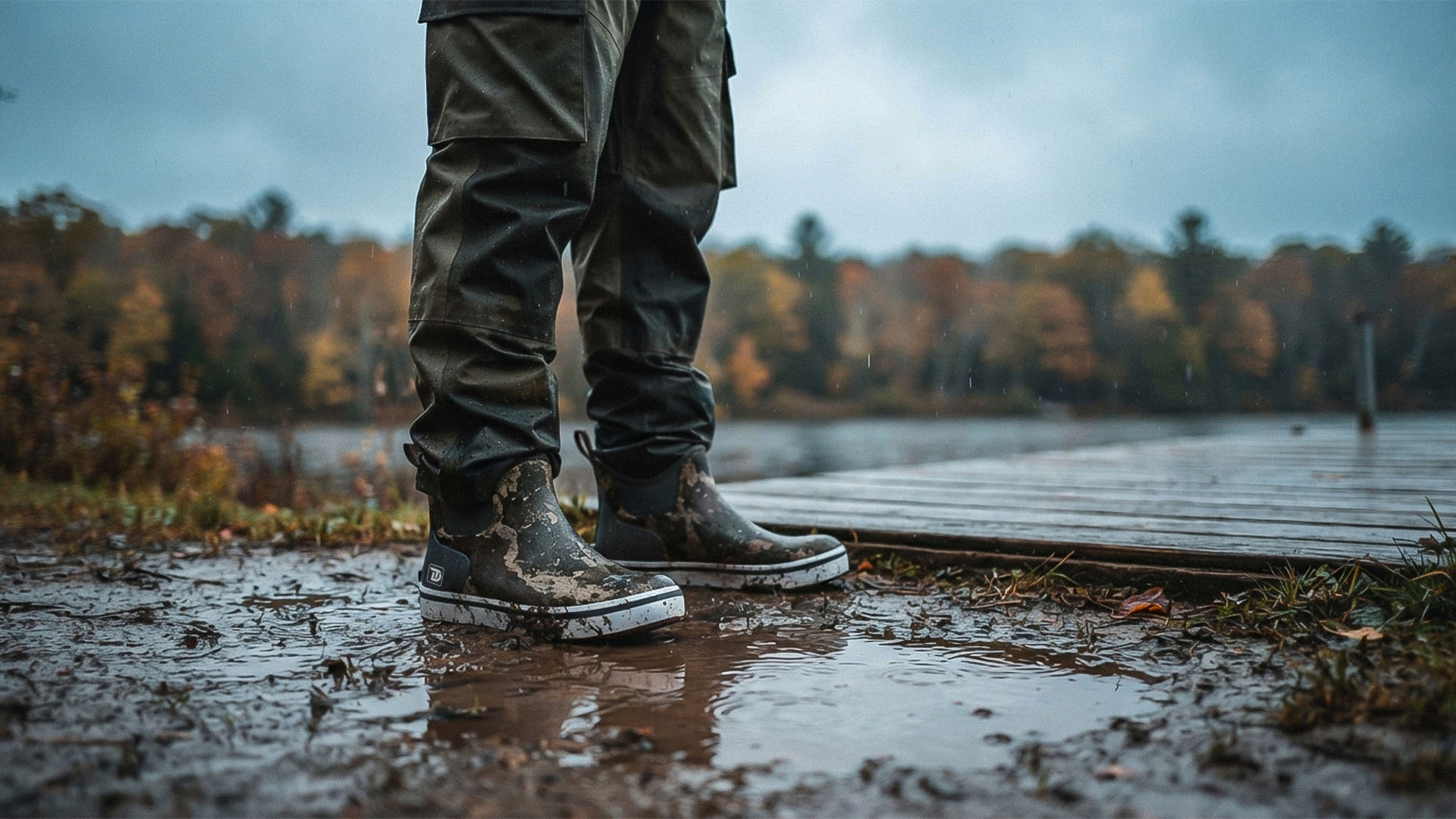
Cleaning Boots After Muddy Boat Ramps
Remove mud before it dries into the tread.
Use a hose and medium-bristle brush.
Pay attention to clay, which may remain packed inside narrow grooves.
Do not carry muddy boots directly onto a clean boat deck.
Mud can reduce wet-surface traction.
Clean the outsole at the ramp when possible.
Cleaning Boots After Freshwater Fishing
Freshwater boots still need care.
They may collect:
- Lake mud
- Algae
- Fish slime
- Bait
- Grass
- Sand
- Boat-cleaning products
The same basic process applies:
- Rinse
- Wash gently
- Clean the tread
- Remove the insoles
- Dry completely
Salt removal may not be necessary, but organic residue and moisture still cause odor.
Cleaning Boots Used Around Invasive Species
Fishing equipment can transport mud, plants, and small organisms between waterways.
Follow local environmental guidance for cleaning, draining, and drying fishing gear.
Requirements may vary by location.
Do not move visible plants, mud, or water from one fishing area to another.
Some jurisdictions recommend specific decontamination procedures.
Follow official local instructions when they apply.
Inspect the Boots While Cleaning
Cleaning is the best time to look for damage.
Inspect:
- Tread wear
- Cracks
- Punctures
- Outsole separation
- Pull-tab damage
- Lining wear
- Compressed insoles
- Sharp objects in the tread
- Changes in material flexibility
A clean boot makes small defects easier to see.
Address problems before the next offshore trip.
Check the Outsole for Hooks
Fishing hooks can become embedded in tread.
Inspect carefully before brushing with bare hands.
Use pliers to remove hooks when safe.
Dispose of damaged hooks properly.
Do not leave them loose around children, pets, driveways, or boat ramps.
Check for Reduced Traction
After cleaning and drying, examine the tread.
Look for:
- Smooth sections
- Rounded tread edges
- Uneven heel wear
- Cracks
- Missing material
- Hardened outsole areas
Cleaning may restore traction when residue was the cause.
It cannot restore rubber that has worn away.
Replace boots when outsole performance has significantly declined.
How Often Should Deck Boots Be Deep-Cleaned?
Rinse after every saltwater trip.
Perform a more detailed cleaning when:
- Fish were cleaned onboard
- Blood or bait reached the boots
- Mud is packed into the tread
- Odor is developing
- Water entered the interior
- The boots were worn for a long shift
- They will be stored for an extended period
Frequent light cleaning is easier than occasional aggressive cleaning.
Quick Rinse vs. Deep Cleaning
Quick Rinse
Appropriate after a light trip involving:
- Minor spray
- Clean boat decks
- Limited fish handling
- No interior moisture
Steps:
- Rinse with fresh water.
- Clean the outsole.
- Air dry.
Deep Cleaning
Appropriate after:
- Fish blood
- Heavy slime
- Bait contamination
- Mud
- Interior water
- Strong odor
- Long saltwater exposure
Steps:
- Remove debris.
- Rinse thoroughly.
- Remove insoles.
- Wash with mild soap.
- Clean the interior when needed.
- Rinse completely.
- Dry all parts separately.
Storage After Cleaning
Store clean, dry deck boots in a location that is:
- Cool
- Shaded
- Ventilated
- Away from chemicals
- Away from direct heat
- Protected from crushing
Avoid permanent storage in:
- Vehicle trunks
- Hot truck beds
- Unventilated boat lockers
- Sealed plastic bags
- Direct sunlight
- Damp basements
Place the boots upright and maintain their natural shape.
Do Not Store Dirty Boots in the Vehicle
Fish-contaminated boots may create strong odor inside a warm vehicle.
Heat can also accelerate material aging.
Keep a waterproof tray or ventilated boot bag in the vehicle for transportation.
Remove the boots and clean them when you return home.
Do not leave them sealed inside the bag.
Transporting Wet Deck Boots
After fishing:
- Remove heavy mud and fish residue at the marina when possible.
- Place the boots in a waterproof tray.
- Keep dirty footwear separate from clean clothing.
- Open the container after arriving home.
- Clean and dry the boots promptly.
A sealed transportation bag is useful for the drive.
It is not appropriate for long-term storage.
How to Prevent Strong Odor
Odor prevention is easier than odor removal.
Use these habits:
- Wear clean moisture-wicking socks
- Rinse after fishing
- Remove the insoles
- Dry completely
- Do not wear the boots barefoot unless designed for it
- Rotate footwear during frequent use
- Change wet socks
- Clean fish residue immediately
- Avoid hot vehicle storage
- Replace permanently damaged insoles
Moisture management is the most important factor.
Rotate Between Two Pairs
Guides, captains, and frequent anglers may benefit from rotating two pairs.
Rotation gives each pair time to:
- Dry completely
- Release moisture
- Be cleaned properly
- Recover from insole compression
- Remain available as backup
Wearing the same damp boots on consecutive days encourages odor and discomfort.
Replace Worn Insoles
A clean boot may still smell when the insole is permanently contaminated or broken down.
Replace insoles when they are:
- Torn
- Flattened
- Cracked
- Permanently odorous
- Moldy
- Unable to dry
- Uncomfortable
Use replacement footbeds that fit the boot without reducing toe room.
Common Deck Boot Cleaning Mistakes
Waiting Several Days to Clean Them
Dried fish residue is harder to remove.
Using Harsh Solvents
They may damage waterproof materials and adhesives.
Using Bleach Without Approval
Bleach may discolor or weaken components.
Pressure-Washing at Close Range
High pressure may damage surfaces and force water into the boot.
Machine Washing
The machine may damage the boots, and the boots may damage the machine.
Using Too Much Soap
Soap residue can make surfaces sticky or slippery.
Leaving the Insoles Inside
The interior dries more slowly.
Drying With High Heat
Heat may warp, crack, or separate materials.
Storing the Boots While Damp
Moisture encourages odor and mildew.
Masking Odor Without Removing Residue
Fragrance does not replace cleaning.
Deck Boot Cleaning Checklist
After Every Saltwater Trip
- Remove visible debris
- Rinse with fresh water
- Clean the outsole grooves
- Check for hooks
- Remove wet insoles
- Dry with airflow
After Heavy Fish Handling
- Apply diluted mild soap
- Brush fish slime and blood
- Clean pull tabs and openings
- Wash the insoles separately
- Rinse thoroughly
- Dry completely
Before Storage
- Confirm the interior is dry
- Reinstall only dry insoles
- Inspect for cracks
- Check tread wear
- Store upright
- Avoid heat and sunlight
A Simple Five-Minute Cleaning Routine
When the trip was not especially messy, use this routine:
Minute 1
Shake out debris and remove the insoles.
Minute 2
Rinse both boots with fresh water.
Minute 3
Brush the outsole and any visible stains.
Minute 4
Rinse away soap and inspect for damage.
Minute 5
Wipe excess water and place everything in a ventilated drying area.
A short routine after every trip can prevent the need for aggressive deep cleaning later.
Final Thoughts
Cleaning deck boots after saltwater fishing does not require complicated chemicals or equipment.
Begin by removing mud, sand, hooks, and fish residue.
Rinse the entire boot with fresh water.
Use a small amount of mild soap for slime, blood, bait, and oily contamination.
Brush the outsole grooves carefully.
Remove and wash the insoles separately.
Rinse all soap away.
Dry the boots and footbeds with gentle airflow.
Avoid washing machines, dishwashers, bleach, strong solvents, pressure washers at close range, and direct high heat unless the manufacturer specifically approves the method.
Do not store wet deck boots inside sealed bags, hot vehicles, or unventilated boat lockers.
Clean them soon after every saltwater trip.
Regular rinsing protects more than the appearance of the footwear. It helps preserve traction, reduces odor, makes damage easier to identify, and keeps the boots ready for the next day on the water.
Frequently Asked Questions
Should I rinse deck boots after every saltwater trip?
Yes. Fresh water removes salt, fish residue, and surface contamination before it builds up or dries onto the material.
What soap should I use to clean deck boots?
Use a small amount of mild liquid soap or a footwear cleaner approved for the boot material. Avoid harsh solvents and strong household chemicals.
How do I remove fish smell from deck boots?
Clean away all fish residue, wash the insoles separately, rinse thoroughly, and dry the interior completely. Odor usually returns when organic residue or moisture remains.
Can I use bleach on fishing boots?
Do not use bleach unless the manufacturer specifically approves it. Bleach may damage materials, linings, adhesives, and color.
Can deck boots go in a washing machine?
Most molded deck boots should be hand washed. Machine washing may distort the footwear or damage its construction.
Can I pressure-wash deck boots?
A hose and brush are safer. High-pressure water may damage the boot or force water into the lining and structural gaps.
How do I clean deck boot insoles?
Remove them, hand wash with mild soap and cool or lukewarm water, rinse thoroughly, press out moisture with a towel, and allow them to dry separately.
How should I dry deck boots?
Remove the insoles, drain the boots, wipe the interior, and use shaded airflow or a compatible no-heat boot dryer. Avoid direct high heat.
Can I put wet deck boots in the sun?
Brief exposure may help with surface drying, but prolonged direct sunlight and heat may damage some materials. A shaded, ventilated area is safer.
Why do my deck boots still smell after washing?
The insole, lining, or toe area may still contain moisture or organic residue. Remove the insoles, clean the interior again, and allow more drying time.
How do I remove sand from inside deck boots?
Shake out the boots, remove the insoles, brush the interior, rinse lightly when necessary, and dry everything completely.
Should I use baking soda inside deck boots?
Check the manufacturer’s recommendations first. Loose powder may remain inside seams and linings. Cleaning and complete drying should be the first odor-control steps.
How often should I deep-clean deck boots?
Deep-clean them after heavy fish handling, mud, interior flooding, strong odor, or before long-term storage. A freshwater rinse should be completed after every saltwater trip.
Can saltwater damage waterproof fishing boots?
Repeated salt buildup and poor care may contribute to residue, odor, and material wear. Freshwater rinsing after each trip helps protect the boots.
When should I replace deck boot insoles?
Replace them when they are flattened, torn, cracked, permanently odorous, moldy, or no longer comfortable.
How do I store deck boots after cleaning?
Store them fully dry, upright, and away from direct sunlight, heat, chemicals, and crushing. Use a cool area with airflow.