Meta Description: Learn what to wear pond fishing in spring, summer, fall, and winter, including footwear, rain gear, sun protection, insect protection, and clothing for muddy banks.
Suggested URL Slug: what-to-wear-pond-fishing
Primary Keyword: what to wear pond fishing
Secondary Keywords: pond fishing clothes, best shoes for pond fishing, bank fishing outfit, fishing clothes for muddy banks, summer pond fishing clothing, cold weather pond fishing gear
Search Intent: Informational / Commercial Investigation
Pond fishing may look simple compared with offshore or river fishing.
You park nearby, carry a rod and small tackle bag to the water, and start casting from the bank.
However, pond conditions can be surprisingly demanding on clothing and footwear.
Morning grass may be soaked with dew. The shoreline may turn to mud after one rainstorm. Mosquitoes gather near vegetation, direct sunlight reflects from the water, and changing temperatures can make a comfortable morning outfit feel too warm by afternoon.
Public ponds, farm ponds, neighborhood lakes, golf-course ponds, and rural fishing holes also have very different access conditions.
One location may have a paved path and fishing platform. Another may require walking through knee-high grass, soft soil, brush, and uneven ground.
The best pond fishing clothing should protect you from weather, insects, mud, vegetation, and sun without adding unnecessary weight.
This guide explains what to wear pond fishing during every season, including footwear, shirts, pants, rain gear, socks, hats, and accessories.
Start With the Conditions Around the Pond
Before choosing your outfit, think about how you will reach the water.
Ask:
- Is the shoreline maintained?
- Will you walk through tall grass?
- Is the ground muddy?
- Are there rocks, roots, or steep banks?
- Is there a fishing pier?
- How far will you walk?
- Are ticks or mosquitoes common?
- Is rain expected?
- Will you fish before sunrise?
- How long will you stay?
The correct outfit depends as much on the shoreline as the weather.
A pair of lightweight shoes may work perfectly on a paved neighborhood pond.
The same footwear may become soaked and unstable around a muddy farm pond.
What to Wear Pond Fishing in Spring
Spring fishing conditions can change quickly.
A cool morning may become warm by midday. Rain may leave the grass and shoreline wet for several days. Mud, wind, and insects also become more common as temperatures rise.
A practical spring pond fishing outfit includes:
- Moisture-wicking long-sleeve shirt
- Lightweight fleece or hoodie
- Packable waterproof jacket
- Quick-drying fishing pants
- Waterproof footwear
- Synthetic or lightweight merino socks
- Hat
- Polarized sunglasses
- Insect protection
- Spare socks
Wear clothing in layers.
You may begin the morning with a fleece and rain shell, then remove both as temperatures rise.
Avoid relying on one heavy jacket.
Several lighter layers are easier to adjust and store.
Spring Footwear for Pond Fishing
Spring banks are often soft.
Snowmelt, rain, irrigation, and limited sunlight can keep the soil wet.
Suitable footwear may include:
- Waterproof ankle boots for shallow mud
- Tall rubber boots for deeper mud
- Waterproof hiking boots for rough terrain
- Deck boots for maintained wet shorelines
- Waders when entering the water is necessary
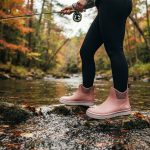
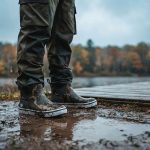
Ankle-height waterproof boots work well when the grass is wet and the mud remains shallow.
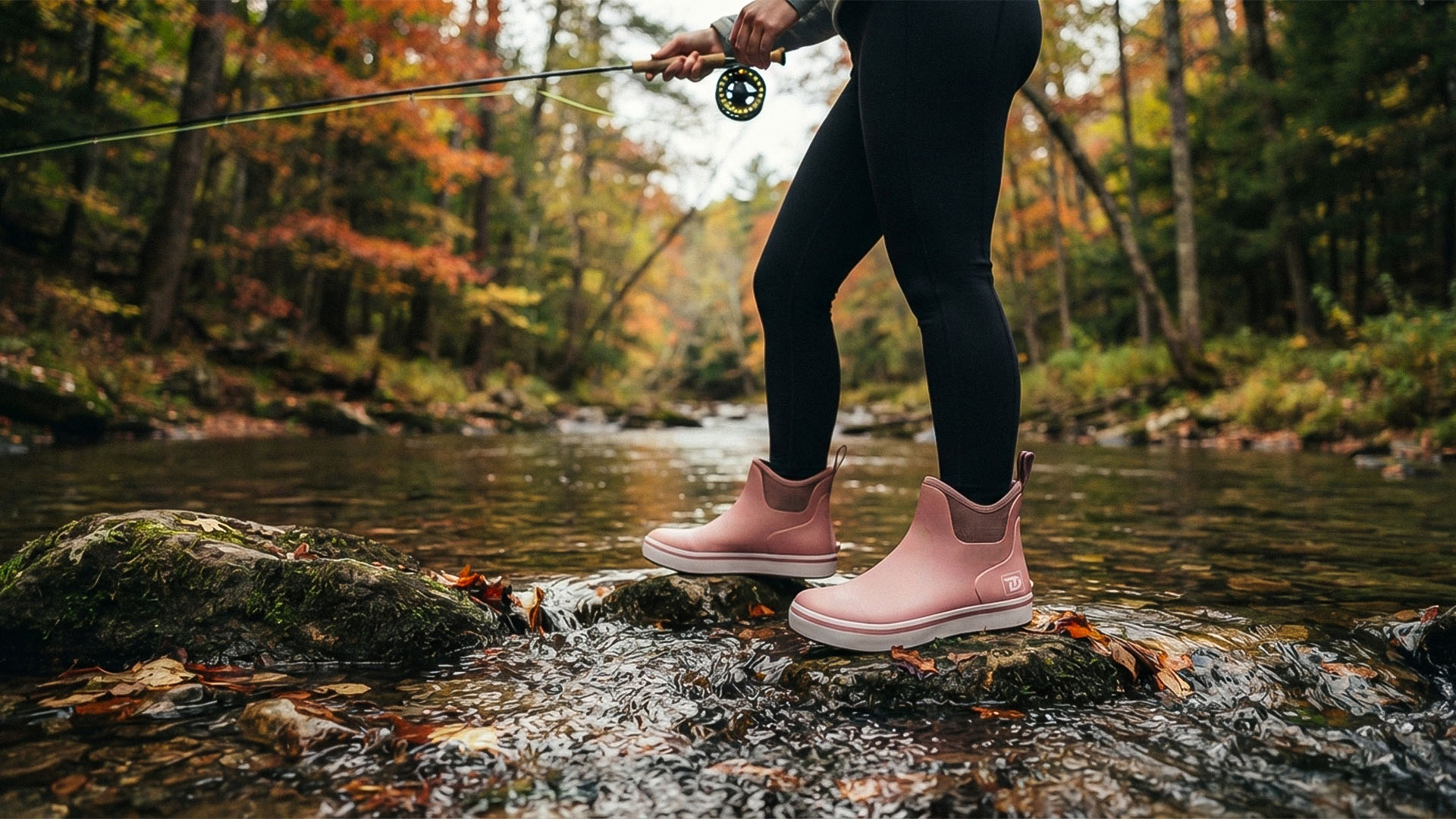
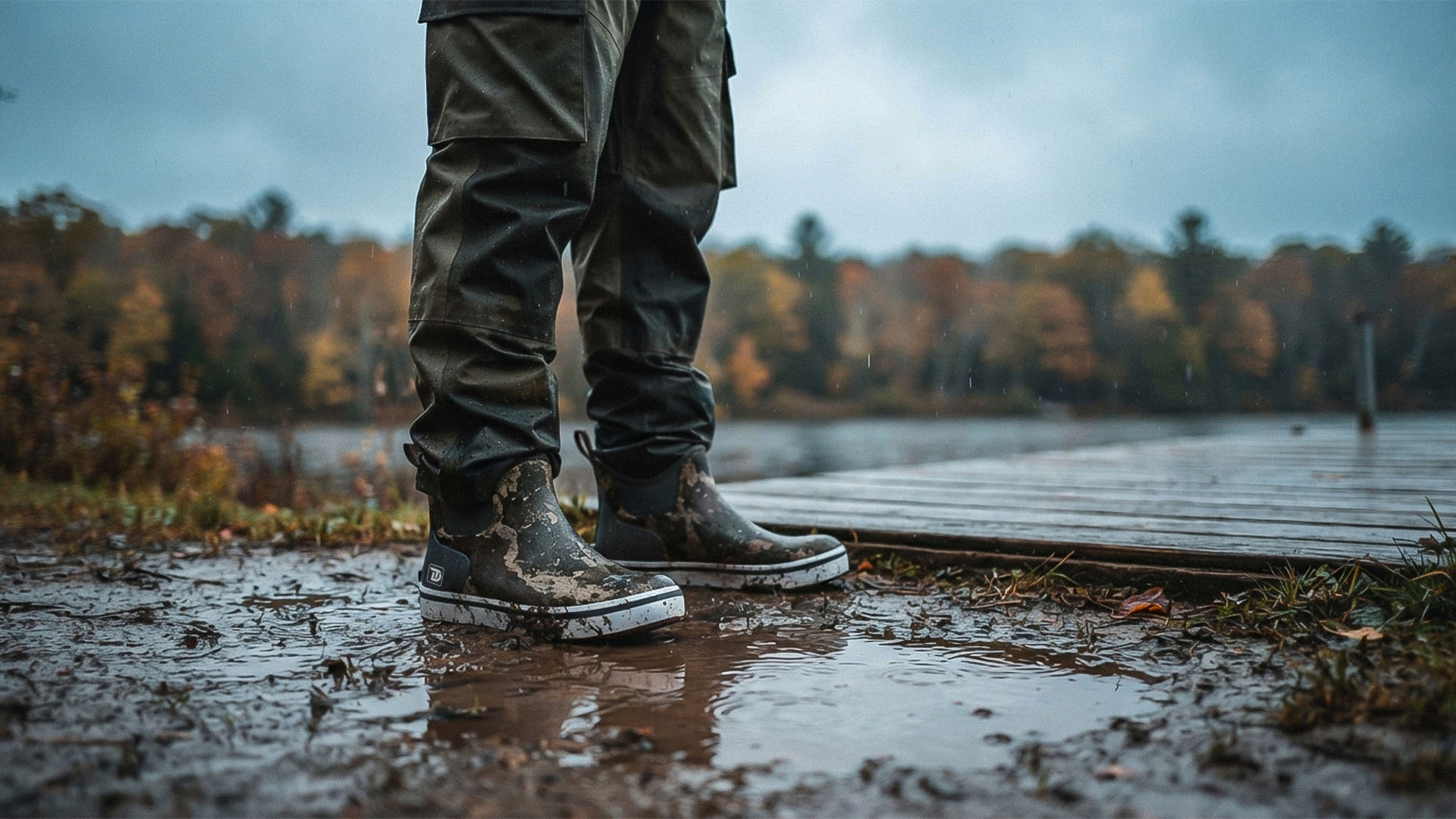
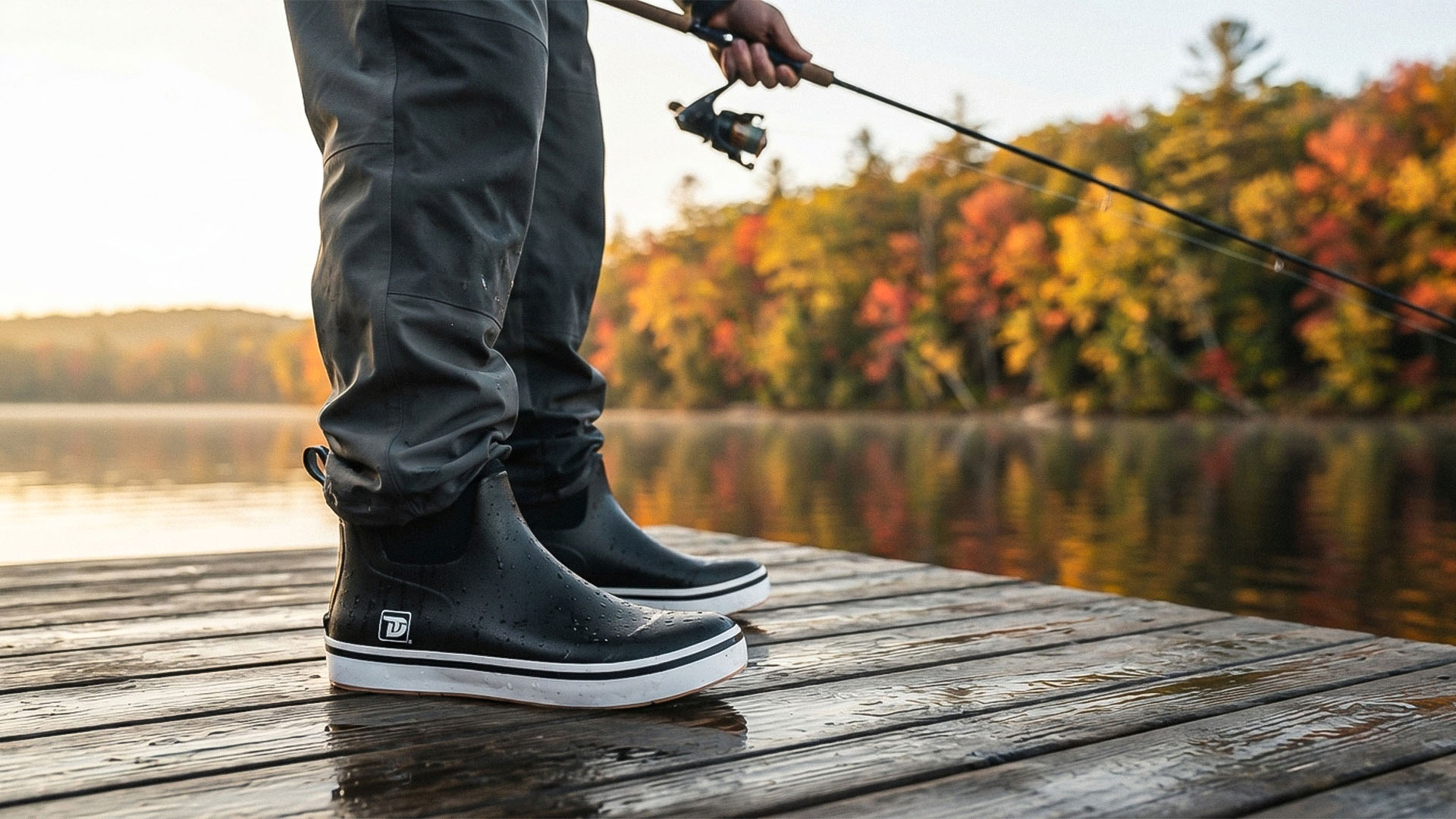
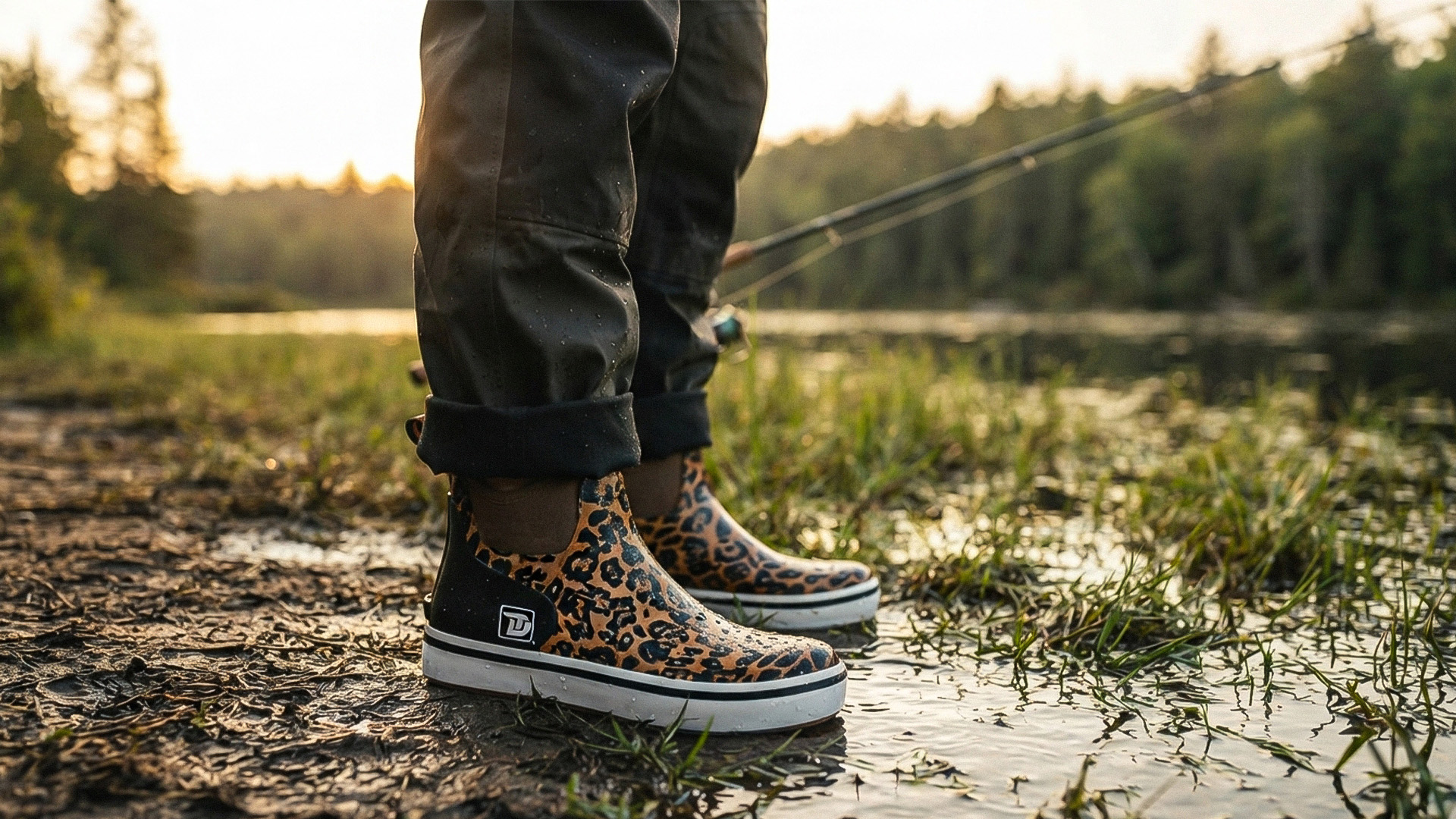
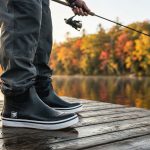
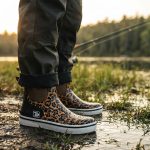
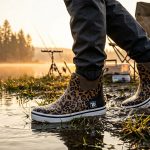
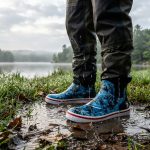
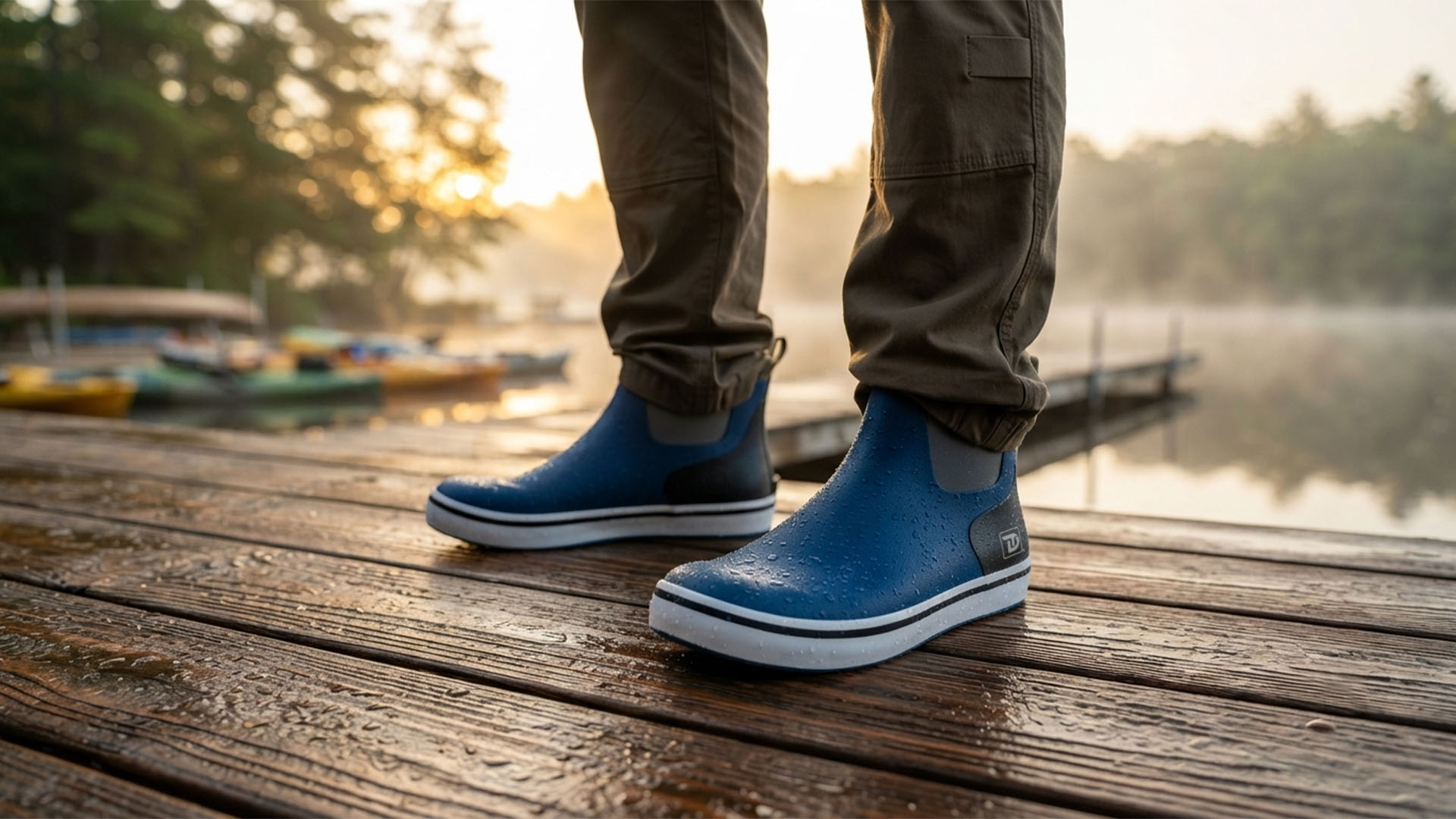
For anglers who want easy-to-clean footwear for flat pond banks, rainy parks, and short walks from the vehicle, [TruDaveGear waterproof deck boots] can be compared with other fishing-specific options.
Choose footwear based on outsole traction, fit, cushioning, and mud depth.
A marine-style outsole may work well on docks and firm banks but may not provide enough grip on steep clay.
What to Wear Pond Fishing in Summer
Summer pond fishing often means heat, direct sun, humidity, insects, and warm vegetation.
Wearing less clothing is not always the best way to remain comfortable.
Lightweight long sleeves and pants can provide protection while allowing moisture to escape.
A practical summer outfit includes:
- Lightweight long-sleeve sun shirt
- Quick-drying fishing pants or shorts
- Thin moisture-wicking socks
- Breathable fishing footwear
- Wide-brim hat or fishing cap
- Polarized sunglasses
- Neck gaiter
- Sunscreen
- Insect repellent
- Lightweight rain shell
Choose light fabrics with a loose but secure fit.
Avoid heavy cotton.
Cotton absorbs sweat and stays damp, especially in humid weather.
Should You Wear Shorts Pond Fishing?
Shorts can be comfortable during hot weather, but they expose the legs to:
- Sun
- Mosquitoes
- Ticks
- Poisonous plants
- Tall grass
- Thorns
- Mud
- Fishing equipment
Wear shorts when the pond has:
- Maintained paths
- Short grass
- Fishing platforms
- Limited insect activity
- Easy shoreline access
Choose lightweight pants when fishing around:
- Tall vegetation
- Rural ponds
- Marshy banks
- Heavy insects
- Brush
- Strong sun
Modern fishing pants can feel nearly as cool as shorts while providing more coverage.
Best Summer Pond Fishing Footwear
In hot conditions, choose footwear based on water exposure and walking distance.
Lightweight Fishing Shoes
Good for dry, maintained ponds and long walks.
Quick-Draining Shoes
Useful when getting wet is expected.
Ankle Deck Boots
Suitable for wet grass, muddy edges, rain, and shallow puddles.
Waterproof Hiking Shoes
Better for rough paths and longer walks.
Tall Rubber Boots
Usually too warm unless the ground is deeply muddy.
Waterproof footwear can trap sweat.
Wear lightweight moisture-wicking socks and remove boots after fishing so they can dry.
What to Wear Pond Fishing in Fall
Fall often provides comfortable pond fishing weather, but mornings may be cold and damp.
Leaves can cover holes, roots, mud, and slippery surfaces.
A practical fall outfit includes:
- Long-sleeve moisture-wicking shirt
- Lightweight fleece
- Wind-resistant jacket
- Quick-drying pants
- Waterproof boots or hiking footwear
- Medium-weight socks
- Hat
- Polarized sunglasses
- Light gloves
- Rain shell
Bring a layer that blocks wind.
Standing near open water can feel colder than walking through a sheltered neighborhood.
As the day warms, remove the insulating layer before sweating heavily.
Fall Footwear Considerations
Fallen leaves can hide uneven terrain.
Choose footwear with a secure fit when walking around unfamiliar ponds.
Waterproof hiking boots are useful for:
- Rocky access
- Long walks
- Slopes
- Roots
- Leaf-covered trails
Deck boots are practical for:
- Flat pond banks
- Wet grass
- Shallow mud
- Fishing docks
- Short walks
- Rainy conditions
Do not assume wet leaves are safe simply because the ground looks flat.
They can become extremely slippery on wood, concrete, and clay.
What to Wear Pond Fishing in Winter
Winter pond fishing requires more planning.
Even when the air temperature is above freezing, wind and inactivity can make conditions feel much colder.
A winter clothing system may include:
- Thermal moisture-wicking base layer
- Fleece or synthetic mid layer
- Windproof and waterproof outer shell
- Insulated fishing pants
- Warm socks
- Insulated waterproof boots
- Knit hat
- Insulated gloves
- Neck gaiter
- Spare dry clothing
Avoid wearing so many layers that movement becomes difficult.
You should still be able to cast, tie knots, handle fish, and walk safely.
Winter Footwear for Pond Fishing
Cold-weather footwear should provide enough insulation without becoming too tight.
Choose:
- Insulated rubber boots
- Winter hiking boots
- Insulated fishing boots
- Waterproof boots with adequate sock space
Uninsulated deck boots may work during mild winter rain and short trips, but they are not designed for prolonged cold exposure unless specifically built for it.
Do not solve cold feet by adding socks until the boots become tight.
Restricted circulation can make your feet colder.
Dress in Layers for Changing Pond Conditions
A simple three-layer system works through much of the year.
Base Layer
Manages moisture.
Choose synthetic fabric or merino wool.
Mid Layer
Provides insulation.
Choose fleece, wool, or lightweight synthetic insulation.
Outer Layer
Blocks wind and water.
Choose a packable shell that allows casting and movement.
Layering lets you adjust throughout the day.
It also reduces the need to bring several complete outfits.
What Shirt Is Best for Pond Fishing?
A long-sleeve performance fishing shirt is the most versatile choice.
It can provide:
- Sun protection
- Insect coverage
- Moisture management
- Light wind protection
- Quick drying
- Protection from vegetation
Short sleeves work well on maintained ponds in warm weather.
For rural access, long sleeves usually provide more practical coverage.
Choose a shirt that does not have loose cords or oversized fabric that may catch on hooks and brush.
What Pants Are Best for Pond Fishing?
Good pond fishing pants should be:
- Lightweight
- Quick-drying
- Flexible
- Durable enough for brush
- Comfortable while sitting
- Easy to clean
- Appropriate for insects and sun
Useful options include:
- Technical fishing pants
- Lightweight hiking pants
- Convertible pants
- Waterproof overpants
- Soft-shell pants for cool weather
Avoid heavy jeans when rain or mud is likely.
Wet denim becomes heavy and takes a long time to dry.
How to Dress for Muddy Pond Banks
Mud changes footwear and clothing requirements.
For shallow mud:
- Wear ankle waterproof boots
- Keep pants outside the boot opening
- Use secure socks
- Take short steps
For deeper mud:
- Wear tall rubber boots
- Use fitted or adjustable pant cuffs
- Carry less gear per trip
- Test the ground before stepping
For steep muddy banks:
- Use hiking boots with terrain-focused tread
- Avoid smooth marine outsoles
- Keep one hand free
- Find a safer access point
Waterproofing alone does not provide mud traction.
How to Dress for Wet Grass
Wet grass can soak shoes and pants before you reach the water.
Wear:
- Waterproof footwear
- Quick-drying pants
- Gaiters when grass is tall
- Socks that extend above the boot opening
- A light waterproof shell when dew is heavy
Morning dew may be enough to soak mesh shoes within minutes.
Ankle waterproof boots are useful when the ground underneath the grass remains firm.
Tall boots or gaiters provide more protection when vegetation reaches above the ankle.
What to Wear Around Tall Grass
Tall grass may contain:
- Ticks
- Mosquitoes
- Burrs
- Seeds
- Thorns
- Hidden holes
- Wet vegetation
- Poisonous plants
Wear long pants and closed footwear.
Consider:
- Gaiters
- Long socks
- Tucked or adjustable cuffs
- Long-sleeve shirt
- Appropriate insect repellent
- Light-colored clothing for easier tick checks
Inspect clothing and skin after fishing.
Follow local health guidance for tick prevention and removal.
Insect Protection for Pond Fishing
Ponds create ideal habitat for mosquitoes and other insects.
Insect activity is often strongest:
- Near sunrise
- Near sunset
- Around standing vegetation
- After rain
- During humid weather
- Near marshy edges
Use a combination of:
- Long sleeves
- Lightweight pants
- Socks
- Closed footwear
- Neck gaiter
- Appropriate insect repellent
Do not spray repellent directly onto fishing line, lures, sunglasses, or sensitive equipment unless the product is safe for those materials.
Sun Protection for Pond Fishing
Pond anglers may spend hours without shade.
Water reflects sunlight, increasing exposure around the face and neck.
Bring:
- Broad-spectrum sunscreen
- Long-sleeve sun shirt
- Hat
- Polarized sunglasses
- Neck gaiter
- Lip protection
Apply sunscreen before fishing and reapply according to the product instructions.
Commonly missed areas include:
- Ears
- Back of the neck
- Hands
- Lower legs
- Tops of feet
- Under the chin
Clouds do not eliminate ultraviolet exposure.
Why Polarized Sunglasses Matter
Polarized sunglasses reduce surface glare.
They may help anglers see:
- Fish near the bank
- Beds
- Vegetation
- Submerged logs
- Drop-offs
- Baitfish
- Changes in water clarity
They also protect the eyes from sunlight, hooks, branches, and insects.
Use a retainer strap so the glasses do not fall into the pond.
What Hat Should You Wear?
Choose a hat based on sun, wind, and temperature.
Baseball or Fishing Cap
Convenient and easy to wear, but provides limited neck coverage.
Wide-Brim Hat
Offers more protection for the face, ears, and neck.
Knit Cap
Useful during cold mornings and winter fishing.
Waterproof Hat
Helpful during light rain.
Make sure the hat fits securely.
Open pond shorelines can become windy.
What Shoes Should You Wear Pond Fishing?
The best shoes depend on shoreline conditions.
Deck Boots
Best for:
- Wet grass
- Flat muddy banks
- Rain
- Fishing platforms
- Short walks
- Easy cleanup
Waterproof Hiking Boots
Best for:
- Long walks
- Rocky trails
- Steep banks
- Heavy gear
- Uneven terrain
Tall Rubber Boots
Best for:
- Deep mud
- Farm ponds
- Marshy shorelines
- Tall wet vegetation
- Heavy rain
Athletic Fishing Shoes
Best for:
- Dry maintained ponds
- Warm weather
- Paved paths
- Long comfortable walking
Waders
Best for:
- Entering the pond
- Working around deeper water
- Cold shallow water
- Specific fishing techniques
Do not enter unfamiliar pond water without understanding depth, bottom conditions, and local rules.
Should You Wear Deck Boots Pond Fishing?
Deck boots can be a good choice when the bank is relatively flat and water exposure remains shallow.
They are especially useful for:
- Morning dew
- Wet parks
- Rainy conditions
- Fishing piers
- Shallow mud
- Cleaning fish
- Walking around boat ramps
They are less suitable for:
- Steep slopes
- Sharp rocks
- Deep mud
- Long technical trails
- Water above the ankle
- Ice
Match the outsole to the surface.
A boot designed for wet hard decks may not grip deep mud as effectively as a terrain-focused boot.
What Socks Should You Wear?
Choose socks according to temperature and footwear.
Hot Weather
Lightweight synthetic or thin merino-blend socks.
Mild Weather
Lightweight or medium-weight moisture-wicking socks.
Cold Weather
Medium or heavyweight merino wool socks with enough boot space.
Avoid cotton during wet trips.
Cotton absorbs moisture and dries slowly.
Bring a spare pair in a sealed waterproof bag.
Bring Spare Shoes for the Drive Home
Pond banks can leave footwear covered with:
- Mud
- Grass
- Sand
- Fish slime
- Water
- Plant material
Keep a clean pair of shoes in the vehicle.
Also bring:
- Plastic boot tray
- Waterproof bag
- Old towel
- Boot brush
- Spare socks
Changing footwear protects the vehicle and gives your feet a dry option after fishing.
What to Wear for Early-Morning Pond Fishing
Before sunrise, conditions may be cooler and wetter.
Wear:
- Moisture-wicking base layer
- Lightweight fleece
- Wind-resistant shell
- Fishing pants
- Waterproof boots
- Warm or medium-weight socks
- Hat
- Light gloves
Carry a dry bag for layers removed after sunrise.
Do not leave loose clothing on the bank where it can collect dew or insects.
What to Wear for Evening Pond Fishing
Evening fishing often begins warm and becomes cooler after sunset.
Mosquito activity may also increase.
Bring:
- Long-sleeve shirt
- Lightweight pants
- Insect protection
- Light jacket
- Closed footwear
- Headlamp
- Spare batteries
- Hat
- Reflective or visible accessory when walking near roads
Know how you will return to the vehicle after dark.
Do not rely entirely on a phone flashlight.
What to Wear Pond Fishing in the Rain
A rainy pond fishing outfit may include:
- Waterproof jacket
- Waterproof pants
- Moisture-wicking base layer
- Waterproof boots
- Synthetic or merino socks
- Brimmed hat under the hood
- Spare dry shirt
- Spare socks
Rain pants should normally overlap the outside of ankle boots.
Tucking them inside can direct water into the footwear.
Avoid steep clay banks during heavy rain.
What to Wear at a Farm Pond
Farm ponds may involve taller grass, deeper mud, insects, livestock areas, and fewer maintained paths.
Wear:
- Long pants
- Long-sleeve shirt
- Tall waterproof boots or hiking boots
- Higher socks
- Hat
- Insect protection
- Gloves when handling rough vegetation
Ask the landowner about access routes, fences, animals, and property rules.
Do not drive or walk across planted areas without permission.
What to Wear at a Neighborhood Pond
Neighborhood ponds often have maintained grass, sidewalks, benches, and easy parking.
A simple outfit may include:
- Performance shirt
- Fishing shorts or lightweight pants
- Athletic fishing shoes or ankle deck boots
- Hat
- Sunglasses
- Sunscreen
Even maintained ponds can have soft edges near the water.
Avoid stepping onto unstable banks.
What to Wear at a Golf-Course Pond
Only fish golf-course ponds where permission is clearly granted.
Clothing should be practical and respectful of the property.
Wear:
- Clean outdoor clothing
- Low-profile waterproof footwear
- Long pants or shorts appropriate for the location
- Hat
- Sunglasses
- Small tackle setup
Avoid aggressive tread that damages maintained turf.
Follow all property rules and stay clear of active play.
What to Wear at a Public Park Pond
Public parks may combine paved trails, grass, mud, playgrounds, and shared recreational spaces.
Choose clothing that allows you to move safely around other visitors.
Wear:
- Clean closed footwear
- Quick-drying pants or shorts
- Sun shirt
- Hat
- Sunglasses
Keep hooks covered during transport.
Do not leave rods or tackle across walking paths.
Clothing for Catching and Handling Fish
Fish slime, water, and bait can stain clothing.
Wear garments that are easy to wash.
Consider carrying:
- Small towel
- Fish-handling gloves
- Pliers
- Dehooking tool
- Hand sanitizer
- Sealable bag for dirty items
Do not wipe fish slime onto clothing you cannot wash easily.
Follow local regulations and safe fish-handling practices.
Carry a Lightweight Rain Shell
Even when the forecast looks clear, a compact rain shell is useful.
It can protect against:
- Sudden showers
- Wind
- Cool mornings
- Wet vegetation
- Light spray
Choose a shell that fits inside a tackle bag or backpack.
Do not carry a bulky jacket when a packable layer will do the job.
Use a Small Backpack
A small backpack keeps hands free while walking.
It can hold:
- Rain shell
- Water
- Sunscreen
- Insect repellent
- Spare socks
- Tackle
- First-aid supplies
- Snacks
- Phone
- Dry bag
Avoid overpacking.
Heavy gear makes muddy and steep banks more difficult to navigate.
Basic Pond Fishing Safety Clothing
Wear clothing that helps you move safely and remain visible.
Consider:
- Closed footwear
- Light or visible outer layer
- Headlamp near darkness
- Gloves in cold weather
- Personal flotation device near deep or unstable water
- Weather-appropriate layers
Children should be supervised closely and use appropriate flotation where conditions require it.
Common Pond Fishing Clothing Mistakes
Wearing Cotton Jeans in Rain
They become heavy and dry slowly.
Wearing Flip-Flops on Muddy Banks
They provide limited protection and stability.
Dressing Only for Afternoon Temperatures
Morning conditions may be much colder.
Ignoring Wet Grass
Dew can soak ordinary shoes quickly.
Wearing Shorts Through Tall Vegetation
This increases exposure to insects, thorns, and plants.
Choosing Boots Only for Waterproofing
Outsole traction and terrain matter.
Forgetting Spare Socks
Wet feet can ruin the rest of the trip.
Wearing Expensive Clothing
Fish slime, mud, and bait are difficult to avoid.
Leaving Rain Gear in the Vehicle
A distant parking area makes it useless when weather changes.
Pond Fishing Clothing Checklist
Warm Weather
- Long-sleeve sun shirt
- Quick-drying pants or shorts
- Lightweight socks
- Fishing shoes or ankle boots
- Hat
- Sunglasses
- Sunscreen
- Insect repellent
Cool Weather
- Moisture-wicking base layer
- Fleece or hoodie
- Wind-resistant shell
- Fishing pants
- Waterproof footwear
- Medium-weight socks
- Hat
- Light gloves
Rainy Weather
- Waterproof jacket
- Waterproof pants
- Waterproof boots
- Moisture-wicking socks
- Spare socks
- Dry shirt
- Waterproof bag
Cold Weather
- Thermal base layer
- Insulated mid layer
- Waterproof outer shell
- Warm pants
- Insulated boots
- Merino wool socks
- Warm hat
- Gloves
- Neck gaiter
Final Thoughts
The best pond fishing outfit depends on the season, shoreline, walking distance, weather, and vegetation.
For warm maintained ponds, lightweight sun-protective clothing and comfortable fishing shoes may be enough.
For wet grass and shallow mud, waterproof ankle boots provide convenient protection.
For deep mud, use taller rubber boots.
For rocky or remote access, choose hiking footwear with better support and terrain traction.
Wear quick-drying fabrics.
Protect yourself from the sun and insects.
Bring a waterproof jacket.
Carry spare socks.
Use layers when temperatures may change.
Pond fishing does not require complicated technical clothing, but the right outfit makes it easier to stay comfortable and focus on the water.
Dress for the shoreline you have to cross, not just the weather forecast you see from home.
Frequently Asked Questions
What should I wear pond fishing?
Wear a moisture-wicking shirt, quick-drying pants or shorts, weather-appropriate layers, closed footwear, a hat, and polarized sunglasses. Add waterproof gear, insect protection, or warm layers as conditions require.
What shoes are best for pond fishing?
Deck boots work well for wet grass, rain, and shallow mud. Hiking boots are better for rocky or steep banks, while tall rubber boots provide more protection in deep mud.
Can you wear sneakers pond fishing?
Sneakers are suitable for dry maintained ponds and paved paths. They may become soaked in wet grass, rain, or muddy shoreline conditions.
Are deck boots good for pond fishing?
Yes. Deck boots are useful for flat pond banks, morning dew, shallow mud, rain, docks, and short walks. They are less suitable for steep terrain or deep mud.
Should I wear shorts pond fishing?
Shorts work at maintained ponds in hot weather. Lightweight pants provide better protection from insects, sun, tall grass, thorns, and wet vegetation.
What should I wear pond fishing in summer?
Wear a lightweight long-sleeve fishing shirt, quick-drying pants or shorts, breathable footwear, a hat, sunglasses, sunscreen, and insect repellent.
What should I wear pond fishing in winter?
Wear moisture-wicking base layers, insulation, a windproof and waterproof shell, warm pants, insulated boots, merino wool socks, a hat, gloves, and a neck gaiter.
Do I need waterproof boots for pond fishing?
Waterproof boots are useful when the grass is wet, rain is expected, or the bank is muddy. They may be unnecessary at dry ponds with paved or maintained access.
What socks should I wear pond fishing?
Wear synthetic moisture-wicking socks in warm weather and merino wool socks in cooler conditions. Avoid cotton during wet trips.
How do I protect myself from mosquitoes while pond fishing?
Wear long sleeves, lightweight pants, closed footwear, and appropriate insect repellent. Mosquito activity is often strongest around sunrise, sunset, and dense shoreline vegetation.