
Meta Description: Learn why fishing boots smell and how to clean, dry, and deodorize deck boots after saltwater fishing without damaging waterproof materials.
Suggested URL Slug: how-to-clean-smelly-fishing-boots
Primary Keyword: how to clean fishing boots
Secondary Keywords: how to deodorize fishing boots, why do fishing boots smell, clean deck boots, remove fish smell from boots, fishing boot care, saltwater fishing boot maintenance
Search Intent: Informational
Fishing boots are supposed to handle water, bait, fish slime, mud, and long days on wet decks.
Unfortunately, they can also develop strong odors.
Sometimes the smell comes from fish residue on the outside of the boots. In other cases, sweat and moisture remain trapped inside waterproof footwear for hours after the fishing trip ends.
Once bacteria begin growing in a damp boot, rinsing the outside with a hose may not solve the problem.
The odor returns every time the boots become warm or wet.
The good news is that most fishing boot smells can be controlled with proper cleaning, drying, and storage. The key is removing the source of the odor without damaging the waterproof materials, adhesives, liners, or insoles.
This guide explains why fishing boots smell, how to clean deck boots after saltwater fishing, and how to keep them fresher between trips.
Why Do Fishing Boots Smell?
Fishing boot odor usually comes from a combination of moisture, bacteria, sweat, and organic residue.
Waterproof boots are especially vulnerable because they are designed to keep water from moving through the outer material.
That protection works both ways.
When sweat or outside water enters the boot, moisture may remain trapped inside for a long time.
Several common causes contribute to fishing boot odor.
Sweat and Trapped Moisture
Your feet produce moisture throughout the day.
During warm-weather fishing, physical activity and waterproof footwear can increase sweat buildup.
If boots are placed in a truck, locker, storage bin, or garage immediately after use, the interior may remain damp overnight or even longer.
Warm, dark, and damp conditions allow odor-producing bacteria to multiply.
The boots may appear dry on the outside while the lining and insole remain wet.
Fish Slime, Blood, and Bait Residue
Fishing is messy.
Fish slime, blood, scales, cut bait, shrimp, squid, and other organic materials can end up on the outside of your boots.
Small amounts may collect around tread patterns, seams, pull tabs, and the edges of the outsole.
If this residue is not removed, it begins to break down and produce odor.
A quick rinse may remove visible dirt while leaving organic material behind.
Saltwater Buildup
Saltwater does not usually create the strongest odor by itself, but dried salt can trap residue and affect boot materials over time.
Salt deposits may collect around seams, textured surfaces, and outsole grooves.
Saltwater exposure can also leave the boot stiff or uncomfortable when it dries.
Freshwater rinsing after every saltwater trip helps remove salt before it builds up.
Wet Socks Left Inside the Boots
Leaving wet socks inside fishing boots is one of the fastest ways to create odor.
The socks hold moisture against the boot lining and reduce airflow.
They may also contain sweat, bacteria, fish residue, or dirty water.
Remove socks, insoles, and any removable liners as soon as possible after fishing.
Boots Stored Without Airflow
Deck boots should not be stored while wet inside:
- Closed plastic bins
- Boat lockers
- Vehicle trunks
- Gear bags
- Sealed cabinets
- Damp garages
- Covered buckets
These locations limit airflow and slow drying.
Even clean boots can develop an odor when stored wet.
Can You Wash Fishing Boots With Soap?
Most waterproof fishing boots can be cleaned with mild soap and fresh water.
However, the exact care method depends on the materials and construction.
Always check the manufacturer’s instructions before using cleaning chemicals, brushes, heat, or deodorizing products.
Avoid harsh solvents, bleach, gasoline, strong degreasers, and abrasive cleaners unless the manufacturer specifically approves them.
These products may damage:
- Waterproof materials
- Adhesives
- Rubber compounds
- Surface finishes
- Liners
- Printed logos
- Outsole construction
A mild cleaning solution is usually enough for routine fishing boot care.
What You Need to Clean Deck Boots
You do not need specialized equipment for most cleaning jobs.
Prepare:
- Fresh water
- Mild dish soap or gentle cleaning soap
- Soft-bristled brush
- Sponge or cloth
- Small brush for tread grooves
- Clean towel
- Drying rack or ventilated area
- Baking soda when appropriate
- Boot dryer with low or no heat, if available
Do not use the same cleaning brush you use for dishes or household food surfaces.
Keep fishing-gear cleaning supplies separate.
Step 1: Remove Insoles and Loose Debris
Before washing the boots, remove any detachable insoles or liners.
Shake out:
- Sand
- Gravel
- Fish scales
- Mud
- Grass
- Small pieces of bait
- Other debris
Turn the boots upside down and gently tap the soles.
Do not strike them against hard surfaces with excessive force, as this may damage the boots or pull tabs.
Cleaning removable insoles separately allows both the insole and boot interior to dry faster.
Step 2: Rinse the Exterior With Fresh Water
Use fresh water to remove loose salt, mud, slime, and surface residue.
Rinse from the top downward.
Pay attention to:
- Outsole grooves
- The edge where the outsole meets the upper
- Pull tabs
- Textured areas
- Heel sections
- Flex points
For saltwater anglers, this step should be completed after every trip, even when the boots do not appear dirty.
Salt may remain on the surface after water evaporates.
Step 3: Wash With Mild Soap
Mix a small amount of mild soap with warm or cool water.
Avoid extremely hot water.
Use a soft cloth, sponge, or soft-bristled brush to clean the exterior.
Scrub gently around areas with fish slime, blood, or bait residue.
Do not aggressively grind a stiff brush against flexible waterproof material.
Excessive scrubbing may damage the finish or create premature wear.
For the outsole, use a separate brush to remove debris from the tread.
Step 4: Clean the Inside Carefully
Do not automatically fill every fishing boot with soapy water.
Some boots have liners, insulation, adhesives, or internal materials that require specific care.
Check the manufacturer’s instructions first.
When interior washing is permitted, use a small amount of mild soap and water.
Gently wipe or rinse the inside, then remove as much water as possible.
Do not leave soap residue inside the boot.
Soap remaining in the lining can irritate skin, attract dirt, or create a new odor.
Step 5: Rinse Thoroughly
Rinse all cleaned areas with fresh water.
Continue until no soap remains.
Pay special attention to textured surfaces and outsole grooves where soap may collect.
Incomplete rinsing can leave the boot slippery or sticky.
Step 6: Dry the Boots Properly
Drying is the most important part of odor prevention.
Place boots in a shaded, ventilated area.
Keep the openings exposed to airflow.
Remove insoles and dry them separately.
You can place the boots upside down at an angle, provided air can still move into the interior and water can drain.
Avoid leaving them upside down flat against the ground, as this may block airflow.
Can You Put Fishing Boots in a Dryer?
Fishing boots should generally not be placed in a household clothes dryer unless the manufacturer specifically says it is safe.
High heat and tumbling can damage:
- Rubber
- Waterproof compounds
- Adhesives
- Liners
- Boot shape
- Outsole bonding
The same caution applies to placing boots directly against heaters, fireplaces, radiators, or high-temperature vents.
Fast drying is convenient, but excessive heat may shorten the life of the footwear.
Can You Use a Boot Dryer?
A low-temperature or no-heat boot dryer can help remove moisture from fishing boots.
This is especially useful for anglers who fish on consecutive days.
Make sure the dryer is suitable for the boot materials.
Use gentle airflow rather than intense heat.
Remove the boots once they are dry instead of leaving them on heated equipment indefinitely.
How to Remove Odor From Fishing Boots
Cleaning removes fish residue and surface contamination.
Deodorizing addresses the smell that remains inside the boot.
Several methods may help.
Allow the Boots to Dry Completely
Before adding deodorizing products, make sure the boots are fully dry.
Applying powder or odor-control products to soaking-wet boots can create clumps and make cleanup more difficult.
Drying alone may solve mild odor problems.
Use Baking Soda Carefully
Baking soda can help absorb moisture and neutralize mild odors.
Once the boots are dry, add a small amount inside each boot.
Allow it to remain overnight.
Shake or vacuum the powder out before wearing the boots.
Do not use excessive amounts.
Powder left inside footwear can create friction, irritate skin, or form a paste when it becomes wet.
Check manufacturer guidance before using baking soda on specialized liners.
Wash or Replace the Insoles
Insoles often hold more odor than the boot itself.
Remove them and follow the manufacturer’s cleaning instructions.
Some insoles can be hand-washed with mild soap and water.
Others should only be wiped clean.
If an insole remains strongly odorous after repeated cleaning, replacement may be more effective.
Make sure replacement insoles fit properly and do not make the boots too tight.
Use Footwear Deodorizing Products
Commercial footwear sprays, powders, and odor absorbers may help.
Choose products intended for footwear and compatible with the boot materials.
Avoid strong fragrances that simply cover the smell without addressing moisture or bacteria.
A clean boot with good airflow usually stays fresher than a damp boot filled with perfume.
Rotate Between Two Pairs of Boots
Anglers who fish frequently may benefit from rotating footwear.
Wearing one pair every day may not allow enough drying time between trips.
A second pair gives each boot more time to air out completely.
This is especially helpful for guides, charter crews, marina workers, and commercial fishermen.
How to Remove Fish Smell From the Outside of Boots
Fish odor on the exterior usually indicates that organic residue remains on the surface.
Rinse the boots thoroughly.
Apply mild soapy water.
Use a soft brush around tread grooves and textured areas.
Rinse again and allow the boots to dry.
Do not immediately use harsh chemicals.
Strong cleaners can damage waterproof materials while leaving residue in small grooves.
If the smell remains, repeat the mild cleaning process rather than using a much stronger chemical without checking material compatibility.
How to Clean Muddy Fishing Boots
Allowing thick mud to dry slightly can make bulk removal easier, but do not leave saltwater mud or fish residue on the boots for extended periods.
Remove large pieces outside.
Rinse with fresh water.
Clean the tread with a brush.
Use mild soap where necessary.
Rinse and dry completely.
Do not wash heavy mud into indoor sinks where it may create plumbing problems.
How to Clean Saltwater Fishing Boots
Saltwater boots should be rinsed with fresh water after every use.
A good saltwater maintenance routine includes:
- Remove loose debris.
- Rinse the exterior with fresh water.
- Clean fish residue with mild soap.
- Rinse the outsole grooves.
- Remove the insoles.
- Dry the interior and exterior completely.
- Store the boots in a ventilated area.
This process does not need to take long when completed immediately after fishing.
Cleaning becomes more difficult after salt, blood, and slime dry onto the surface.
How Often Should You Clean Fishing Boots?
The cleaning schedule depends on use.
After Every Saltwater Trip
Rinse with fresh water.
Remove visible fish residue.
Dry completely.
After Heavy Fish or Bait Exposure
Wash with mild soap and water.
Clean the outsole grooves.
Inspect the interior for moisture.
After Several Routine Trips
Remove and clean the insoles.
Inspect for cracks, separation, and persistent odor.
Before Long-Term Storage
Complete a full cleaning.
Dry the boots completely.
Store them in a ventilated location.
Never place damp, dirty boots into seasonal storage.
How to Keep Fishing Boots From Smelling
Odor prevention is easier than removing a strong smell later.
Follow these habits.
Wear Moisture-Wicking Socks
Cotton socks absorb sweat and dry slowly.
Synthetic or merino wool socks generally manage moisture better during long fishing trips.
The best sock depends on temperature and activity level.
Make sure the socks fit without bunching.
Change Socks During Long Trips
For full-day fishing, bring a spare pair of socks in a waterproof bag.
Changing damp socks reduces the amount of moisture transferred into the boot lining.
This can improve both comfort and odor control.
Remove Boots Soon After Fishing
Do not wear wet deck boots for hours after leaving the boat unless necessary.
Removing them allows your feet and the boots to cool and dry.
Change into clean shoes for the drive home when practical.
Do Not Leave Boots in a Hot Vehicle
A hot vehicle creates an ideal environment for strong odors.
Heat speeds bacterial activity and makes existing smells more noticeable.
Remove fishing boots, wet clothing, and bait containers from the vehicle as soon as possible.
Open the Boots for Airflow
Keep the boot openings unobstructed while drying.
Do not stack equipment on top of them.
Remove insoles.
Place them where air can circulate.
A fan can help improve airflow without exposing the boots to high heat.
Clean Them Before Odor Develops
Do not wait until the boots smell terrible.
Routine freshwater rinsing and proper drying prevent most odor problems.
A few minutes of cleaning after each fishing trip is easier than trying to rescue badly contaminated footwear later.
Should You Wear Socks With Deck Boots?
Yes, wearing socks with deck boots is generally a good idea.
Socks help:
- Reduce friction
- Absorb and move moisture
- Improve fit
- Protect the boot lining
- Reduce direct skin contact
- Control temperature
Choose sock thickness based on the boot fit and weather.
In warm conditions, lightweight synthetic socks may work well.
In cold conditions, merino wool can provide additional insulation.
Do not wear socks so thick that the boots become tight.
When Should You Replace Fishing Boots?
Cleaning cannot solve every problem.
Replace boots when they no longer provide reliable protection or comfort.
Warning signs include:
- Cracks in waterproof material
- Leaking seams
- Outsole separation
- Severely worn tread
- Permanent interior contamination
- Damaged lining
- Loss of support
- Strong odor that returns immediately after cleaning
- Boot deformation
- Pain caused by worn cushioning
A persistent smell alone does not always mean the boot must be replaced.
However, severe odor combined with damaged or permanently wet internal materials may indicate that replacement is the better option.
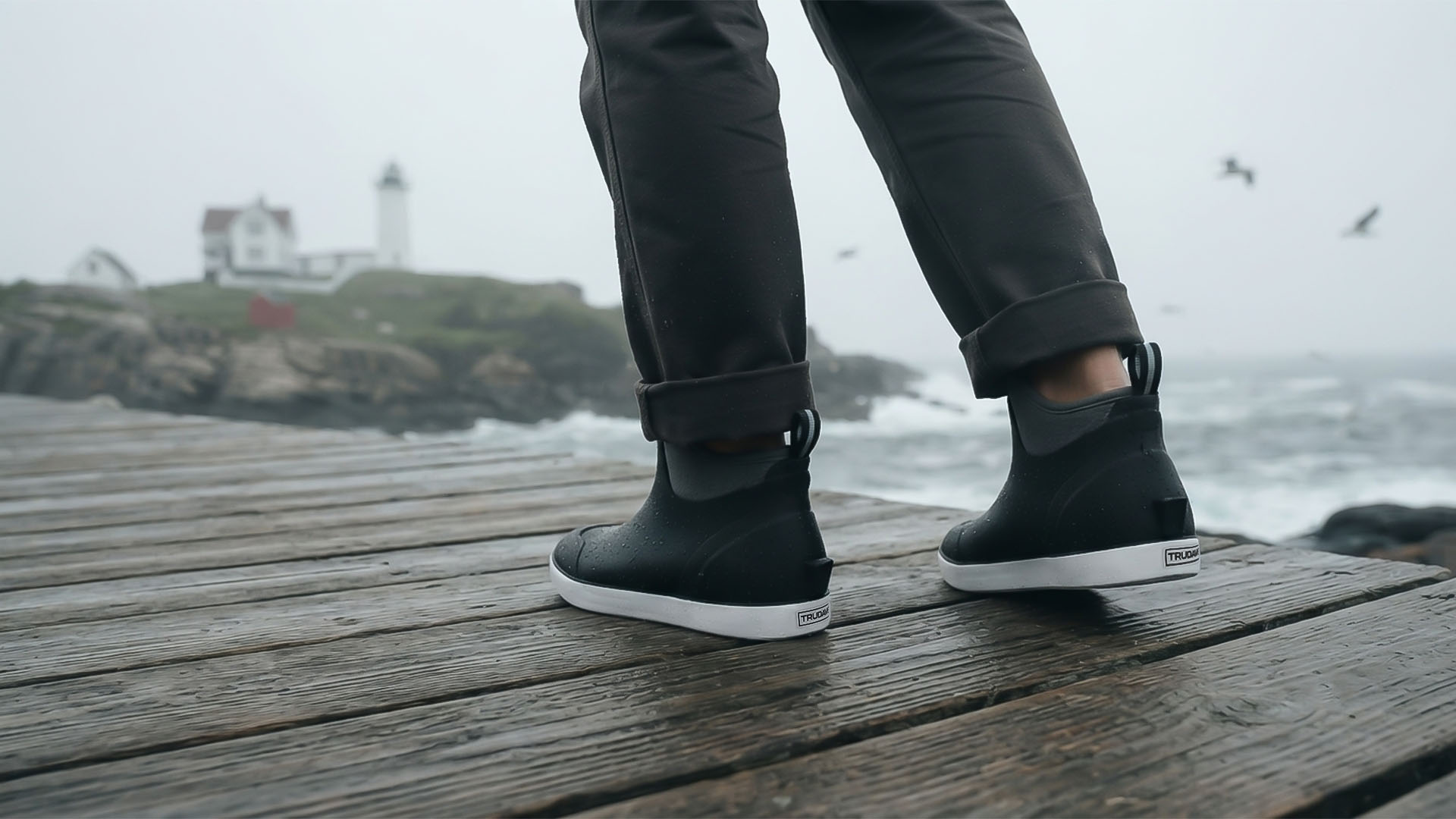
When selecting a new pair, anglers can compare easy-to-clean waterproof options such as [TruDaveGear deck boots] with other footwear designed for wet fishing environments.
The best choice should be based on fit, traction, water protection, comfort, and how easily the materials can be maintained.
Common Fishing Boot Cleaning Mistakes
Using Bleach Without Checking Compatibility
Bleach can damage materials, discolor the boot, weaken adhesives, and irritate skin.
Follow manufacturer instructions.
Drying Boots With High Heat
High heat may warp materials or damage waterproof construction.
Use natural airflow or a low-temperature boot dryer.
Leaving the Insoles Inside
Insoles trap moisture and slow interior drying.
Remove them after wet trips.
Storing Boots While Damp
This is one of the most common causes of odor.
Dry boots completely before storage.
Using Fragrance Instead of Cleaning
Strong sprays may temporarily cover the smell.
They do not remove fish residue, sweat, or trapped moisture.
Ignoring the Outsole
Fish slime and bait can remain inside tread grooves.
Clean the bottom of the boots carefully.
Wearing Dirty Socks
Even freshly cleaned boots will begin smelling again when worn with contaminated socks.
Wash fishing socks thoroughly and allow them to dry.
Simple Post-Fishing Boot Care Routine
Use this routine after a normal fishing trip:
- Remove boots and socks.
- Take out removable insoles.
- Shake out loose debris.
- Rinse saltwater and dirt with fresh water.
- Wash fish residue with mild soap.
- Rinse the boots thoroughly.
- Wipe away excess water.
- Dry boots and insoles separately.
- Store them in a ventilated location.
- Inspect them before the next trip.
Consistency matters more than using complicated cleaning products.
How to Store Deck Boots Between Seasons
Before storing fishing boots for several months:
Clean them thoroughly.
Remove all salt, fish residue, mud, and debris.
Dry the interior completely.
Clean and dry removable insoles.
Avoid folding or crushing the boots.
Store them upright in a cool, dry, ventilated area.
Keep them away from direct sunlight, extreme heat, chemicals, and sharp objects.
Do not seal them inside an airtight bag while any moisture remains.
Check the boots before the next fishing season.
Look for cracks, stiffness, outsole separation, or signs of mildew.
Final Thoughts
Fishing boots smell because moisture, sweat, bacteria, fish residue, bait, and poor storage conditions build up over time.
The most effective solution is not a powerful fragrance or aggressive chemical cleaner.
It is a consistent care routine.
Rinse saltwater away after every trip.
Clean fish slime and bait residue with mild soap.
Remove the insoles.
Dry the boots completely.
Store them where air can circulate.
Use moisture-managing socks and bring a spare pair on long fishing days.
Avoid high heat and harsh cleaners that may damage waterproof materials.
Well-maintained deck boots are more comfortable to wear, easier to store, and less likely to fill your truck or garage with the smell of last weekend’s catch.
A few minutes of cleaning after each fishing trip can prevent a much bigger problem later.
Frequently Asked Questions
Why do my fishing boots smell so bad?
Fishing boots often smell because sweat, bacteria, fish slime, bait residue, and moisture become trapped inside or around the boots. Waterproof materials can slow drying and make the odor stronger.
How do you get fish smell out of rubber boots?
Rinse the boots with fresh water, wash them with mild soap, scrub tread grooves and textured areas, rinse thoroughly, and allow them to dry completely. Repeat the process if organic residue remains.
Can I put baking soda in fishing boots?
A small amount of baking soda may help absorb odor in dry boots. Leave it overnight and remove it before wearing. Check the manufacturer’s care instructions before applying powders to specialized liners.
Can fishing boots go in the washing machine?
Most fishing boots should not be placed in a washing machine unless the manufacturer specifically approves it. Agitation, heat, and detergents may damage waterproof construction or adhesives.
How do you dry the inside of deck boots?
Remove the insoles, drain excess water, place the boots in a ventilated area, and use gentle airflow. A low-temperature or no-heat boot dryer may also help when compatible with the materials.
Can I use bleach to clean fishing boots?
Bleach is not recommended unless the boot manufacturer specifically approves it. It may damage rubber, adhesives, liners, colors, or waterproof materials.
How often should deck boots be cleaned?
Rinse deck boots after every saltwater trip. Wash them with mild soap whenever they are exposed to fish slime, blood, bait, mud, or strong odors. Always dry them completely before storage.
Why do my boots still smell after washing?
Odor may remain in damp insoles, liners, tread grooves, or internal materials. Remove and clean the insoles, repeat the cleaning process, and make sure every part of the boot dries completely.