Meta Description: Learn how to keep your feet dry while fishing in rain, spray, and wet boat conditions. Practical tips for choosing footwear, socks, and gear for long days on the water.
Suggested URL Slug: how-to-keep-feet-dry-while-fishing
Primary Keyword: how to keep feet dry while fishing
Secondary Keywords: keep feet dry fishing, waterproof fishing footwear, wet feet while fishing, saltwater fishing boots, deck boots for fishing, fishing in wet weather, best socks for fishing boots
Search Intent: Informational
A long day of saltwater fishing can become uncomfortable quickly when your feet get wet.
Sometimes the problem starts with a wave coming over the side of the boat. Other times, rain runs down your legs and into your boots. Your feet may also become damp from sweat after standing for hours inside footwear that does not breathe well.
Once moisture gets inside your socks and footwear, the discomfort tends to build.
Wet socks create friction. Cold water lowers the temperature around your feet. Skin becomes softer after prolonged exposure to moisture, making irritation and blisters more likely. Even when the weather is warm, spending an entire fishing trip with damp feet can become distracting.
Keeping your feet dry requires more than buying a pair of waterproof boots.
You need to think about where the water is coming from, what type of fishing you are doing, how long you will be on the water, and how your footwear, socks, and outer layers work together.
Here is how to keep your feet dry and comfortable during long days of saltwater fishing.
Understand How Your Feet Are Getting Wet
Before changing your fishing gear, identify the source of the moisture.
Most anglers experience wet feet for one of four reasons.
Water Entering Through the Footwear
Older shoes and boots may develop cracks, separated seams, or damaged waterproof materials.
Water can enter gradually without being immediately noticeable.
A small leak may not matter during a short trip, but after several hours of standing around water, your socks can become completely soaked.
Inspect fishing footwear regularly, especially around flex points, seams, and areas where the upper connects to the outsole.
Water Entering From the Top
This is one of the most common problems anglers overlook.
Your boots may be completely waterproof, but rain, spray, and water running down your waterproof pants can enter through the boot opening.
Once water gets inside, waterproof footwear can actually make the situation worse because the moisture has no easy way to escape.
The solution depends on your clothing system and boot height.
Rain pants should direct water over the outside of your boots rather than into them.
Sweat Building Up Inside Your Boots
Waterproof footwear prevents outside water from reaching your feet, but it can also reduce ventilation.
During warm weather or high activity levels, sweat may accumulate inside your socks.
After several hours, your feet can feel almost as wet as they would from a leaking boot.
Choosing appropriate socks and footwear for the temperature can help manage this problem.
Wearing the Wrong Footwear for the Conditions
Not every fishing trip requires fully waterproof boots.
During hot-weather kayak fishing, for example, lightweight shoes that drain and dry quickly may be more practical.
On an offshore boat during cold rain and heavy spray, waterproof footwear becomes far more important.
Keeping your feet dry starts with choosing gear that matches your fishing environment.
Choose Waterproof Footwear for Consistently Wet Conditions
If you regularly fish from boats, especially in saltwater environments, waterproof footwear can make a significant difference.
Fishing decks become wet from rain, spray, bait, fish, and routine washdowns.
Ordinary sneakers and casual shoes often absorb water quickly. Even if the outsole provides acceptable traction, wet fabric and soaked socks can remain uncomfortable for the rest of the trip.
Waterproof deck boots are designed for environments where water exposure is expected.
They are particularly useful for:
- Offshore fishing
- Saltwater fishing
- Cold-weather fishing
- Rainy fishing trips
- Boat washdowns
- Early mornings with wet decks
- Long days around standing water
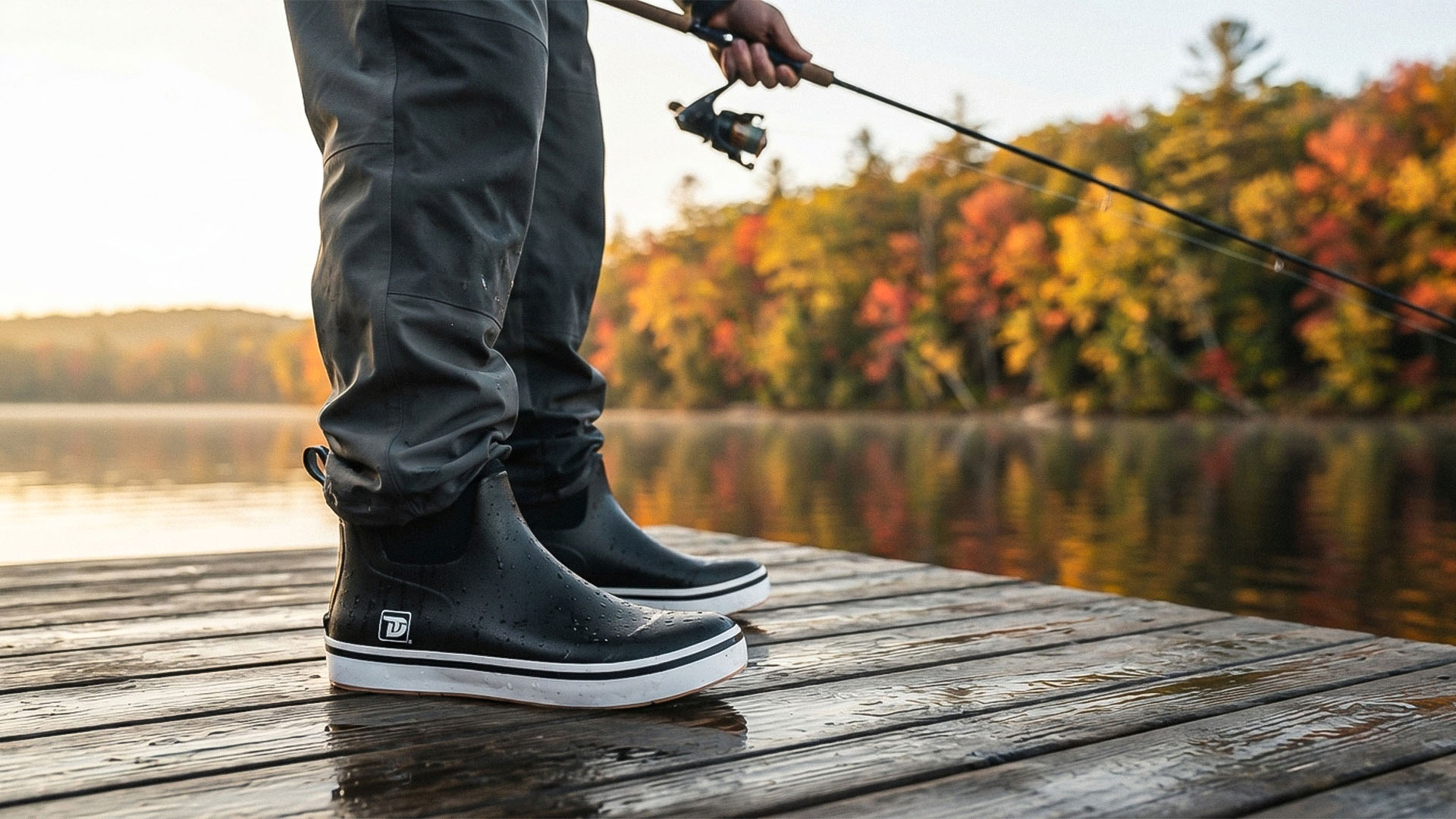
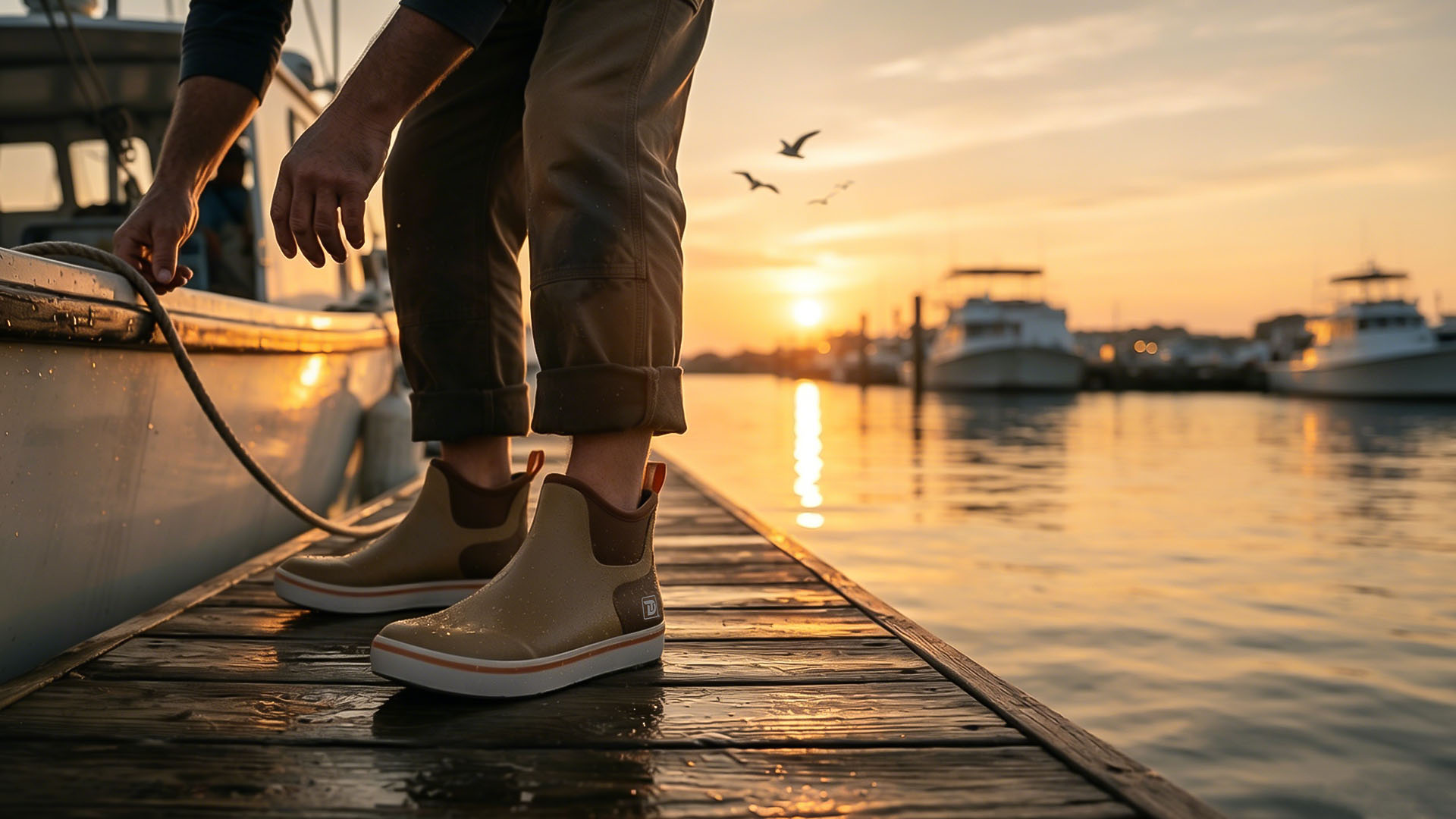
Ankle-height deck boots are popular among recreational anglers because they provide waterproof protection without the weight and bulk of traditional knee-high rubber boots.
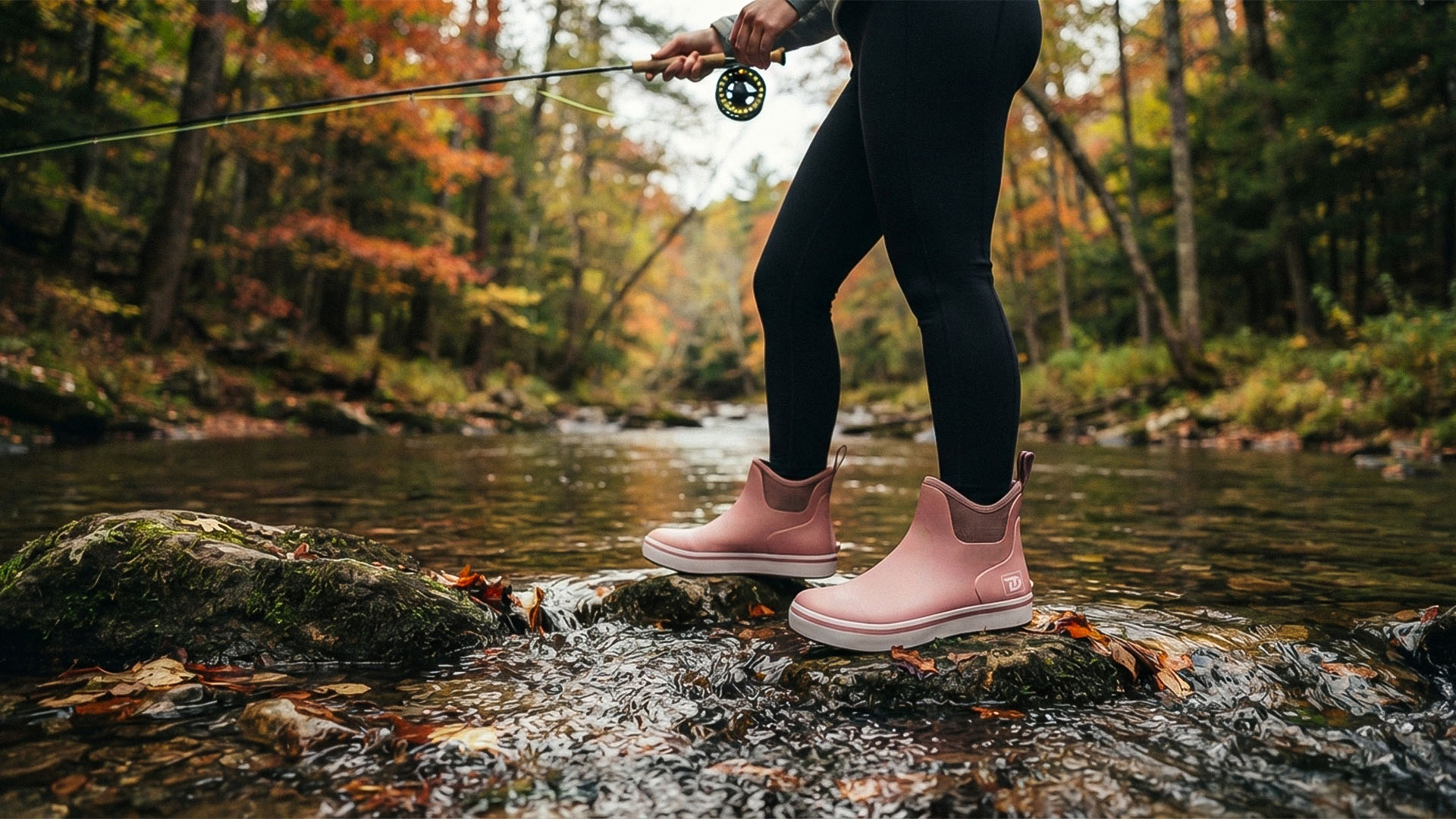
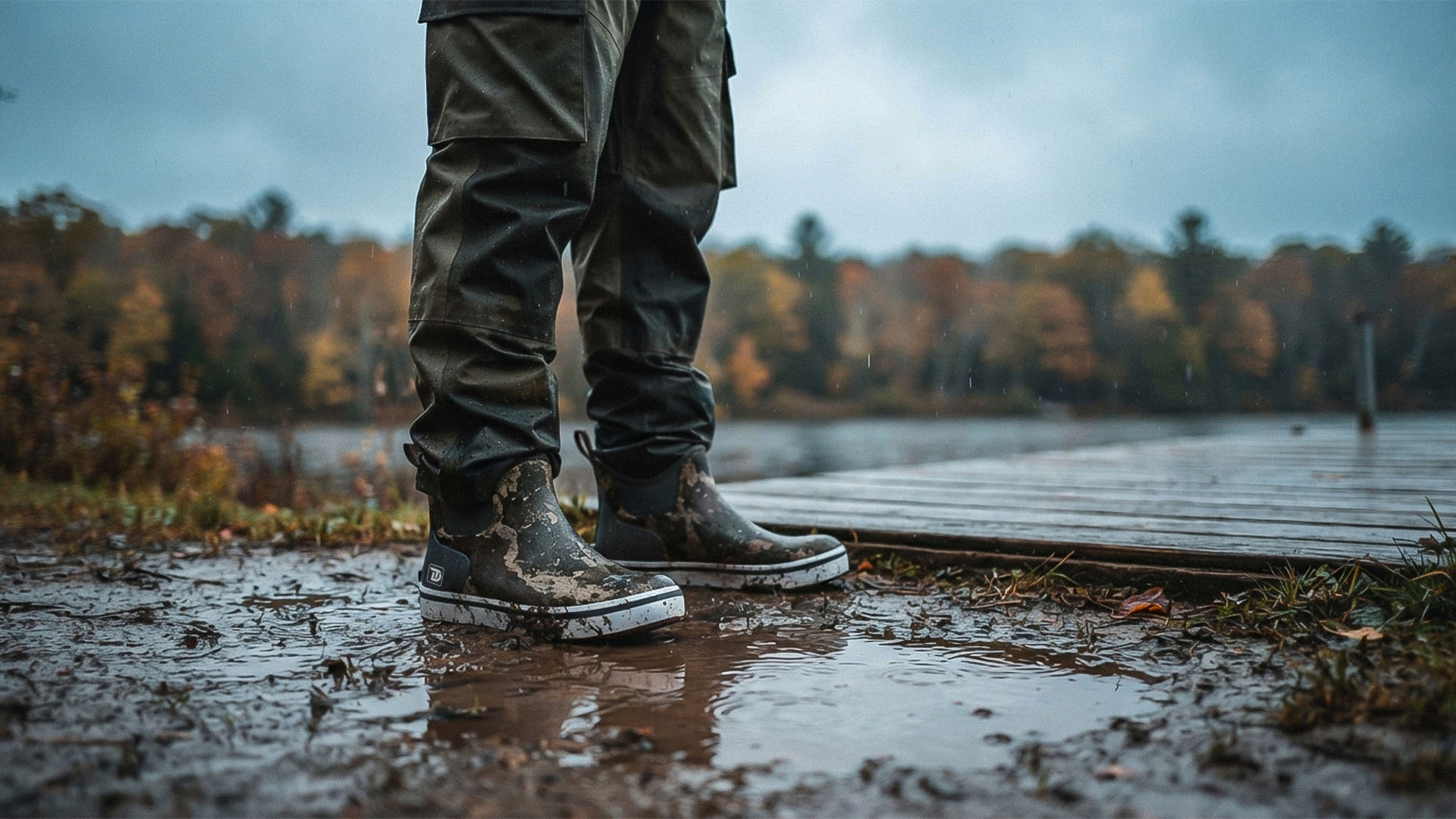
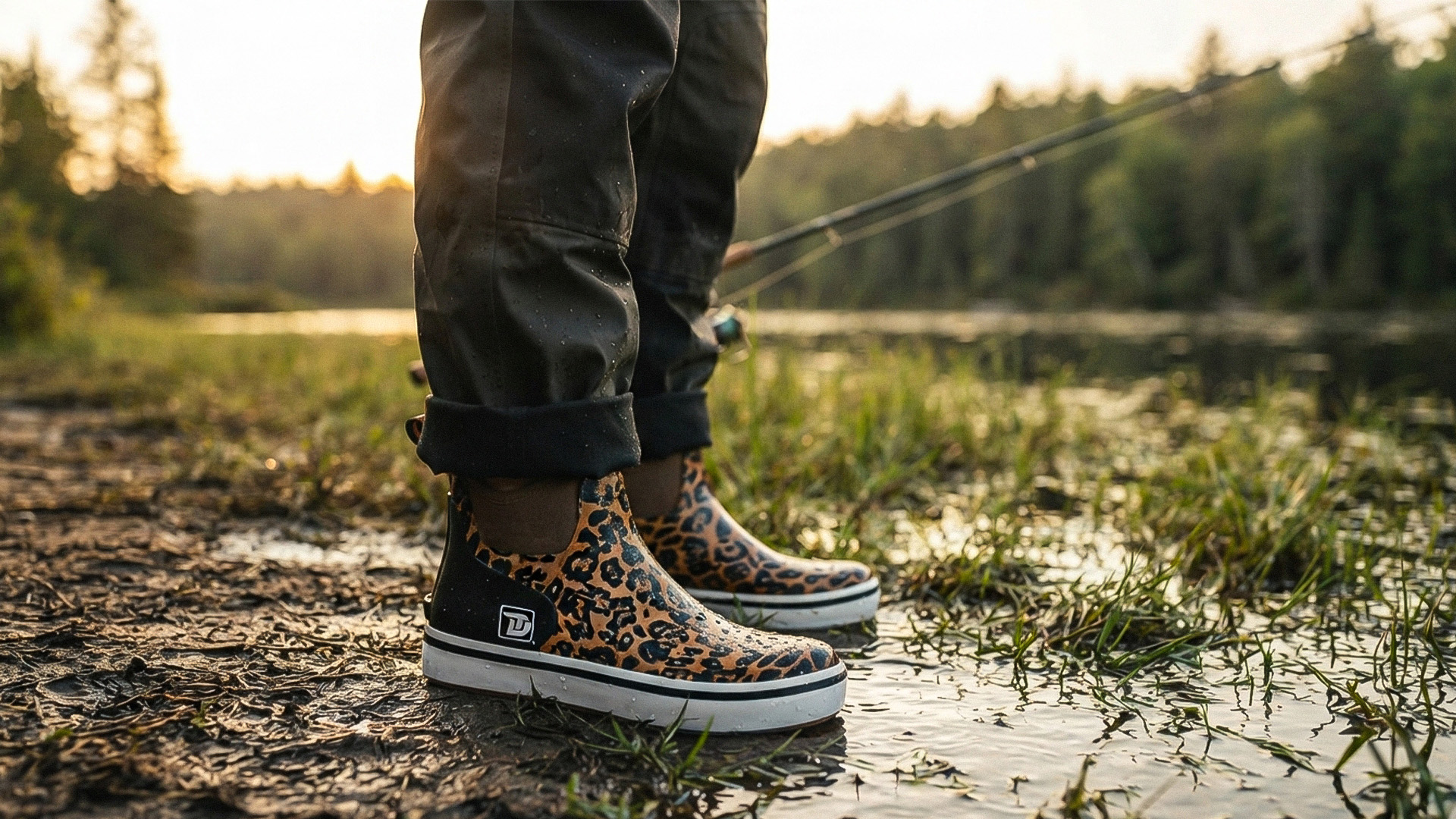
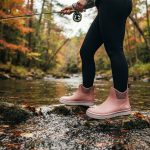
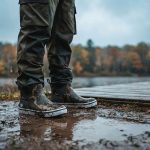
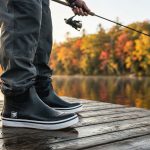
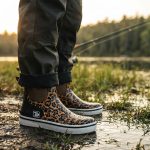
For anglers looking for footwear designed around wet fishing environments, [TruDaveGear waterproof deck boots] can be considered when comparing options for long days on the water.
Whatever brand or style you choose, pay attention to fit, outsole traction, cushioning, boot opening, and overall comfort rather than focusing only on whether the product is labeled waterproof.
Make Sure Your Rain Pants Work With Your Boots
Waterproof boots cannot keep your feet dry if rainwater runs directly into them.
Your rain pants and boots need to work as a system.
The lower section of your rain pants should fit over the boot opening.
This allows rain and spray to move down the outside of your clothing and footwear.
Avoid tucking waterproof pants inside your boots during heavy rain unless your specific fishing situation requires it.
Doing so can create a direct path for water to enter the boot.
Before heading offshore, put on your complete rain gear at home.
Move around, sit down, bend your knees, and check whether the pants remain positioned over the boot opening.
A setup that works while standing still may shift when you move around the boat.
Wear the Right Socks
Socks play an important role in moisture management.
Many anglers spend hundreds of dollars on fishing equipment and then wear ordinary cotton socks inside waterproof boots.
That can be a mistake.
Avoid Cotton Socks for Long Wet Fishing Trips
Cotton absorbs moisture and dries slowly.
Once cotton socks become wet from sweat or outside water, they can remain damp for hours.
This increases friction and can make your feet feel colder.
Consider Synthetic Fishing or Hiking Socks
Synthetic materials can move moisture away from your skin and dry faster than cotton.
They are useful for moderate and warm-weather conditions.
Look for socks that fit securely without creating folds or pressure points inside your boots.
Use Merino Wool in Cold Conditions
Merino wool socks are popular for cold-weather outdoor activities because they provide insulation and continue to offer warmth when damp.
They can work well for winter fishing, cold mornings, and long offshore trips.
Choose sock thickness based on the available space inside your boots.
Extremely thick socks inside tight footwear can restrict circulation and make your feet colder rather than warmer.
Bring an Extra Pair of Socks
This is one of the simplest pieces of fishing advice, but many anglers ignore it.
Keep at least one dry pair of socks in your fishing bag.
Store them inside a waterproof dry bag or sealed plastic bag.
If water enters your boots or your socks become saturated with sweat, changing into a dry pair can make the rest of the fishing trip much more comfortable.
For full-day offshore trips or multi-day fishing trips, consider bringing multiple pairs.
Dry socks take up very little space and can solve a surprisingly large number of comfort problems.
Check the Fit of Your Fishing Boots
Poorly fitting boots can increase moisture-related problems.
Boots that are too loose allow your feet to slide around.
When your socks become damp, the additional movement creates friction and increases the chance of hot spots and blisters.
Boots that are too tight can compress socks and reduce circulation.
Your fishing boots should provide enough room for the socks you normally wear without allowing excessive movement.
Remember that feet can swell slightly after several hours of standing.
Try on fishing footwear later in the day when possible and wear the same type of socks you plan to use while fishing.
Do Not Assume Taller Boots Are Always Better
Tall rubber boots provide more protection from deep standing water, but additional height does not automatically make them the best option for every angler.
Tall boots can be heavier, warmer, and less flexible.
For commercial fishing, heavy rain, or situations where deeper water regularly covers the deck, the additional protection may be necessary.
For recreational anglers dealing primarily with spray, rain, shallow standing water, and routine washdowns, ankle deck boots may provide enough protection while allowing easier movement.
Choose boot height based on actual water exposure.
Manage Sweat During Warm-Weather Fishing
Keeping water out is only half of the challenge.
During hot weather, moisture produced inside your footwear can become a significant problem.
If you wear fully waterproof boots in high temperatures, consider the following strategies.
Choose moisture-wicking socks.
Avoid socks that are unnecessarily thick.
Remove your boots during long breaks when conditions allow.
Allow boots to dry completely between fishing trips.
Rotate between multiple pairs of socks on extremely long days.
If your fishing environment guarantees that your feet will become submerged, quick-draining fishing shoes may be more practical than waterproof boots.
The goal is not to wear waterproof footwear in every situation.
The goal is to control moisture based on the conditions.
Keep Water From Entering During Boat Washdowns
Deck washdowns are a common source of wet feet.
After landing fish or dealing with bait, the deck may need to be rinsed repeatedly.
If you are wearing low-cut shoes, water can easily enter from above.
Pay attention to where you stand during washdowns and how water moves across the deck.
Direct the hose away from your footwear when possible.
Make sure waterproof pants overlap your boots.
Avoid standing in deeper areas of pooled water for unnecessary periods.
Small habits can prevent water from entering otherwise waterproof footwear.
Inspect Your Boots Before Every Fishing Season
Fishing footwear does not last forever.
Saltwater, sunlight, repeated flexing, improper storage, and temperature changes can gradually damage materials.
Before the start of a busy fishing season, inspect your boots.
Look for:
- Cracks around flex points
- Separation between the upper and outsole
- Damaged pull tabs
- Worn tread
- Interior damage
- Permanent odors caused by trapped moisture
- Areas where waterproof materials have become thin or damaged
A boot may look acceptable from a distance while allowing water to enter through a small crack.
Finding the problem before an offshore trip is better than discovering it several miles from shore.
Rinse Saltwater From Your Fishing Footwear
Saltwater should not be allowed to remain on fishing gear longer than necessary.
After returning from a fishing trip, rinse your footwear with fresh water.
Remove fish slime, scales, mud, bait, and salt deposits.
If the insoles are removable, take them out periodically and allow the interior of the boots to dry.
Store footwear in a ventilated location away from excessive heat and direct sunlight.
Do not leave wet fishing boots inside a sealed vehicle compartment or closed storage container for extended periods.
Proper maintenance helps control odors and may extend the useful life of your footwear.
Use a Boot Dryer Carefully
A boot dryer can help remove moisture from inside fishing footwear between trips.
This can be particularly useful for anglers who fish multiple days in a row.
However, avoid exposing boots to excessive heat.
High temperatures can damage certain materials, adhesives, and waterproof components.
Use a low-temperature drying system and follow the footwear manufacturer’s care recommendations.
If you do not have a boot dryer, remove the insoles and allow the boots to air dry in a well-ventilated area.
Keep Emergency Foot Care Supplies in Your Fishing Bag
Even with good preparation, water sometimes gets inside your footwear.
A small foot-care kit can help prevent a minor problem from ruining the rest of your fishing trip.
Consider carrying:
- Dry socks
- Adhesive bandages
- Blister treatment
- Foot powder
- A small towel
- A waterproof bag for wet clothing
These items require very little storage space.
For anglers who regularly spend full days offshore, they can be just as useful as many pieces of fishing equipment.
Pay Attention to Your Feet During Long Trips
Do not wait until your feet become painful before dealing with moisture.
If you notice a wet sock, developing hot spot, or rubbing inside your boot, address the problem early.
Change your socks.
Dry your feet.
Adjust your footwear.
Cover areas where friction is developing.
A five-minute break can prevent hours of discomfort later in the day.
This becomes especially important during multi-day fishing trips when small blisters and skin irritation can affect your ability to fish the following day.
Build a Footwear System for Your Fishing Conditions
Experienced anglers rarely rely on a single piece of equipment for every situation.
The same principle applies to footwear.
You may need different options for different fishing environments.
For example:
Hot-weather kayak fishing may require quick-draining shoes.
Casual inshore trips may only require lightweight fishing shoes.
Full-day offshore fishing may call for waterproof ankle deck boots.
Commercial fishing and heavy-weather conditions may require tall rubber boots.
Cold-weather fishing may require insulated waterproof footwear combined with appropriate socks.
Instead of asking which fishing shoe is universally best, ask which footwear system works best for the conditions you encounter most often.
Common Mistakes That Lead to Wet Feet While Fishing
Many wet-foot problems are preventable.
Avoid these common mistakes.
Wearing Cotton Socks
Cotton holds moisture and dries slowly.
Choose synthetic or merino wool socks for long fishing trips.
Tucking Rain Pants Inside Boots
This can direct water straight into waterproof footwear.
Allow rain pants to overlap the boot opening.
Wearing Damaged Waterproof Boots
Small cracks and separated seams can allow water to enter gradually.
Inspect footwear regularly.
Choosing Boots That Are Too Tight
Tight footwear can reduce circulation and increase discomfort.
Leave enough room for appropriate fishing socks.
Forgetting Spare Socks
A dry pair of socks can rescue an otherwise uncomfortable fishing trip.
Keep them in a waterproof bag.
Ignoring Sweat
Not all moisture comes from outside the boot.
Choose socks and footwear appropriate for the temperature and activity level.
Final Thoughts
Keeping your feet dry while fishing requires more than a waterproof label on a pair of boots.
You need footwear that matches your fishing environment, socks that manage moisture, rain gear that directs water away from the boot opening, and habits that help keep your equipment dry between trips.
For anglers who regularly fish offshore or spend long days working around wet boat decks, waterproof deck boots can provide a practical balance of protection and mobility.
In warmer environments where water exposure is unavoidable, quick-drying footwear may be the better choice.
Pay attention to where moisture is coming from.
Carry spare socks.
Maintain your fishing footwear.
Deal with wet feet before discomfort becomes a bigger problem.
Fishing trips are long enough without spending the entire day thinking about soaked socks.
Frequently Asked Questions
How do I keep my feet completely dry while fishing?
Wear waterproof footwear appropriate for the fishing environment, make sure rain pants overlap the boot opening, use moisture-wicking socks, inspect boots for leaks, and carry spare socks in a waterproof bag. Keep in mind that sweat can also create moisture inside waterproof footwear.
What socks are best for keeping feet dry while fishing?
Synthetic moisture-wicking socks work well in moderate and warm conditions. Merino wool socks are useful for colder weather because they provide insulation and remain comfortable when slightly damp. Cotton socks are generally less suitable for long fishing trips.
Are waterproof deck boots good for saltwater fishing?
Waterproof deck boots are well suited for saltwater fishing because they can protect feet from spray, rain, shallow standing water, and boat washdowns. They should still be rinsed with fresh water after exposure to saltwater.
Why are my feet wet inside waterproof boots?
Moisture may come from sweat, water entering through the boot opening, condensation, or small cracks and damaged seams. Check both the condition of the boots and the clothing system you wear with them.
Should I tuck my fishing pants into my boots?
During rainy or wet conditions, waterproof fishing pants should generally overlap the outside of the boot opening so water runs down the exterior. Tucking pants inside boots can allow water to enter from above.
Should I wear deck boots in hot weather?
It depends on the amount of water exposure. Waterproof deck boots can protect your feet from wet decks and washdowns, but they may become warm during extremely hot weather. Quick-draining fishing shoes can be a better option when your feet are expected to get wet and temperatures are high.