Meta Description: Not sure what shoes to wear on a fishing boat? Learn how to choose safe, comfortable, and water-ready footwear for offshore trips, inshore fishing, and long days on wet decks.
Suggested URL Slug: what-shoes-to-wear-on-a-fishing-boat
Primary Keyword: what shoes to wear on a fishing boat
Secondary Keywords: best shoes for fishing boat, fishing boat footwear, waterproof fishing boots, deck boots for fishing, non-slip fishing shoes, offshore fishing footwear
Search Intent: Informational / Commercial Investigation
Fishing boats are hard on footwear.
Decks get wet. Fish slime makes already slick surfaces even more slippery. Saltwater works its way into seams, hardware, and fabrics. Weather conditions can change quickly, and a calm morning at the marina can turn into hours of rain, spray, and standing water.
The shoes you wear can make the difference between a comfortable day on the water and several miserable hours dealing with wet socks, sore feet, or poor traction.
For casual trips in warm weather, a pair of quick-drying fishing shoes may be enough. Anglers who regularly fish offshore, spend long hours on wet decks, or head out in cold and rainy conditions usually need more protection.
This guide explains what shoes to wear on a fishing boat, which footwear options work best for different situations, and what features actually matter when choosing fishing footwear.
Why the Right Fishing Boat Footwear Matters
Most people spend far more time standing than they expect during a fishing trip.
You may be preparing tackle, moving between rod holders, fighting fish, handling lines, cleaning the deck, or standing at the rail for hours.
Unlike walking on a sidewalk or trail, a fishing boat constantly moves beneath your feet.
Even in calm conditions, the deck can become wet from spray, rain, bait, fish, and washdowns.
Good fishing footwear should help you handle three basic challenges.
Traction on Wet Surfaces
Traction is one of the most important factors when choosing shoes for a fishing boat.
Smooth soles and ordinary street shoes can become dangerously slippery when exposed to water and fish slime.
Fishing footwear should have an outsole designed to maintain contact with wet surfaces. Look for tread patterns that allow water to move away from the bottom of the shoe instead of becoming trapped beneath it.
However, aggressive tread is not always better.
Deep hiking-style lugs can collect mud, sand, and debris. On a boat deck, a flatter outsole with effective siping or water-channeling patterns may provide a better balance between traction and stability.
Protection From Water
Getting splashed occasionally is different from spending eight hours around standing water.
Breathable fishing shoes and sandals work well when temperatures are high and getting wet is part of the experience.
During cold mornings, offshore trips, commercial fishing, or extended periods of rain, waterproof footwear becomes much more important.
Once water gets inside your shoes, wet socks can quickly lead to discomfort, blisters, and cold feet.
Comfort During Long Hours of Standing
Fishing footwear should not only keep you dry.
It should also remain comfortable after several hours on your feet.
Decks are hard surfaces, and standing in one place for long periods can create fatigue in the heels, arches, knees, and lower back.
Cushioning, proper fit, support, and overall boot weight should all be considered when choosing footwear for long fishing trips.
Best Types of Shoes to Wear on a Fishing Boat
There is no single type of footwear that works for every angler.
The right choice depends on weather conditions, water exposure, fishing style, boat type, and how long you expect to remain on the water.
Here are the most common options.
1. Deck Boots
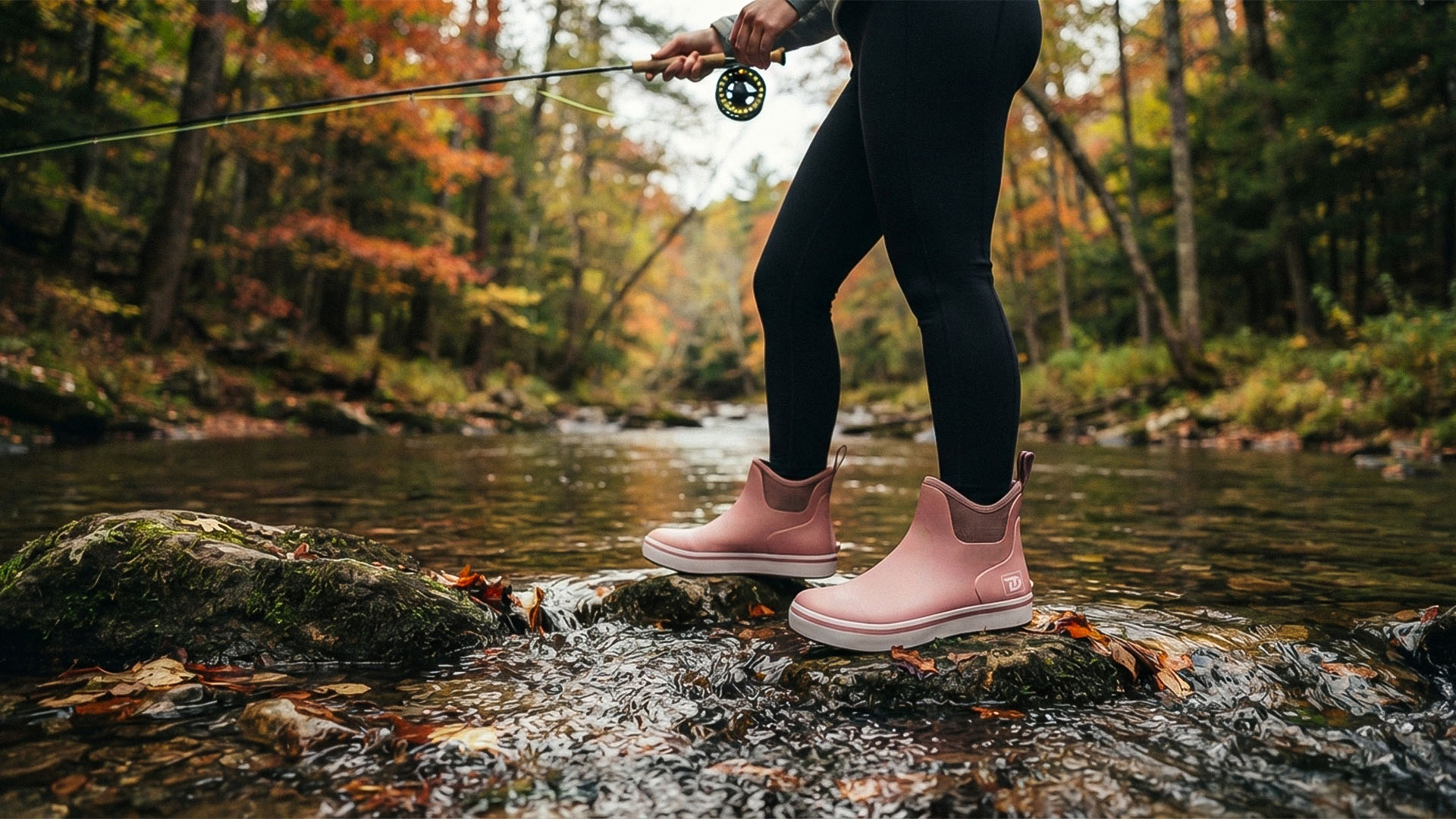
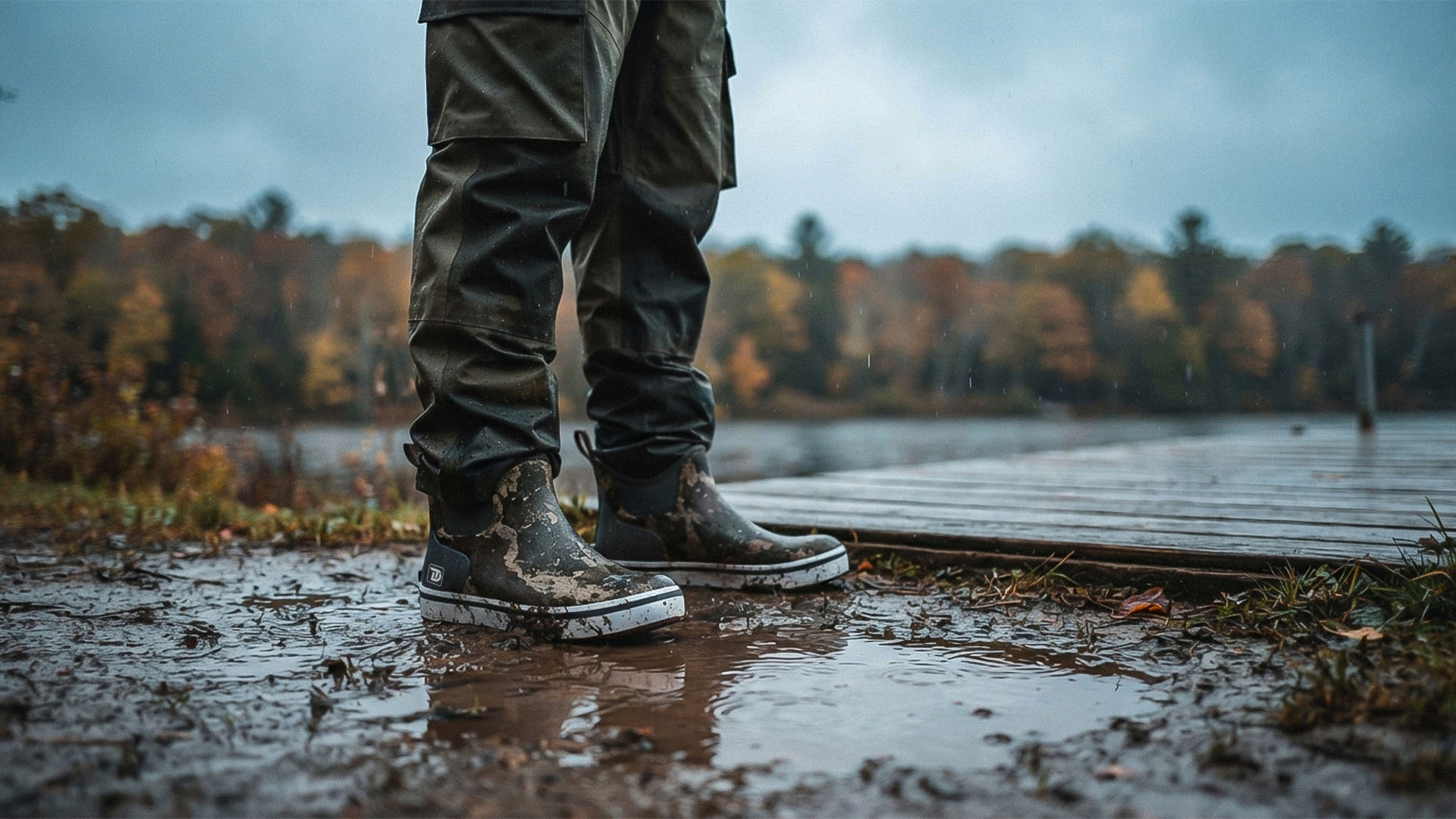
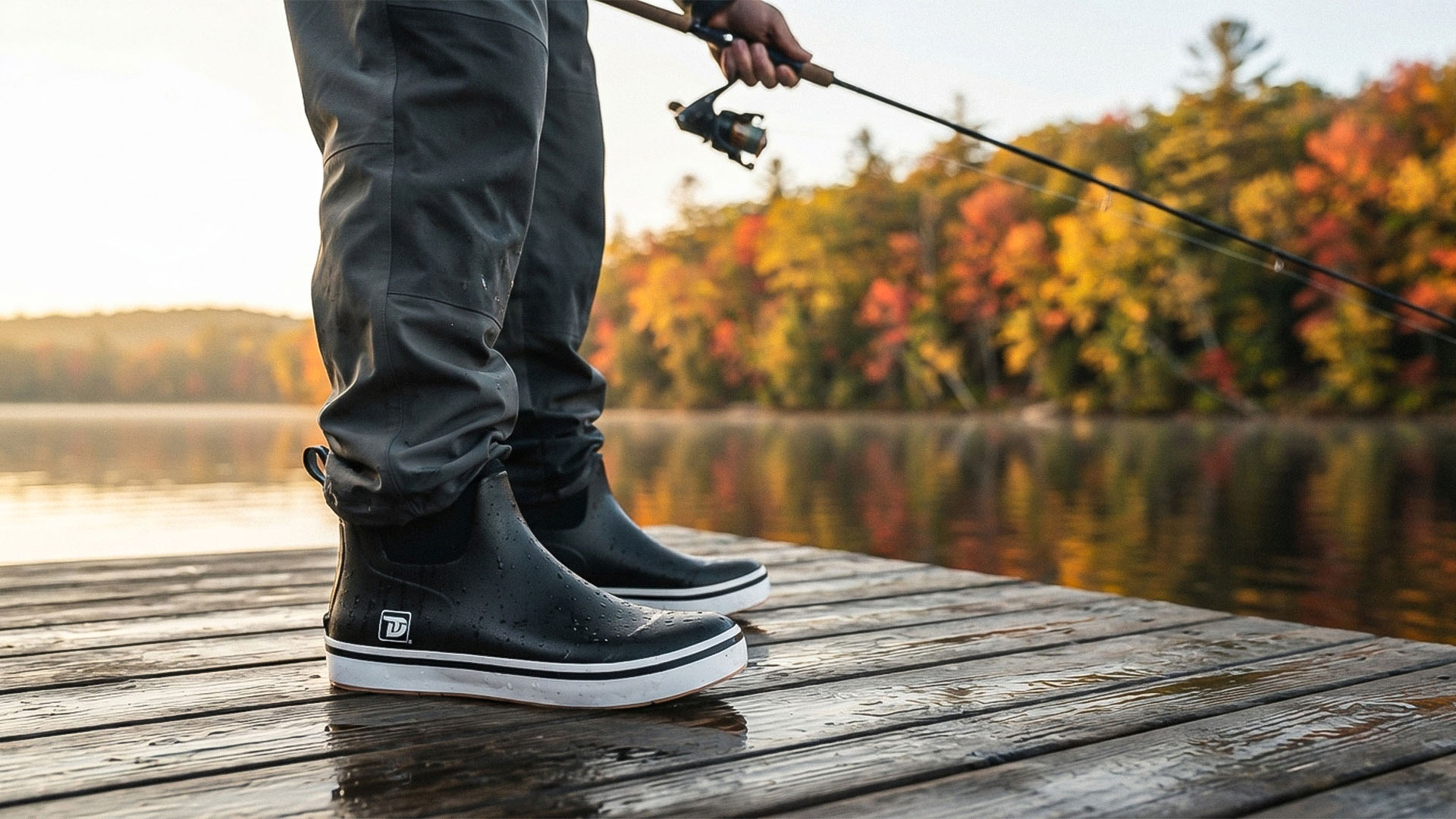
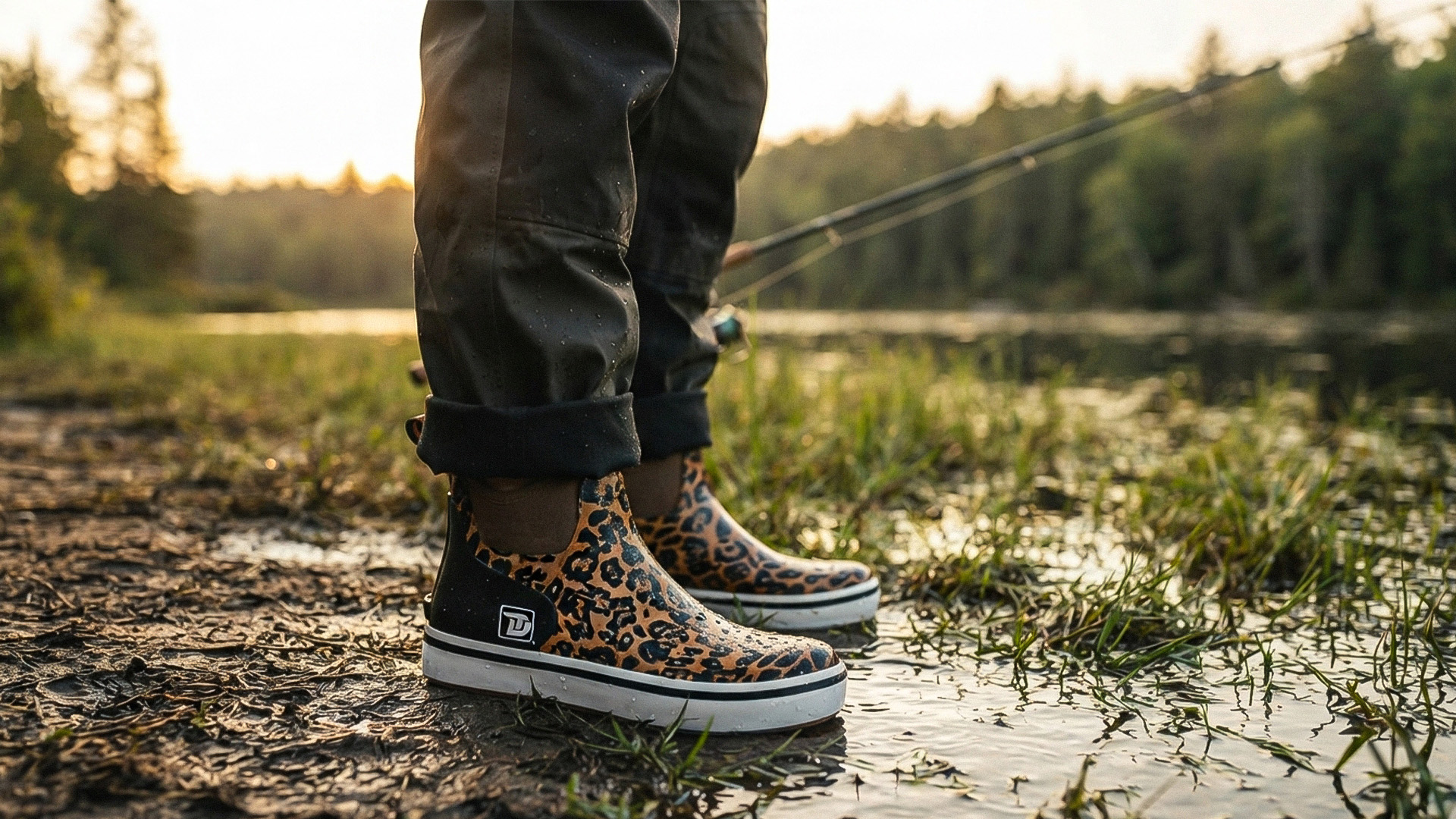
Deck boots are one of the most practical footwear choices for anglers who regularly spend time on wet boats.
Unlike traditional rain boots, modern fishing deck boots are designed specifically for long hours around water.
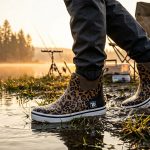
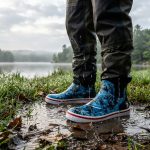
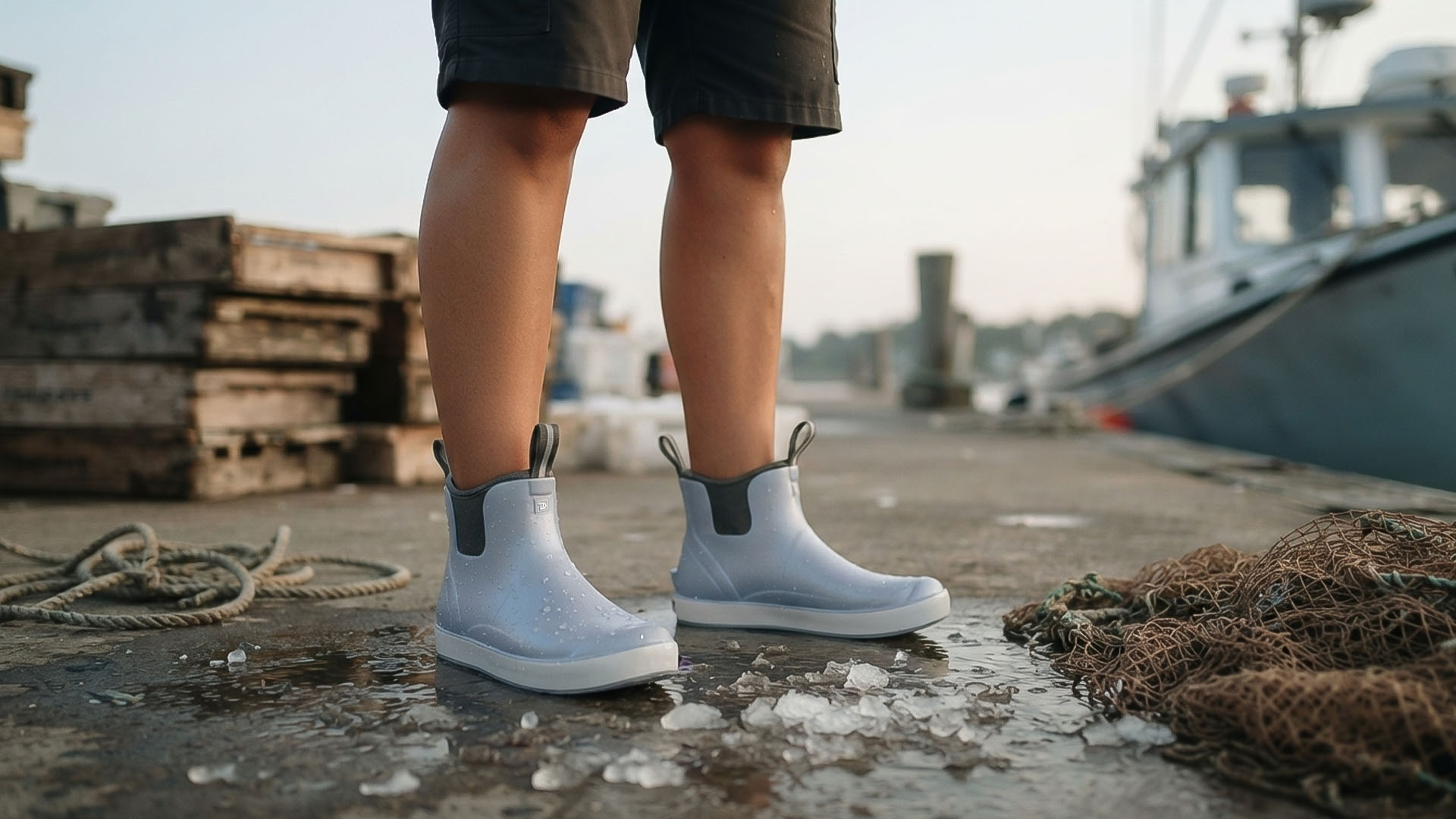
Most deck boots combine a waterproof exterior, slip-resistant outsole, easy-to-clean construction, and a lower profile that allows anglers to move around the boat comfortably.
Ankle-height deck boots have become especially popular among recreational and offshore anglers because they provide waterproof protection without the bulk of tall rubber boots.
They work particularly well for:
- Offshore fishing
- Saltwater fishing
- Rainy conditions
- Cold mornings
- Boat washdowns
- Long fishing trips
- Anglers who regularly work around standing water
If your fishing trips often involve wet decks and unpredictable weather, a well-designed pair of waterproof deck boots is one of the most versatile options available.
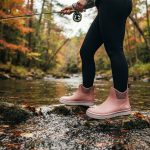
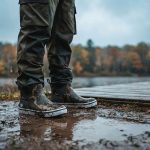
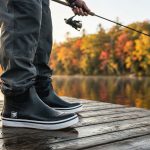
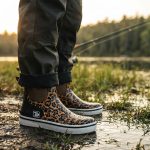
Anglers comparing different styles can explore [TruDaveGear waterproof deck boots] to see examples of fishing footwear designed for wet environments and long days around the water.
The key is choosing deck boots based on fit, traction, comfort, and the conditions you actually fish in rather than simply buying the heaviest waterproof boot available.
2. Boat Shoes
Traditional boat shoes were originally designed to provide traction on wet decks.
They are lightweight, flexible, and comfortable in warm weather.
Boat shoes can be a reasonable option for casual boating, marina use, and short fishing trips when conditions are relatively dry.
However, they have limitations.
Most traditional boat shoes are not fully waterproof. Once water enters the shoe, socks and interior materials can remain wet for hours.
They are best suited for:
- Casual boating
- Warm weather
- Short inshore trips
- Marina environments
- Light water exposure
For anglers expecting heavy spray, rain, or regular deck washdowns, waterproof footwear usually provides better protection.
3. Quick-Drying Fishing Shoes
Quick-drying fishing shoes are popular among kayak anglers, flats fishermen, and people fishing in hot climates.
These shoes are designed to drain water rather than prevent water from entering.
Many models use lightweight mesh materials combined with drainage ports in the sole.
They work well for:
- Kayak fishing
- Wade fishing
- Tropical climates
- Hot summer conditions
- Situations where your feet will regularly get wet
The main disadvantage is obvious: your feet will get wet.
In warm weather, this may not matter.
During cold mornings or long offshore trips, wet feet can quickly become uncomfortable.
4. Fishing Sandals
Fishing sandals provide ventilation and easy drainage.
They are popular in warm coastal areas and can work well for casual fishing trips.
However, sandals provide less protection from hooks, fish spines, dropped equipment, and other hazards commonly found on fishing boats.
They also leave your feet exposed to sunlight.
If you wear sandals while fishing, remember that the tops of your feet can burn quickly during several hours on open water.
Fishing sandals are best suited for:
- Hot weather
- Casual fishing
- Kayak fishing
- Light-duty boating
They are generally less suitable for commercial fishing, cold weather, or boats where heavy equipment is frequently moved around the deck.
5. Rubber Boots
Traditional rubber boots have been used by commercial fishermen for generations.
They provide excellent waterproof protection and are easy to clean.
Tall rubber boots are particularly useful when working around deeper standing water or during heavy weather.
However, they can also be heavy, stiff, and uncomfortable during long periods of standing.
For recreational anglers who do not need knee-high protection, ankle deck boots may provide a more comfortable alternative.
Tall rubber boots remain useful for:
- Commercial fishing
- Heavy rain
- Deep standing water
- Fish processing
- Cold and extremely wet environments
Shoes You Should Avoid Wearing on a Fishing Boat
Some footwear should generally stay on shore.
Flip-Flops
Flip-flops provide very little stability when the boat moves unexpectedly.
They can slide around on wet surfaces and offer almost no protection from hooks, fish, or equipment.
Smooth-Soled Sneakers
Ordinary sneakers may feel comfortable, but many models are not designed for wet environments.
Smooth rubber soles can lose traction on wet decks, while fabric uppers absorb water and take hours to dry.
Heavy Hiking Boots
Hiking boots provide support and traction on trails, but they are not designed for boat decks.
Aggressive tread patterns can trap mud and debris, while heavy construction may become uncomfortable during long periods of standing.
Saltwater can also damage certain leather materials and metal components.
Bare Feet
Walking barefoot on a fishing boat creates unnecessary risk.
Hooks, fish spines, knives, sharp equipment, and hot deck surfaces can all cause injuries.
Even on smaller recreational boats, wearing proper footwear is the safer choice.
What Features Should You Look for in Fishing Boat Shoes?
When comparing fishing footwear, focus on practical features rather than marketing claims.
Slip-Resistant Outsoles
Look for outsoles designed specifically for wet surfaces.
Effective fishing footwear should provide traction without making it difficult to move naturally around the deck.
Remember that no outsole can completely prevent slipping.
Good traction should always be combined with careful movement and proper deck maintenance.
Waterproof Construction
If you regularly fish in rain, spray, or standing water, waterproof construction is essential.
Pay attention to the entire boot design.
A waterproof lower section does not help much if water easily enters through the opening.
Boot height should match the amount of water exposure you expect.
Easy-to-Clean Materials
Fishing is messy.
Blood, scales, bait, salt, and mud can quickly cover your footwear.
Smooth waterproof materials are generally easier to rinse and maintain than fabric shoes with complicated seams and panels.
Cushioning and Support
Long fishing trips involve hours of standing on hard surfaces.
Look for footwear with enough cushioning to reduce fatigue.
Removable insoles can also be useful because they allow anglers to replace worn footbeds or use aftermarket insoles when additional support is needed.
Proper Fit
Fishing boots should fit securely without crushing your toes.
Your feet may swell slightly after several hours of standing, especially during warm weather.
At the same time, boots that are too loose can cause your feet to slide around inside the footwear, reducing stability and creating friction.
Always consider the socks you normally wear when choosing your size.
Weight
Heavy boots can become tiring during long fishing trips.
Modern ankle deck boots often use lightweight materials to reduce fatigue while maintaining waterproof protection.
This is particularly useful for anglers who frequently move around the boat.
Deck Boots vs. Regular Rain Boots for Fishing
At first glance, deck boots and rain boots may appear similar.
Both are designed to keep water away from your feet.
The difference is how they are intended to be used.
Regular rain boots are primarily designed for walking through puddles, mud, and wet ground.
Fishing deck boots are designed for movement and extended periods of standing on wet boat surfaces.
That difference can affect outsole design, boot height, flexibility, weight, and cushioning.
For occasional fishing trips, ordinary rain boots may be enough.
For anglers who regularly spend full days on the water, deck boots are often the more comfortable and practical option.
Ankle Deck Boots vs. Tall Fishing Boots
Boot height is another important consideration.
Choose Ankle Deck Boots If:
You want lightweight footwear.
You frequently move around the boat.
You need protection from rain, spray, and shallow standing water.
You want boots that are easy to put on and remove.
You primarily fish recreationally or take offshore charter trips.
Choose Tall Fishing Boots If:
You work around deeper standing water.
You regularly fish in heavy rain.
You work in commercial fishing or seafood processing.
You need additional lower-leg protection.
Neither option is automatically better.
The right boot height depends on your environment.
What Shoes Should You Wear for Offshore Fishing?
Offshore fishing often involves more water exposure than casual inshore trips.
Long boat rides can create spray, weather can change quickly, and anglers may spend many hours standing on hard decks.
For most offshore fishing situations, waterproof deck boots are a strong choice.
They provide protection from water while remaining easier to move in than traditional tall rubber boots.
In hot climates, some anglers prefer quick-drying fishing shoes.
However, if you expect cold mornings, rain, or rough conditions, waterproof footwear usually provides greater comfort.
What Shoes Should You Wear on a Fishing Charter?
If you are going on a fishing charter, check the operator’s recommendations before your trip.
Some charter boats have specific footwear rules.
In general, choose clean shoes with good wet-surface traction.
Avoid footwear that may leave marks on the deck.
For short trips in warm and dry weather, fishing shoes or boat shoes may be sufficient.
For full-day offshore charters, waterproof ankle deck boots can provide better protection against spray, rain, fish, and deck washdowns.
How to Keep Your Fishing Footwear in Good Condition
Saltwater can damage almost any piece of fishing equipment over time.
Your footwear is no exception.
After fishing in saltwater, rinse your boots or shoes with fresh water.
Remove mud, fish scales, blood, and other debris before they dry.
Allow footwear to dry naturally in a ventilated area.
Avoid storing wet boots inside sealed containers or hot vehicle compartments for extended periods.
If your footwear has removable insoles, take them out occasionally and allow the interior of the boots to dry completely.
Regular cleaning helps reduce odors and can extend the usable life of your fishing footwear.
Final Thoughts
The best shoes to wear on a fishing boat depend on where you fish, how long you stay on the water, and the conditions you expect to encounter.
Boat shoes can work for casual trips.
Quick-drying fishing shoes are useful in hot climates.
Sandals provide ventilation for light-duty fishing.
Tall rubber boots remain practical for commercial work and extremely wet environments.
For anglers who regularly deal with rain, spray, wet decks, and long hours of standing, waterproof deck boots provide one of the best combinations of protection, mobility, and everyday comfort.
Choose footwear based on traction, waterproof protection, fit, cushioning, and the conditions you actually fish in.
The right pair of fishing shoes will not catch more fish for you.
But they can help you stay comfortable, move safely around the boat, and spend more time focusing on the reason you went fishing in the first place.
Frequently Asked Questions
What are the best shoes to wear on a fishing boat?
The best shoes depend on fishing conditions. Waterproof deck boots are a versatile option for anglers who regularly encounter rain, spray, and wet decks. Quick-drying fishing shoes can work well in hot climates, while tall rubber boots are better suited for commercial fishing and extremely wet environments.
Can you wear regular sneakers on a fishing boat?
You can wear sneakers on a fishing boat, but many regular sneakers are not designed for wet surfaces. They may absorb water, take a long time to dry, and provide less traction than footwear specifically designed for boating and fishing.
Are deck boots good for fishing?
Yes. Deck boots are designed for wet environments and are commonly used by recreational anglers, offshore fishermen, and people who work around boats. Good deck boots should provide waterproof protection, wet-surface traction, and enough cushioning for long periods of standing.
Should fishing boat shoes be waterproof?
Waterproof footwear is recommended if you expect rain, spray, cold weather, or regular exposure to standing water. In hot climates where getting wet is unavoidable, quick-drying shoes may be more comfortable.
Are ankle deck boots better than tall fishing boots?
Ankle deck boots are lighter, easier to move in, and often more comfortable for recreational fishing. Tall fishing boots provide greater protection from deeper water and are commonly used for commercial fishing and heavy-duty work.
Can I wear sandals on a fishing boat?
Fishing sandals can work in warm weather, but they provide less protection from hooks, fish spines, dropped equipment, and sun exposure. Closed-toe fishing footwear is generally a better choice when additional protection is needed.