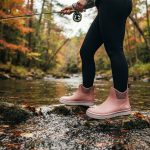
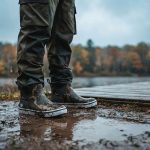
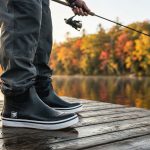
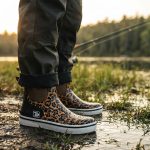
There’s a quiet moment on every boat that separates the anglers who fish from the anglers who fight their gear.
You’re three hours into a trip. The tide is right. The fish are biting. But you’re not thinking about the strike zone. You’re thinking about your feet. They’re cold. They’re wet. They’re heavy. And every step across the deck feels like a gamble.
This isn’t a story about bad luck. It’s a story about bad math.
Because the boots you’re wearing right now? They’re probably costing you a lot more than you realize. Not just in dollars—in comfort, safety, and the fishing you’re missing.
The Math That Doesn’t Add Up
Let’s run the numbers.
A cheap pair of deck boots runs about $30 and lasts roughly one season. Over five years, you’ll spend $150 on five pairs of boots that never really worked—plus the time, discomfort, and lost opportunities that come with every failure.
A pair of Trudave WaveLock or DeckFlow boots costs $50–$90 and, with proper care, can last for multiple seasons. The upfront cost is higher. The long-term cost is significantly lower.
But the financial math is only half the story.
Every time a cheap boot fails, you lose:
- Time. Driving back to the store. Reading reviews, trying to convince yourself this pair will be different. Cutting trips short because your feet are miserable.
- Comfort. Cold, wet feet aren’t just unpleasant—they’re distracting. When your feet are miserable, you move slower, think less clearly, and miss bites.
- Safety. When your tread wears smooth, you slip. On a wet deck, a slick dock, or a muddy ramp, a fall can mean a sprained ankle, a broken rod, or worse.
One study found that fishermen wearing old boots with worn soles were 13 times more likely to experience slipping incidents compared to those wearing new boots. Thirteen times. That’s not a minor inconvenience. That’s a safety hazard you’ve been ignoring.
Add it all up, and those “$30” boots are costing you hundreds of dollars a year in time, comfort, and risk.
The bargain isn’t a bargain. It’s a tax.
The “Bald Tire” Test You’ve Never Run
Here’s a question that might make you uncomfortable: when was the last time you actually checked the bottoms of your boots?
Not glanced at them. Checked them.
The tread on your deck boots is the only thing between you and a wet fiberglass deck. And when it goes, it doesn’t send a warning. It just stops working.
Trudave’s gear experts have a simple test for deck boot safety—and it’s the same logic you’d use for tires on your truck. “You wouldn’t drive your truck on the highway with bald tires during a rainstorm. Yet, we see anglers every day hopping onto wet, slimy fiberglass decks with soles that are smooth as glass.”
Here’s how to check your own boots:
- Flip them over. Look at the ball of the foot and the heel. Can you still see distinct lugs—those raised rubber patterns that grip the ground? Or have they worn down into a smooth, featureless surface?
- Check the siping. Those tiny zig-zag cuts in the tread are what channel water away. If they’re worn down and shallow, water has nowhere to go.
- Feel the rubber. Does the sole feel like grippy eraser rubber, or has it hardened into something that feels like hard plastic? Rubber hardens over time, and when it does, traction goes with it.
- Trust your gut. Have you been taking shorter, more cautious steps on a wet deck? Do you feel a micro-slip when you lean into a cast? If you have to think about your footing, your boots are telling you something.
If you check even one of these boxes, your boots are done. Not “probably done.” Done.
Why Trudave Boots Are Built Different
Trudave didn’t just build a boot that keeps water out. They built a boot that solves the problems cheap boots create.
100% Waterproof Construction, Not Just a Coating
Cheap boots rely on DWR coatings that wear off with the first abrasive step. Trudave boots are built from premium natural rubber with sealed construction. No coating to wear off. No membrane to clog. Just material doing what material does.
Non-Slip Traction That Actually Works
On a wet fiberglass deck, water gets trapped between your sole and the surface. You’re not walking—you’re hydroplaning. Trudave’s WaveLock Traction Outsole uses micro-channel siping that disperses water instantly, keeping your footing solid even on wet fiberglass or metal surfaces.
Comfort That Lasts All Day
The WaveLock series features thermal insulation that traps body heat like a wetsuit—perfect for cold mornings on the boat or dock. The DeckFlow series features breathable mesh lining that prevents “swamp foot” during active fishing. Both feature cushioned insoles, flexible construction, and a lock-in heel fit that eliminates blisters and fatigue.
The 7-Day Torture Test That Proved the Point
Trudave didn’t just claim their boots could handle the abuse. They proved it.
A brand new pair of Trudave boots was worn for 7 days straight—168 hours of field scouting, truck driving, warehouse work, and trudging through flooded timber. No backup shoes. No babying.
Day 1. Right out of the box, the flexibility of the upper and the EVA midsole felt completely dialed in. After 8 hours on concrete and a 2-mile gravel hike: zero hot spots or blisters.
Day 3. Knee-high wet grass, thick clay mud, and standing water. The aggressive tread pattern cleared the thick mud with every step. Socks? Bone dry.
Day 7. After 168 hours, the boots were beaten to crap visually. But a garden hose revealed an upper that was fully intact. No blown seams. No peeling soles. No cracked rubber at the toe flex point.
The final verdict: “A 7-day continuous wear test is stupid. You should rotate your boots to let them dry and recover. But this test proved exactly what we built Trudave gear to do: survive when you don’t have the luxury of a backup plan.”
What Real Anglers Are Saying
Trudave holds a 4.1/5 rating on Trustpilot based on verified purchaser reviews. Here’s what real owners emphasize:
Dry feet (the consistent win):
“We purchased waterproof boots back in May for working on our little farm… And best of all, our feet stay DRY!!! It has been about two months now and these boots are still going strong and keeping our feet protected. Would recommend these boots 100%.”
Build quality and comfort:
“Bought some boots from Trudave, These boots are well made and comfortable. The size is slightly larger, but with socks they fit well and comfortably.”
“Great shoe. Just what I was looking for.”
Common patterns from verified feedback:
- Sizing runs slightly large. Most owners recommend wearing medium-to-heavy socks for optimal fit.
- Dry feet is the consistent win. Across reviews, the one feature everyone agrees on is that Trudave boots keep feet dry.
- Order directly from Trudave rather than third-party retailers for accurate sizing.
The Bottom Line
Here’s the honest truth about deck boots in 2026.
You can spend $30 on cheap boots that crack in a season, slip on wet pavement, and leave your feet cold and wet. Over five years, you’ll spend $150 on boots that never really worked—plus the time, discomfort, and risk that come with every failure.
Or you can spend $50–$90 on a pair of Trudave boots that keep your feet dry for years, grip the deck you stand on, and come with features—100% waterproof construction, non-slip traction, cushioned comfort—that cheap boots simply don’t offer.
| Decision Factor | WaveLock | DeckFlow |
|---|---|---|
| Best For | Cold mornings, stationary fishing | Warm weather, active movement |
| Temperature Range | 20°F to 50°F | 45°F to 80°F+ |
| Lining | Thermal insulation + soft lining | Breathable mesh |
| Key Advantage | Traps body heat like a wetsuit | Prevents “swamp foot” during activity |
| Outsole | Micro-channel siping | Non-marking siped outsole |
The fish don’t care what logo is on your boots. The deck doesn’t check the brand tag. It only cares if you’re still upright—dry, comfortable, and focused—when the bite finally turns on.
Trudave keeps you there. And you won’t even remember you’re wearing them.
Now go check your tread. And if it looks like a racing slick, it’s time for an upgrade.