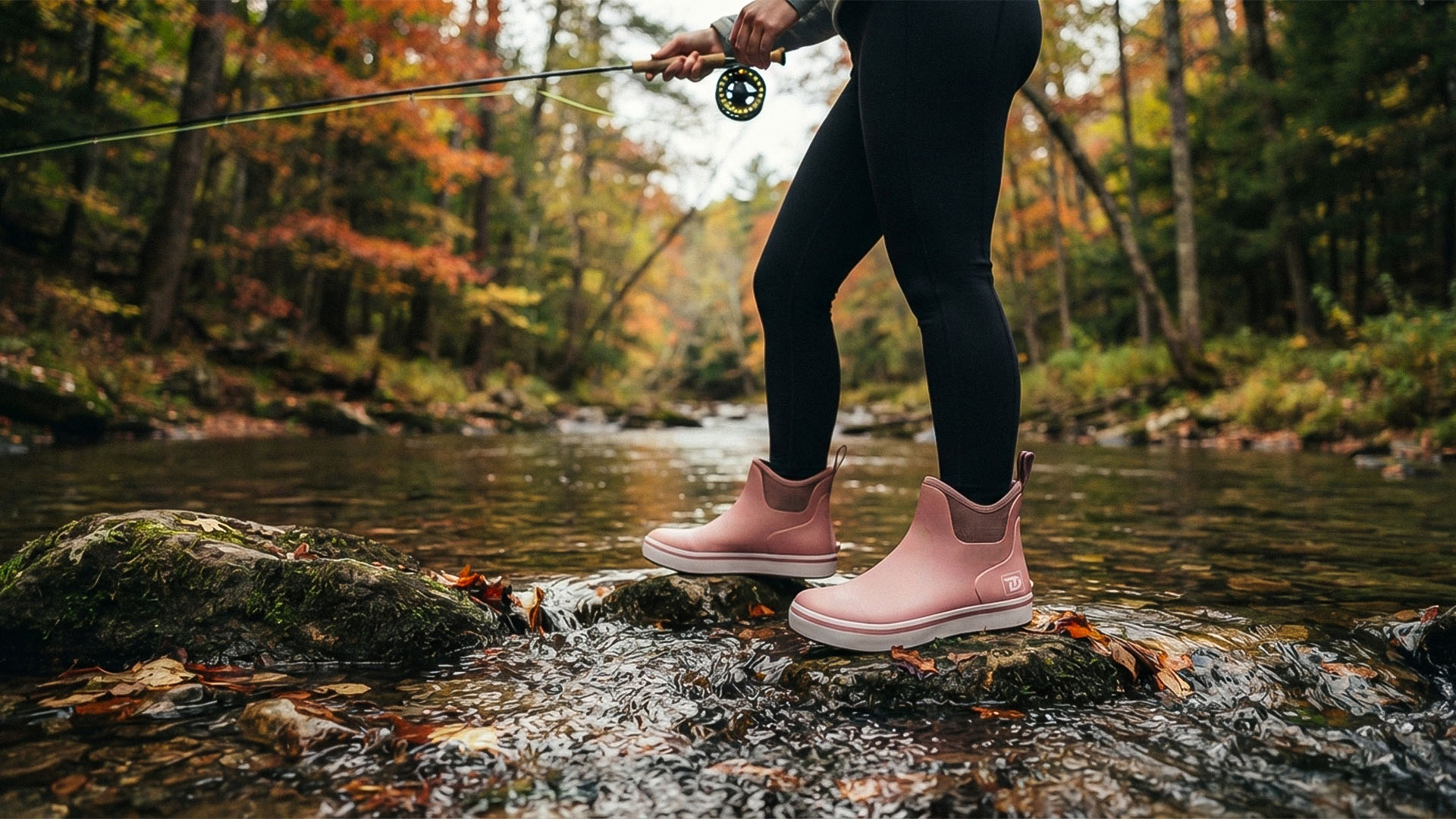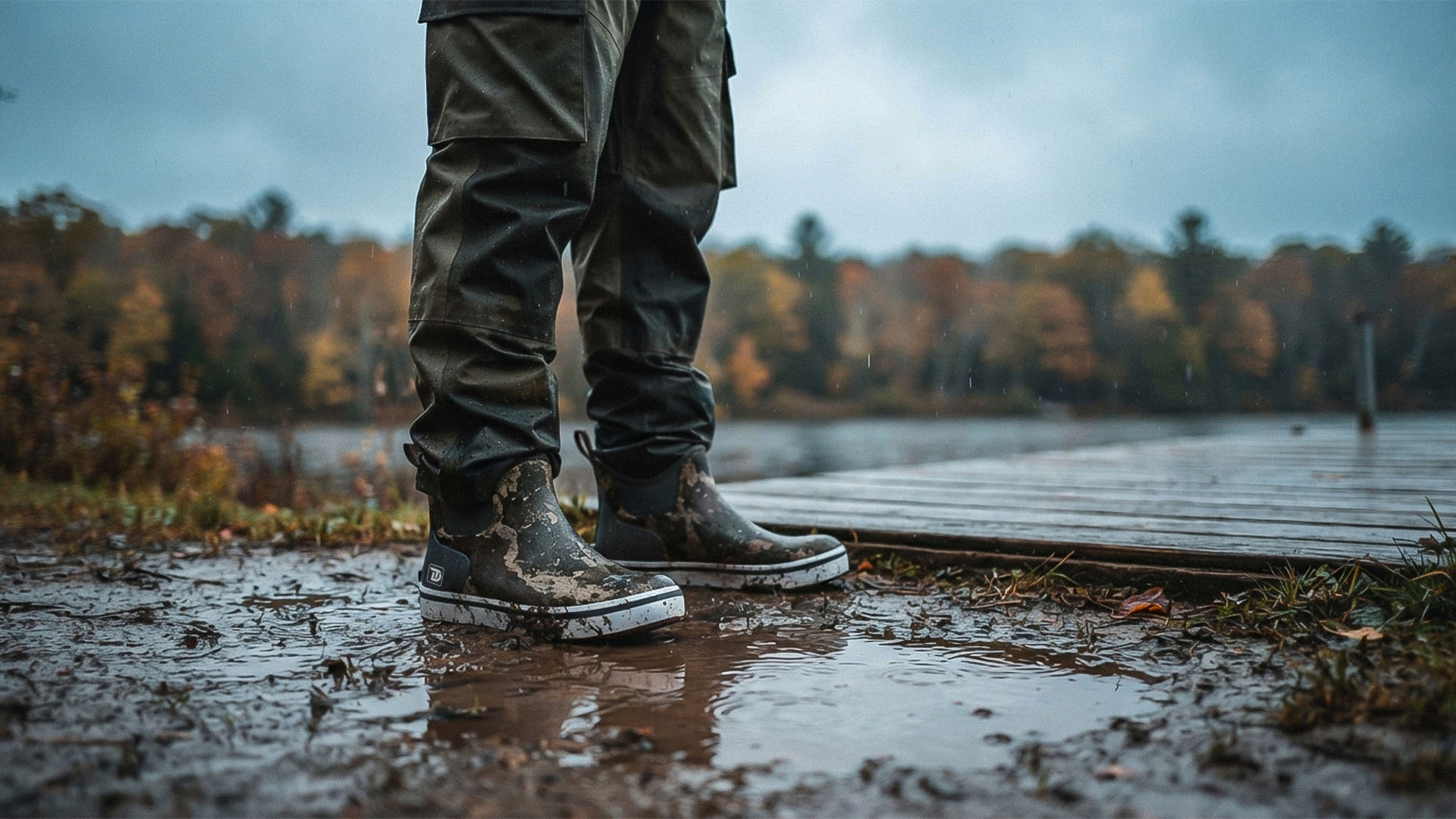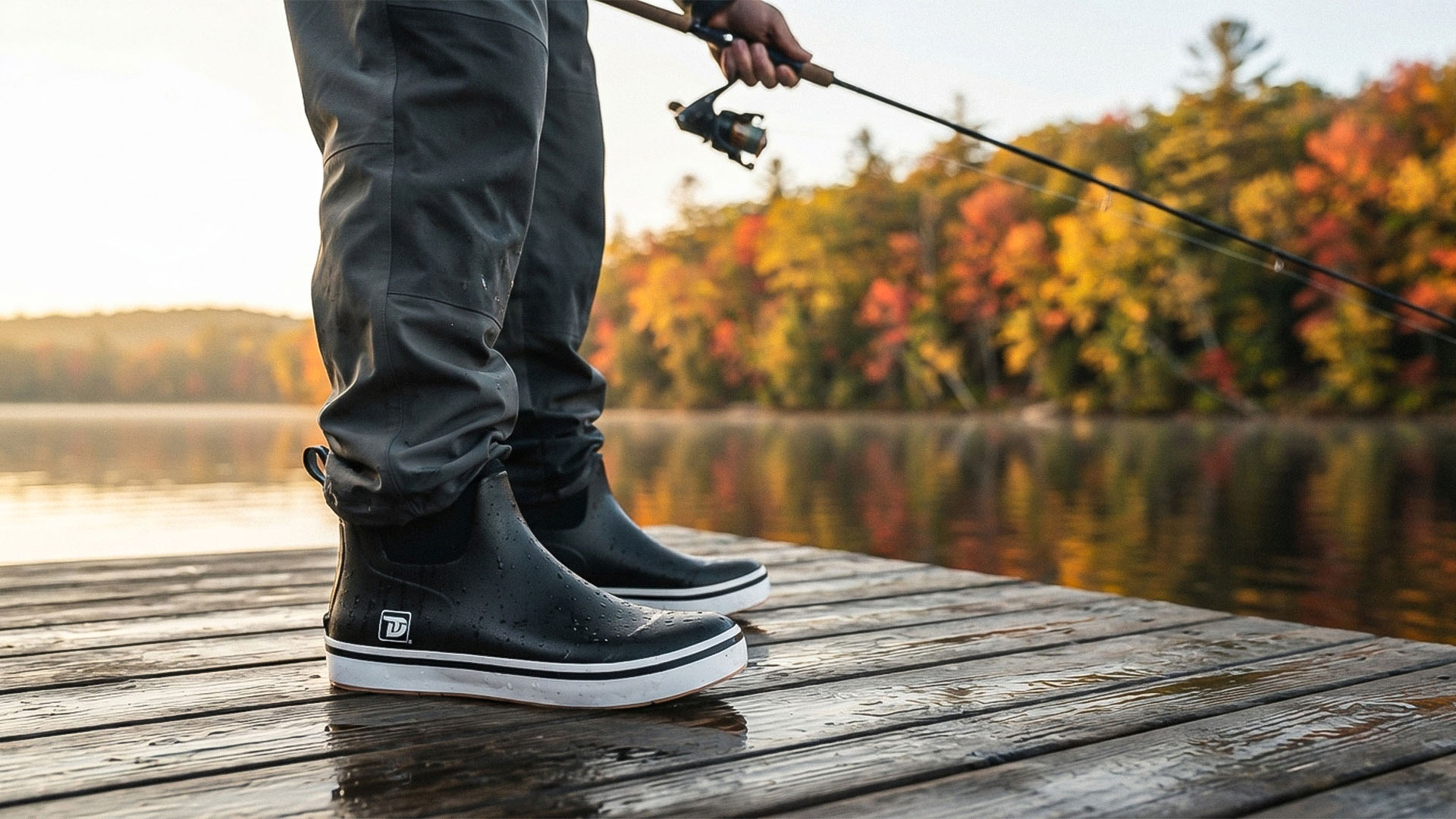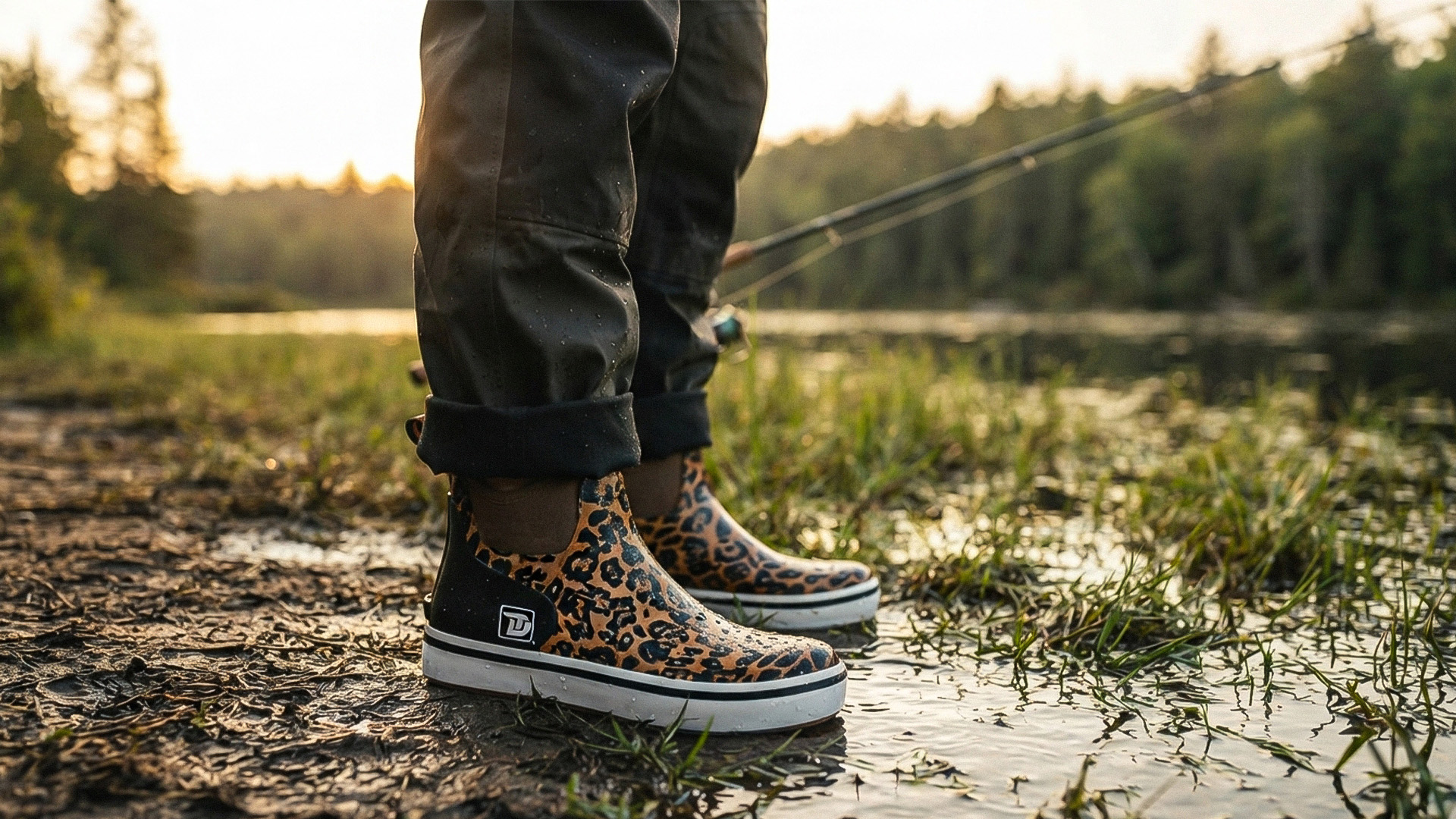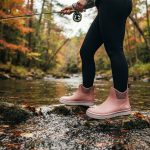
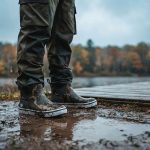
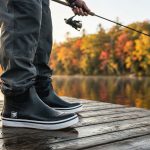
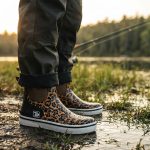
Picture this.
Your alarm goes off at 4:00 AM. You load the truck, grab your coffee, and hit the water just as the sun breaks the horizon. The bite is red-hot. You hook into a personal best. But instead of focusing on the screaming drag, all you can think about is how freezing, soggy, and miserable your feet are.
Sound familiar?
Here’s the uncomfortable truth most anglers don’t want to admit: they’re wearing the wrong boots. Not just the wrong brand—the wrong kind of boot for the water they’re fishing.
This isn’t about brand loyalty or marketing hype. It’s about understanding that a boot that works for a kayak fisherman in Florida won’t work for a deckhand on a center console in the Pacific Northwest. The water is different. The deck is different. The demands on your feet are different.
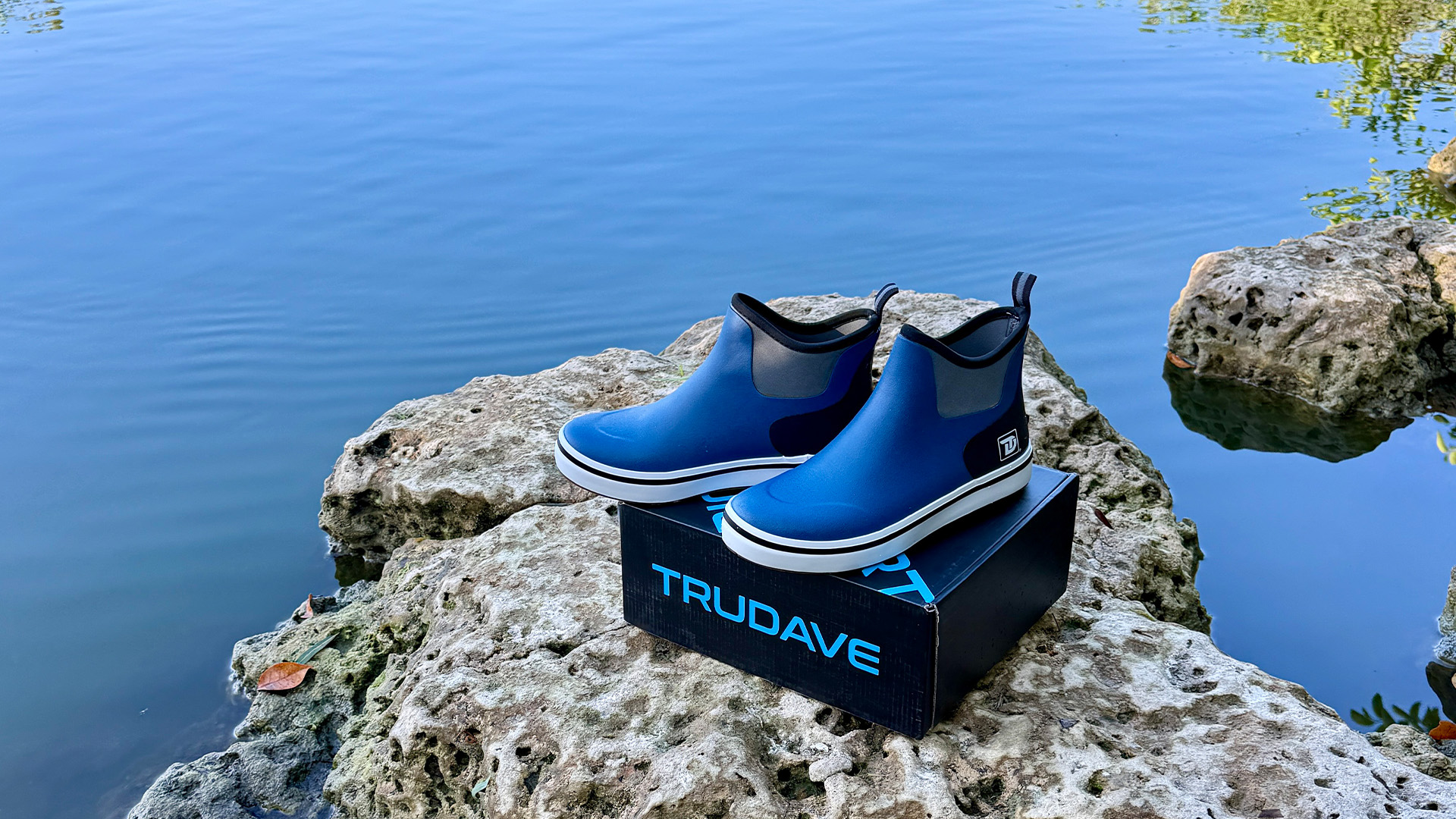
Trudave Gear built two distinct deck boot series—WaveLock and DeckFlow—to solve exactly this problem. They share the same DNA: 100% waterproof rubber, non-slip outsoles, and sneaker-like comfort. But each is optimized for a different kind of angler and a different kind of water .
This guide breaks down what makes each boot different, who each one is for, and how to choose the right pair for your time on the water.
⚠️ Disclosure: This article is based on product specifications, independent gear reviews, and verified customer feedback from multiple sources. All factual claims are sourced from publicly available information. Our goal is to provide honest, practical information—not to sell you anything.
The Three Questions That Decide Everything
Before you look at a single boot, you need to answer three questions. Not about the boots. About you. Because the right boot isn’t the most expensive one or the one with the biggest logo. It’s the one that matches how you fish.
Question 1: When do you fish most? Are you out there in March, scraping frost off the windshield? Or are you hitting the water in July, sweating through your shirt before you even cast?
Question 2: How active are you on the water? Do you sit still most of the trip—anchored, drifting, waiting for the bite? Or do you move constantly—kayaking, wading, running the deck all day?
Question 3: What surface do you stand on? Are you on a boat deck, a dock, or a muddy bank? Because the outsole that grips a wet fiberglass deck will slide in deep mud—and the pattern that claws through mud will skate across wet concrete .
Answer those three questions, and you’ve already eliminated 80% of the guesswork.
WaveLock vs. DeckFlow: Which One Fits Your Water?
Trudave offers two distinct deck boot series, each optimized for different fishing styles and conditions. Here’s how they compare:
| Feature | WaveLock Series | DeckFlow Series |
|---|---|---|
| Primary Use | Cold mornings, early season, stationary fishing | Warm weather, active movement, year-round versatility |
| Lining | Soft thermal insulation + fleece interior | X-Dry moisture-wicking breathable mesh |
| Ideal Temperature | 20°F to 50°F | 45°F to 80°F+ (works colder with wool socks) |
| Outsole | WaveLock micro-channel siping, non-slip grip | Non-marking siped outsole |
| Key Feature | Stretchy side panels, reinforced heel armor, easy-off heel tab | Lightweight low-cut design, transitions from dock to daily wear |
WaveLock Series — The “Static” Specialist
The WaveLock is built for anglers who fish when the water is cold and the air is colder. Early spring stripers. Late-fall trophy hunts. Steelhead trips when you’re scraping frost off the windshield.
Thermal insulation that actually works. When you’re anchored and waiting for the bite, your body isn’t generating much heat. The insulation does the work for you, trapping your body heat inside the boot .
Micro-channel siping for wet-deck traction. The WaveLock uses Trudave’s exclusive WaveLock Traction Outsole with micro-channel siping that disperses water instantly, keeping your footing solid even on wet fiberglass or metal surfaces. Those tiny cuts in the sole act like miniature squeegees, channeling water away so the rubber meets the deck directly—not a thin layer of lubricant.
Practical design touches. Stretchy side panels provide quick slip-on comfort while keeping a snug fit without pressure points. Reinforced heel armor prevents wear and tear, enhances balance on wet decks, and adds an easy-off heel tab for quick removal.
The trade-off: If the sun comes out and you decide to hike three miles, your feet will sweat, and you’ll get uncomfortable. Choose WaveLock if you hate cold toes and spend more time standing or sitting than walking.
DeckFlow Series — The “Active” Specialist
The DeckFlow is built for anglers who move. Kayak fishermen, bank anglers, tournament fishermen running the deck all day. Anyone who generates their own heat through activity .
Breathable lining that prevents “swamp foot.” The DeckFlow combines a fully waterproof shell with a soft, breathable lining . When you’re paddling, casting, reeling, and moving around the deck, your body is a furnace. Too much insulation turns into a sweat box. The DeckFlow’s breathable mesh pulls sweat away from your skin, allowing it to evaporate instead of pooling inside your boots.
Non-marking siped outsole for marine traction. The DeckFlow features non-slip rubber outsoles designed for superior traction on slick boat decks, docks, and marinas . It won’t scuff your boat’s gel coat—a small detail that matters to anyone who cares about their boat’s finish.
Lightweight low-cut design. Engineered with a low-profile ankle cut that moves naturally with your stride, ditching the clunky feel of traditional boots so you stay light on your feet from sunrise to sunset .
The trade-off: If you stand still on ice for an hour in thin socks, you will freeze. Choose DeckFlow if you’re active and want one boot to do it all.
The Year-Round Hack: One Boot, Three Seasons
What if you fish in both cold and warm weather? You have two good options.
Option 1: Buy both. The WaveLock for the cold months, the DeckFlow for the warm months. Together, they cost less than a single pair of premium deck boots—and you get the right boot for every condition, not a compromise.
Option 2: Buy the DeckFlow plus wool socks. The breathable boot covers spring through fall comfortably. A few pairs of good merino wool socks provide the warmth for the 20% of days when it’s actually cold. This is the smart play for anglers who want one pair to cover 90% of their trips without overheating in summer.
The Enemy Isn’t Cold—It’s Moisture
Here’s something most boot guides don’t tell you: in rubber boots, the #1 cause of cold feet isn’t usually the outside air. It’s sweat.
If your feet sweat in a sealed rubber boot and that moisture can’t escape, it cools down rapidly as soon as you stop moving. This creates a “refrigerator effect” inside your boot. Your feet get cold—even when the air temperature is mild—because your own sweat has turned against you.
That’s why choosing the right deck boot isn’t just about insulation thickness. It’s about managing moisture balance based on your activity level. The WaveLock traps heat when you’re static. The DeckFlow breathes when you’re active . Both solve the same problem—just in different ways.
What Real Anglers Are Saying
Trudave holds a 4.1/5 rating on Trustpilot based on verified purchaser reviews . Here’s what real owners emphasize about their boots:
Dry feet (the consistent win across hundreds of reviews):
“We purchased waterproof boots back in May for working on our little farm as we were constantly dealing with wet, muddy and otherwise soiled shoes while tending our livestock. The boots have made our jobs and lives sooo much better and easier. And best of all, our feet stay DRY!!! It has been about two months now and these boots are still going strong and keeping our feet protected. Would recommend these boots 100%” .
Build quality and comfort:
“Bought some boots from Trudave, These boots are well made and comfortable. The size is slightly larger, but with socks they fit well and comfortably. A size smaller would be too tight” .
Sizing advice from the field:
Common patterns from verified feedback:
- Sizing runs slightly large. Most owners recommend wearing medium-to-heavy socks for optimal fit .
- Dry feet is the consistent win. Across hundreds of reviews, the one feature everyone agrees on is that Trudave boots keep feet dry.
- Heels can rub with thin socks—easily addressed by wearing proper sock thickness.
- Order directly from Trudave rather than third-party retailers for accurate sizing .
Important note: Some purchasers have noted confusion about steel toe advertising. Trudave’s standard deck boots feature a steel shank for underfoot puncture protection—they are not certified steel toe for workplace impact safety. If your job requires ASTM-certified steel toe protection, verify specific certifications before purchase.
How to Care for Your Deck Boots
Proper care dramatically extends the lifespan of any boot. Here’s the simple routine that works for both the WaveLock and DeckFlow:
Rinse after every use. Especially after saltwater exposure. A quick fresh-water rinse removes salt crystals, fish residue, and mud that can degrade rubber over time .
Air dry naturally—never use heat. Never put rubber boots on a radiator, in a dryer, or in direct sunlight. Heat cracks rubber and ruins the waterproof seal .
Use mild soap only. For heavy dirt, use mild dish soap and a soft brush. Avoid degreasers, bleach, or harsh chemicals—these strip essential oils from the rubber and cause premature cracking.
Store upright in a cool, dry place away from direct sunlight. Don’t fold or crease the boots, which creates weak points.
Check your tread periodically. When the lugs wear down and the sole feels hard like plastic instead of grippy rubber, it’s time for new boots.
The Bottom Line
Here’s the honest truth about deck boots in 2026.
You can spend $100–$180 on a pair of boots with a logo that’s been around for decades. You’ll get a good boot. It will keep your feet dry. It will work.
Or you can spend $50–$90 on a pair of Trudave boots that do the same things—with better comfort engineering, the same waterproofing, and comparable slip resistance—and use the money you save for more important things. Like fuel for more trips. Like new lures. Like a better fish finder.
The WaveLock keeps you warm and planted when you’re sitting still in cold weather. The DeckFlow keeps you comfortable and secure when you’re moving on the deck in warm weather. Both keep you upright—and that’s the only thing that really matters .
| Decision Factor | WaveLock | DeckFlow |
|---|---|---|
| Cold-weather fishing (20°F–50°F) | ⭐⭐⭐⭐⭐ Best in class | ⭐⭐⭐ Requires wool socks |
| Warm-weather fishing (50°F–80°F+) | ⭐⭐ Too hot | ⭐⭐⭐⭐⭐ Best in class |
| Stationary fishing | ⭐⭐⭐⭐⭐ Warmth without movement | ⭐⭐ Feet get cold |
| Active fishing | ⭐⭐ Overheats | ⭐⭐⭐⭐⭐ Breathable |
| Slip resistance | ⭐⭐⭐⭐⭐ Micro-channel siping | ⭐⭐⭐⭐ Non-marking siped outsole |
| Waterproofing | ⭐⭐⭐⭐⭐ | ⭐⭐⭐⭐⭐ |
| Comfort engineering | ⭐⭐⭐⭐⭐ | ⭐⭐⭐⭐⭐ |
| Value for money | ⭐⭐⭐⭐⭐ | ⭐⭐⭐⭐⭐ |
The fish don’t care what logo is on your boots. The deck doesn’t check the brand tag. It only cares if you’re still upright—dry, comfortable, and focused—when the bite finally turns on.
Trudave keeps you there. And you won’t even remember you’re wearing them.
Now go catch something. Your boots will handle the rest.